1st Generation
(2016 - 2020)
Technical specifications, versions, and history for the Abarth 124 Spider.
Select a generation to see available versions
(2016 - 2020)
The history of the Abarth 124 Spider represents one of the most fascinating chapters in the Italian automotive industry, uniting the elegance of European design with the mechanical aggressiveness that defines the scorpion brand. From its emergence in the 1970s as a homologation tool for rallies to its modern rebirth in partnership with Japanese engineering, the model maintained a core philosophy: the pursuit of driving pleasure through lightness and dynamic balance. This report exhaustively analyzes each phase of the model, detailing its technical specifications, production volumes, and the evolutions that consolidated its status as an icon among enthusiasts and collectors.
The birth of the Abarth lineage in the 124 model occurred in 1972, when Carlo Abarth's workshops in Turin took on the task of transforming the elegant Fiat 124 Sport Spider into a rally machine capable of competing on the world stage. This project was not just a styling exercise, but a strategic necessity for Fiat, which sought to replace previous models with a vehicle that met the FIA Group 4 requirements.
To compete in Group 4, the rules of the time required the manufacturing of at least 500 units of a street version, called the "Stradale". Official production began in the autumn of 1972, extending until early 1974. However, due to high demand and the need to also qualify the car for Group 3, Fiat and Abarth ended up producing approximately 1,000 units of the Fiat Abarth 124 Rally, technically known by the code 124 CSA.
Manufacturing was a hybrid process. The chassis were taken from Fiat's main assembly line and sent to Abarth's facilities for specific preparation. The main focus was weight reduction and increased rigidity. Lightweight body panels were adopted, including a matte black fiberglass hood and trunk lid, as well as aluminum door skins. The removal of heavy bumpers and the installation of a fixed hardtop with a perspex rear window were fundamental to achieving a curb weight of just 938 kg.
The heart of the 124 Abarth Rally was the 1,756 cc inline four-cylinder engine, designed by engineer Aurelio Lampredi. This powertrain used a cast iron block with an aluminum alloy cylinder head and dual overhead camshafts (DOHC). For the Stradale version, Abarth installed two Weber 44 IDF carburetors, replacing the single carburetor of the standard Fiat models, and an Abarth exhaust system with dual outlets.
| Technical Specification | 1972 Stradale Model Value |
|---|---|
| Displacement | 1,756 cc |
| Bore x Stroke | 84.0 mm x 79.2 mm |
| Compression Ratio | 9.8:1 |
| Maximum Power | 128 hp @ 6,200 rpm |
| Maximum Torque | 16.2 kg.m @ 5,200 rpm |
| Fuel System | 2 Weber 44 IDF Carburetors |
| Transmission | 5-speed Manual |
| Top Speed | 190 km/h |
One of the greatest innovations of this generation was the introduction of a fully independent rear suspension. Unlike the solid axle found on the standard Fiat 124 Spider, the Abarth version utilized a system with lower and transverse wishbones, longitudinal radius arms, and coil springs, giving the car superior agility and much more efficient traction on the uneven terrain typical of rallies.
Technical development did not stop with the homologation version. Between 1973 and 1975, the competition model underwent drastic evolutions. In 1973, performance packages allowed the engine to reach 170 hp, although the car still faced reliability and weight issues compared to World Rally Championship competitors.
The big change occurred for the 1974 and 1975 seasons. The engine was updated with a 16-valve cylinder head, raising the power to around 200 hp. In the final phase of 1975, the displacement was slightly increased to 1,840 cc, and the Kugelfischer mechanical injection system was adopted, resulting in an output of up to 215 hp at 7,000 rpm. Visually, these final versions were identified by larger air intakes on the hood and integrated fender flares to accommodate wider wheels and tires.
After decades of absence, the 124 Spider name returned in 2016, the result of a collaboration between Fiat Chrysler Automobiles (FCA) and Mazda. Although the car shared the platform and the Hiroshima assembly line with the Mazda MX-5 (ND), the Abarth version was conceived to have a distinct personality, focused on the power of the turbo engine and a much more aggressive suspension calibration.
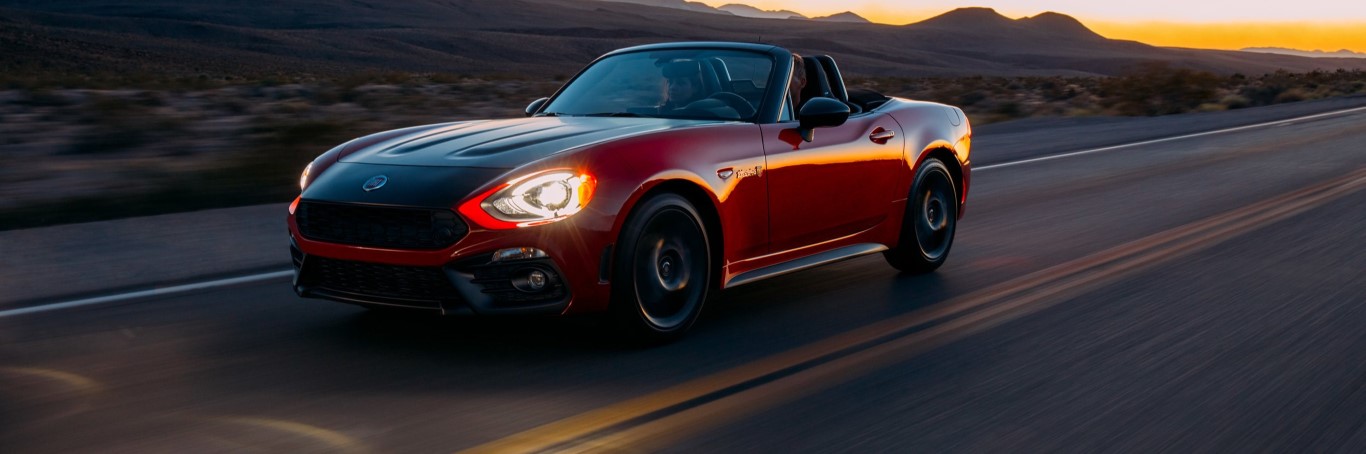
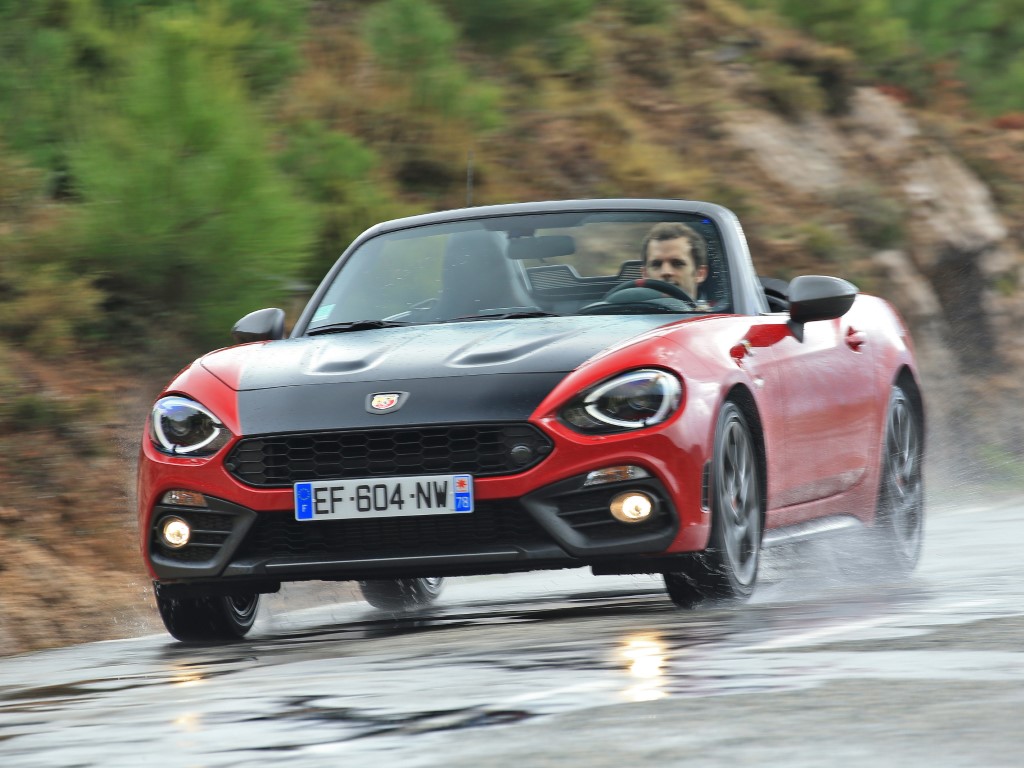
The modern design, developed at the Centro Stile Fiat under the direction of Ruben Wainberg, sought direct inspiration from the original 1966 and 1972 models. The dual power domes on the hood, the hexagonal grille, and the horizontal taillights are clear references to the past. Unlike the Fiat version, the Abarth received exclusive bumpers, black side skirts, and the scorpion logo replacing the traditional Fiat emblems.
A crucial detail about the production is that, although the basic chassis was manufactured in Japan, the final assembly of specific performance components was carried out at the Officine Abarth in Turin, Italy. This included the installation of the Bilstein suspension, the exhaust system, and exclusive interior finishes, ensuring that the brand's DNA was preserved in the final product.
Unlike the naturally aspirated 2.0-liter engine of its Japanese "sibling," the Abarth 124 Spider utilized FCA's 1.4 MultiAir Turbo engine. This valve management technology eliminates the need for a traditional throttle body to control air intake, using an electro-hydraulic system to vary the timing and lift of the intake valves.
This powertrain allowed the car to deliver maximum torque at very low RPMs, an essential characteristic for an everyday sports roadster. In the European market (EMEA region), the engine was calibrated to 170 hp, while in the North American market (NAFTA), the power output was 164 hp.
| Performance Parameter | Abarth 124 Spider Specification (2016-2020) |
|---|---|
| Engine | 1.4L Turbo MultiAir |
| Cylinders | Inline 4, 16 valves |
| Power (Europe) | 170 hp @ 5,500 rpm |
| Power (North America) | 164 hp @ 5,500 rpm |
| Maximum Torque | 250 Nm @ 2,500 rpm (Sport Mode) |
| 0-100 km/h Acceleration | 6.8 seconds |
| Top Speed | 232 km/h |
| Weight (Manual) | 1,060 kg |
The choice of the six-speed manual transmission was also strategic. Abarth opted to use the gearbox from the third-generation Mazda MX-5 (NC), rather than the ND model's gearbox, because the older unit was capable of handling the superior torque of the 1.4-liter turbo engine without compromising long-term durability.
The Abarth 124 Spider did not undergo profound visual facelifts during its life cycle, maintaining a stable bodywork from 2017 to 2020. However, there were mechanical updates and the introduction of styling packages that altered the model's perception over the years.
In 2018, the changes focused on customization. The "Red Top Edition" was introduced for the Lusso model, which also influenced the color options for the Abarth lineup. The main mechanical highlight was the refinement of the Sport Mode Selector, which became standard on the Abarth, altering throttle response, steering weight, and, on automatic models, gear shift times.
For the 2019 model year, Abarth expanded its technology offering. The 7-inch touchscreen infotainment system and rearview camera became standard equipment in more markets. Furthermore, the "Veleno Appearance" package was made available for the Abarth, adding red accents on the exterior mirror caps, the lower lip of the front bumper, and the tow hook.
In the final year of official production for North America, the 2020 model received the "Scorpion Sting" decal package as its main novelty. This set included a large scorpion decal on the hood and side stripes, reinforcing the brand's aggressive identity before the end of production. Despite expectations for a more robust facelift, FCA opted not to invest in major design changes, signaling the imminent end of the model.
Abarth utilized its tradition of special editions to keep interest in the 124 Spider alive during its commercialization. Each variant was designed to highlight a specific aspect of the car, whether it be luxury, track performance, or historical heritage.
The 124 GT was one of the most important additions to the lineup. Presented as a solution for those who desired the experience of a coupe and the freedom of a roadster, the GT came equipped with a removable carbon fiber hardtop weighing just 16 kg. In addition to improving acoustic and thermal insulation, this roof significantly increased the vehicle's torsional rigidity.
The GT's specifications included:
The Scorpione version was launched as a more purist and accessible option, focused on essential performance. It retained all the 170 hp mechanics and the limited-slip differential but simplified the interior trim to reduce cost. It was only available in solid colors like San Marino Black 1972 or Turini White 1975, paying homage to Abarth's past victories.
To celebrate the Abarth 124 Rally's victory in the FIA R-GT Cup in 2018, the limited edition "Rally Tribute" was launched, restricted to just 124 numbered units. This model featured specific logos on the fenders and an internal metal plaque with the unit's serial number.
The "70th Anniversary" series marked the year 2019. All Abarth 124 models produced and registered that year received a special commemorative badge celebrating the brand's founding in 1949. These cars instantly became collectible due to the date's symbolism.
The major differentiator of the Abarth 124 Spider compared to the Fiat 124 and the Mazda MX-5 was the meticulous calibration of its dynamic setup. Abarth focused on creating a car that was predictable at the limit but extremely agile in direction changes.
The suspension used a double-wishbone layout at the front and a five-link multilink setup at the rear. The Abarth calibration included Bilstein gas-pressure shock absorbers on all wheels and specific springs with a higher spring rate. This resulted in a car with minimal body roll, ideal for driving on winding roads.
The Brembo braking system was optional or standard depending on the version. It featured four-piston fixed aluminum calipers at the front and 280 mm self-ventilating discs. This setup guaranteed consistent, fade-resistant stopping power, which is fundamental for anyone intending to take the car to track days.
An indispensable emotional element was the dual-mode Record Monza exhaust system. Through a mechanical valve operated by exhaust gas pressure, the system altered the exhaust flow at higher RPMs, releasing a raspy sound characteristic of Abarth.
To ensure that power reached the ground efficiently, Abarth equipped all 124 Spiders with a mechanical Limited-Slip Differential (LSD), called the Abarth D.A.M. This component allowed the wheel with the most traction to receive more torque during aggressive cornering, preventing power from being wasted by the lighter inside wheel, improving traction and control upon corner exits.
A separate chapter in the model's modern history is the Rally version, developed for the R-GT category. Unlike the street model that used the 1.4L engine, the Rally version was equipped with a 1.8L turbocharged four-cylinder engine mounted in a longitudinal-mid position.
| Component | Rally R-GT Version Specification |
|---|---|
| Engine | 1.8 Liter Turbocharged I-4 |
| Power | 300 hp @ 6,500 rpm |
| Torque | 500 Nm |
| Transmission | 6-speed Sadev sequential with paddle shift |
| Weight | 1,050 kg |
| Suspension | 5-way adjustable |
| Brakes | Brembo Gran Turismo (355 mm front / 320 mm rear) |
The rally car utilized aluminum and carbon fiber panels to compensate for the additional weight of the mandatory roll cage and the more robust sequential transmission. This model was essential to restoring Abarth's image as a legitimate competitor on the international rally scene.
The trajectory of the Abarth 124 Spider was short but intense. Total production, combining the Fiat and Abarth versions (since both were assembled on the same basic Mazda line before finalization in Italy), reached just over 41,000 units.
The geographic distribution of sales shows that Europe was the strongest market for the model, reflecting the region's cultural passion for Italian roadsters.
| Calendar Year | Sales in Europe | Sales in the US | Sales in Canada | Total |
|---|---|---|---|---|
| 2016 | 3,717 | 2,475 | 258 | 6,450 |
| 2017 | 7,831 | 4,478 | 601 | 12,910 |
| 2018 | 7,637 | 3,515 | 284 | 11,436 |
| 2019 | 4,717 | 2,644 | 205 | 7,566 |
| 2020 | 76 | 1,711 | 165 | 1,952 |
| 2021 | - | 955 | 52 | 1,007 |
| Global Total | 23,978 | 15,778 | 1,565 | 41,321 |
The numbers for 2020 and 2021 represent the sell-off of remaining inventory, as actual production ended in most markets by late 2019 due to new regulatory cycles. In Australia, the model peaked in 2017 with 375 units sold, dropping to just 57 units in 2020, culminating in its official withdrawal from the Australian market.
The end of production was motivated by a combination of technical and financial factors. The transition to the Euro 6d-Temp and WLTP emission standards in Europe would have required massive investments in updating the 1.4 MultiAir engine, which was already nearing the end of its life cycle within the FCA lineup. In addition, the rapid decline of the compact roadster segment in favor of SUVs made the model economically unviable for a contract renewal with Mazda.
Abarth, under Stellantis's new strategy, began to focus its efforts on electrification, as seen with the launch of the new 500e and 600e models, leaving the 124 Spider as one of the last representatives of the classic era of pure sports internal combustion turbo engines.
The Abarth 124 Spider is today a highly desired collector's vehicle. Its combination of Japanese engineering — known for reliability and chassis rigidity — with an Italian engine and soul created a hybrid that offers the best of both worlds. The model's evolution from the 70s to the modern era shows a continuous respect for Carlo Abarth's philosophy: "Small but wicked".
For the modern enthusiast, the Abarth 124 Spider offers an analog experience in a digital world. The simple manual roof, rear-wheel drive with a limited-slip differential, and the unmistakable sound of the Record Monza exhaust ensure that this model will be remembered as one of the purest roadsters of its time. With global production limited to around 41,000 units, its future rarity is guaranteed, especially for limited versions like the GT and the Rally Tribute, which represent the technical pinnacle of the 124 lineage.