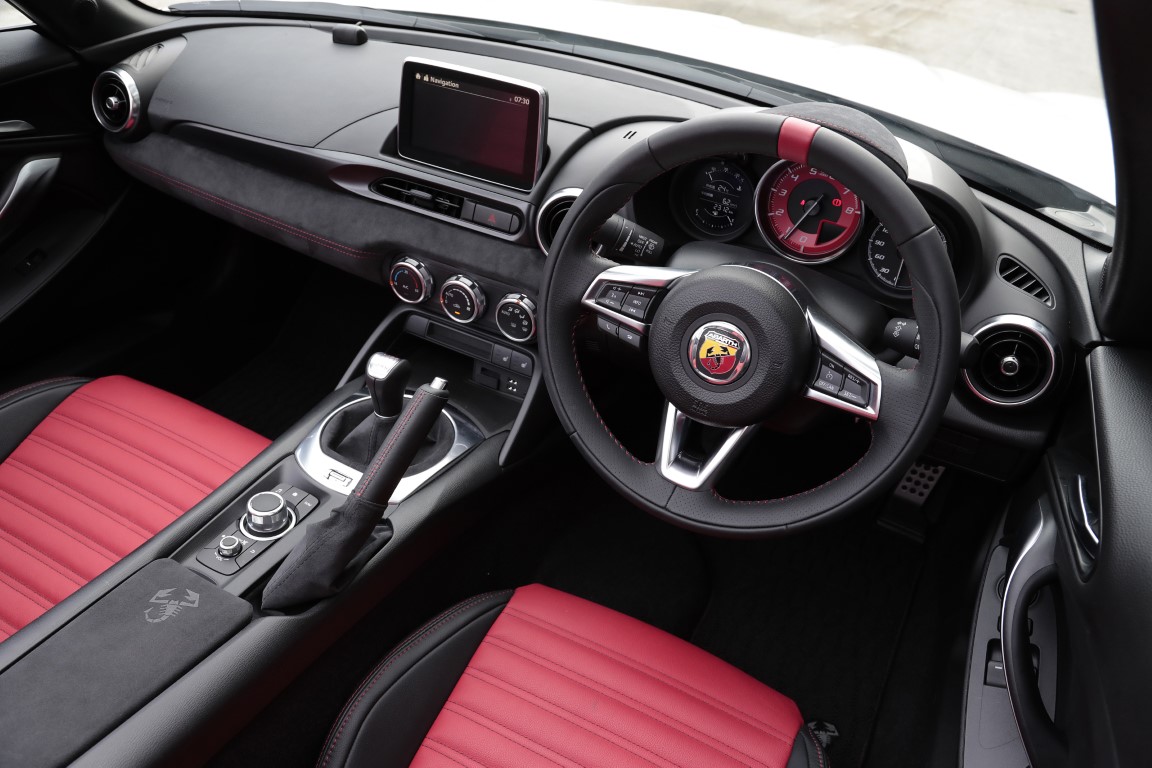
The birth of the Abarth lineage in the 124 model occurred in 1972, when Carlo
Abarth's workshops in Turin took on the task of transforming the elegant Fiat 124 Sport Spider
into a rally machine capable of competing on the world stage. This project was not just a
styling exercise, but a strategic necessity for Fiat, which sought to replace previous models
with a vehicle that met the FIA Group 4 requirements.
The Homologation Process and the Stradale Version
To compete in Group 4, the rules of the time required the manufacturing of at
least 500 units of a street version, called the "Stradale". Official production began in the
autumn of 1972, extending until early 1974. However, due to high demand and the need to also
qualify the car for Group 3, Fiat and Abarth ended up producing approximately 1,000 units of the
Fiat Abarth 124 Rally, technically known by the code 124 CSA.
Manufacturing was a hybrid process. The chassis were taken from Fiat's main
assembly line and sent to Abarth's facilities for specific preparation. The main focus was
weight reduction and increased rigidity. Lightweight body panels were adopted, including a matte
black fiberglass hood and trunk lid, as well as aluminum door skins. The removal of heavy
bumpers and the installation of a fixed hardtop with a perspex rear window were fundamental to
achieving a curb weight of just 938 kg.
Mechanical Architecture and the Twin-Cam Engine
The heart of the 124 Abarth Rally was the 1,756 cc inline four-cylinder
engine, designed by engineer Aurelio Lampredi. This powertrain used a cast iron block with an
aluminum alloy cylinder head and dual overhead camshafts (DOHC). For the Stradale version,
Abarth installed two Weber 44 IDF carburetors, replacing the single carburetor of the standard
Fiat models, and an Abarth exhaust system with dual outlets.
| Technical Specification |
1972 Stradale Model Value |
| Displacement |
1,756 cc |
| Bore x Stroke |
84.0 mm x 79.2 mm |
| Compression Ratio |
9.8:1 |
| Maximum Power |
128 hp @ 6,200 rpm |
| Maximum Torque |
16.2 kg.m @ 5,200 rpm |
| Fuel System |
2 Weber 44 IDF Carburetors |
| Transmission |
5-speed Manual |
| Top Speed |
190 km/h |
One of the greatest innovations of this generation was the introduction of a fully independent
rear suspension. Unlike the solid axle found on the standard Fiat 124 Spider, the Abarth version
utilized a system with lower and transverse wishbones, longitudinal radius arms, and coil
springs, giving the car superior agility and much more efficient traction on the uneven terrain
typical of rallies.
The Evolution for the Tracks: 1973 to 1975
Technical development did not stop with the homologation version. Between
1973 and 1975, the competition model underwent drastic evolutions. In 1973, performance packages
allowed the engine to reach 170 hp, although the car still faced reliability and weight issues
compared to World Rally Championship competitors.
The big change occurred for the 1974 and 1975 seasons. The engine was updated
with a 16-valve cylinder head, raising the power to around 200 hp. In the final phase of 1975,
the displacement was slightly increased to 1,840 cc, and the Kugelfischer mechanical injection
system was adopted, resulting in an output of up to 215 hp at 7,000 rpm. Visually, these final
versions were identified by larger air intakes on the hood and integrated fender flares to
accommodate wider wheels and tires.