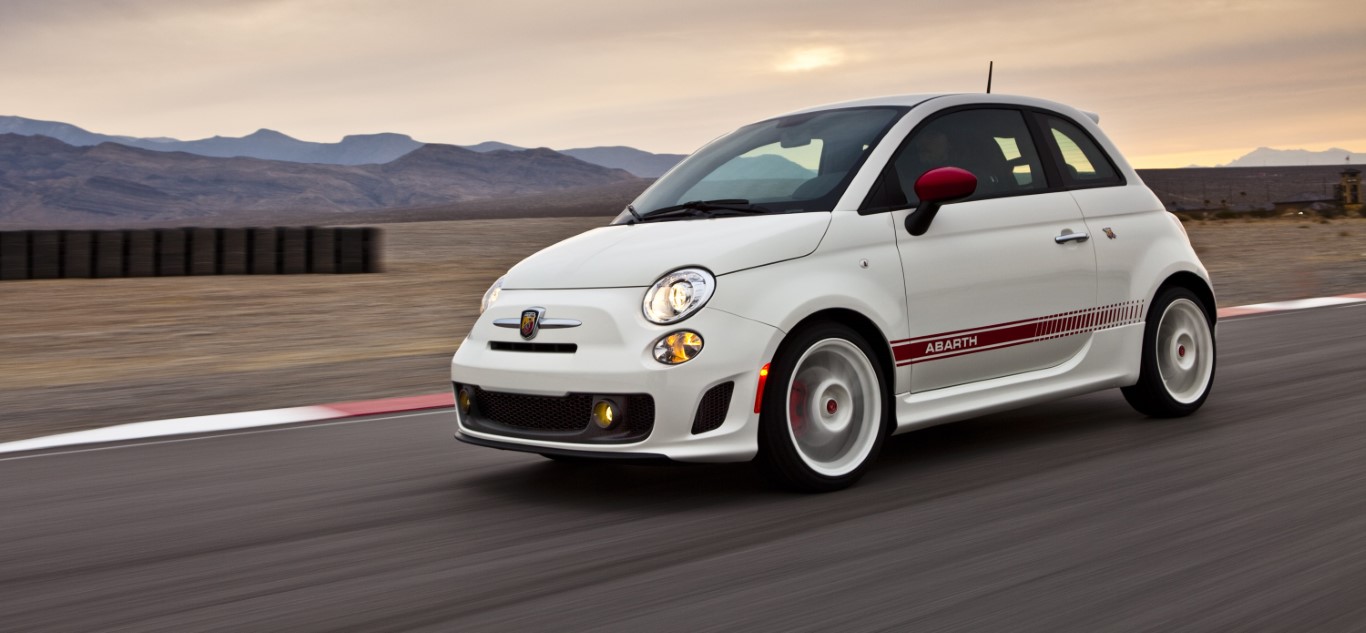
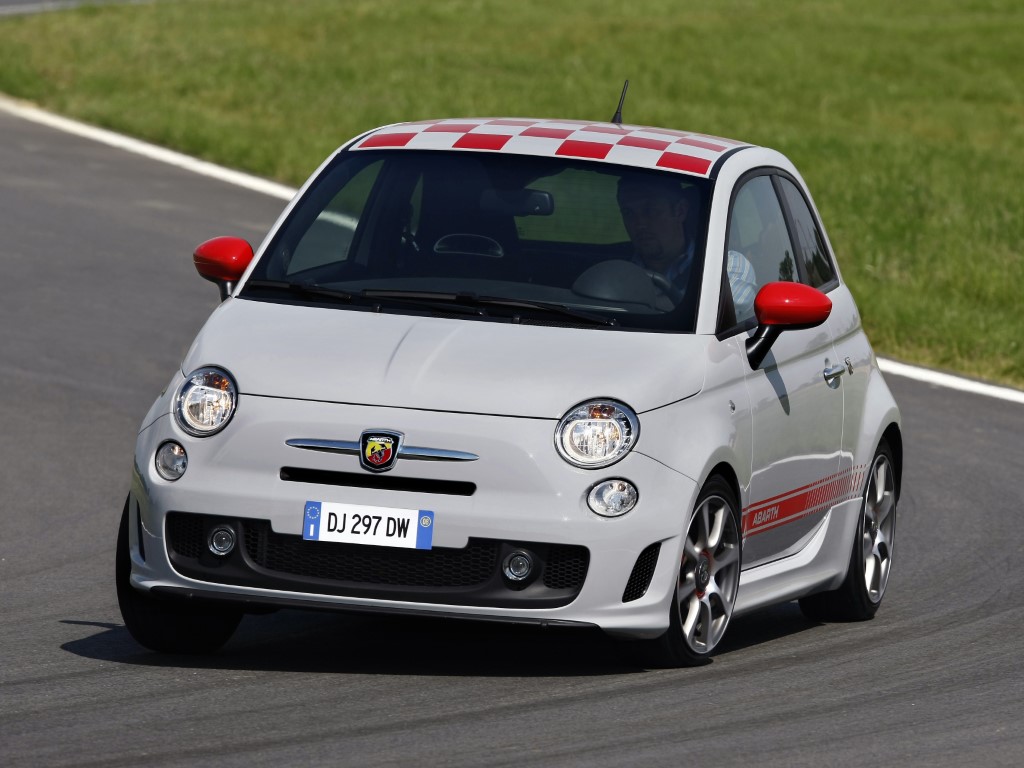
1st Generation
(2008 - 2019)
Technical specifications, versions, and history for the Abarth 500.
Select a generation to see available versions
(2008 - 2019)
The history of the Abarth 500 in the 21st century is not just the narrative of a successful compact car, but rather the resurgence of an engineering philosophy that prioritizes agility, performance, and emotion over pure functionality. Founded in 1949 by Carlo Abarth, the scorpion brand built its reputation by transforming passenger vehicles into racing machines. In the case of the Fiat 500, this relationship began in 1963, when the original model was modified to create the first Abarth 595, laying the foundation for what would become the modern "pocket rocket" launched in 2008. This report details the technical and commercial trajectory of the Hatch and Cabrio variants, exploring their generations, engines, and the subtleties of each update.
The connection between Abarth and the small 500 dates back half a century before the launch of the contemporary version. In 1963, Carlo Abarth used the Fiat 500 D as a base, increasing the displacement to 593 cc to produce the original 595, which delivered 27 horsepower. This 30% increase in power over the factory model, accompanied by a prominent aluminum oil pan and the Record Monza exhaust, defined the brand's visual and sonic identity. Carlo's philosophy was clear: extract performance from small cars to win competitions and offer fun on the streets.
In 2007, Fiat decided to revitalize the Abarth brand as an independent entity, taking advantage of the launch of the new generation of the Fiat 500 (Type 312). The modern Abarth 500 was presented at the 2008 Geneva Motor Show, marking a triumphant return that united the retro design of Roberto Giolito and Frank Stephenson with the high-performance engineering of the racing division.
The first phase of the modern Abarth 500, often referred to by enthusiasts as series 1 to 3, set the hardware standard that would be refined for over a decade. Unlike the conventional Fiat 500, the Abarth version required significant structural modifications to accommodate the turbo engine and the more robust cooling system.
The heart of this generation was the 16-valve 1.4 Fire TurboJet engine. In Europe, this engine was initially configured to deliver 135 hp, while the version with the "esseesse" (SS) kit raised that number to 160 hp. The technological choice of the T-Jet was based on its durability and potential for modifications, being an engine derived from cast iron blocks that withstand high turbo pressures without compromising internal integrity.
| Technical Specification | Abarth 500 (Base) | Abarth 500 "esseesse" |
|---|---|---|
| Displacement | 1,368 cc | 1,368 cc |
| Maximum Power | 135 hp @ 5,500 rpm | 160 hp @ 5,750 rpm |
| Maximum Torque (Sport Mode) | 206 Nm @ 3,000 rpm | 230 Nm @ 3,000 rpm |
| Turbocharger | IHI RHF3-P | IHI RHF3-P |
| 0–100 km/h Acceleration | 7.9 seconds | 7.4 seconds |
| Top Speed | 205 km/h | 211 km/h |
One of the most notable technical differentiators introduced in this phase was the Torque Transfer Control (TTC) system. Acting as an electronic limited-slip differential, the TTC uses the stability control sensors to brake the inside wheel during corners, transferring torque to the outside wheel with more grip, which substantially reduces the understeer characteristic of short-wheelbase front-wheel-drive cars. The suspension was lowered and stiffened, using variable-rate springs and specific shock absorbers that drastically altered directional stability compared to the Fiat model.
In 2010, the range was expanded with the launch of the Abarth 500C (Cabrio). This model did not follow the traditional design of a full convertible, but rather a retractable canvas roof system that preserved the body's side pillars. This engineering decision was crucial to maintaining the torsional rigidity necessary for a high-performance car, minimizing weight gain.
The Abarth 500C was designed to offer 70% less structural vibration at the top of the windshield than its main competitors of the time. The canvas roof, operable at speeds up to 100 km/h (60 mph), retracts in stages, ending in an integrated spoiler that was specifically molded to generate additional downforce, compensating for the turbulence generated by the absence of the hard roof.
Although the Cabrio is only about 15 kg (33 lbs) heavier than the Hatch, it presents practicality challenges, such as a smaller trunk opening and almost zero rear visibility when the roof is fully retracted. However, for the target audience, the sensory advantage of hearing the exhaust without acoustic filters outweighs the space limitations.
The Brazilian chapter of the Abarth 500 formally began in October 2014, with its presentation at the São Paulo Motor Show. Unlike the European models that used the T-Jet engine, the Abarth imported to Brazil came from the Toluca plant in Mexico and used the 1.4 MultiAir Turbo powertrain.
The MultiAir technology replaces the traditional intake camshaft with an electronically controlled electro-hydraulic system, allowing continuous variation of valve timing and lift. This resulted in an engine with more efficient responses and greater torque at low revs for the American and Brazilian markets, although it is considered more complex for long-term maintenance than the robust European T-Jet.
| Attribute | Abarth 500 (Brazil/Mexico) | Abarth 500 (Europe - Series 1) |
|---|---|---|
| Engine | 1.4 16V MultiAir Turbo | 1.4 16V T-Jet Turbo |
| Power | 167 hp | 135 hp / 160 hp |
| Torque | 23.0 kgfm (226 Nm) | 206 Nm / 230 Nm |
| Curb Weight | 1,164 kg | 1,035 kg |
| Chassis Configuration | Reinforced suspension (US standard) | Standard EU suspension |
The Brazilian model included as standard seven airbags, four-wheel ventilated disc brakes with sealed red calipers, and exclusive 16-inch wheels. The interior featured leather-upholstered bucket sports seats and a satellite turbo boost gauge positioned next to the instrument cluster.
In 2016, keeping pace with the changes to the Fiat 500, Abarth launched what is known as the Series 4. This update was not merely aesthetic, but represented a complete restructuring of the model range, which became permanently designated as 595 and 695 to signal different levels of aggressiveness.
The Series 4 brought over 1,800 detailed changes. The front bumper received much larger air intakes, which improved engine thermal management by 18%. The headlights gained LED daytime running lights (DRL) with a circular design reminiscent of the "0" in the 500 logo, while the taillights adopted an annular design with body-colored centers.
The interior underwent a technological revolution with the introduction of the Uconnect infotainment system. For the first time, the model offered full smartphone integration via Apple CarPlay and Android Auto on 5 or 7-inch screens. The instrument cluster was replaced by a 7-inch TFT screen with specific performance graphics, including G-force meters and gear shift indicators optimized for sporty driving.
Starting with the facelift, Abarth segmented its models to cater to everyone from the entry-level enthusiast to the most demanding weekend racer.
The basic 595 retained the 145 hp engine, serving as a blank canvas for customization. The 595 Turismo was positioned for the customer seeking sophistication, equipping the engine with 165 hp through the adoption of the Garrett GT 1446 turbine, as well as Koni FSD shock absorbers on the rear axle for a superior balance between comfort and stability.
The Competizione became the performance benchmark, delivering 180 hp. It came equipped with the four-tailpipe Record Monza exhaust with an active valve, which alters the engine sound according to throttle pressure. Sabelt seats with a carbon shell and Brembo brakes with four-piston fixed aluminum calipers transformed the car into a track tool. The Esseesse model, relaunched in 2019, added white Supersport wheels and white exterior details, plus an aluminum hood for weight reduction.
| Version | Power | Turbo | Suspension | Brakes |
|---|---|---|---|---|
| 595 Base | 145 hp | IHI | Standard | Solid Rear Discs |
| 595 Turismo | 165 hp | Garrett | Koni FSD (Rear) | Ventilated Discs |
| 595 Competizione | 180 hp | Garrett | Koni FSD (All around) | Brembo 4-Piston |
| 695 Esseesse | 180 hp | Garrett | Koni FSD + Eibach Springs | Brembo 4-Piston |
Abarth used the 500 platform to create some of the most desired limited editions in modern automotive history, often celebrating historical milestones or luxury partnerships.
Launched on the 50th anniversary of the original 695, the Biposto is considered the "world's smallest supercar." With a dry weight of just 997 kg and a 190 hp engine, it offers a weight-to-power ratio of 5.2 kg/hp. It removed the rear seats in favor of a roll-bar, used fixed polycarbonate side windows, and could be equipped with a dog-ring transmission, something unprecedented in production cars of this segment.
Two editions stand out for their market value and exclusivity. The 695 Tributo Ferrari (2009) was produced in official Maranello colors, such as Rosso Corsa and Giallo Modena, incorporating carbon fiber details and wheels inspired by the Ferrari 430 Scuderia. About 1,696 units were manufactured in total. The 695 Edizione Maserati focused on the elegance of the GranTurismo, available only as a Cabrio in the Pontevecchio Bordeaux color, limited to 499 global units.
Although total production of the Fiat 500 in Tychy has surpassed 2.5 million units, Abarth's numbers represent a smaller, more exclusive fraction of this assembly. The Polish plant reached important milestones, such as the production of the 12.5 millionth car (counting all group models), with an Abarth 695 Tributo 131 Rally being the vehicle that marked the start of the new count after the jubilee.
The commercial success of the Abarth 500 was driven by export to more than 100 countries, with about 80% of sales occurring outside Italy. At the end of 2017, the brand held a 14.6% share of the high-performance urban car segment in Europe.
In 2023, the brand began its most radical transformation with the launch of the Abarth 500e. This model is based on the new purely electric generation (Type 332) and aims to transpose the aggressiveness of the scorpion to the silence of electrification.
The Abarth 500e uses a 113.7 kW (155 hp) motor and a 42 kWh battery, allowing acceleration from 0 to 100 km/h in 7 seconds. The biggest technological innovation is the Sound Generator, a system that reproduces the roar of the gasoline T-Jet engine through external speakers, maintaining the sonic identity that is a trademark of Abarth.
| Characteristic | Abarth 500e (Electric) | Abarth 695 (Gasoline) |
|---|---|---|
| Power | 155 hp | 180 hp |
| Torque | 235 Nm (Instant) | 250 Nm |
| 0-100 km/h Acceleration | 7.0 seconds | 6.7 seconds |
| Curb Weight | 1,410 kg | 1,120 kg |
| Top Speed | 155 km/h | 225 km/h |
The trajectory of the Abarth 500 demonstrates a rare longevity in the automotive market. The model managed to evolve from a sporty derivative of an economy car into a range of highly engineered collectible vehicles. The transition between series 1-3 and series 4 (facelift) was fundamental to integrate modern digital technologies without losing the mechanical essence that defines the brand.
The Hatch and Cabrio variants fulfilled distinct roles: while the Hatch was always the choice for pure performance and track use, the Cabrio (500C) allowed a visceral connection with the engine sound, becoming a lifestyle piece. With the end of production of the combustion models in 2024 in Europe, the Abarth 500 consolidates itself as one of the most influential cars of the century, preserving Carlo Abarth's spirit that "performance is a state of mind."