1st Generation
(2010 - 2018)
1.4 T-Jet
190 cv
Technical specifications, versions, and history for the Abarth 695.
Select a generation to see available versions
(2010 - 2018)
(2017 - 2024)
The trajectory of the Abarth 695 represents not only the history of a high-performance compact vehicle, but the materialization of an engineering philosophy that prioritizes agility, specific power, and the visceral connection between the driver and the asphalt. Since its foundation in 1949 by the Italian-Austrian engineer Carlo Abarth, the brand of the scorpion has consolidated itself as a division specialized in transforming mass-produced cars into competition and enthusiast machines. At the center of this evolution is the 695 model, which historically served as the apex of performance within the lineage based on the Fiat 500, evolving from a small "pocket rocket" of the 1960s to a technological collector's icon in the 21st century.
The genesis of the 695 designation dates back to the 1964 Geneva Motor Show. At that time, Abarth was already recognized for its tuning kits that transformed the modest Fiat 500 into a feared competitor on European circuits. The launch of the original Abarth 695 was a direct response to the need for greater engine displacement to compete in higher categories, using the Fiat 500 D chassis as a base.
The fundamental modification lay in increasing the cylinder diameter of the air-cooled twin-cylinder engine, raising the capacity from 499 cc to 690 cc. Although the base model already represented a leap compared to the factory models, it was the "esse esse" (SS) version, introduced in 1966, that set the performance standard of the time. The 695 SS featured a Solex C28 PBJ carburetor, high-compression pistons, reinforced valve springs, and a redesigned camshaft to withstand higher engine speeds.
The table below details the fundamental differences between the entry-level model and the high-performance variant of the classic era.
| Technical Attribute | Abarth 695 (1964) | Abarth 695 SS (1966) |
|---|---|---|
| Engine Architecture | Twin-cylinder, 690 cc | Twin-cylinder, 690 cc |
| Maximum Power | 30 hp @ 4,900 rpm | 38 hp @ 5,200 rpm |
| Top Speed | ~130 km/h | ~140 km/h |
| Curb Weight | 560 kg | 570 kg |
| Fuel System | Solex Carburetor | Optimized Solex C28 PBJ |
| Total Production | Variable | 1,000 units |
The 695 SS was visually distinguished by its widened wheel arches and the iconic rear hood held ajar by mechanical supports. This was not a purely aesthetic choice; the opening was vital for engine cooling and aerodynamic stabilization, as the airflow helped keep the rear of the car planted at high speeds. It is estimated that out of the 1,000 units produced, only about 150 original examples survive today, making them prime targets for global collectors.
After the acquisition of Abarth by Fiat in 1971 and a period focused on rallying with models like the 131 Abarth, the brand went on hiatus until its official relaunch in 2007. The 695 designation returned in 2009, not as a mass-produced model, but as a platform for prestigious limited editions that connected Abarth to other luxury brands within the Fiat Group, such as Ferrari and Maserati.
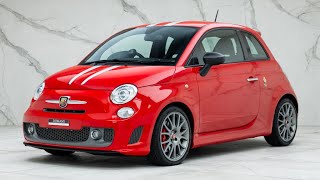
Launched at the 2009 Frankfurt Motor Show, the Abarth 695 Tributo Ferrari was designed to offer Ferrari owners an agile vehicle for urban traffic, without compromising the sporty soul. This model introduced the 1.4 Turbo T-Jet engine calibrated to deliver 180 hp, an impressive mark for the time in a car of this segment.
The chosen transmission was the "Abarth Competizione", an automated manual gearbox (MTA) with paddle shifters behind the steering wheel, which sought to mimic the gear shifting experience of the Maranello models. The braking system was upgraded to four-piston fixed Brembo calipers with 305 mm discs, ensuring a deceleration capacity consistent with the increase in power.
The exclusivity of the model was reinforced by a limited run and a color palette that directly referenced Ferrari.
| Launch Color | Units Produced (Est.) | Historical Significance |
|---|---|---|
| Rosso Corsa | 1,199 | Official color of Scuderia Ferrari |
| Giallo Modena | 299 | Tribute to Enzo Ferrari's hometown |
| Blu Abu Dhabi | 99 | Reference to the brand's global expansion |
| Grigio Titanio | 99 | Focus on technical elegance and discretion |
The interior of the Tributo Ferrari featured "Abarth Corsa by Sabelt" seats with a carbon fiber structure, reducing weight by 10 kg compared to standard seats, alongside Alcantara finishes and a specific instrument panel produced by Jaeger.
In 2012, the brand introduced the 695 Edizione Maserati, focused on sophistication and comfort, rather than the raw aggressiveness of the Ferrari model. Based exclusively on the convertible bodywork (695C), the model was painted in Maserati's exclusive "Pontevecchio Bordeaux" color and featured a titanium gray soft top.
Unlike the Tributo Ferrari, the focus here was refinement. The interior was upholstered in beige "Poltrona Frau" leather, and the audio system was replaced by a 400W JBL unit with 9 speakers and an 8-channel amplifier. Mechanically, it maintained the 180 hp of the 1.4 T-Jet engine and the MTA transmission, but with a Koni FSD (Frequency Selective Damping) suspension setup configured for a smoother, though still sporty, ride. Total production was restricted to 499 numbered units.
In 2014, to celebrate the 50th anniversary of the first 695, Abarth launched the Biposto, labeled as the "world's smallest supercar". This model represented the pinnacle of technology transfer from the track to the streets. The removal of the rear seats and the installation of a Poggipolini titanium roll bar allowed for a dry weight of just 997 kg.
The 1.4 T-Jet engine was boosted to 190 hp, resulting in a weight-to-power ratio of 5.2 kg/hp, allowing acceleration from 0 to 100 km/h in just 5.9 seconds. The Biposto was the first production street car to offer as an option a dog-ring gearbox with an exposed aluminum "H" pattern shifter, allowing clutchless gear changes under track conditions.
The Biposto's technological package included components rarely seen in cars of its size:
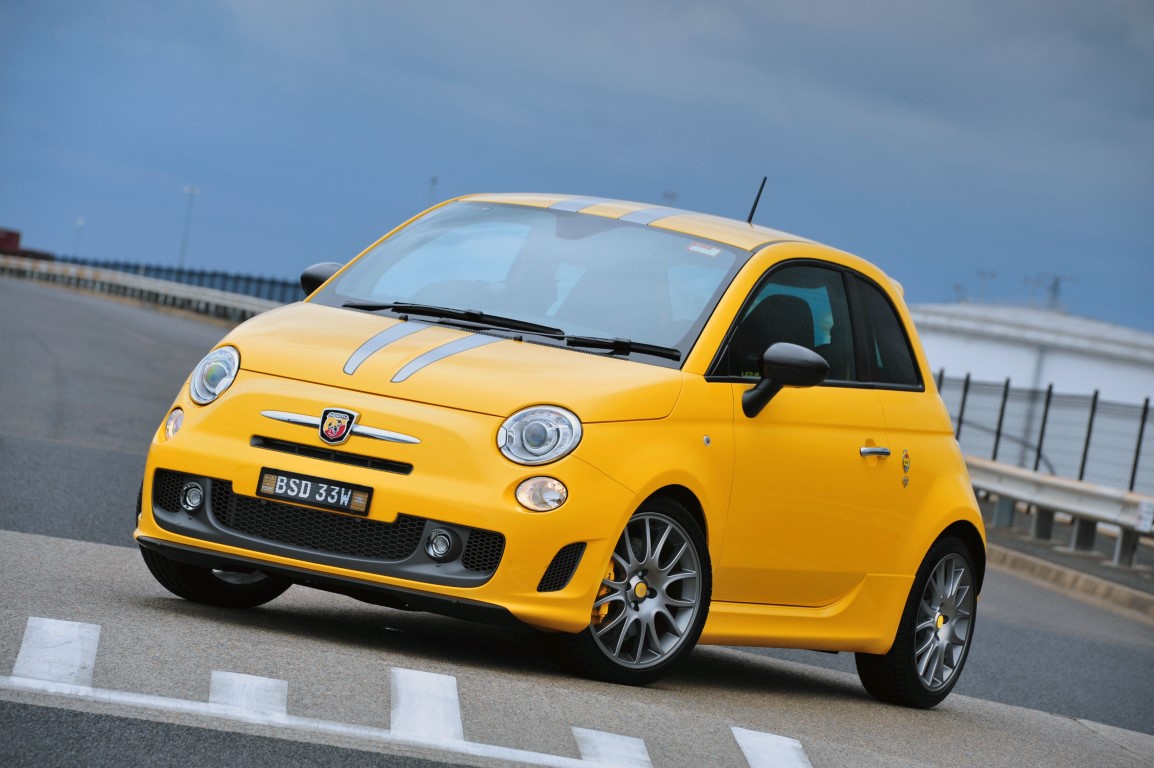
A limited variant, the 695 Biposto Record, was launched with 133 units in Modena Yellow to celebrate the number of world records held by Abarth. This edition included a mechanical limited-slip differential as standard, an essential component for managing the 250 Nm of torque out of corners.
In 2016, the Abarth lineup underwent a profound update, often referred to as "Series 4". This phase marked the technological and aesthetic democratization of the 595 and 695 models.
The facelift brought new bumpers with significantly larger air intakes. The central front opening was redesigned to improve cooling capacity by 18%, a critical factor for the thermal stability of the turbo engine in hot climates. The daytime running lights (DRL) became LED, and the rear diffuser became more prominent and functional.
The interior received a technological revamp with the 7-inch Uconnect system. For the first time, drivers could access real-time telemetry, along with full Apple CarPlay and Android Auto integration. Materials were elevated to include Alcantara on the dashboard and new matte carbon fiber trim options, reducing glare during sporty driving.
The post-2016 phase was characterized by editions that celebrated strategic partnerships and historical milestones, using the 695 as the most exclusive base.
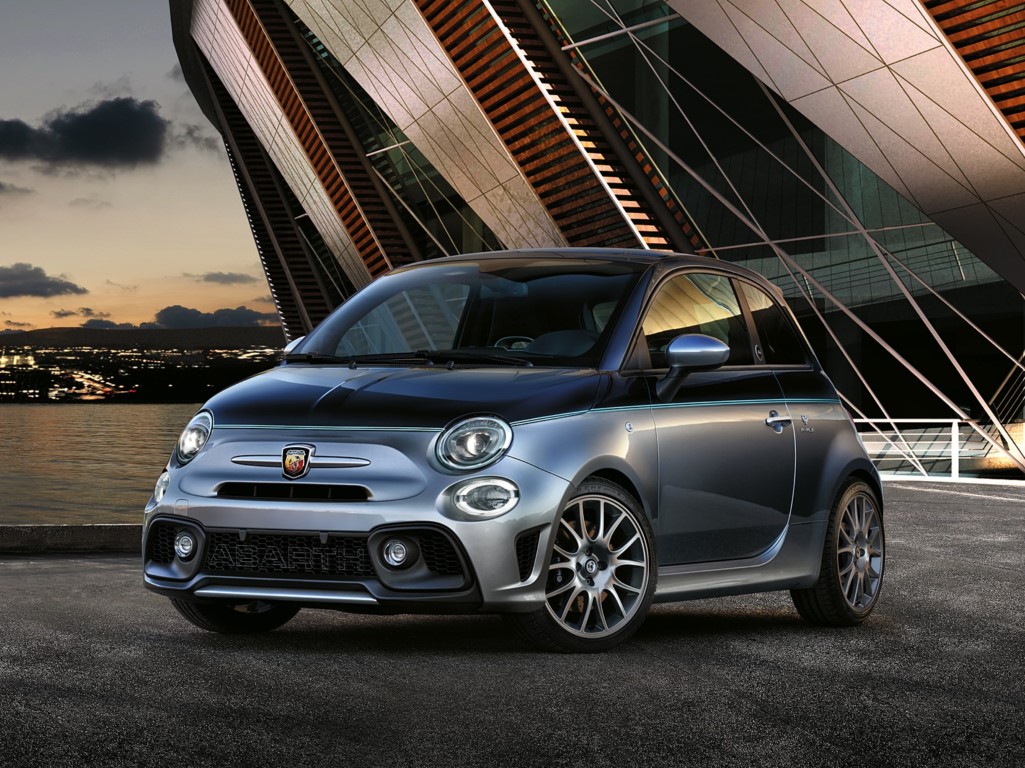
Born from a collaboration with the Riva shipyard, the 695 Rivale was conceived to mirror the elegance of the "56’ Rivale" yacht. The two-tone "Riva Sera Blue" and "Shark Grey" paint was divided by a double "Aquamarine" pinstripe, symbolizing the waterline of a vessel. The luxury was evident on the dashboard, which could be specified in mahogany wood with maple inlays, alongside blue leather on the seats. Mechanically, it delivered 180 hp and used Koni FSD shock absorbers and Brembo brakes as standard.
To celebrate seven decades of the brand in 2019, Abarth launched a limited edition of 1,949 units. The major innovation was the "Spoiler ad Assetto Variabile", a manually adjustable rear spoiler with 12 positions, from 0 to 60 degrees.
The aerodynamic importance of this system is quantifiable: in the maximum tilt position (60°), the spoiler generates an additional 42 kg of aerodynamic load at a speed of 200 km/h. This translates into greater rear stability under heavy braking and in high-speed corners, reducing the need for electronic stability control (ESP) interventions.
The 2021 Esseesse model was a direct homage to the tuned "Cinquino" of 1964. Focusing on weight reduction, the car received a new aluminum hood with two bulges, being 25% lighter than the standard steel hood. Coupled with the Akrapovič exhaust system with titanium tailpipes, the total weight was reduced by 10 kg compared to the Abarth 595 Competizione. Production was limited to 1,390 units (695 in Scorpione Black and 695 in Campovolo Grey).
As the last tribute to the 1.4 T-Jet engine before the full electric transition, Abarth launched the 75th-anniversary edition in 2024. Production was limited to exactly 1,368 units, a reference to the engine's 1,368 cc displacement.
Aesthetically, the model is a statement of intent: black paint with a golden scorpion occupying the entire roof and 17-inch golden wheels. The interior is adorned with black Alcantara and Sabelt carbon seats with gold stitching and the 75th-anniversary logo.
| Performance Data - 75° Anniversario | |
|---|---|
| Engine | 1.4 T-Jet with Garrett GT 1446 |
| Power | 180 HP @ 5,500 rpm |
| Maximum Torque | 250 Nm @ 3,000 rpm |
| 0–100 km/h | 6.7 seconds |
| Top Speed | 225 km/h |
| Suspension | Front and Rear Koni FSD |
The choice between the closed and convertible bodywork involves technical compromises between dynamic purity and sensory experience.
The Hatchback is preferred by track day enthusiasts due to its greater torsional rigidity. The closed structure allows for a more predictable load transfer and better withstands the lateral forces of a stiffened suspension. Furthermore, models like the 70th Anniversario and the Esseesse are exclusive to the Hatch body to allow for the installation of the adjustable spoilers.
The 695C (Cabriolet), in turn, offers the auditory advantage. With the soft top retracted, the characteristic sound of the Record Monza or Akrapovič exhausts floods the cabin without the distortions of acoustic insulation. Structurally, the 695C is about 30 kg to 45 kg heavier than the Hatchback, due to the structural reinforcements required to compensate for the absence of a rigid roof and the weight of the soft top's electric motors.
| Model (Series 4+) | Hatchback (Manual) | 695C Cabrio (Manual) |
|---|---|---|
| Curb Weight | 1,045 kg | 1,090 kg |
| Weight Distribution (F/R) | 64% / 36% | ~65% / 35% |
| Trunk Capacity | 185 L | 185 L (Limited access) |
| Total Height | 1,485 mm | 1,488 mm |
The 1.4 T-Jet engine is the pillar of reliability and power of the modern Abarth. Its evolution was marked by changing turbocharger suppliers to reach new power levels.
The initial models of the Abarth 500 line (135 hp) used IHI turbos, known for their quick response at low revs and low turbo lag. However, for the 695 variants, Abarth adopted the Garrett GT 1446. Although the Garrett takes a little longer to reach maximum pressure (full boost of 1.6 bar around 2,800–3,000 rpm), it allows for a much higher airflow at high revs, being the only one capable of sustaining the 180 hp and 190 hp with safety and mechanical longevity.
The Record Monza exhaust is, to many, the car's vocal signature. Its technology evolved from a purely mechanical system to an electronically controlled one:
The 695's performance doesn't come solely from the engine, but from a harmonious set of world-class components.
One of the most recent and significant editions was the Tributo 131 Rally, limited to 695 global units. This model celebrated the 40th anniversary of the last official race of the Fiat 131 Abarth Rally, a car that won three World Rally Championships for Manufacturers (1977, 1978, and 1980).
The 695 Tributo 131 Rally featured the two-tone "Blue Rally" color and a black roof, alongside the adjustable spoiler and Record Monza exhausts with stacked vertical tailpipes. Inside, the dashboard was upholstered in blue Alcantara with the silhouette of the historic 131 Rally laser-engraved. Mechanically, it used the standard 180 hp setup with the Garrett turbo and black Brembo brakes.
The history of the Abarth 695 is a testament to a brand's ability to reinvent itself without losing its essence. From the modest but aggressive 1964 model to the technologically advanced 75° Anniversario of 2024, the 695 has remained true to Carlo Abarth's vision that small cars could defeat giants through intelligent engineering and weight reduction.
| Featured Model | Year | Production | Power | Technical Differential |
|---|---|---|---|---|
| Classic 695 SS | 1966 | 1,000 | 38 hp | Ajar hood, 690cc |
| Tributo Ferrari | 2009 | ~1,696 | 180 hp | MTA gearbox, 430 Scuderia wheels |
| Biposto | 2014 | N/A | 190 hp | Dog-ring gearbox, 2 seats |
| Rivale | 2017 | 3,000 | 180 hp | Mahogany finish, Riva colors |
| 70th Anniversario | 2019 | 1,949 | 180 hp | Adjustable Spoiler 0-60° |
| Esseesse 2021 | 2021 | 1,390 | 180 hp | Aluminum hood, -10kg |
| 75° Anniversario | 2024 | 1,368 | 180 hp | Golden Scorpion, Final Edition |
With the end of production for internal combustion engines, the Abarth 695 instantly becomes a modern classic. Its limited and numbered editions guarantee a stable resale value and a captive place in the "Abarth Register", reserved for models of major historical importance. The legacy of the 695 now passes to the electric models, but the emotional impact and mechanical purity of the combustion generations will remain as the gold standard of driving fun on a reduced scale.