
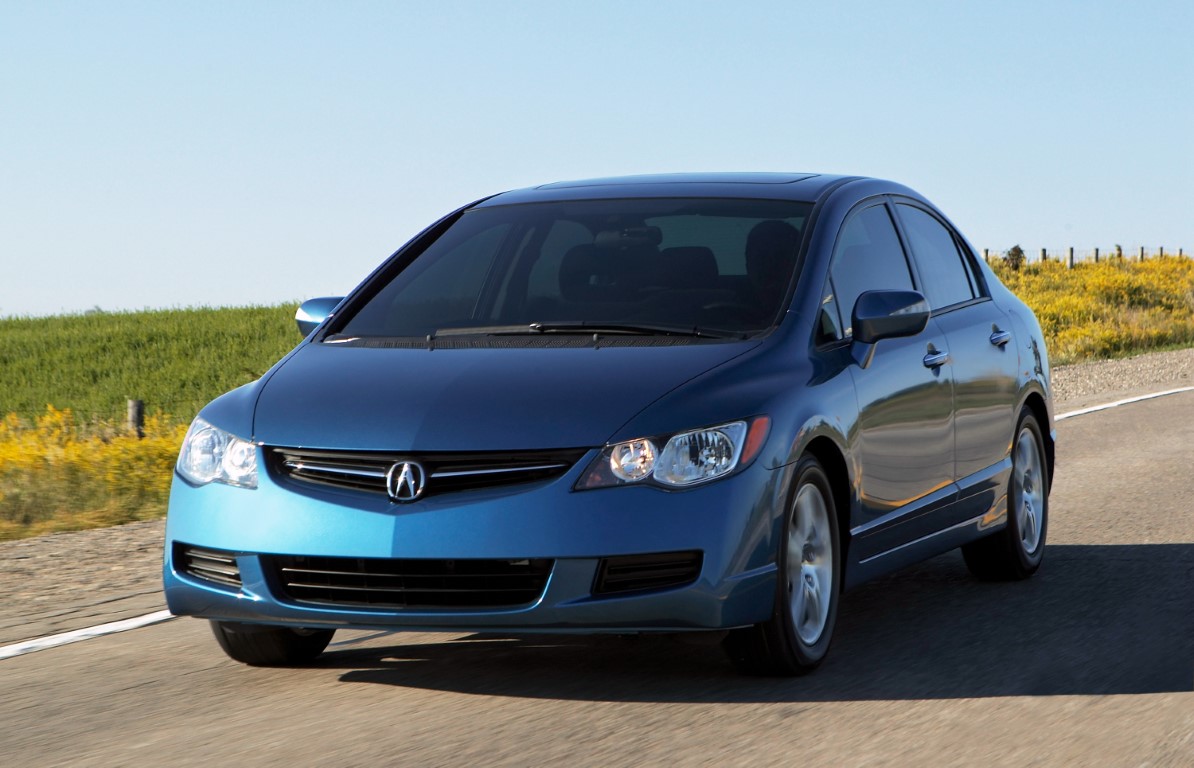
1st Generation
(2006 - 2008)
2.0 L i-VTEC
200 cv
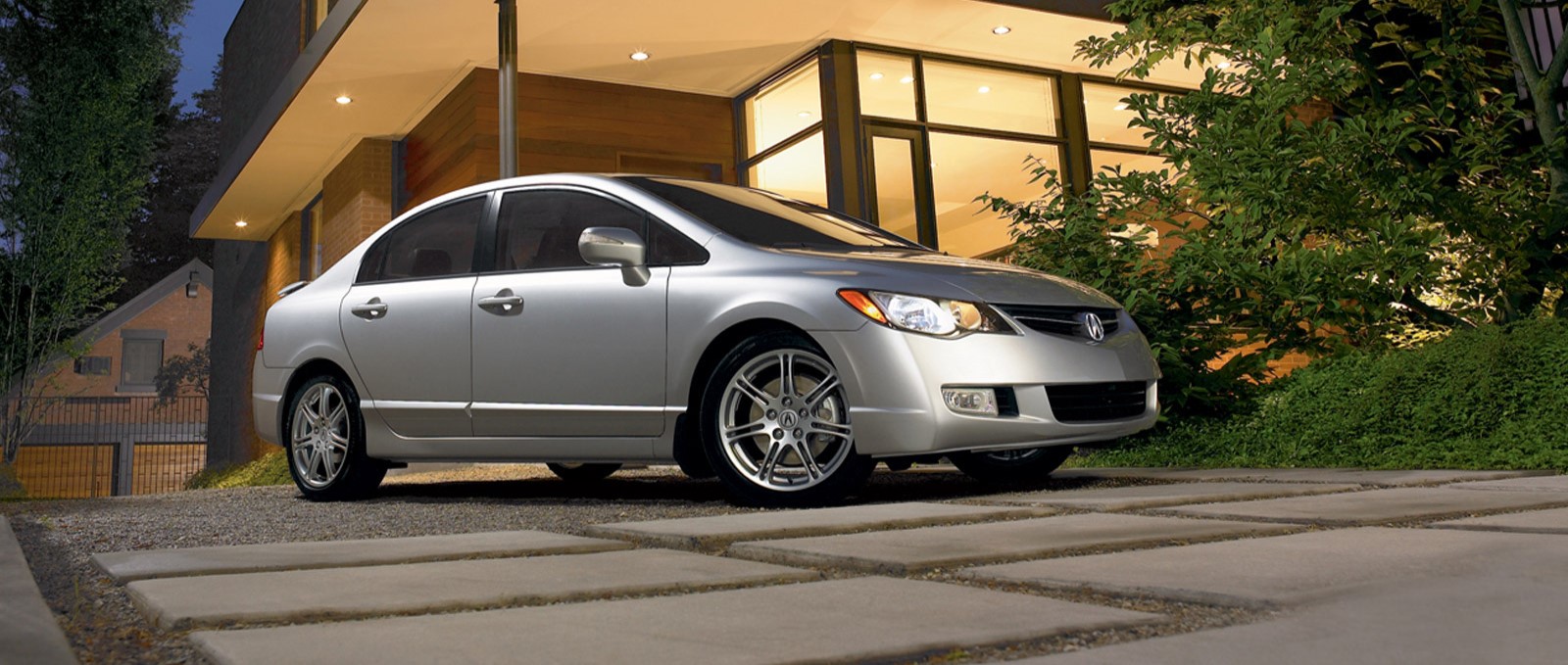
Technical specifications, versions, and history for the Acura CSX.
Select a generation to see available versions
(2006 - 2008)
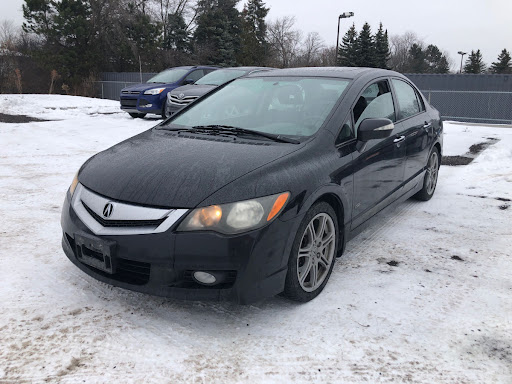
(2009 - 2010)
Select a powertrain to view full technical specifications
The Acura CSX occupies a prominent place in the chronology of the Honda Motor Company, representing a highly segmented and successful market strategy that challenged the brand's global design conventions. Launched as a direct successor to the Acura EL, the CSX was conceived as an entry-level luxury sedan exclusive to the Canadian market, manufactured at the Alliston plant in Ontario. This report details the evolution of this model, from its strategic foundation and engineering innovations to its discontinuation and the legacy left in the premium compact sedan segment.
The genesis of the Acura CSX is deeply linked to the demographic and economic particularities of Canada. Unlike the United States, where the Acura brand frequently focused on larger models or sports coupes like the RSX, the Canadian consumer historically demonstrated a preference for compact vehicles that combined fuel economy, reliability, and a superior level of sophistication. The CSX was designed to be Acura's "gateway product", serving as the first step for young professionals to enter the brand's ecosystem, positioning itself below models like the TSX and the TL.
The decision to keep the CSX as a Canada-exclusive model allowed Acura Canada to adapt the vehicle specifically to local needs, including bilingual navigation systems (English and French) to cater to the province of Quebec, and suspension tuning geared towards the country's climate and paving conditions. The vehicle was introduced in November 2005 as a 2006 model, based on the eighth-generation Honda Civic platform, but with substantial modifications that distanced it from its Honda counterpart.
One of the greatest curiosities in the history of the CSX is the inversion of Honda's traditional design flow. Generally, Canadian models were derived from Japanese or American designs. In the case of the CSX, Honda of Japan chose the Canadian design of the CSX as the aesthetic model for the Honda Civic sold in Japan and other international markets (FD series), instead of the other way around. This means that the refined aesthetics of the CSX, characterized by a slightly longer nose and sculpted optical groups, became the global face of the eighth-generation Civic outside North America.
The exterior design of the CSX differed from the North American Civic by several key elements: a distinct front grille featuring Acura's identity, headlights with clear lenses and exclusive internal design, and a lower air intake that spanned the entire width of the front bumper. At the rear, the vehicle featured "jewel" style taillights and a metal conformation on the trunk lid that gave it a more robust and sophisticated appearance. These changes were not just aesthetic, but aimed to elevate the perceived value of the car compared to the regular Civic.
The Acura CSX was launched with a clear proposition: to offer the refinement of a luxury car in a compact and efficient package. At its launch in 2006, the model focused on delivering a superior driving experience through a more powerful engine than the standard Civic and a generous list of standard equipment.
While the contemporary Honda Civic used a 1.8L R-series engine, the base Acura CSX came equipped with the 2.0L DOHC i-VTEC engine, known by the code K20Z2. This inline four-cylinder engine was built entirely of aluminum and delivered an output of 155 horsepower, providing much more vigorous acceleration and smoother highway driving.
| Engine Specification | Base Model Details (2006–2008) |
|---|---|
| Engine Type | 2.0-liter, 16-valve, DOHC, i-VTEC |
| Maximum Power | 155 hp @ 6,000 rpm |
| Maximum Torque | 139 lb-ft @ 4,500 rpm |
| Fuel System | PGM-FI Injection with Drive-by-Wire |
| Standard Transmission | 5-speed Manual or 5-speed Automatic |
| Steering | Electric Power Steering (EPS) |
| Recommended Fuel | Regular Gasoline (91 RON min.) |
The i-VTEC (Intelligent Variable Valve Timing and Lift Electronic Control) technology was one of the major differentiators, allowing the engine to adjust valve opening times to optimize both low-end torque and high-speed power. In addition, the electric power steering (EPS) system eliminated the need for a conventional hydraulic pump, which reduced the assembly's weight and prevented engine power loss to peripheral systems, making the CSX more agile in corners.
Acura's market strategy for the CSX in 2006 was based on three main trim levels: Touring, Premium, and Premium + Navi.
Due to the initial success of the model, Acura Canada received authorization to develop a high-performance version, resulting in the launch of the CSX Type-S in November 2006 as a 2007 model. This variant was designed to attract enthusiasts seeking the pure mechanics of the Honda Civic Si sedan, but in a more luxurious and discreet package.
The Type-S shared its entire powertrain with the contemporary Civic Si, utilizing the 2.0-liter K20Z3 engine. This engine was a masterpiece of Honda engineering, capable of reaching a maximum redline of 8,000 rpm and delivering 197 horsepower. The transmission was exclusively a close-ratio six-speed manual, mated to a helical limited-slip differential (LSD). The LSD was crucial to ensuring power was distributed correctly between the front wheels during tight cornering, minimizing understeer and increasing traction.
| Performance Component | Acura CSX Type-S Specifications |
|---|---|
| Engine | High-Compression 2.0L i-VTEC (K20Z3) |
| Maximum Power | 197 hp @ 7,800 rpm |
| Maximum Torque | 139 lb-ft @ 6,100 rpm |
| Transmission | Close-ratio 6-speed manual |
| Differential | Helical Limited-Slip (LSD) |
| Suspension | Sport-tuned (stiff springs and dampers) |
| Tires | 215/45R17 All-Season |
| Fuel | Premium Gasoline (91+ octane) |
The Type-S suspension was significantly firmer than that of the Touring model, featuring thicker stabilizer bars and sport-tuned shock absorbers. However, Acura was careful not to sacrifice comfort entirely. Additional sound insulation materials were applied to muffle road noise, and the side windows were thicker to improve onboard silence at cruising speeds. Internally, the Type-S distinguished itself with drilled aluminum pedals, red ambient footwell lighting, and a premium 350-watt 7-speaker audio system, including a subwoofer.
The year 2008 marked an important update in terms of value and safety for the CSX. Acura decided to raise the standard equipment level to remain competitive against rising European competition in Canada.
This year, leather upholstery, a tire pressure monitoring system (TPMS), illuminated vanity mirrors, and the Vehicle Stability Assist (VSA) system became standard items on all versions. Furthermore, the "Premium" version was renamed to "CSX Technology," reflecting the standard inclusion of HID headlights, fog lights, XM satellite radio, and the bilingual navigation system as part of the main package.
In 2009, the Acura CSX underwent its most profound mid-life renewal, technically known as a facelift. The goal was to align the compact sedan with the brand's new visual language, which was being implemented globally on models like the TL and RL.
The most controversial and striking visual change was the introduction of the "Power Plenum" grille, a robust horizontal metallic blade that became the symbol of Acura's identity at that time. Other external changes included:
Inside, the 2009 model introduced significant improvements to the user experience. All models now featured a USB port for audio device connectivity, allowing control of external players through the audio and steering wheel controls. The Technology and Type-S versions received the Bluetooth HandsFreeLink system as standard, facilitating hands-free communication. The navigation system was also updated to a unit with a more responsive and intuitive touchscreen.
In its final two years of production, the Acura CSX underwent a drastic simplification to optimize costs and prepare the ground for its successor.
In 2010, Acura decided to discontinue the base "Touring" model. The entry-level model became the "Technology," which was renamed the Acura CSX iTech. This nomenclature aimed to emphasize the integrated technology as the vehicle's main selling point. In the final year, 2011, the range was reduced to just two levels: Base (with fewer features than the original Touring) and iTech.
During this period, the high-performance Type-S version was discontinued from the Canadian catalog. The color palette was also reduced to just four essential options to simplify production: Crystal Black Pearl, Alabaster Silver Metallic, Polished Metal Metallic, and Taffeta White. Despite this simplification, the CSX continued to be one of Acura Canada's best-selling models until its last day on the assembly line.
Although many critics at the time labeled the CSX as just a "luxury Civic," a detailed analysis of the components reveals that Acura made hundreds of changes to justify the premium price and the badge on the hood.
The term NVH (Noise, Vibration, and Harshness) was central to the development of the CSX. While the Civic was focused on cost efficiency and low weight, the CSX prioritized silence.
Several mechanical and comfort features were strictly exclusive to Acura and were never offered on the Honda Civic during the eighth generation's life cycle in North America.
The Acura CSX was not just a design success, but also an economic engine for the Ontario region. Being produced locally by Honda of Canada Mfg. (HCM), the vehicle symbolized the brand's commitment to domestic manufacturing.
The Alliston plant was the only one in the world to manufacture the CSX, which gave Canadian workers a unique responsibility over the quality control of a luxury product. It is estimated that the CSX, along with its predecessor the EL, contributed significantly to the mark of over 800,000 Acura vehicles manufactured in Canada over decades.
The CSX was Acura Canada's best-selling vehicle in 2006 and 2007, and again in specific periods between 2009 and 2010, outperforming the brand's own popular SUVs.
| Fiscal Year | Annual Sales (Units) | Market Observations |
|---|---|---|
| 2005 | 596 | Launch in November |
| 2006 | 5,186 | Sales peak at launch |
| 2007 | 3,729 | Introduction of the Type-S |
| 2008 | 2,998 | Update of standard features |
| 2009 | 2,526 | Facelift year (Plenum Grille) |
| 2010 | 2,064 | Transition to the iTech line |
| 2011 | 1,795 | Final year of production |
| 2012 | 27 | Final stock clearance |
| Total | 18,921 | — |
These numbers demonstrate that, despite being a country-exclusive niche model, the CSX maintained a loyal and consistent customer base. Its gradual sales decline starting in 2008 can be attributed to both the global financial crisis and the saturation of the compact sedan market by new European competitors such as the Audi A3 and the Mercedes-Benz B-Class.
In 2011, Acura officially announced the discontinuation of the CSX. The decision was made to align the brand's strategy on a continental level, replacing the Canadian model with the Acura ILX, a global vehicle that would be sold in Canada as well as the United States and Mexico.
The Acura ILX inherited many of the principles established by the CSX, including the idea of being a compact luxury sedan based on the Civic platform. However, the ILX marked the end of Canadian exclusivity for Acura's compacts. The CSX became the third model of the brand to have had only one generation (following the Vigor and the SLX), which today makes it a curiosity item among modern car collectors.
Acura used a variety of color codes to differentiate the CSX from other Honda models, focusing on shades that conveyed elegance and visual depth.
| Color Name | Color Code | Notes |
|---|---|---|
| Nighthawk Black Pearl | B-92P | Classic of the early years |
| Crystal Black Pearl | NH-731P | Replaced Nighthawk in 2009 |
| Alabaster Silver Metallic | NH-700M | The best-selling color in the lineup |
| Polished Metal Metallic | NH-737M | Introduced with the facelift |
| Taffeta White | NH-578 | Only solid color in the palette |
| Royal Blue Pearl | B-536P | Sophisticated dark blue hue |
| Fiji Blue Pearl | B-529P | Exclusive to the Type-S |
| Habanero Red Pearl | YR-557P | Iconic on the performance Type-S |
The Acura CSX represents a fascinating period in the automotive industry, where a regional division had enough autonomy to dictate the direction of a global design and create a product that resonated deeply with its local consumer base. Through its robust engineering centered on Honda's K-series engines, its superior cabin refinement, and a smart marketing strategy, the CSX proved that luxury does not need to be measured in meters of length, but rather in the quality of the driving experience and attention to detail.
Although its production lasted only six years, its impact is visible in how Acura continues to approach the entry-level market and in the continuous appreciation of these vehicles in the Canadian used market. The CSX was not just an improved Civic; it was a statement that Canada had its own sophisticated automotive identity, capable of influencing the markets of Japan and Europe. With its discontinuation in 2011, the cycle of Acura cars exclusive to Canada came to an end, making the CSX a historical piece from a time when regional markets had a stronger voice on the global stage.
Images of the Acura CSX