
1st Generation
(1997 - 1998)
1.6 L VTEC
129 cv

Technical specifications, versions, and history for the Acura EL.
Select a generation to see available versions
(1997 - 1998)
(1999 - 2000)
(2001 - 2003)
(2004 - 2005)
The North American automotive market is frequently treated as a single block, but the history of the Acura EL demonstrates the profound nuances that separate the preferences of Canadian and United States consumers. Launched in 1996 as a 1997 model year, the Acura EL was not just a car, but a strategic response to a specific economic and cultural reality. While Americans showed a preference for full-size sedans and high-displacement engines, the Canadian public valued efficiency, maneuverability in dense urban centers, and, above all, reliability in extreme climates. This report details the trajectory of the vehicle that became Acura's best-selling model in Canada for almost a decade, transforming into an icon of Canadian national manufacturing and the concept of accessible luxury.
The Acura brand, Honda's luxury division, was launched on March 27, 1986, as the first luxury brand from a Japanese manufacturer in North America. Initially, the lineup consisted of the Legend sedan and the compact sporty Integra. In Canada, the Integra enjoyed a good reputation, but there was a clear disparity: while the hatchback (three-door) versions sold well, the Integra four-door sedan presented extremely low sales numbers. Honda Canada realized it needed a replacement that offered more practicality and a level of refinement that the Integra sedan failed to convey to the average Canadian buyer.
Canada's economic context in the 1990s also played a crucial role. With higher taxes on fuels and slightly lower disposable income in comparison with their southern neighbors, Canadians tended to buy smaller and more economical cars. However, there was a growing demand for "entry-level luxury." The solution was the Acura EL, a car based on the Honda Civic platform, but with significant improvements in terms of styling, equipment, and user experience. It was the first Acura manufactured in Canada, specifically at Honda of Canada Manufacturing's (HCM) Alliston, Ontario plant.
The success was instantaneous. In its first full year on the market, the EL accounted for no less than 51% of all Acura sales in Canada. It maintained the position of the brand's best-selling model in the country from 1997 to 2003, proving that the product "regionalization" strategy was highly effective.
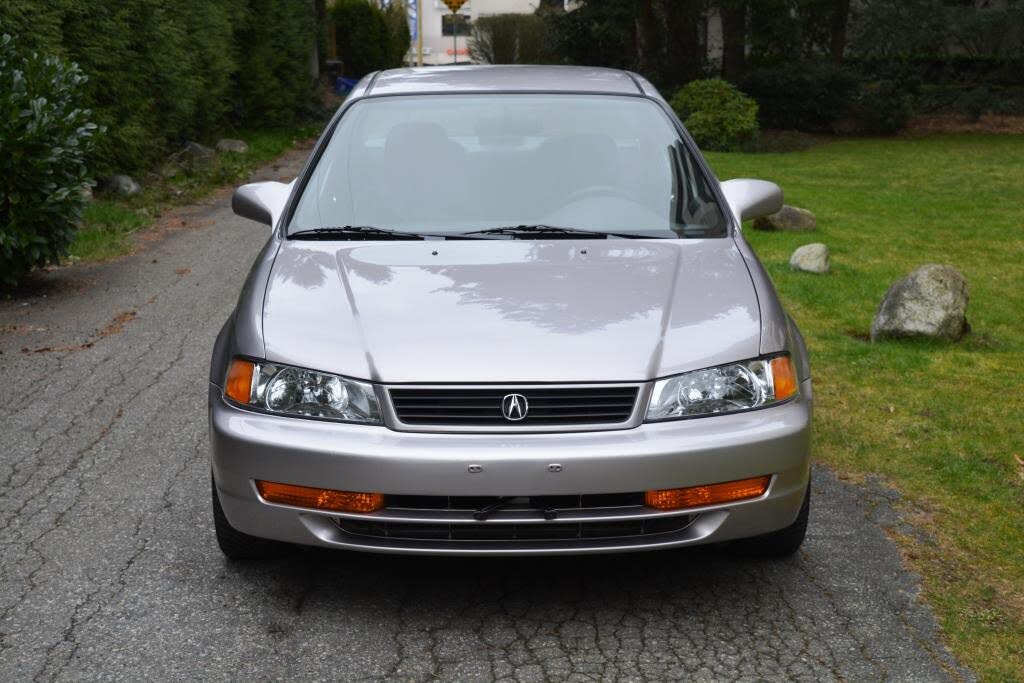
The first generation of the Acura EL, known internally by the chassis code MB4, was introduced in late 1996 for the 1997 model year. Although it shared the basic structure with the sixth generation Honda Civic sedan, the 1.6EL sought its visual identity in the Honda Domani, a model sold in Japan and Europe. Designers Don Herner and Kouichirou Fujii were responsible for adapting this aesthetic for the Canadian market, focusing on lines that conveyed sobriety and elegance.
Aesthetic differentiation was the main pillar of the 1.6EL. The front featured wider headlights with turn signals in the corners, an inverted trapezoidal grille with the Acura emblem, and an exclusive bumper with amber turn signals. At the rear, a new trunk lid allowed for a distinct shape for the taillights, which were larger and more luxurious than those on the Civic. A detail that owners valued was the absence of a keyhole on the trunk lid; it was opened only from the inside or by the remote control, giving a cleaner look.
Internally, the 1.6EL offered features that were not available on the Canadian Civic at that time:
The engine chosen for this generation was the D16Y8, a 1.6-liter powerplant with 16 valves and VTEC (Variable Valve Timing and Lift Electronic Control). This engine was equivalent to the one found in the Civic Si Coupe in Canada (known as the Civic EX sedan in the US), ensuring that the EL always had the best engine available on the platform.
| Specification | Technical Detail |
|---|---|
| Engine Code | D16Y8 |
| Configuration | Inline 4-cylinder, SOHC 16V |
| Displacement | 1,590 cc (1.6L) |
| Maximum Power | 127 hp (95 kW) @ 6,600 rpm |
| Maximum Torque | 107 lb-ft (145 Nm) @ 5,500 rpm |
| Fuel System | Multipoint Injection P2P ECU |
| VTEC Engagement Point | 5,600 rpm |
| 0-100 km/h Acceleration | ~8.7 to 9.4 seconds |
| Maximum Speed | ~195 km/h (121 mph) |
The standard transmission was a 5-speed manual, with an optional 4-speed automatic equipped with Grade Logic Control to smooth out shifts on hilly terrains. The suspension was one of the big highlights: four-wheel independent with double wishbones front and rear, which provided handling far superior to the average compact cars of the time.
To cater to different price ranges, Acura organized the 1.6EL into three trim levels:
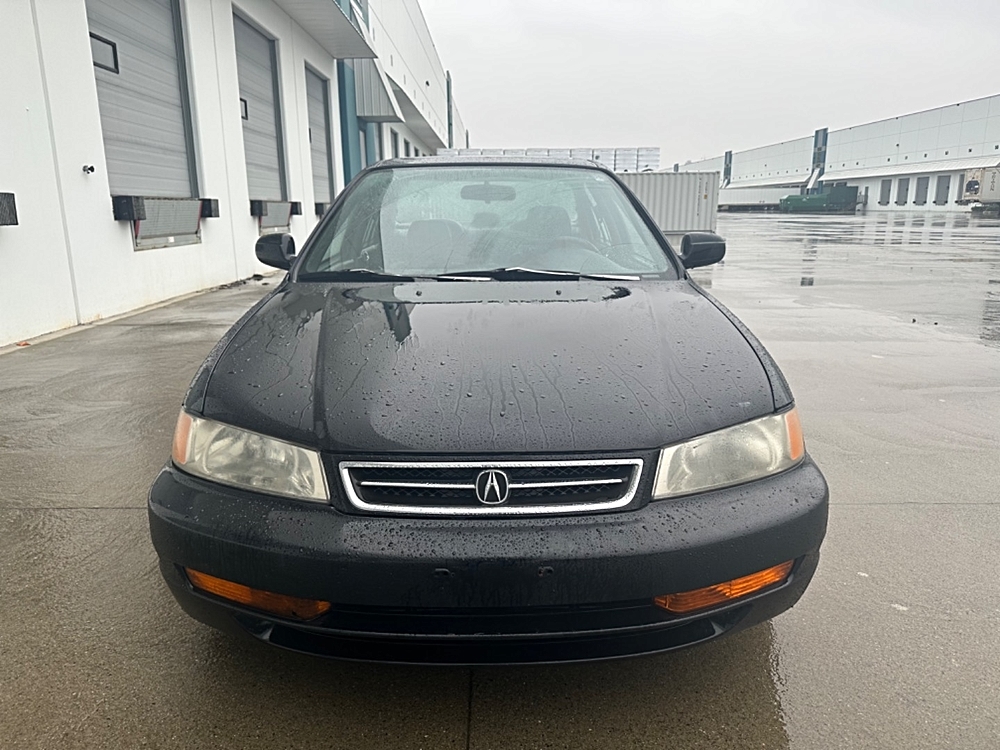
In 1999, the first generation underwent a slight aesthetic and functional update to stay modern. The front grille received an updated mesh design, and the exterior rearview mirrors became folding and heated on the Sport version. An important detail for enthusiasts was the introduction, on all 5-speed models from 1999 onwards, of a leather-wrapped shift knob, identical to the one used on the Acura Integra GS-R, elevating the sporty feel when driving.
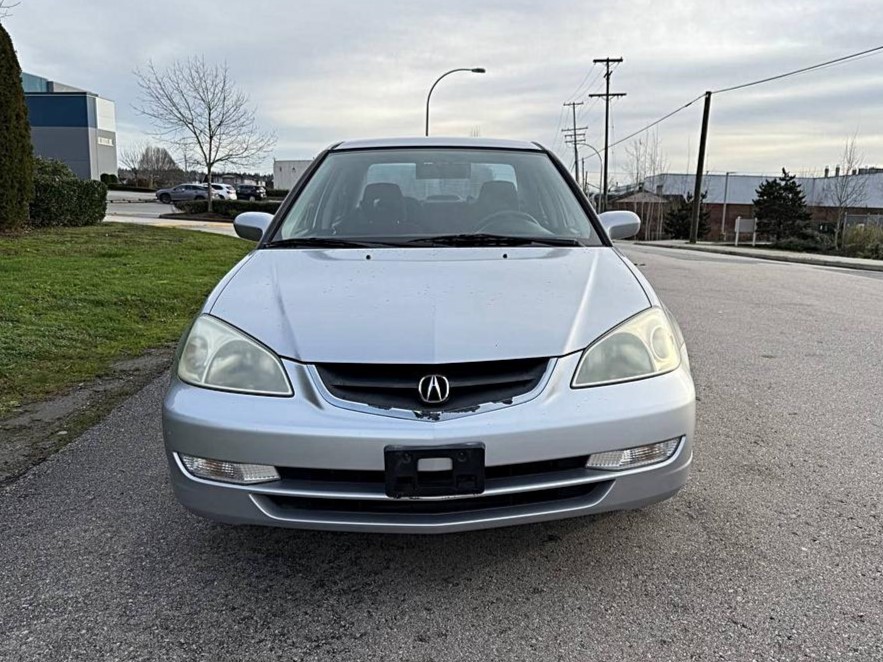
With the launch of the seventh-generation Honda Civic, Acura completely redesigned the EL for the 2001 model year. The new car, with chassis code ES3, brought a change in official nomenclature to Acura 1.7EL, reflecting the increase in engine displacement. This generation focused even more on internal refinement and comfort, distancing itself from the Civic through superior materials and denser sound insulation.
Unlike the first generation, the 1.7EL adopted a MacPherson strut front suspension, a change that allowed for a larger cabin and better performance in crash tests, although it sacrificed some of the "pure" suspension geometry of the previous double wishbone system. To compensate, Acura equipped the EL with thicker sway bars (26 mm front and 12 mm rear) and four-wheel disc brakes with ABS as standard on all models, a clear advantage over the Civic, which still used rear drums on most versions.
The 1.7-liter D17A2 engine brought a welcome gain in torque, making the car more agile for overtaking and in heavy urban use. Although the maximum power remained the same as the previous generation, the delivery curve was more linear.
| Specification | Technical Detail |
|---|---|
| Engine Code | D17A2 |
| Configuration | Inline 4-cylinder, SOHC 16V VTEC |
| Displacement | 1,668 cc (1.7L) |
| Maximum Power | 127 hp (93 kW) @ 6,300 rpm |
| Maximum Torque | 114 lb-ft (155 Nm) @ 4,800 rpm |
| Compression Ratio | 9.9:1 |
| VTEC System | VTEC-E (focused on efficiency and torque) |
| Fuel Capacity | 50 Liters |
The trim structure was simplified to Touring and Premium. The Touring version already included cruise control, 15-inch wheels, and heated mirrors. The Premium version added heated leather seats and a power sunroof. In 2003, automatic temperature control (digital climate control) was added to the Premium version, extending to the Touring the following year.
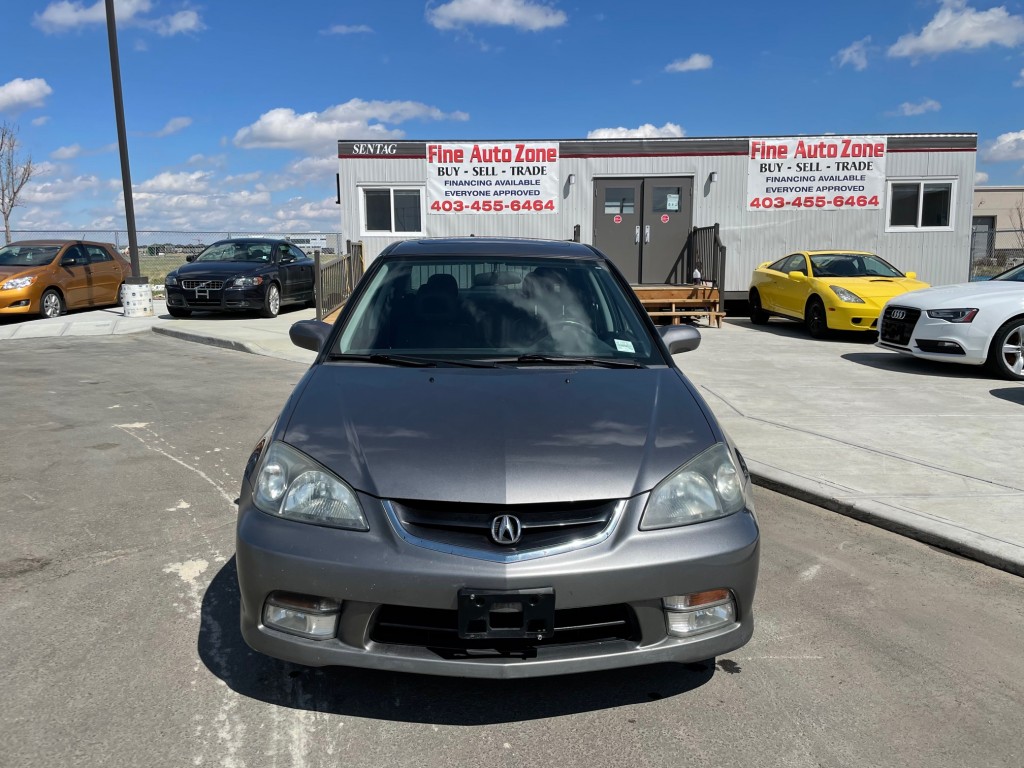
The 2004 facelift was the most significant change of this generation. The front was completely redesigned with a "pentagon" style grille, which would become Acura's trademark in the following years, and the bumper gained cleaner and more aggressive lines. The headlights and taillights received a multi-reflector design, giving a more luxurious and modern look to the vehicle. Additionally, an optional "aero" aesthetic package, installed at dealerships, added front and rear spoilers, side skirts, and a functional rear spoiler.
The Acura EL was manufactured exclusively at the Honda of Canada Manufacturing plant in Alliston, Ontario. This plant is one of the pillars of the Canadian automotive economy, with a production capacity of approximately 400,000 vehicles per year. The EL was not just a car assembled in Canada; it was a demonstration that the local industry could produce luxury vehicles with a global standard of quality.
Although exact production numbers by chassis are not always disclosed in isolation, the consolidated sales data show the model's importance for Acura in Canada. The EL was the brand's best-selling model for seven consecutive years (1997-2003).
Below is Acura's consolidated annual sales data in Canada during the final transition period of the EL and its immediate successors (including the CSX):
| Year | Units Sold (Total Acura Canada) | EL/CSX Role in Volume |
|---|---|---|
| 2005 | 10,500 | Transition from the EL to the CSX at the end of the year. |
| 2006 | 19,951 | First full year of the CSX successor. |
| 2007 | 20,119 | Brand's sales peak in the period. |
| 2008 | 19,384 | Volume maintained despite the economic crisis. |
In terms of production milestones, the Alliston plant celebrated the production of its 9 millionth vehicle in 2020 and reached the 11 million mark in 2025. It is estimated that the two generations of the Acura EL totaled hundreds of thousands of units produced over its 9-year lifecycle, consolidating itself as one of the most ubiquitous luxury vehicles on Canadian roads.
The Acura EL always positioned itself as a superior option to the Civic, not only in appearance, but in substance. This was reflected in areas that the average consumer might not notice immediately, but which influenced the long-term experience.
While the Civic was designed to be light and efficient, the EL received additional layers of sound-absorbing material on the firewall and in the doors. The interior materials were chosen to be more durable and pleasant to the touch. For example, while the Civic used hard plastics on much of the console, the EL applied softer textures and leather finishes that elevated the perceived value.
The VTEC system used in the EL was calibrated to offer a balance between low-end torque and high-end power. In the first generation (1.6EL), VTEC engaged more noticeably at 5,600 rpm, providing that characteristic Honda "exciting" acceleration. In the second generation (1.7EL), the VTEC-E system was more focused on efficiency, closing one of the intake valves at low engine speeds to create a swirl effect in the combustion chamber, improving fuel burn and low-speed torque.
Acura used the EL to introduce safety features that would take years to reach mainstream cars. From the beginning, passive safety was prioritized with a rigid survival cell and front and rear crumple zones.
Anti-theft security was also superior, with an engine immobilizer system coded into the ECU (Engine Control Unit) that prevented the car from running without the original chipped key, a critical feature for reducing theft rates.
Despite being Acura's best-selling vehicle in Canada, Honda decided to end production of the EL in 2005 to make way for the Acura CSX. The CSX continued the philosophy of being a Canada-exclusive model based on the Civic platform, but with an even greater focus on performance, offering a Type-S version for the first time.
The legacy of the Acura EL is immense. It proved that there was a vibrant market for small luxury sedans, a concept that Acura would later take to the United States and other markets with the Acura ILX and, more recently, with the return of the Acura Integra in 2023.
The history of the EL is inseparable from Honda of Canada Manufacturing. The Alliston plant, which started with only 400 employees and a modest capacity in 1986, became a global giant that today produces models like the Civic and the CR-V for export to several countries. The EL was the vehicle that consolidated Honda Global's confidence in the Canadian workforce to produce its premium brand vehicles.
| Generation | Period | Engine | Technological Highlight | Sales Status |
|---|---|---|---|---|
| 1.6EL (MB4) | 1997–2000 | 1.6L D16Y8 | 4-wheel Double Wishbone suspension. | 51% of Acura sales in year 1. |
| 1.7EL (ES3) | 2001–2005 | 1.7L D17A2 | Standard side airbags and ABS/EBD. | Brand's top seller until 2003. |
The Acura EL is a fascinating example of how a manufacturer can adapt its global lineup to meet the specific needs of a regional market. By transforming the reliable Honda Civic into a refined luxury sedan, Acura not only ensured its survival in Canada, but dominated the entry-level luxury segment for almost a decade.
With efficient engines, a superior equipment level, and an unwavering reputation for reliability, the EL paved the way for all the compact luxury models that followed it. Its history is a tribute to practical engineering and a deep understanding of the consumer, remaining to this day in the memory of Canadians as the car that brought luxury to daily use, without giving up the economy and practicality that the country's climate and economy demanded. The EL was not just a "luxury Civic"; it was the right car, in the right place, at the right time.