
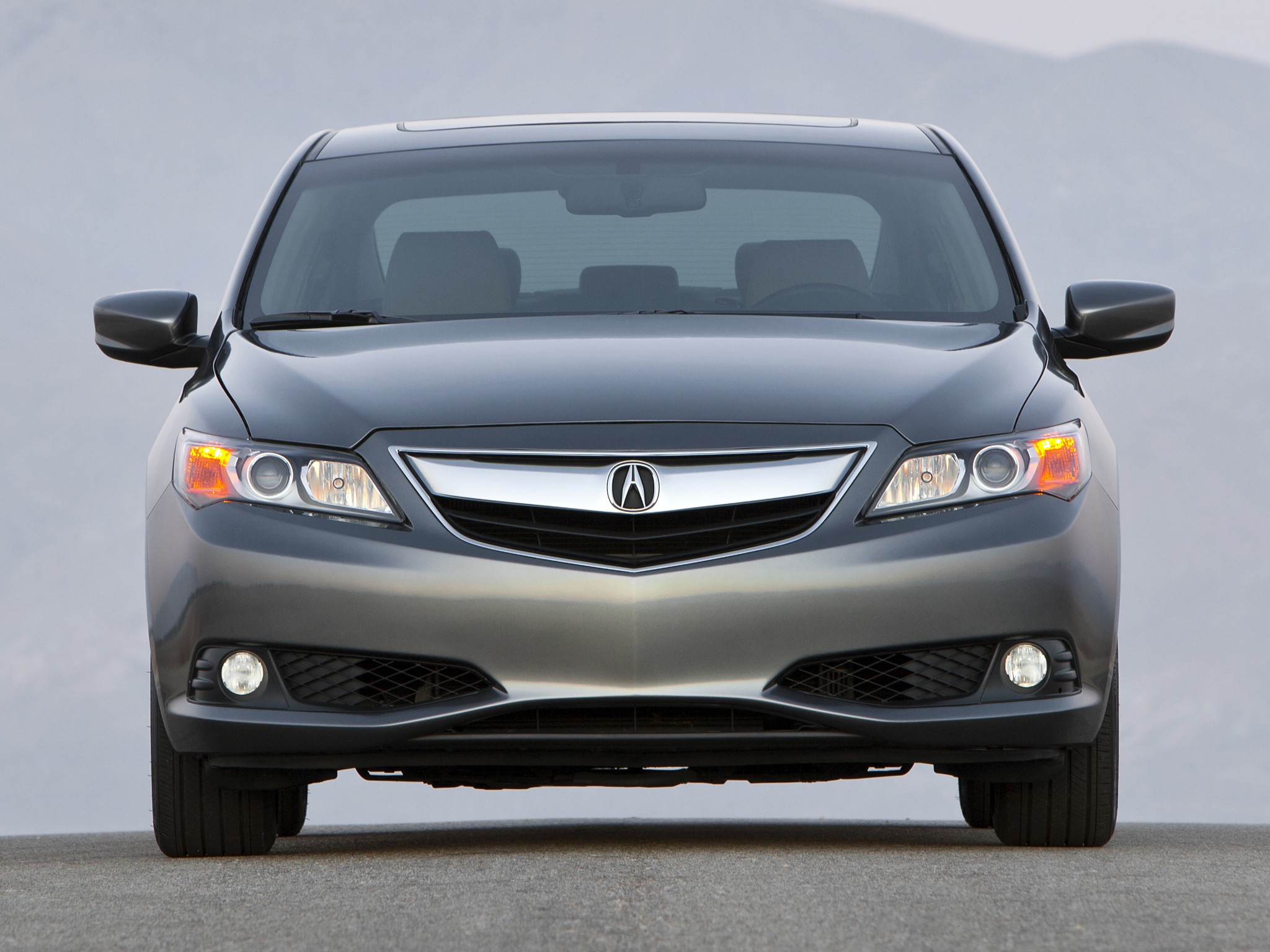
1st Generation
(2013 - 2015)
2.4 L i-VTEC
204 cv
Technical specifications, versions, and history for the Acura ILX.
Select a generation to see available versions
(2013 - 2015)
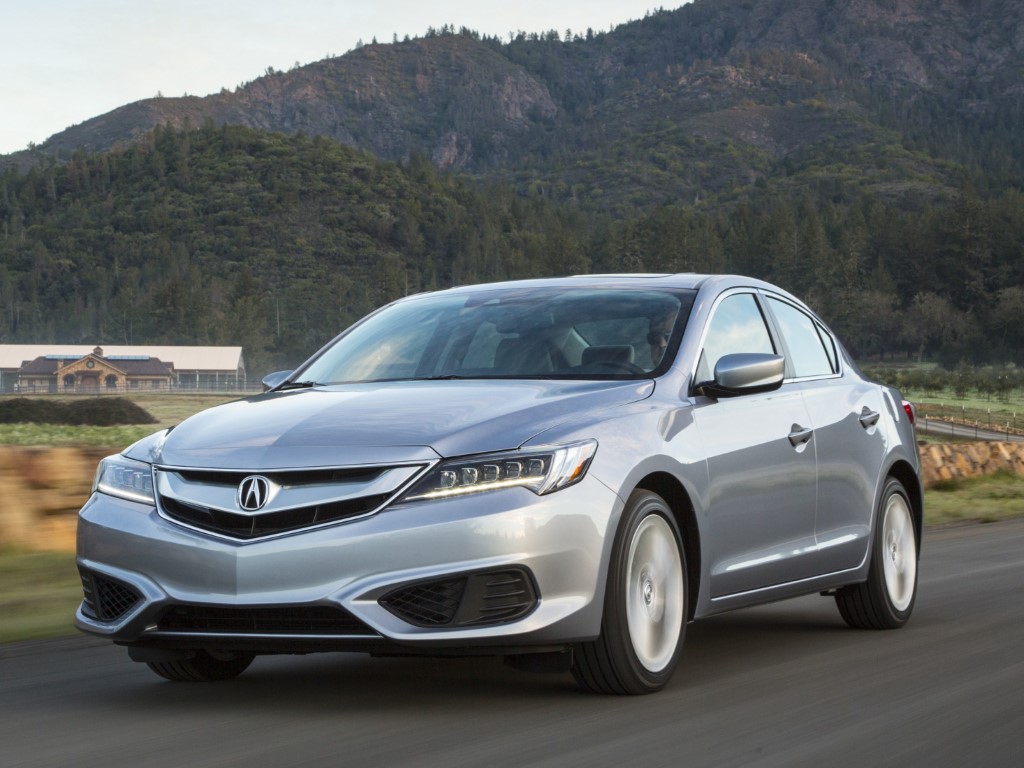
(2016 - 2018)
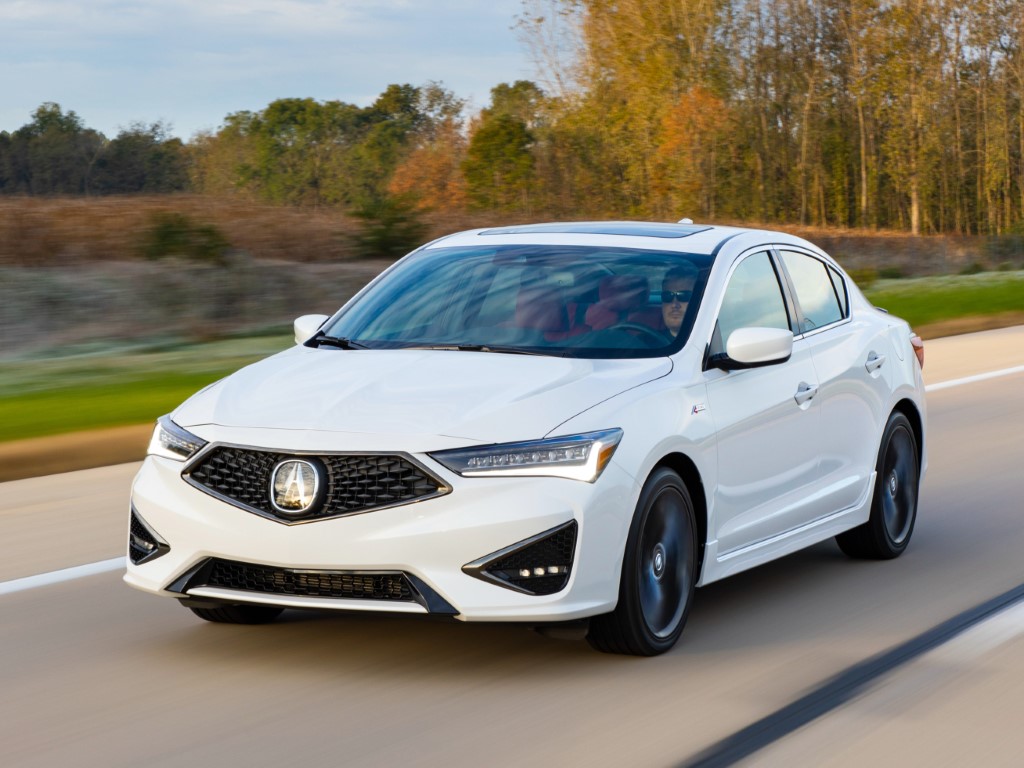
(2019 - 2022)
The Acura ILX represents a significant milestone in Honda's strategy for its luxury division in North America, serving for a decade as the gateway to the brand's portfolio. Originally launched in 2012 as a 2013 model, the ILX was designed to attract a younger demographic, particularly millennials, who sought the balance between the prestige of a premium brand and the practicality of a compact vehicle. This report details the complete trajectory of the model, from its conception on the ninth-generation Honda Civic platform to its discontinuation in 2022 to make way for the reborn Acura Integra.
The creation of the Acura ILX was not an isolated event, but a strategic response to changes in consumer preferences and the need to expand Acura's customer base in the United States and Canada. Prior to its arrival, Acura marketed the CSX exclusively in the Canadian market, which was essentially a Honda Civic with a higher trim level. However, for the broader North American market, the brand needed a product that could compete with emerging rivals such as the Mercedes-Benz A-Class, the Audi A3, and the Volvo S60.
The ILX was introduced to fill the gap below the Acura TSX, becoming the most accessible model in the lineup. The engineering challenge was to transform the robust but simple platform of the Honda Civic into an experience that justified the Acura badge, which required substantial investments in sound insulation, cabin materials, and mechanical refinement. The concept was first revealed at the North American International Auto Show in 2012, with the production version debuting at the Chicago Auto Show shortly after.
Between the years of 2013 and 2015, Acura adopted a diversified approach for the ILX, offering three distinct powertrain options to cater to different buyer profiles: the comfort-focused entry-level engine, the sporty variant for enthusiasts, and the first hybrid model in Acura's history.
The table below summarizes the technical specifications of the powertrains introduced at the model's launch:
| Engine | Configuration | Power | Torque | Transmission |
|---|---|---|---|---|
| 2.0 L R20A | 4 cylinders i-VTEC | 150 hp @ 6,500 rpm | 140 lb-ft @ 4,300 rpm | 5-speed automatic |
| 2.4 L K24Z7 | 4 cylinders i-VTEC | 201 hp @ 7,000 rpm | 170 lb-ft @ 4,300 rpm | 6-speed manual |
| 1.5 L LEA Hybrid | 4 cylinders IMA | 111 hp @ 5,500 rpm | 127 lb-ft @ 1,000-3,000 rpm | CVT |
The 2.0-liter engine served as the balanced choice for daily urban use, while the 2.4-liter engine was directly derived from the acclaimed Honda Civic Si, offering a more visceral driving experience and being the only option available with a manual transmission. The hybrid model utilized Honda's Integrated Motor Assist (IMA) system, combining a combustion engine with a DC electric motor and lithium-ion batteries.
Although the model was new, Acura was agile in responding to market feedback. In the 2014 model year, substantial improvements were introduced to the interior to elevate the car's premium status. These changes included the addition of standard leather seating, an eight-way power driver's seat, an upgraded audio system with noise cancellation technology, and 17-inch wheels as standard.
However, the hybrid variant faced significant commercial difficulties. With only about 2,660 units sold through May 2014, Acura decided to discontinue the ILX Hybrid after the 2014 model year, focusing its resources on the gasoline variants that showed higher demand.
In 2015, for the 2016 model year, the Acura ILX underwent a profound revamp that fundamentally altered its mechanical and visual identity. This phase marked the end of engine diversity in favor of a single, more powerful and technologically advanced powertrain, aligned with Honda's new "Earth Dreams" philosophy.
The most significant change was the replacement of the older engines with the new 2.4-liter 16-valve direct-injected i-VTEC engine. This engine produced 201 horsepower at 6,800 rpm and 180 lb-ft of torque at 3,600 rpm, representing a gain of 51 horsepower and 40 lb-ft over the old 2.0-liter engine.
To manage this power, Acura introduced one of the most innovative transmissions on the market: the 8-speed dual-clutch transmission (8DCT) with a torque converter. The torque converter was included to smooth out takeoffs and low-speed maneuvers, eliminating the hesitation common in conventional dual-clutch transmissions, while the eight gears allowed for extremely rapid shifts and greater highway fuel economy.
The 2016 reengineering was not limited to the engine. The vehicle's structure was upgraded with the next-generation ACE (Advanced Compatibility Engineering) body structure, improving crash safety and torsional rigidity. The suspension was recalibrated to offer a more athletic and balanced ride, and sound insulation was reinforced with thicker door glass and additional sound-absorbing materials.
| Feature | Technical Detail (2016) | Evolution |
|---|---|---|
| Front Suspension | MacPherson Strut with Reactive Dampers | Greater steering linearity |
| Rear Suspension | Multi-link with 15 mm stabilizer bar | 1 mm increase in rear bar |
| Brakes | 12.3-inch ventilated front discs | Greater braking capacity |
| Wheels | 17-inch (Base) / 18-inch (A-Spec) | New 10-spoke designs |
Visually, the 2016 model introduced the "Jewel Eye" LED headlights, which would become an Acura brand signature, in addition to new LED taillights and a revised grille design. It was also in this update that the A-Spec package was introduced, offering a more aggressive look with spoilers, side skirts, and Lux Suede interior trims.
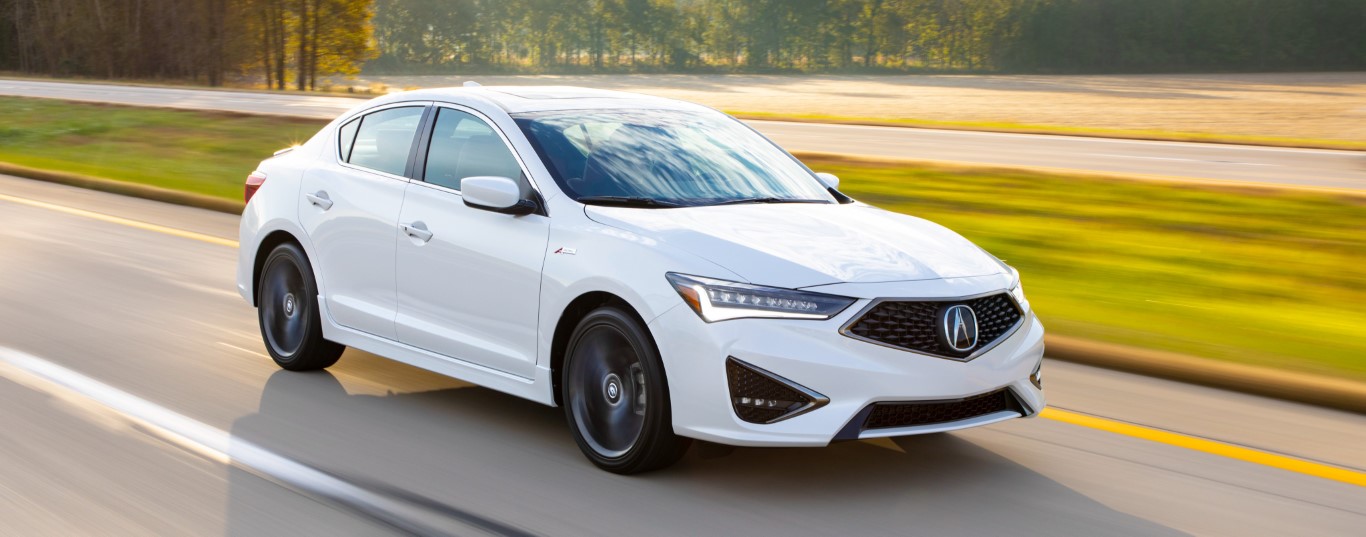
In September 2018, Acura revealed the final update for the ILX, visually transforming it to fit the brand's new design language, which had been inaugurated by the RDX SUV and the TLX sedan. The 2019 model brought a completely new face, abandoning the old grille in favor of the Diamond Pentagon grille.
The aesthetic renovation was extensive, including a new sculpted hood, new Jewel Eye headlights with 7 LED elements, and a redesigned rear where the license plate was moved from the trunk lid to the bumper, giving the car a visually lower and wider stance.
Inside, the focus was on technological modernization and comfort:
One of the most important evolutions of 2019 was Acura's decision to make the AcuraWatch active safety suite a standard feature on all ILX trims. This suite included advanced driver assistance technologies that were previously optional or reserved for higher-end models:
Acura ILX production was centralized in the United States, utilizing Honda's vast industrial infrastructure in the region. Throughout its lifespan, the model was assembled at two distinct plants, reflecting its evolution and integration with other brand models.
Originally, the ILX began production at the Greensburg, Indiana plant in April 2012, sharing the assembly line with the Honda Civic. However, with the 2016 facelift and the shift to the 2.4L engine with 8DCT, Acura decided to transfer production to the Marysville Auto Plant in Ohio in January 2015.
This move to Marysville was strategic, as it allowed the ILX to be manufactured alongside the Acura TLX, facilitating the sharing of components and ensuring that Acura's specialized luxury vehicle workforce handled the entry-level model. In 2014, about 94% of Acura vehicles sold in the United States were manufactured domestically, and the ILX was a central piece of that statistic.
The Acura ILX maintained stable sales performance for most of its decade-long existence, serving as an important volume driver for the Acura dealership network. Although it faced growing competition from compact SUVs, the ILX remained relevant through its aesthetic and value updates.
The following table details annual sales in the United States and Canadian markets:
| Year | US Sales (Units) | Canada Sales (Units) | Market Notes |
|---|---|---|---|
| 2012 | 12,250 | 2,259 | Partial year launch |
| 2013 | 20,430 | 3,192 | First full year of sales |
| 2014 | 17,850 | 2,752 | Hybrid discontinuation |
| 2015 | 18,530 | 2,551 | 2016 facelift launch |
| 2016 | 14,597 | 2,459 | Transition to single powertrain |
| 2017 | 11,757 | 2,047 | Segment stabilization |
| 2018 | 11,273 | 1,903 | Before Diamond Pentagon facelift |
| 2019 | 14,685 | 1,871 | Recovery with new design |
| 2020 | 13,414 | 774 | Global pandemic impact |
| 2021 | 13,900 | 870 | Entry-level model resilience |
| 2022 | 6,296 | - | End of production |
| Total | 154,345 | 20,678 | Cumulative sales (approx.) |
The data shows that the ILX had its sales peak early on in 2013, but demonstrated a remarkable capacity for recovery in 2019 after the second facelift, proving that the aggressive design and the inclusion of standard safety technology resonated with buyers.
The ILX did not just evolve in appearance; there was a series of incremental technical adjustments aimed at improving driving dynamics and owner satisfaction. The ninth-generation Civic platform provided a solid foundation, but Acura applied layers of refinement that changed the car's behavior.
From the start, the ILX utilized MacPherson strut front and multi-link rear suspension. However, for the 2016 model, Acura engineering introduced Amplitude Reactive Dampers. These dampers have two separate circuits: a primary circuit to absorb small road imperfections and a secondary circuit that engages under greater compression forces to maintain vehicle stability in fast corners.
In 2019, the system was refined even further to handle the 18-inch wheels of the A-Spec package, ensuring that the low tire profile did not compromise ride comfort. The electric power steering (EPS) also received new software maps over the years to provide a heavier, more precise "feeling" at highway speeds.
Below, the evolution of external dimensions across the three ILX phases:
| Dimension | 2013–2015 | 2016–2018 | 2019–2022 |
|---|---|---|---|
| Wheelbase | 2,670 mm | 2,670 mm | 2,670 mm |
| Overall Length | 4,549 mm | 4,620 mm | 4,628 mm |
| Width | 1,793 mm | 1,793 mm | 1,793 mm |
| Height | 1,412 mm | 1,412 mm | 1,412 mm |
The increase in overall length was a direct result of changes to the front and rear bumper designs to improve both aesthetics and safety ratings in low-speed impacts.
After a decade of production and serving as the brand's entry-level sedan, the Acura ILX was officially discontinued in 2022. Acura's decision to end the ILX cycle was not due to a lack of success, but a strategic repositioning aimed at reviving one of its most famous and beloved nameplates: the Integra.
The 2023 Integra arrived to take the ILX's place, but bringing a five-door "liftback" body style proposition instead of the traditional four-door sedan. Although the ILX was criticized in its final years for maintaining an aging platform, it laid the groundwork for what the Integra would become: a fun, accessible, and technologically advanced car.
Some fundamental differences in the transition included:
The Acura ILX ended its journey as one of the most resilient models of the Acura brand. It successfully fulfilled its original mission of being the "gateway" to the brand, attracting new buyers to the Acura ecosystem and maintaining high rates of loyalty and resale value. Throughout its three main phases—the diversified launch of 2013, the mechanical reengineering of 2016, and the technological renovation of 2019—the ILX demonstrated Acura's ability to extract refinement and performance from shared platforms.
Although the Integra now carries the torch as the new entry point, the ILX will be remembered for its pioneering introduction of technologies like the 8DCT transmission with a torque converter and for being the brand's first hybrid. With over 150,000 units sold in the United States alone, the ILX secured its place in Acura's history as the vehicle that kept the brand relevant in the luxury compact segment during a decade of intense changes in the automotive industry.