
Introduction
The trajectory of the 4-door Acura Integra is one of the most significant chapters in the history of the Japanese automotive industry in North America. Launched in 1986 as one of the founding models of the Acura brand, Honda's luxury division, the Integra was designed to fill a gap between economical mass-market vehicles and high-cost European luxury sedans. Over five generations, the 4-door Integra evolved from a versatile hatchback to a sporty executive sedan and, finally, to a modern turbocharged liftback, always maintaining the philosophy of offering precision engineering and high performance to a broader audience.
The Birth of the Acura Brand and the First Generation (1986–1989)
On March 27, 1986, Honda took a bold step by launching Acura in the United States, becoming the first Japanese manufacturer to establish a separate luxury brand. The Acura Integra debuted that day alongside the Legend, offering an accessible "driver's car" proposition that was technically superior to the compacts of the time. While the coupe market was strong, Acura recognized the need for a more practical variant, launching the original Integra in 3- and 5-door configurations.
Engineering and D16A1 Powertrain
The first-generation Integra was based on the Honda Civic chassis, but with significant improvements in stiffness and suspension components. The major technological differentiator was its 1.6-liter DOHC (double overhead camshaft) 16-valve engine, an extremely rare configuration for entry-level vehicles in the 1980s.
This engine, identified by the code D16A1, underwent a crucial evolution in the middle of its production cycle, which generated two variants well known by enthusiasts:
- Browntop (1986–1987): Characterized by the brown valve cover, this engine used a vacuum advance distributor and produced 113 horsepower.
- Blacktop (1988–1989): With the black valve cover, this version received lighter connecting rods, domed pistons for higher compression, and an electronic advance distributor, raising the power to 118 horsepower.
The 5-door version offered a longer wheelbase compared to the 3-door model, ensuring more legroom for rear passengers and a more stable ride.
Technical Specifications: First Generation (1986–1989)
| Characteristic | Technical Details |
|---|---|
| Engine | 1.6L DOHC 16-Valve I4 (D16A1) |
| Power (86-87) | 113 hp @ 6,250 rpm |
| Power (88-89) | 118 hp @ 6,250 rpm |
| Torque (86-87) | 99 lb-ft @ 5,500 rpm |
| Torque (88-89) | 103 lb-ft @ 5,500 rpm |
| Transmission | 5-speed Manual or 4-speed Automatic |
| Weight (5-door) | Approx. 1,084 kg |
| Wheelbase (5-door) | 2,520 mm |
Facelift and Special Editions
In 1988, the model received a facelift that included redesigned front and rear bumpers, plus an interior update to improve ergonomics. In that same year, Acura introduced the LS Special Edition model, which featured body-colored wheels, exclusive badges, and distinct interior finishes. In total, about 228,000 units of the first generation were sold worldwide, with the vast majority destined for the North American market.
Second Generation: Refinement and the Arrival of VTEC (1990–1993)
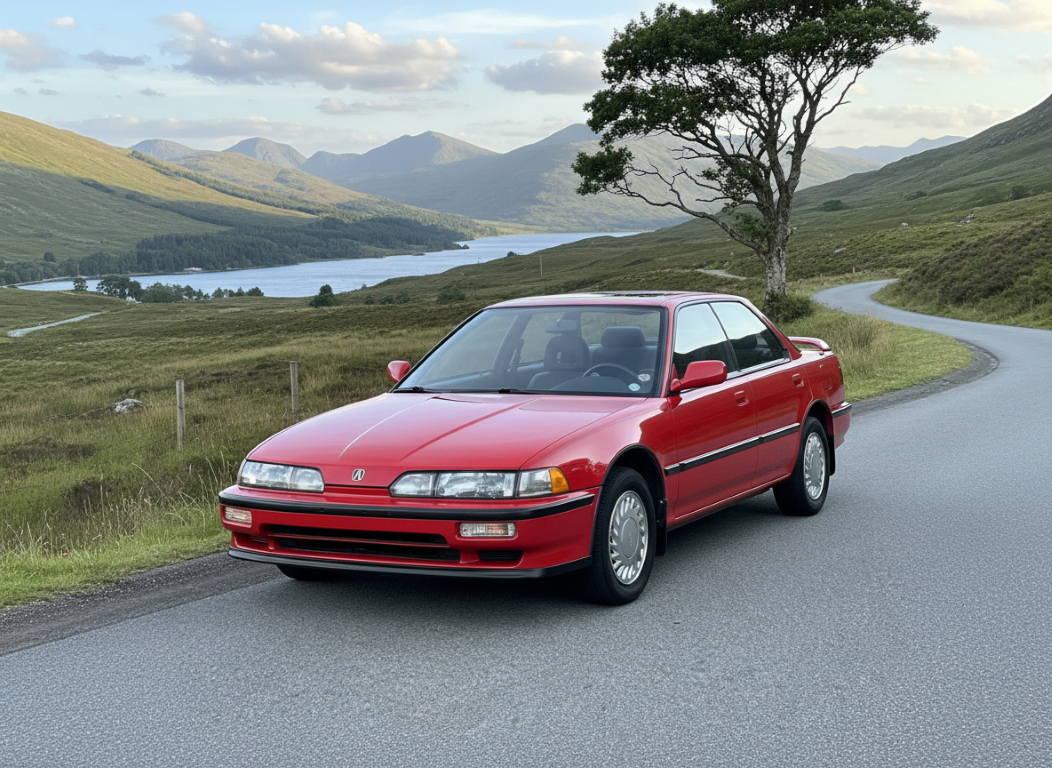
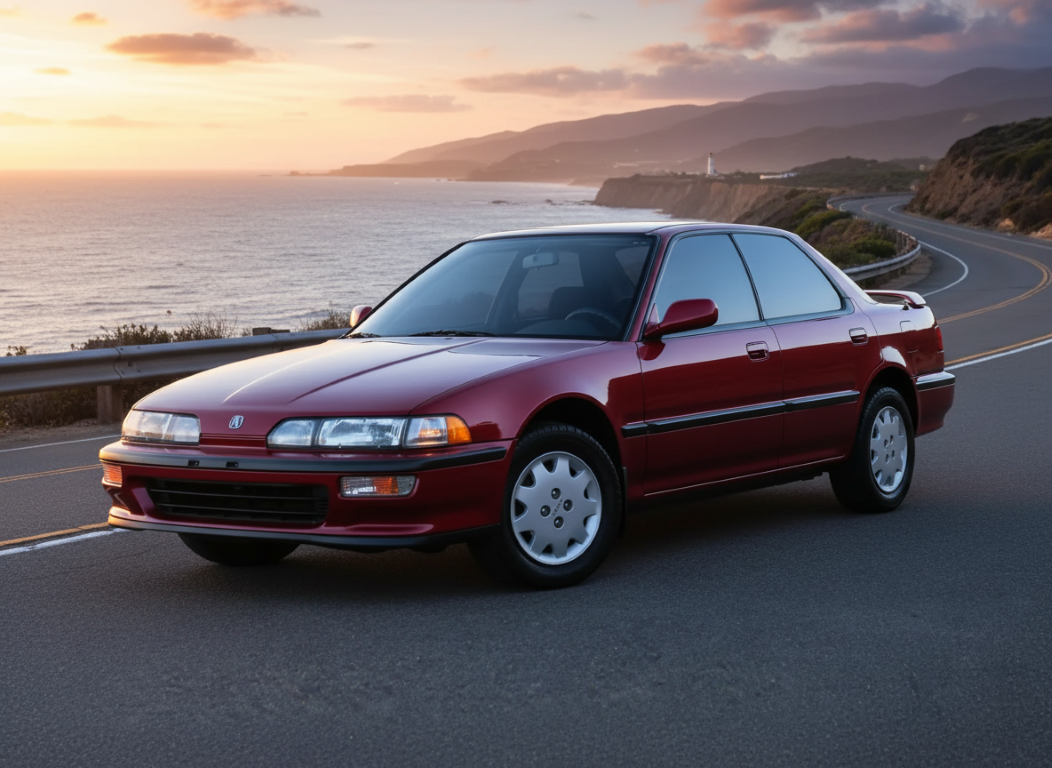
Launched in 1989 as a 1990 model, the second generation represented a drastic change in the visual and mechanical identity of the Integra. The 5-door body style was discontinued in favor of a conventional 4-door sedan, which featured a more mature and executive design, removing the pop-up headlights in favor of thinner and more aerodynamic fixed units.
Chassis Innovations: Double Wishbone Suspension
The great evolution of this generation was the adoption of independent double wishbone suspension on all four wheels. Inspired by Formula 1 engineering, this suspension allowed the wheels to maintain an ideal contact patch with the ground during aggressive cornering, providing an agility that became the Integra's trademark. The sedan (DA9/DB1 chassis) had a wheelbase of 2,600 mm, which offered a significantly more spacious cabin than the coupe.
B18A1 Powertrain and the GS-R Milestone
The standard engine grew to 1.8 liters. In the 1990 and 1991 units, the B18A1 powertrain delivered 130 horsepower. With the 1992 update, intake and electronic tweaks raised the power to 140 horsepower.
However, the year 1992 is best remembered for the emergence of the GS-R (Grand Sport Racing). It was the second Acura model, after the exotic NSX, to use VTEC (Variable Valve Timing and Lift Electronic Control) technology. The North American GS-R came equipped with the 1.7-liter B17A1 engine, capable of generating 160 horsepower at an impressive 7,600 rpm. Although the GS-R was sold only as a coupe in the US in this generation, the Japanese market already enjoyed the XSi sedan with a 160-170 PS B16A VTEC engine.
Specifications Evolution: Second Generation Sedan
| Component | Specification (1990–1991) | Specification (1992–1993) |
|---|---|---|
| Engine | 1.8L DOHC I4 (B18A1) | 1.8L DOHC I4 (B18A1) |
| Power | 130 hp @ 6,000 rpm | 140 hp @ 6,300 rpm |
| Torque | 121 lb-ft @ 5,000 rpm | 126 lb-ft @ 5,000 rpm |
| Redline | 6,500 rpm | 6,800 rpm |
| Transmission | 5-MT / 4-AT | 5-MT / 4-AT |
| ABS | Optional on GS | Standard on GS |
Third Generation: The Peak of Performance and the GS-R Sedan (1994–2001)
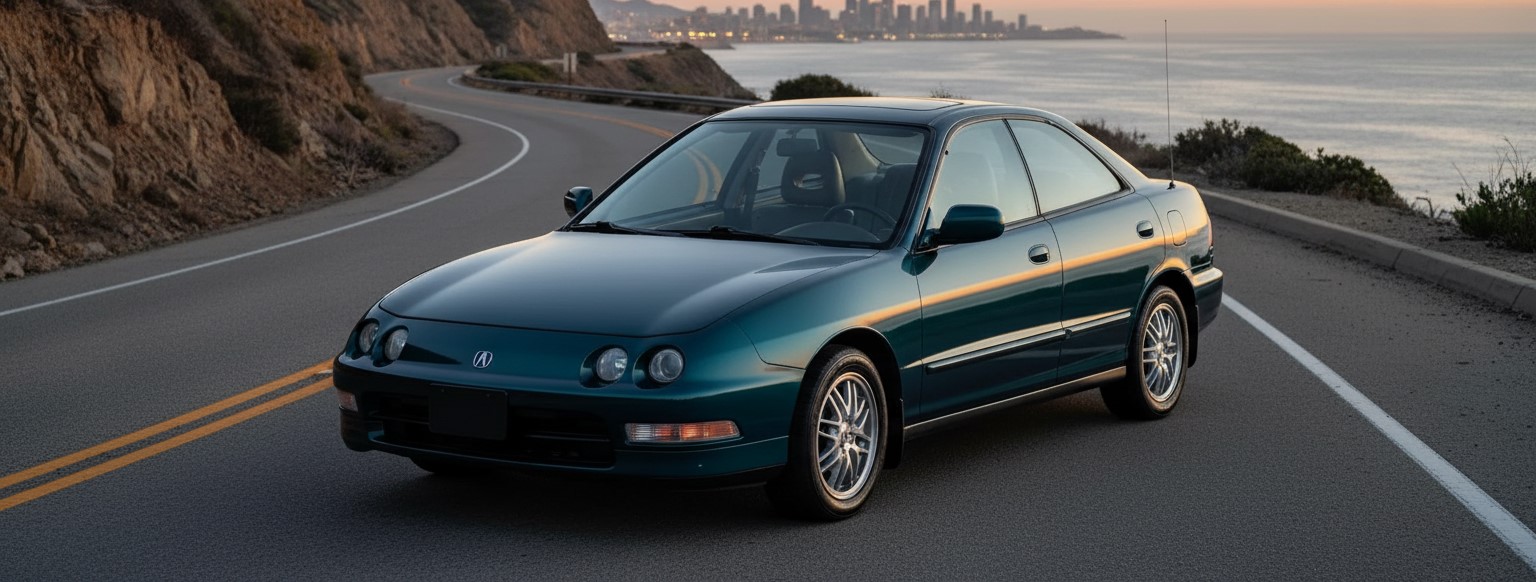
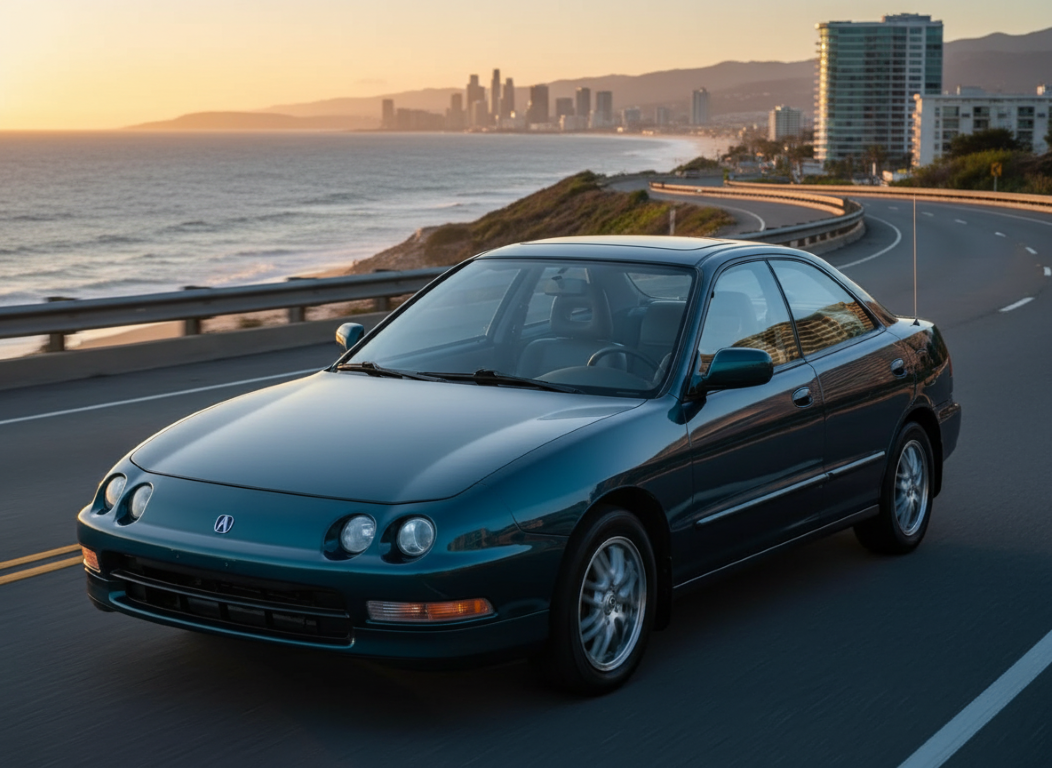
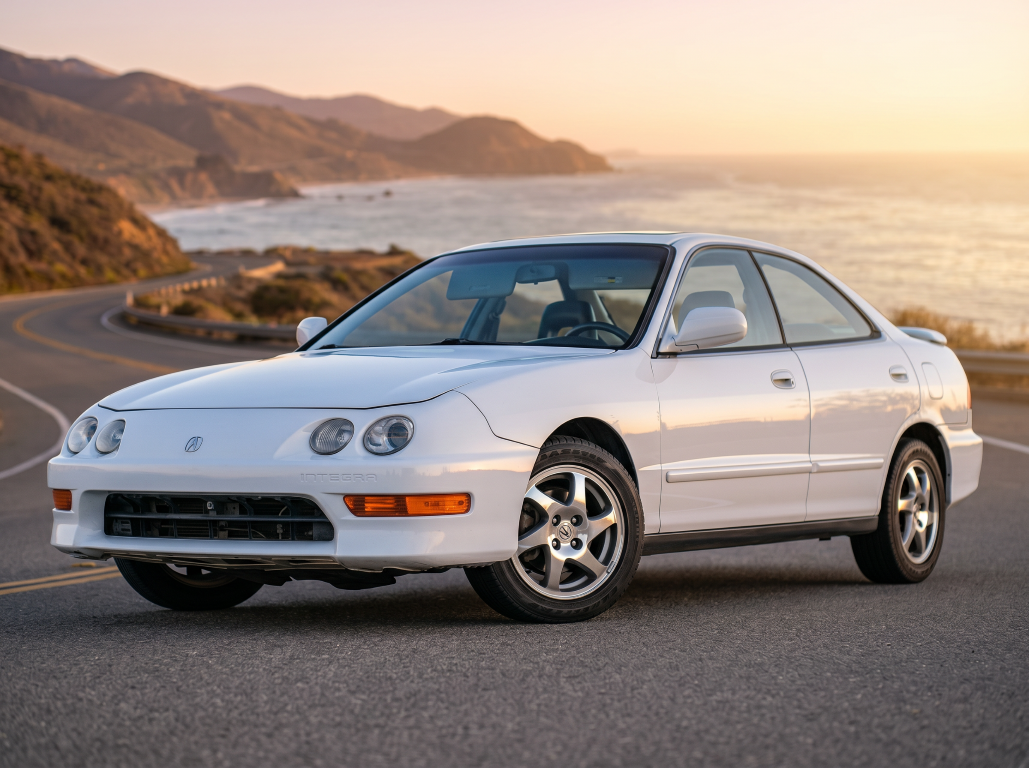
The third generation, launched in late 1993 for the 1994 model year, is widely considered the peak of the Integra lineage in terms of mechanical purity and iconic design. Marked by its controversial (and later adored) four circular headlights, this generation introduced a new platform that was both stiffer and more refined.
The Availability of the GS-R Sedan (DB8)
For the first time in North America, Acura offered the high-performance GS-R package in the 4-door sedan body style (DB8 chassis code). This allowed enthusiasts to have the performance of the VTEC engine with the convenience of four doors. The GS-R sedan used the 1.8-liter B18C1 engine, which generated 170 horsepower.
The B18C1 engine was an engineering gem, featuring a dual-stage intake manifold that optimized airflow at both low and high rpms, ensuring a linear torque delivery and the characteristic VTEC scream above 5,800 rpm.
Trims and Facelifts (1994–2001)
The 4-door lineup was structured to cover everything from economical daily driving to sporty luxury:
- RS (Rally Sport): Focused on simplicity, available as a sedan until 1997.
- LS (Luxury Sport): The balanced trim, with air conditioning and comfort features.
- SE (Special Edition): Available in 1995-1996, it brought leather and GS-R suspension in a luxury-focused package.
- GS (Grand Sport): Replaced the SE starting in 1997, becoming the top-of-the-line non-VTEC model.
In 1998, a significant facelift occurred. The bumpers were redesigned, the headlight and taillight lenses were updated, and the interior received new materials. Technically, the engines were tuned for lower emissions, and the LS model received new 14-inch alloy wheels, while the GS-R switched to 15-inch 16-spoke wheels.
Third Generation Engine Comparison (USA)
| Trim | Engine | Power | Torque |
|---|---|---|---|
| RS/LS/GS | 1.8L DOHC (B18B1) | 142 hp (94-96) / 140 hp (97-01) | 127 lb-ft |
| GS-R | 1.8L DOHC VTEC (B18C1) | 170 hp @ 7,600 rpm | 128 lb-ft |
| Type R (USDM) | 1.8L DOHC VTEC (B18C5) | 195 hp @ 8,000 rpm | 130 lb-ft |
The Rare 4-Door Integra Type R (JDM DB8)
Although the American market only received the legendary Integra Type R as a 3-door coupe, in Japan Honda produced an extremely coveted 4-door version (DB8 chassis). Launched in 1995, the Type R sedan shared the same radical modifications as the DC2 coupe.
Modifications included:
- Chassis: Structural reinforcements and seam welds at critical points to increase torsional rigidity.
- Weight: Reduction of sound insulation, use of thinner glass, and removal of unnecessary comfort components.
- Mechanics: B18C engine tuned to 200 PS (in the Japanese market), limited-slip differential (LSD), and lowered suspension with track calibration.
Total production of the Type R sedan was limited, with estimates of around 5,135 units produced in Japan over its entire life cycle, making it significantly rarer than the coupe version.
Alternative Lineages: Integra SJ, Acura EL, and Acura CSX
After 2001, Acura made the decision to rename the Integra to RSX in the United States, but offered the new model (DC5 chassis) only as a coupe. This left a vacuum in the premium compact sedan market, which was filled in different ways in other markets.
Honda Integra SJ (1996–2000)
In Japan, Honda launched the Integra SJ (Sedan Joyful), which was technically a Honda Civic Ferio (EK3) with a redesigned front end to resemble the contemporary Acura RL. It was not a "pure" Integra in terms of chassis, but it carried the name to capitalize on the brand's prestige. It used the 1.5-liter D15B engine with 105 horsepower.
Acura EL and CSX (Canada)
In Canada, where compact sedans were more popular than in the US, Acura replaced the Integra sedan with the Acura EL. The EL was essentially a Honda Civic sedan with a luxury interior (leather, extra insulation) and the front end of the Honda Domani. It was a massive success, being Acura's best-selling model in Canada for years.
In 2006, the EL was succeeded by the Acura CSX, based on the eighth-generation Civic. The Canadian CSX Type S was notable for using the front end of the Japanese Civic Type R (FD2) and the 197-horsepower K20 engine, keeping the soul of the high-performance Integra sedan alive until 2011.
Fifth Generation: The Return of the Icon (2023–Present)
After a hiatus of more than 15 years, the Integra name returned triumphantly in 2022 for the 2023 model year. This time, Acura opted for a unique 5-door liftback configuration, evoking the practicality of the first generation, but with the technological sophistication demanded by the modern market.
Turbo Powertrain and the A-Spec Package
The new Integra is the first in history to come equipped with a factory turbocharged engine. Under the hood is the 1.5-liter L15CA engine, which produces 200 horsepower and 192 lb-ft of torque. For enthusiasts, Acura kept the option of a 6-speed manual transmission with a limited-slip differential (LSD) and automatic rev-match system, available in the A-Spec with Technology package.
The suspension was modernized with multi-link systems in the rear and adaptive dampers that can be adjusted via driving modes (Comfort, Normal, Sport).
The Powerful Integra Type S (DE5)
Launched in 2023 for the 2024 model year, the Integra Type S is the most powerful version of the model ever produced. Using the same mechanical foundation as the Honda Civic Type R (FL5), the Type S features a 2.0-liter turbocharged engine (K20C8) generating 320 horsepower.
The 4-door Type S (liftback) features:
- Widebody: Flared fenders to accommodate wider Michelin Pilot Sport 4S tires on 19-inch wheels.
- Brembo Brakes: 4-piston calipers in the front to withstand intense track use.
- Center Exhaust: Three functional exhaust outlets with an active valve for a more aggressive engine sound.
Technical Specifications: Fifth Generation
| Attribute | Integra Base / A-Spec | Integra Type S |
|---|---|---|
| Engine | 1.5L Turbo I4 (L15CA) | 2.0L Turbo I4 (K20C8) |
| Power | 200 hp @ 6,000 rpm | 320 hp @ 6,500 rpm |
| Torque | 192 lb-ft @ 1,800-5,000 rpm | 310 lb-ft @ 2,600-4,000 rpm |
| Transmission | CVT or 6-MT (Manual) | 6-MT (Manual) |
| Length | 4,719 mm | 4,724 mm |
| Width | 1,829 mm | 1,900 mm |
Production, Sales, and Historical Data Analysis
The success of the Integra cannot be measured solely by its engineering, but also by its market acceptance. In its early years, Acura surpassed established European brands in sales volume in the US due to mechanical reliability coupled with luxury.
Production and Sales Numbers
Below are the consolidated total sales data for the Acura brand in the US during the peak of the Integra, reflecting the model's importance:
| Year | Total Acura Sales (USA) | Observation |
|---|---|---|
| 1986 | 52,869 | Launch year |
| 1987 | 109,470 | Integra named "10Best" by Car and Driver |
| 1989 | 142,061 | First generation peak |
| 1991 | 143,708 | Historical sales record for the division |
| 2000 | 142,681 | End of the third generation's lifespan |
Regarding the Integra Type R (USDM), production was deliberately limited to maintain exclusivity, being manufactured only between 1997-1998 and 2000-2001. In total, only 3,823 units were produced for the United States, all in the 3-door body style. The third-generation GS-R sedan (DB8) had an estimated production between 14,000 and 18,000 units, making it a rare vehicle today.
The Theft Problem and Survival
Due to the interchangeability of parts between high-performance Honda engines and entry-level models, the third-generation Integra became one of the most stolen cars in the US. In 2004, nearly 8,000 units were reported stolen in that year alone. Estimates suggest that, of the 260,000 units produced between 1994-2001, only about 100,000 to 120,000 still survive in any condition, with unmodified original examples being extremely valued.
Dimensional Evolution: Growth Over Generations
| Generation | 4-Door Type | Length | Wheelbase | Average Weight |
|---|---|---|---|---|
| 1st (1986) | 5-door Hatchback | 4,355 mm | 2,520 mm | 1,084 kg |
| 2nd (1990) | 4-door Sedan | 4,485 mm | 2,600 mm | 1,181 kg |
| 3rd (1994) | 4-door Sedan | 4,525 mm | 2,620 mm | 1,220 kg |
| 5th (2023) | 5-door Liftback | 4,719 mm | 2,736 mm | 1,400 kg |
Conclusion and Future Perspectives
The trajectory of the 4-door Acura Integra demonstrates constant adaptation to changes in consumer taste, without ever abandoning its roots of accessible performance. From the pioneering D16A1 engine to the brute force of the new Turbo Type S, the model served as the entry point for many drivers into the world of luxury cars and enthusiasts.
Today, the Integra is once again Acura's "entry-level car," but now carrying a decades-long legacy that includes victories in IMSA and SCCA championships, a global tuning culture, and an icon status among collectors. The future of the lineup seems consolidated with hybridization and electrification on Honda's horizon, but the essence of the 4-door Integra — versatility, style, and a communicative chassis — remains its strongest differentiator.