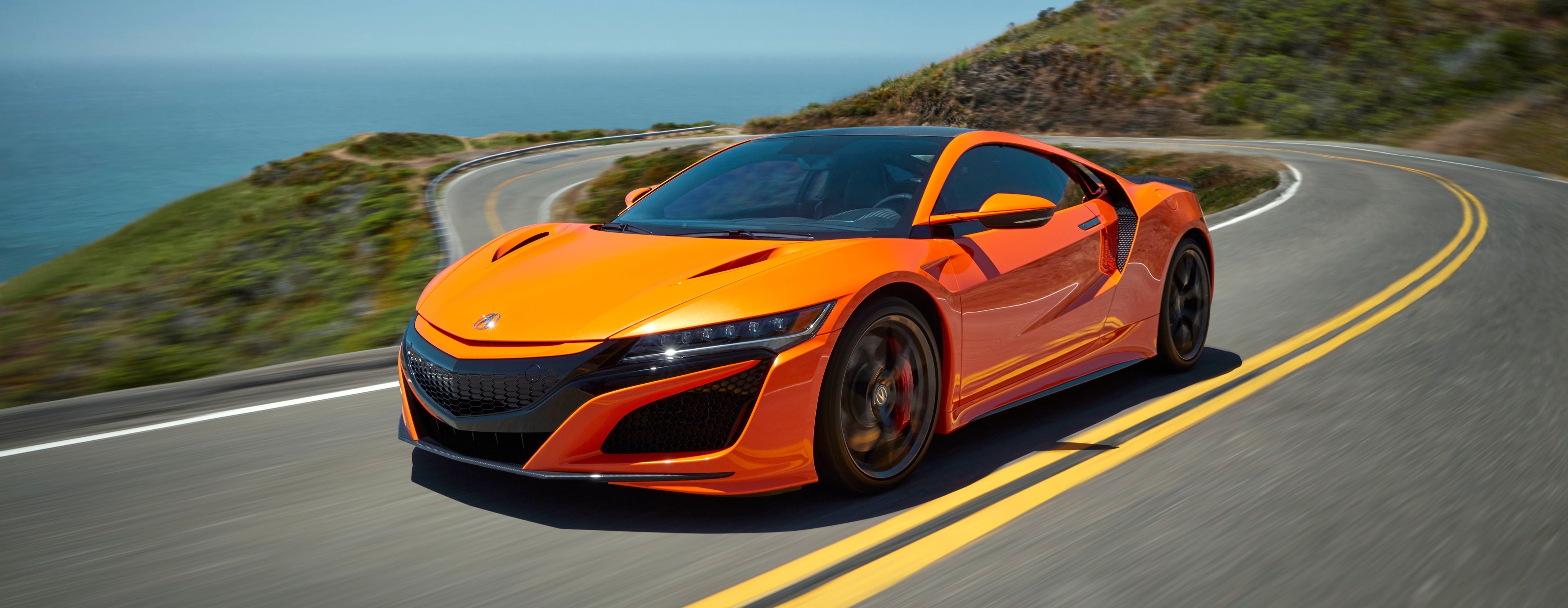
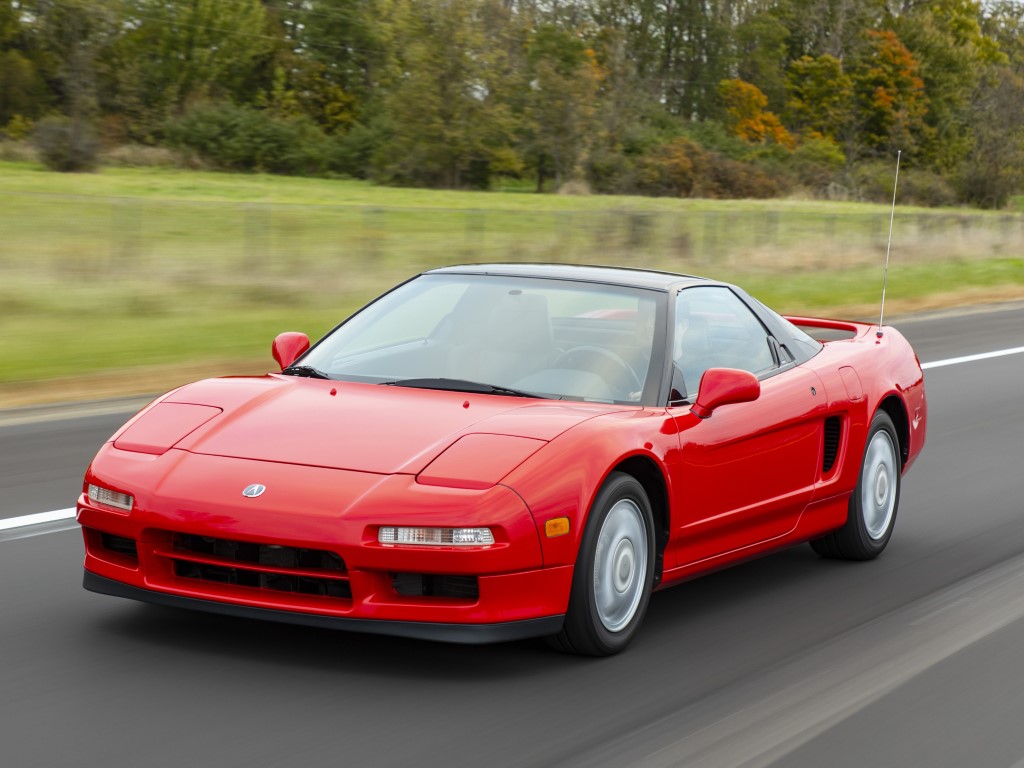
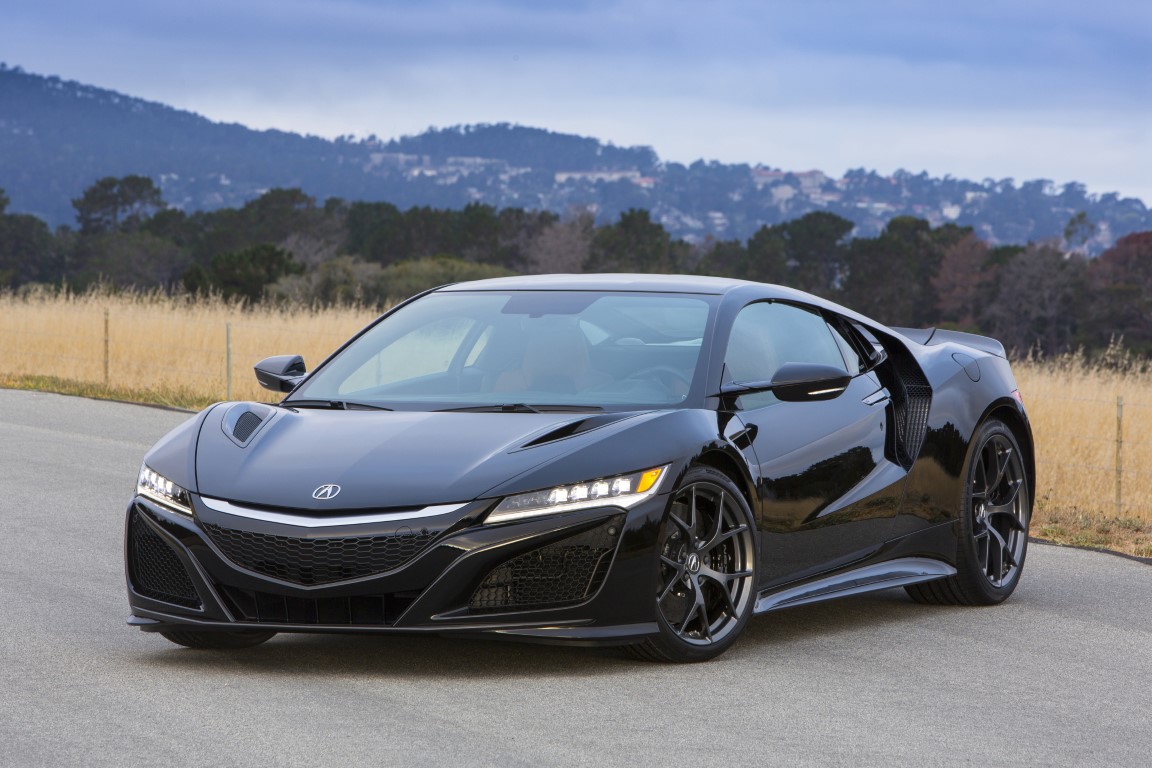
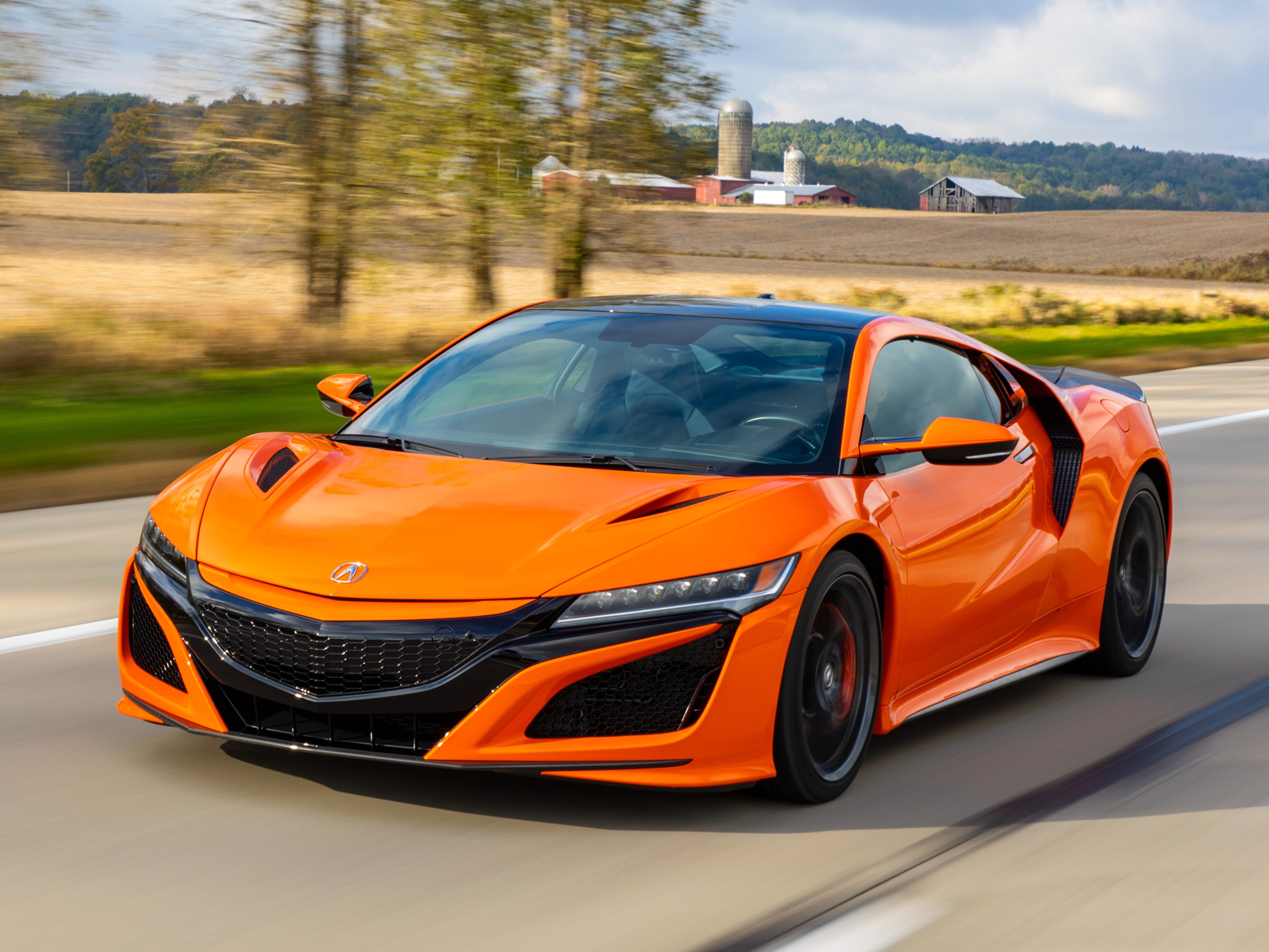
Officially launched as a 1991 model, the Acura NSX shocked the industry by being
the first mass-produced car with a monocoque chassis and body built entirely of aluminum. This material
choice allowed the chassis to weigh just 210 kg (462 lbs), which was about 40% lighter than an equivalent
steel structure, without sacrificing structural strength. The use of aluminum extended to the suspension
arms and seat structures, resulting in a total weight saving of close to 200 kg compared to traditional
methods.
The 3.0-liter C30A engine was an engineering masterpiece. With a V6 architecture,
24 valves, and dual overhead camshafts (DOHC), it produced 270 horsepower. One of the most notable
innovations was the use of titanium connecting rods, a material used at the time in supersonic fighters like
the F-15, providing lightness and strength to withstand the high rev limit of up to 8,000 rpm in manual
models. Visibility was another differentiator; inspired by the F-16 fighter cockpit, the glass area offered
a panoramic view rare in mid-engine cars, facilitating driving in urban environments and maneuvering.
Technical Specifications: Initial Phase (NA1)
| Attribute |
Technical Detail |
| Powertrain |
3.0L V6 DOHC VTEC (C30A) |
| Power (Manual) |
270 hp @ 7,100 rpm |
| Power (Automatic) |
252 hp @ 6,600 rpm |
| Torque |
210 lb-ft @ 5,300 rpm |
| Transmission |
5-speed Manual or 4-speed Automatic |
| Chassis / Body |
Aluminum Monocoque |
| Weight (1991 Coupe) |
1,370 kg (3,010 lbs) |
Production took place at the Tochigi plant by a team of 200 highly experienced
technicians, each with at least 10 years of experience, ensuring that every unit was assembled with
artisanal precision. With a production limit of just 25 cars per day, the NSX was an exclusive vehicle,
costing $65,000 at its launch, the highest price for a Japanese car up to that date.
First Generation Evolutions and Facelifts
Throughout its 15-year lifespan, the first-generation NSX underwent significant
evolutions that kept the model competitive against new rivals. In 1995, Honda introduced the NSX-T,
featuring a removable Targa-style roof. Although removing the roof required structural reinforcements that
added about 45 kg to the vehicle, the configuration became extremely popular, especially in the North
American market, where it became the only option available for several years. In the same year, the
drive-by-wire electronic throttle system was introduced, and the automatic transmission began offering
"SportShift" control, allowing manual shifting via steering wheel selectors.
The Great Performance Leap in 1997 (NA2)
The year 1997 marked the most profound mechanical update of the first generation.
For models equipped with a manual transmission, engine displacement was increased to 3.2 liters (C32B
engine) through a process that utilized thinner fiber-reinforced metal (FRM) cylinder liners. This change
raised power to 290 horsepower and torque to 224 lb-ft. Alongside the new engine debuted a 6-speed manual
transmission with shorter gear ratios, which drastically improved acceleration.
The brakes were also upsized, with rotor diameter increasing from 282 mm to 298
mm to handle the higher speed and performance. To offset the weight of the new transmission and larger
brakes, Honda used a new aluminum alloy for the doors and fenders that was 50% stronger, allowing the use of
thinner panels. The net result was a weight increase of just 10 kg, maintaining the model's characteristic
agility.
The 2002 Facelift: The End of Pop-up Headlights
In 2002, the NSX received its most radical aesthetic facelift. The iconic pop-up
headlights were replaced by fixed units with high-intensity discharge (HID) Xenon bulbs. This alteration was
not just visual; it aimed to improve safety in pedestrian collisions and reduce aerodynamic drag. The drag
coefficient (Cd) dropped to 0.30, resulting in superior high-speed stability and a slightly higher top speed
of 282 km/h.
The suspension was revised once again, adopting progressive rate springs to offer
a refined balance between road comfort and rigorous track control. At the rear, a new air diffuser and
redesigned exhaust outlets completed the visual package, keeping the NSX looking modern even after a decade
on the market.
Powertrain Evolution: 1991 vs 1997 vs 2002
| Specification |
3.0L V6 (1991-1996) |
3.2L V6 (1997-2005) |
3.0L V6 Automatic (All) |
| Power |
270 hp @ 7,100 rpm |
290 hp @ 7,100 rpm |
252 hp @ 6,600 rpm |
| Torque |
210 lb-ft @ 5,300 rpm |
224 lb-ft @ 5,500 rpm |
210 lb-ft @ 5,300 rpm |
| Gears |
5-Speed Manual |
6-Speed Manual |
4-Speed Automatic |
| Acceleration 0-60 mph |
~5.2 sec |
~4.8 sec |
~5.8 sec |
Special Editions and Performance Variants
The Japanese Domestic Market (JDM) was graced with versions that took the NSX's
lightweight philosophy to the extreme. The most emblematic was the NSX-R (Type R), originally launched in
1992. Aiming to create a race car for the streets, Honda removed the sound deadening, audio system, air
conditioning, and replaced the leather seats with Recaro carbon-Kevlar racing buckets. The result was a 120
kg weight reduction, totaling just 1,230 kg.
In 2002, alongside the facelift, emerged the new NSX-R (NA2), which utilized the
hand-balanced 3.2L engine and a body with extensive carbon fiber components, including a vented hood and
rear spoiler. This model became legendary by recording Nürburgring lap times equivalent to supercars with
far more power, demonstrating the superiority of its dynamic balance. Another notable variant was the NSX
Type S and the Type S-Zero, the latter being a track version without an audio or navigation system, weighing
only 1,270 kg, focused exclusively on driving purity.
Production Summary of Special Models (First Generation)
| Model |
Model-Year |
Approximate Production |
Technical Highlight |
| NSX-R (NA1) |
1992-1995 |
483 units |
120kg reduction; track focus. |
| Alex Zanardi Ed. |
1999 |
51 units |
Stiffer chassis; exclusive to the US. |
| NSX-R (NA2) |
2002-2005 |
140 to 155 units |
Carbon fiber components. |
| NSX-R GT |
2005 |
5 units |
Super GT homologation model. |
| Type S / S-Zero |
1997-2001 |
209 units |
Stiff suspension; JDM only. |
Production Quantity and Sales Legacy (1990–2005)
The first-generation NSX had an explosive initial reception. In the early years,
demand far exceeded the production capacity of the Tochigi plant. However, throughout the 1990s, sales began
to decline as the competition modernized and prices rose. In total, approximately 18,685 to 18,896 units
were produced worldwide during its 15 years of existence.
North America was the largest market, absorbing nearly 9,000 units under the
Acura brand, closely followed by Japan, with about 7,400 units sold as Hondas. Europe received a smaller
slice, with around 1,500 registered units. Despite the relatively low sales numbers compared to mass-market
sports cars, the NSX retained its value due to its scarcity and reputation for extreme mechanical
durability, something rare among supercars of that era.
Total Sales by Region (First Generation)
| Region |
Units Sold (Approx.) |
Brand |
| North America |
8,997 - 9,700 |
Acura |
| Japan |
7,400 |
Honda |
| Europe |
1,400 - 1,559 |
Honda |
| Others (Asia/Oceania) |
~200 |
Honda |
| Global Total |
~18,685 - 18,896 |
- |