Acura RDX

Acura RDX

Technical specifications, versions, and history for the Acura RDX.

Acura RDX Generations

Select a generation to see available versions

Acura RDX G1

1st Generation

(2007 - 2009)

2.3 Turbo 243 cv
Acura RDX G1F

1st Generation Facelift

(2010 - 2012)

2.3 Turbo 243 cv
Acura RDX G2

2nd Generation

(2013 - 2015)

3.5 V6 277 cv
Acura RDX G2F

2nd Generation Facelift

(2016 - 2018)

3.5 V6 283 cv
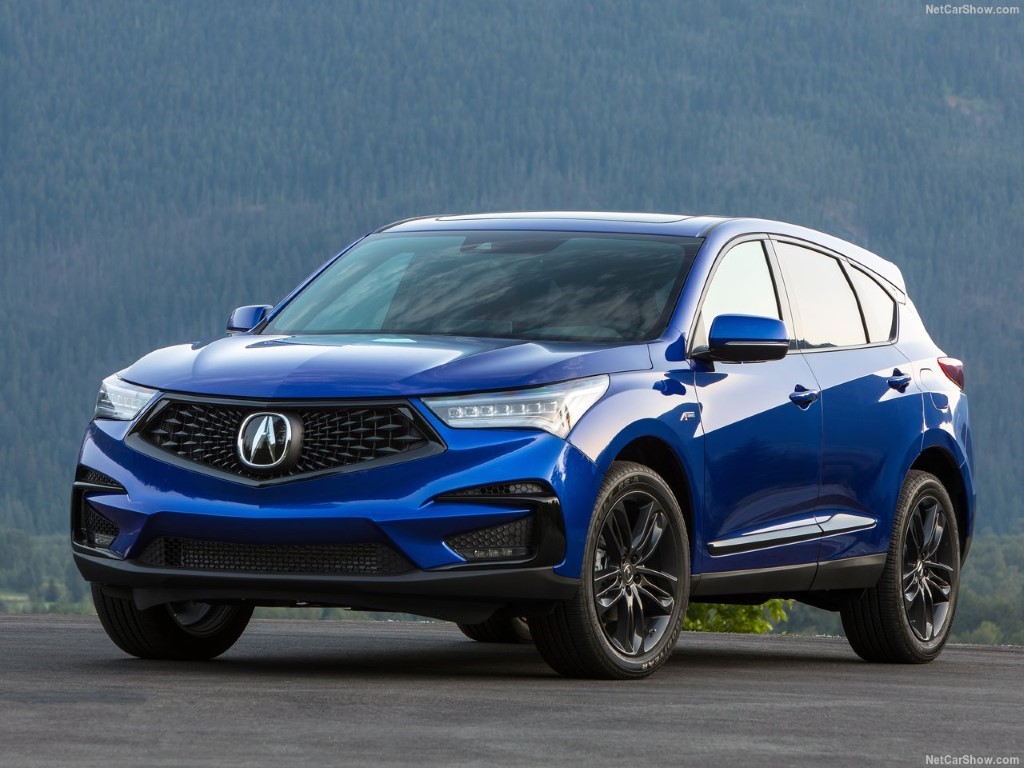
Acura RDX G3

3rd Generation

(2019 - 2021)

2.0 Turbo 276 cv
Acura RDX G3F

3rd Generation Facelift

(2022 - 2025)

2.0 Turbo 276 cv

Technical Data and History: Acura RDX

Introduction and Strategic Context

The Genesis of the Luxury Crossover and the Strategic Role of the RDX

The automotive industry of the early 21st century witnessed a tectonic shift in consumer preferences, migrating from traditional sedans and truck-based SUVs to a new category: the Crossover Utility Vehicle (CUV). In this landscape of transformation, Acura, the luxury division of the Honda Motor Company, established itself as a crucial pioneer. After the resounding success of the MDX, the first car-platform-based three-row SUV, the brand identified a gap in the market for a smaller, more agile vehicle focused on urban performance. Thus the Acura RDX project was born, a vehicle that would not only complement the lineup but serve as an engineering and design philosophy laboratory for the brand for nearly two decades.

The RDX is not just a volume product; it is a barometer of Acura's priorities. Its history is divided into three distinct acts, each representing a direct response to the economic pressures, consumer demands, and technological advancements of its time. From the bold experimentation with turbochargers and torque vectoring in the first generation, through the commercial rationalization and comfort focus of the second generation, to the rebirth of "Precision Crafted Performance" in the third generation, the RDX reflects the brand's quest for identity in the premium sector.

First Generation (TB1/TB2): 2007–2012

The Era of Turbocharged Innovation

The launch of the Acura RDX in 2006, as a 2007 model, was a calculated risk move. The compact luxury crossover segment was in its infancy, dominated by the BMW X3 (E83). Acura chose not to take the safe route of simply shrinking the MDX. Instead, the development team, led by designers like Jon Ikeda, conceived the RDX as an "Urban Running Mate," a vehicle with the soul of a TSX sports sedan but with the utility of an SUV.

Propulsion Engineering: The K23A1 Engine and the Variable Flow Turbo

The heart of the first-generation RDX was an anomaly in Honda's history: the K23A1 engine. Up to that point, Honda was famous for its high-revving naturally aspirated engines. The RDX broke that paradigm by introducing the brand's first factory-turbocharged gasoline engine in the North American market.

The decision to use a four-cylinder engine instead of a V6 was strategic to reduce weight over the front axle and improve agility, but it required an innovative solution to combat "turbo lag." Engineering's answer was the Variable Flow Turbocharger (VFT). Unlike the variable geometry turbos common in diesel engines, Acura's system utilized an exhaust flow control valve.

  • At low RPMs: The valve closed, forcing exhaust gases through a narrow passage. This increased the gas flow velocity, spinning the turbine rapidly and providing nearly instantaneous torque, simulating the response of a large-displacement engine.
  • At high RPMs: The valve opened, allowing the full volume of gases to reach the turbine, ensuring maximum power.

The result was a 2.3L DOHC i-VTEC engine that produced 240 HP at 6,000 rpm and, more impressively, 350 Nm (260 lb-ft) of torque at 4,500 rpm. Despite the innovation, the K23A1 engine faced criticism. To keep the turbo cooled and prevent detonation, the engine operated with a rich air-fuel mixture under load, which resulted in high fuel consumption for a four-cylinder, often comparable to or worse than the competition's V6 engines.

The Dynamic Revolution: Super Handling All-Wheel Drive (SH-AWD)

The defining element of the first-generation RDX's driving dynamics was the inclusion of the SH-AWD system as standard equipment in the early years. While most all-wheel-drive systems of the time (such as the Honda CR-V or Toyota RAV4) were reactive — sending power to the rear only when the front wheels slipped — SH-AWD was proactive and performance-focused.

The system utilized a complex rear differential with dual electromagnetic clutches. This allowed for two critical functions:

  • Longitudinal Torque Transfer: During hard acceleration, the system could transfer up to 45% of the engine's power to the rear axle, utilizing weight transfer to maximize traction.
  • Lateral Torque Vectoring: This was the "magic" of the system. In corners, SH-AWD could direct up to 100% of the available rear axle torque to a single wheel — the outside wheel in the curve.

Furthermore, the rear axle was overdriven relative to the front (it spun 1.7% faster). By sending excessive torque to the outside rear wheel, the system created a yaw moment that effectively pushed the car's nose into the corner, eliminating the understeer typical of front-engine, all-wheel-drive vehicles. The driving sensation was described as if the car were "cornering on rails."

Chronological Evolution and Trim Details

The first generation can be segmented into two distinct phases: the original launch (2007-2009) and the mid-cycle refresh (2010-2012).

Phase 1: Sporty Purism (2007–2009)

During these years, Acura maintained the purity of the concept. All RDXs left the factory with the SH-AWD system and the turbo engine. The suspension was stiffly tuned to complement the torque vectoring, resulting in exemplary body control but a ride considered harsh and "bouncy" on imperfect pavements.

  • Base Trim: Offered a robust package of equipment for the time, including 18-inch alloy wheels, a power moonroof, heated leather seats, Bluetooth connectivity (HandsFreeLink), and HID headlights.
  • Technology Package: Added Acura's electronic vanguard. The highlight was the DVD-based navigation system with voice recognition and a rearview camera. The 410-watt Acura/ELS Surround audio system, with 10 speakers and DVD-Audio playback capability, was considered one of the best in the industry.

Phase 2: Market Adaptation (2010–2012)

In response to the 2008 financial crisis and criticisms regarding fuel consumption and price, Acura carried out a significant "facelift" for the 2010 model.

  • Introduction of Front-Wheel Drive (FWD): The most drastic change was offering a front-wheel-drive-only version. By removing the driveshaft and the complex SH-AWD rear differential, the RDX lost about 90 kg (200 lbs). This improved fuel economy and allowed for a lower entry price.
  • Visual Identity: The exterior was updated to incorporate Acura's "Power Plenum" front grille and redesigned bumpers for a more aggressive appearance.
  • Refined Interior: Ambient lighting was changed to a more modern white tone, and USB connectivity became standard.

Technical Specifications Table (Generation 1)

Feature Technical Detail
Platform Global Compact Platform (Derived from CR-V/Civic, modified)
Engine Code K23A1 (2.3L I-4 Turbo)
Power / Torque 240 HP @ 6000 rpm / 350 Nm @ 4500 rpm
Transmission 5-Speed Automatic (5AT) with Paddle Shifters
Drivetrain SH-AWD (2007-2012) or FWD (2010-2012)
Length 4,590 mm (2007-09) / 4,636 mm (2010-12)
Weight (Curb) Approx. 1,800 kg (SH-AWD)
Second Generation (TB3/TB4): 2013–2018

Commercial Maturation and the Paradigm Shift

The arrival of the second-generation RDX in 2012 marked a complete philosophical break. Acura analyzed market data and concluded that, although enthusiasts loved the turbo and SH-AWD, the vast majority of luxury SUV buyers desired comfort, quietness, smoothness, and reliability. The second-generation RDX was designed to meet these demands, sacrificing its mechanical uniqueness in favor of mass acceptance.

The Transition to the V6: Refinement over Raw Performance

The most controversial change for purists, but the most commercially successful one, was replacing the 4-cylinder turbo engine with the ubiquitous V6 engine from the Honda J-Series family.

  • J35Z2 Engine (2013-2015): A 3.5-liter SOHC i-VTEC V6 that produced 273 HP. Power delivery became linear and progressive.
  • VCM (Variable Cylinder Management) Technology: This system allowed the engine to deactivate three of the six cylinders (or four) at steady cruising speeds, improving highway fuel economy.
  • 6-Speed Transmission: The old 5-speed gearbox was replaced by a 6-speed automatic, which offered taller ratios for quiet cruising.

Drivetrain Simplification: The Temporary End of SH-AWD

In pursuit of reducing weight, cost, and complexity, Acura removed the SH-AWD system. In its place, it installed the AWD with Intelligent Control system. Essentially, this was a version of the Real-Time AWD system found in the Honda CR-V (a "slip-and-grip" system). The torque vectoring capability and agility in dry corners were lost, transforming the RDX into a safer and more predictable, but less exciting, vehicle.

2016 Facelift: Technological and Aesthetic Enhancement

The life cycle of the second generation received an injection of vitality with the 2016 update. Acura not only altered the aesthetics but also improved the mechanics.

  • Updated Engine: The engine was tuned to generate 279 HP (an increase of 6 HP) and 341 Nm of torque, with a curve optimized for mid-range RPMs.
  • Jewel Eye Visual Signature: The RDX adopted the "Jewel Eye" LED headlights, which became Acura's unmistakable visual signature.
  • AcuraWatch: Security became a central pillar with the introduction of the AcuraWatch suite (ACC, CMBS, LKAS), which became an important competitive differentiator.

Trim and Equipment Analysis

The second generation was structured around equipment packages, simplifying the buying process:

  • Standard (Base): Already included a multi-angle rearview camera, moonroof, leather seats, and a power tailgate.
  • AcuraWatch Plus Package: Added the active safety suite and a color display in the instrument panel.
  • Technology Package: Brought updated navigation, ELS Studio Premium Audio with hard drive, GPS-linked climate control, and blind-spot monitoring.
  • Advance Package: The absolute top-of-the-line. Included front/rear parking sensors, rain-sensing wipers, fog lights, remote engine start, and exclusive 18-inch wheels.

The "softening" strategy proved to be a financial masterstroke. In 2018, the RDX set an all-time sales record of 63,580 units in the US. From a reliability standpoint, the second generation is widely considered the most robust, with the J-series V6 powertrain proving to be extremely durable.

Third Generation (TC1/TC2): 2019–Present

The Rebirth of Performance and the "Precision Crafted" Identity

The third generation of the RDX, launched as a 2019 model, represented the realization of the brand's new philosophy: "Precision Crafted Performance." Acura decided that the RDX should no longer be just a "luxury Honda," but a product with its own engineering and identity, capable of competing on equal footing with the Audi Q5 and Mercedes-Benz GLC.

Exclusive Architecture and Structural Rigidity

A common misconception is to assume that the third-generation RDX is just a more expensive Honda CR-V. This is incorrect. For the first time, the RDX was built on an Acura-exclusive platform. The chassis was designed specifically to accommodate the high-performance SH-AWD system. Over 50% of the body structure is composed of high-strength steels, and the assembly utilizes high-performance structural adhesives in addition to traditional welds, increasing rigidity and improving cabin quietness.

The Return of the Turbo: 2.0L VTEC Engine (K20C4)

The V6 engine was retired in favor of a modern 2.0-liter turbocharged 4-cylinder with direct injection (code K20C4), which shares fundamental components with the Honda Civic Type R.

  • Performance: Generates 272 HP at 6,500 rpm and 380 Nm (280 lb-ft) of torque.
  • Advantage over the V6: Although peak power dropped slightly, torque increased significantly and is available over an extremely broad range (1,600 to 4,500 rpm), providing much more vigorous acceleration.

10-Speed Transmission and Generation 4 SH-AWD

The transmission was upgraded to a 10-speed planetary automatic gearbox (10AT), capable of aggressive downshifts (skipping up to 4 gears). The SH-AWD system returned in its fourth iteration, more capable than ever:

  • Torque Capacity: The rear differential can handle 40% more torque than the previous generation.
  • Distribution: Up to 70% of total torque can be sent to the rear axle, and of that total, up to 100% can be sent to a single rear wheel.
  • Overdrive: The rear axle continues to be overdriven to create the yaw effect, helping the vehicle rotate through corners.

"Precision Cockpit" Design and the Touchpad Controversy

The interior of the third-generation RDX was a revolution inspired by the NSX, featuring a floating console and the Integrated Dynamics System (IDS) dial. The biggest innovation (and point of contention) was the introduction of the True Touchpad Interface. The 10.2-inch screen is controlled by a touchpad with absolute mapping (1:1 position with the screen). Although designed to reduce distraction, it required a steep learning curve, generating user criticism.

Trims, Packages, and Special Editions

  • A-Spec: Became a comprehensive and desirable appearance package, with chrome replaced by gloss black, larger exhaust tips, 20-inch wheels, and an Ultrasuede interior.
  • Advance: Focused on supreme luxury, with adaptive suspension (Active Damper System), a Head-Up Display, and open-pore wood.
  • A-Spec Advance (2022+): In the 2022 facelift, Acura combined the sporty look of the A-Spec with the luxury features of the Advance.
  • PMC Editions: Vehicles that transcend mass production. The bodies are hand-finished at the Performance Manufacturing Center (the NSX factory), receiving exclusive paints like Thermal Orange Pearl and Long Beach Blue Pearl.

Comparative Table of Annual Sales in the US

Year Sales (Units) Historical Context and Analysis
2007 23,628 Initial peak of Gen 1; novelty in the market.
2009 10,153 Historical low due to the Great Global Recession.
2012 29,520 Final recovery of Gen 1 with aggressive discounts.
2013 44,750 Gen 2 (V6) launch; immediate acceptance.
2018 63,580 Absolute historical record (late Gen 2 / early Gen 3).
2020 52,785 Impact of the COVID-19 pandemic.
2022 24,749 Supply collapse due to the semiconductor crisis.
2023 39,228 Gradual recovery of inventories and production.
Global Panorama, Reliability, and Conclusion

Global Panorama: China and Brazil

Although the RDX is inherently North American, its history has global ramifications:

  • The Chinese Experience: Honda tried to penetrate the luxury segment via a Joint Venture with GAC. Local production began in 2018, but the brand failed to resonate with the Chinese consumer. Facing unsustainable sales, Honda shut down the Acura brand in China in 2023.
  • The Brazilian Market: Acura never officially operated in Brazil. Studies for a 2015 launch were canceled due to the economic recession. All RDXs on Brazilian soil arrived via independent importation (gray market).

Technical Reliability and Critical Attention Points

An analysis of durability defines the ownership experience for each generation:

  • Generation 1 (Turbo Complexity): The variable flow turbocharger and the top-mount intercooler require rigorous maintenance. The air conditioning compressor is a known point of failure.
  • Generation 2 (V6 Robustness): Considered the most reliable. Pay attention to the VCM system (can cause oil consumption/vibration) and timing belt replacement every 160,000 km (100,000 miles).
  • Generation 3 (Electronics and Glass):
    • Limp Mode: 2019-2020 models suffered from condensation in the intercooler on rainy days, causing misfires.
    • Rear Glass: Reports of spontaneous breakage in early models.
    • Infotainment: The system suffered from instability and dropped connections (FAKRA cables) in the first years.

Conclusion: The Synthesis of Acura's Identity

The Acura RDX is a mirror of the evolution of the luxury market. The First Generation proved that a crossover could be fun with technologies ahead of their time. The Second Generation demonstrated an ability to read the market by focusing on comfort and ensuring financial health. The Third Generation achieved the ideal balance, rescuing the sporty soul and combining it with modern luxury. Today, the RDX remains a pillar of sales, proving that the bet made in 2006 to create an "Urban Running Mate" was visionary.

Technical data based on: • Official manufacturer catalogs • EPA / WLTP documentation when available • Official press releases

Editorial content produced by Gabriel Carvalho. | Última revisão: Dezembro/2025.