
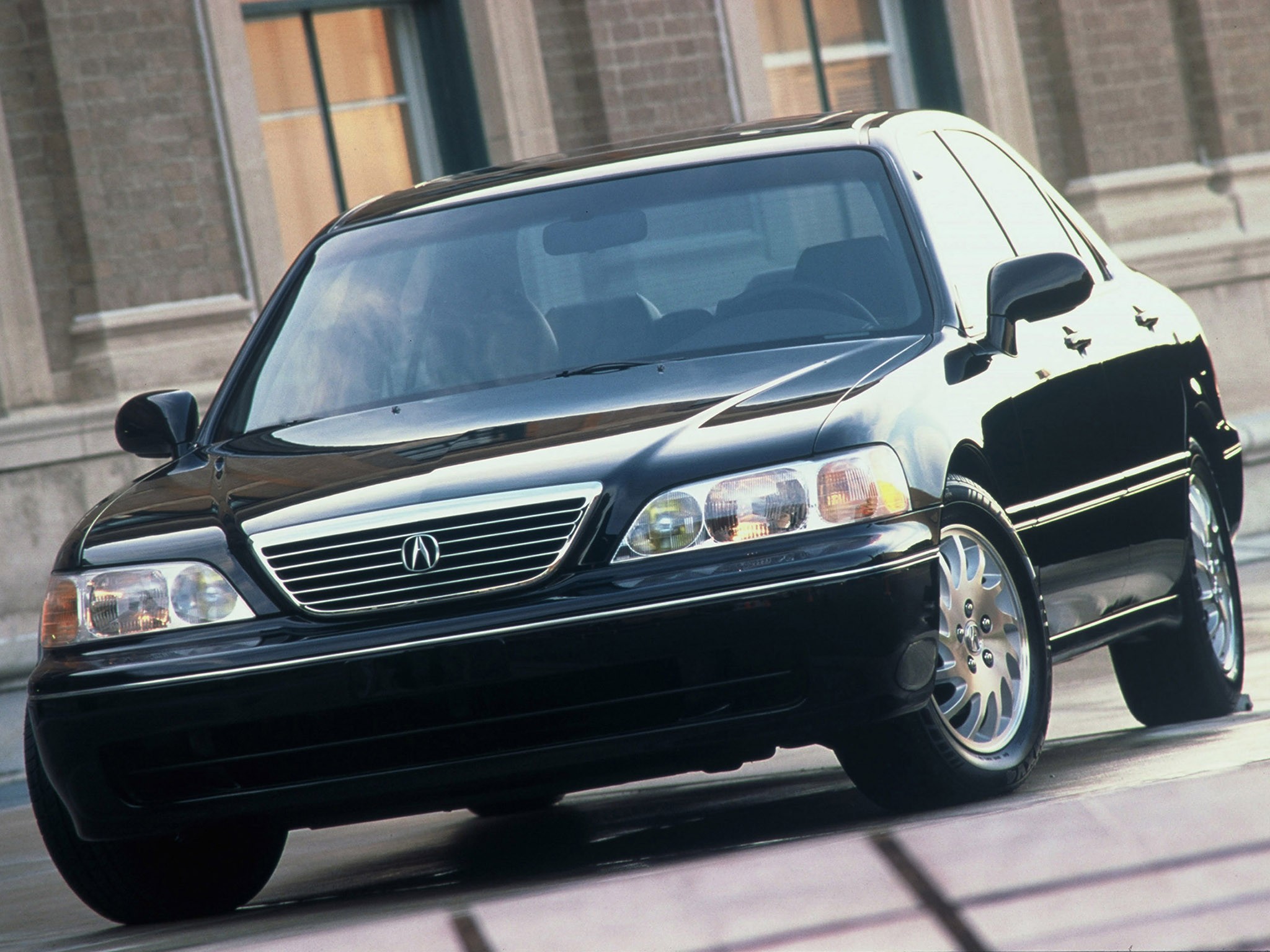
1st Generation
(1996 - 1998)
3.5 L V6
213 cv
Technical specifications, versions, and history for the Acura RL.
Select a generation to see available versions
(1996 - 1998)
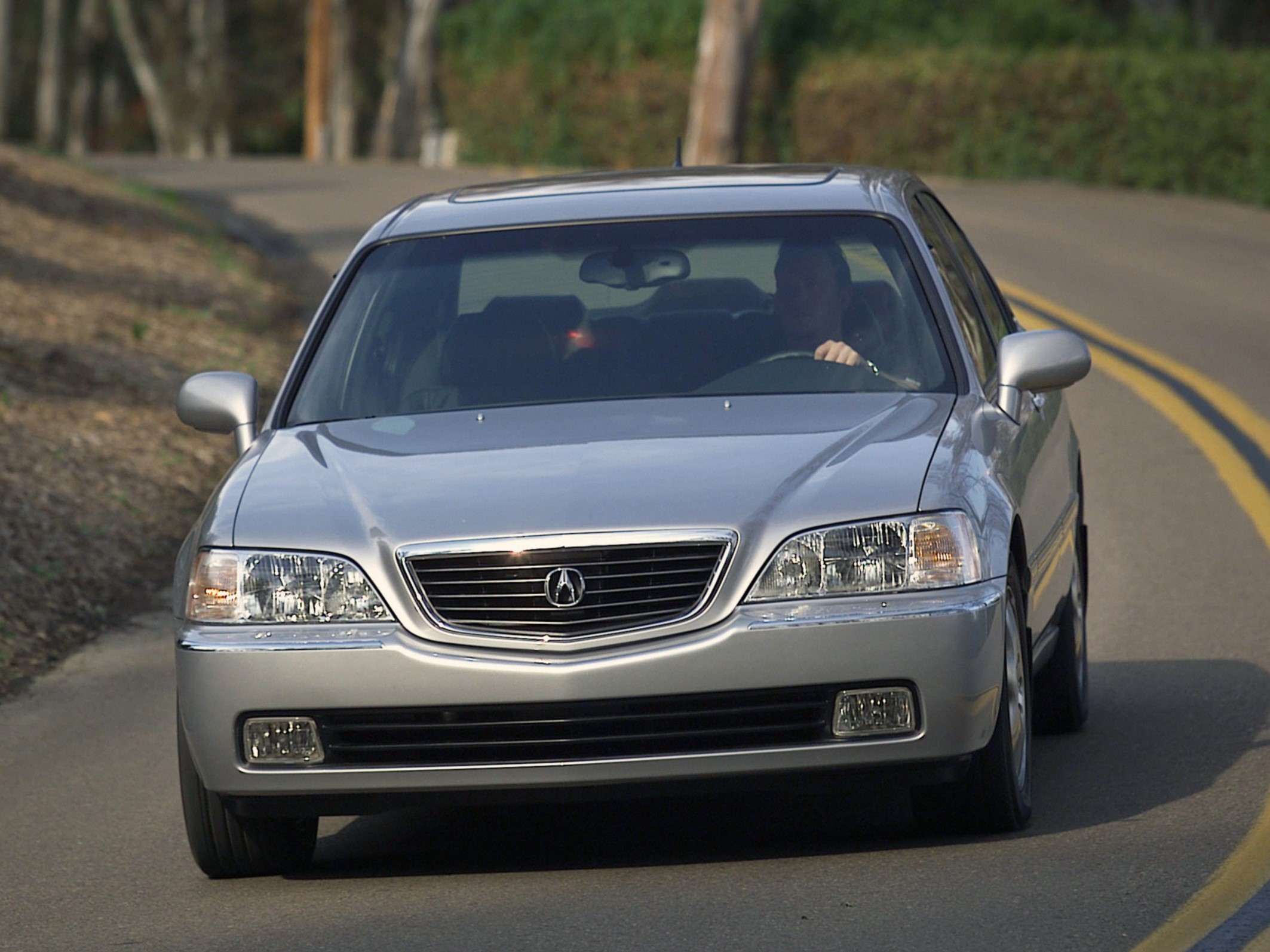
(1999 - 2004)
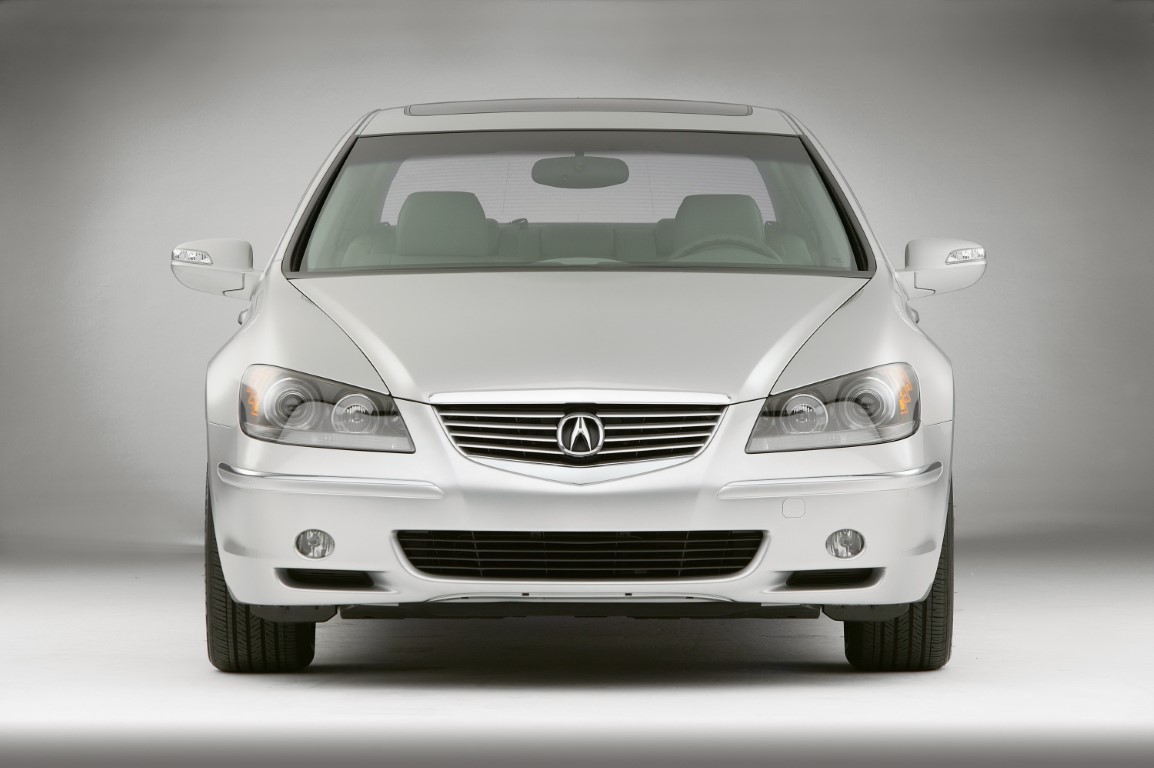
(2005 - 2008)
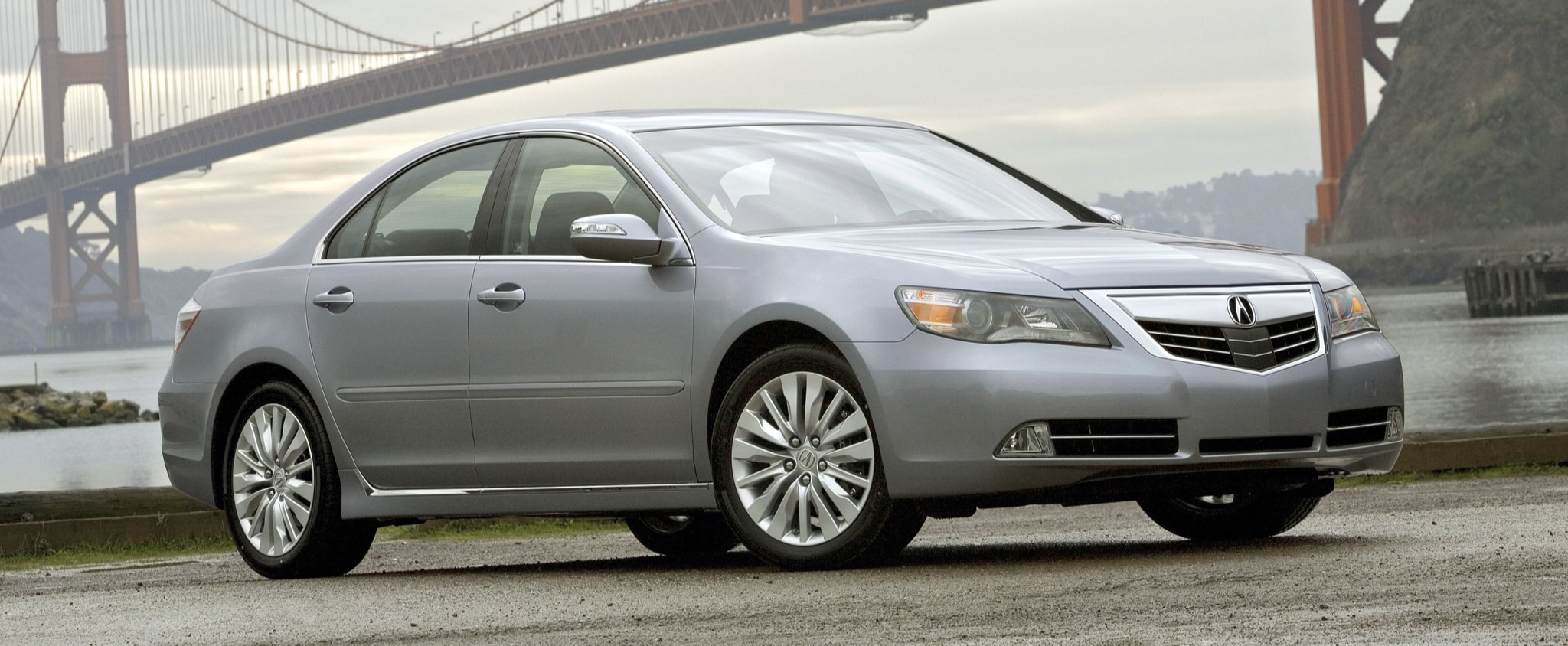
(2009 - 2010)
(2011 - 2012)
The Acura RL served as the flagship sedan for Honda's luxury brand from 1996 to 2012. It replaced the Acura Legend and was eventually succeeded by the Acura RLX in 2013. The acronym RL stands for "Refined Luxury". The name change from Legend to alphanumeric acronyms occurred because market research indicated that buyers associated the model names ("Legend" and "Integra") with individual products rather than the Acura luxury brand itself. The model was entirely produced at the Sayama plant in Saitama, Japan, being a rebadged version of the Honda Legend sold in the Japanese market.
The first generation (internal code KA9) was developed under the design of Mitsuhiro Honda and Tamotsu Okamoto in 1993, starting production in late 1995 as the 1996 model year. The engine was a 3.5-liter V6, code C35A1, with an aluminum block and heads and cast iron cylinders. The major technical peculiarity of this front-wheel-drive model was the longitudinally mounted engine (in the same direction as the length of the car), which allowed for a reduced turning radius of 11 meters and greater agility in urban traffic. The initial weight distribution was 56% in the front and 44% in the rear.
The engine used connecting rods forged by the innovative "block forging" process, a forged crankshaft, and a balance shaft to reduce noise and vibration. It did not feature the VTEC variable valve timing. The suspension was independent with double wishbones in the front and rear, using coil springs and progressive gas shock absorbers to better absorb impacts. The original tires were size P215/60R16 on 16-inch alloy wheels. The front brakes used 280 mm diameter ventilated discs and 280 mm solid rears. The exterior finish went through a rigorous 23-step painting process, with 5 layers of paint and 4 baking cycles. The hard drive navigation system was optional only in California.
Launched in September 2004 as the 2005 model year (KB1 chassis), the second generation featured a modern design created by Toshinobu Minami in 2002. The unibody structure was redesigned using high-strength steel and aluminum. The mechanics changed drastically: the engine became transverse, and the sedan adopted the innovative Super Handling All-Wheel Drive (SH-AWD) system, replacing the old front-wheel drive.
The SH-AWD system could actively vary torque not only between the front and rear axles (sending up to 70% to the rear), but also direct up to 100% of the rear axle's torque to a single outside wheel in corners (torque vectoring) to maximize stability.
The engine was the new J35A8 3.5-liter V6 SOHC VTEC with 300 hp (later revised to 290 hp under SAE norms) and 36 kgfm of torque, mated to a 5-speed automatic transmission with steering wheel sequential paddle shifters. The front brakes used multi-piston aluminum calipers on 320 mm ventilated rotors and 310 mm ventilated rears. The original 17-inch wheels were fitted with 245/50R17 tires.
As a luxury technology highlight, the 10-speaker Bose 5.1 DVD-Audio system with Active Noise Cancellation (ANC) stood out, using two microphones in the cabin to emit inverted sound signals, reducing engine and exhaust noise. There was an option for the A-Spec Performance sports package and, temporarily, the Michelin PAX tire system with run-flat technology.
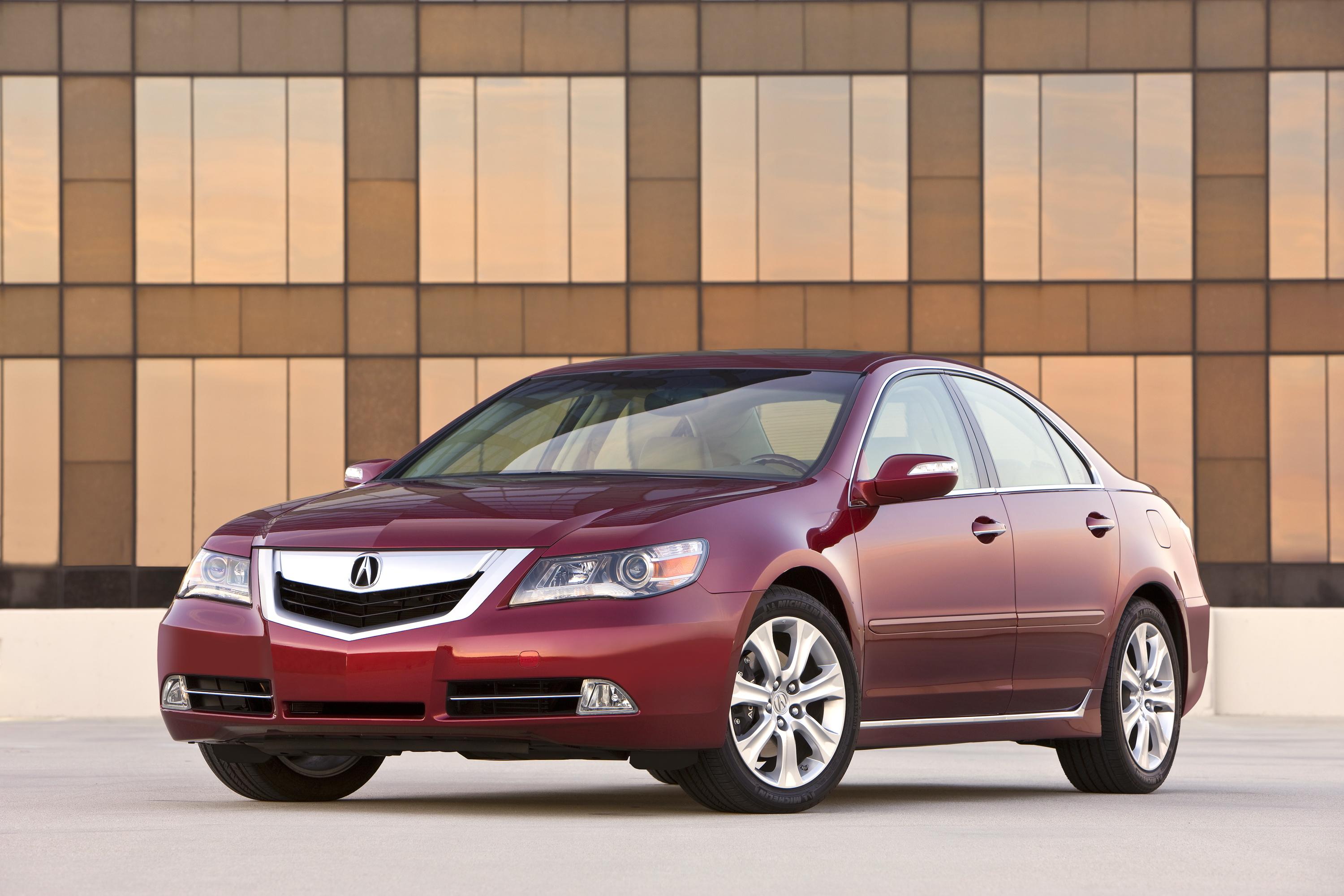
Introduced in early 2008 as the 2009 model (KB2 chassis), the facelift represented the most profound mid-cycle change in Acura's history. The exterior styling adopted the new shield-shaped grille ("power plenum"), a modified aluminum hood, new bumpers, fenders, and LED taillights. The standard wheels became 18 inches with 245/45R18 tires.
The suspension was updated with stiffer springs, larger diameter sway bars, and stiffened suspension bushings. The engine was enlarged to 3.7 liters (code J37A2) with 300 hp and 37.4 kgfm of torque. This engine pioneered, for a Honda SOHC V6, VTEC technology for both intake and exhaust valves. The cabin gained the Active Sound Control (ASC) system and the optional advanced safety package with autonomous emergency braking (CMBS) and adaptive cruise control.
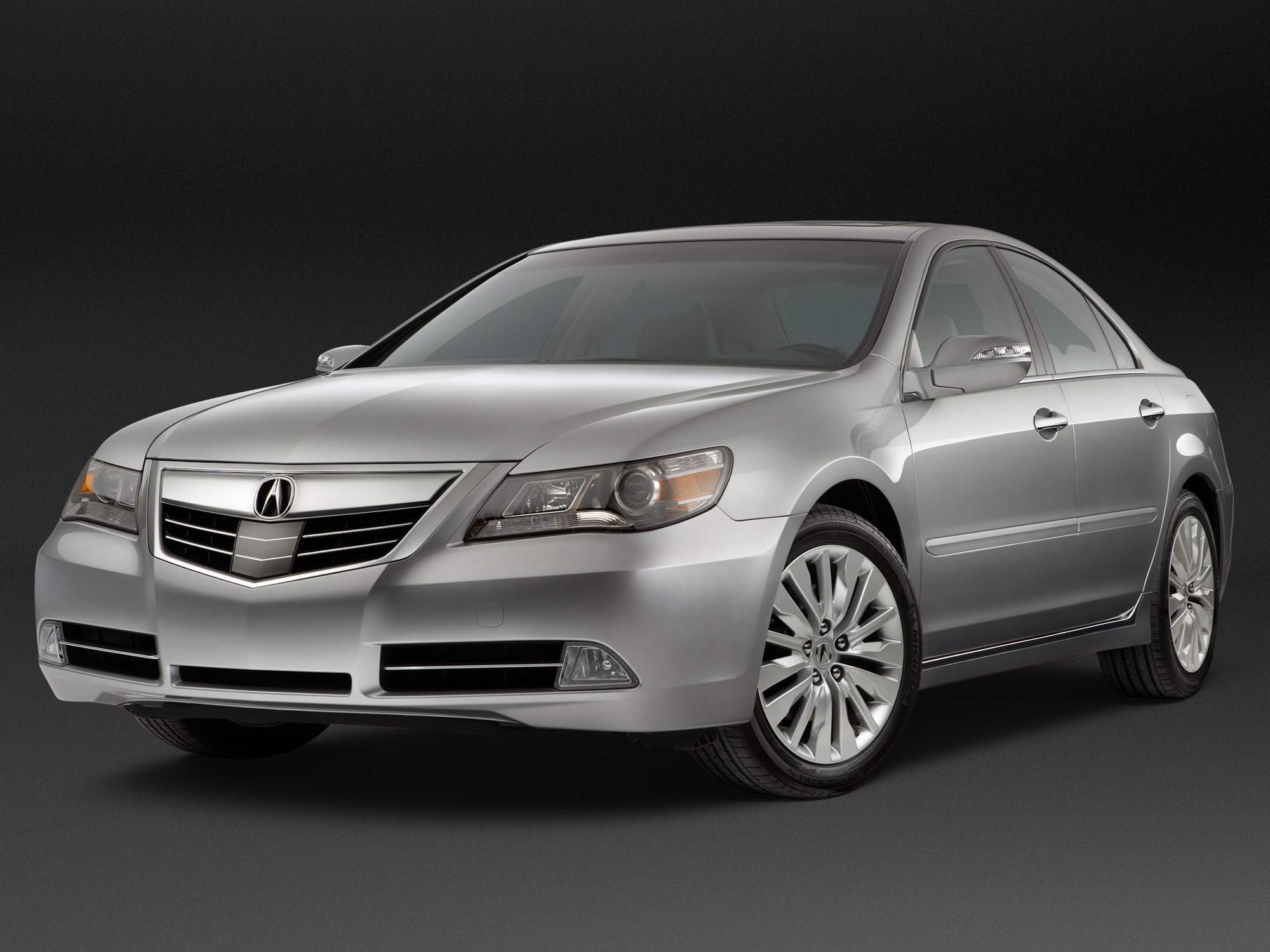
For 2011, the Acura RL received a new 6-speed automatic transmission, eliminating the criticized 5-speed gearbox. This improved highway fuel economy and agility in 0 to 100 km/h acceleration. The front grille was slightly toned down.
A major innovation in terms of acoustic comfort was the introduction of 18-inch wheels equipped with integrated Helmholtz resonators (a world first for a production passenger car). These noise reduction devices lowered internal cabin noise caused by tire resonance by up to 15%. Power-folding mirrors and new rear parking sensors were added. The model remained identical in 2012 before being retired to make way for the Acura RLX.
The following table presents the technical details and main mechanical changes of each phase of the Acura RL over the years:
| Generation and Phase | Engine Code | Displacement and Configuration | Compression Ratio | Net Power | Net Torque | Transmission and Ratios | Brakes (Front / Rear) | Tires and Wheels |
|---|---|---|---|---|---|---|---|---|
| Original G1 (1996–2001) | C35A1 | 3,474 cc 90° V6 (Longitudinal) | 9.6:1 | 210 hp @ 5,200 rpm | 31.0 kgf.m @ 2,800 rpm | 4-speed Automatic (1st: 2.458; 2nd: 1.454; 3rd: 0.948; 4th: 0.652) | 280 mm ventilated discs / 280 mm solid discs | P215/60R16 on 16x6.5" wheels |
| G1 Facelift (2002–2004) | C35A1 | 3,474 cc 90° V6 (Longitudinal) | 9.6:1 | 225 hp @ 5,200 rpm | 32.0 kgf.m @ 2,800 rpm | 4-speed Automatic (1st: 2.458; 2nd: 1.454; 3rd: 0.948; 4th: 0.652) | 300 mm ventilated discs / 282 mm solid discs | P225/55R16 on 16x7.0" wheels |
| Original G2 (2005–2008) | J35A8 | 3,471 cc 60° V6 (Transverse) | 11.0:1 (approximate) | 290 hp @ 6,200 rpm | 36.0 kgf.m @ 5,000 rpm | 5-speed Automatic with steering wheel paddle shifters | 320 mm ventilated discs / 310 mm ventilated discs | P245/50R17 on 17x8.0" wheels |
| G2 Facelift (2009–2010) | J37A2 | 3,664 cc 60° V6 (Transverse) | 11.2:1 | 300 hp @ 6,300 rpm | 37.4 kgf.m @ 5,000 rpm | 5-speed Automatic with steering wheel paddle shifters | 320 mm ventilated discs / 310 mm ventilated discs | P245/45R18 on 18x8.0" wheels |
| G2 Update (2011–2012) | J37A2 | 3,664 cc 60° V6 (Transverse) | 11.2:1 | 300 hp @ 6,300 rpm | 37.4 kgf.m @ 5,000 rpm | 6-speed Automatic (1st: 3.359; 2nd: 2.095; 3rd: 1.485; 4th: 1.065; 5th: 0.754; 6th: 0.556) | 320 mm ventilated discs / 310 mm ventilated discs | P245/45R18 on 18x8.0" wheels (Helmholtz Resonators) |
The change between generations represented a redefinition of the vehicle's proportions. The second-generation model became more compact in length and wheelbase to gain dynamic agility, but became wider and taller to maintain interior space for the passengers. The table below consolidates these physical measurements:
| Model Year and Phase | Wheelbase | Overall Length | Width Without Mirrors | Overall Height (Unloaded) | Curb Weight |
|---|---|---|---|---|---|
| 1996–1998 (Original G1) | 2,911 mm | 4,956 mm | 1,811 mm | 1,384 mm | 1,660 kg |
| 1999–2001 (G1 Facelift I) | 2,911 mm | 4,994 mm | 1,814 mm | 1,435 mm | 1,710 kg (estimated) |
| 2002–2004 (G1 Facelift II) | 2,911 mm | 4,996 mm | 1,821 mm | 1,384 mm | 1,766 kg |
| 2005–2008 (Original G2) | 2,799 mm | 4,917 mm | 1,847 mm | 1,450 mm | 1,810 kg |
| 2009–2010 (G2 Facelift) | 2,799 mm | 4,973 mm | 1,847 mm | 1,453 mm | 1,852 kg |
| 2011–2012 (G2 Update) | 2,800 mm | 4,973 mm | 1,847 mm | 1,455 mm | 1,860 kg (Standard) / 1,865 kg (Tech) |
The Acura RL recorded distinct sales trajectories in each of its generations. The year 2005 represented the model's historical commercial peak in the North American market, driven by the strong initial acceptance of the SH-AWD technology and the 3.5-liter VTEC engine, registering a record of 17,574 units sold in the United States.
In 2006, the RL's export operations were expanded to China with premium prices of 680,000 RMB, establishing exclusive dealerships with customer-focused service and a differentiated long-term warranty. However, starting in 2007, demand in the luxury premium sedan segment suffered considerable contractions, causing RL sales to fall gradually until the discontinuation of the model.
Below is a detailed breakdown of annual sales data recorded in the United States and Canada:
| Calendar Year | Units Sold (USA) | Units Sold (Canada) |
|---|---|---|
| 1996 | 15,848 | Data not available |
| 1997 | 16,004 | Data not available |
| 1998 | 15,024 | Data not available |
| 1999 | 13,366 | Data not available |
| 2000 | 14,827 | Data not available |
| 2001 | 10,723 | Data not available |
| 2002 | 9,392 | Data not available |
| 2003 | 6,829 | Data not available |
| 2004 | 8,753 | Data not available |
| 2005 | 17,574 | Data not available |
| 2006 | 12,068 | 206 |
| 2007 | 6,262 | 158 |
| 2008 | 4,517 | 157 |
| 2009 | 2,043 | 94 |
| 2010 | 2,037 | 64 |
| 2011 | 1,096 | 52 |
| 2012 | 340 | 29 |
| 2013 | 26 (residual sales) | Replaced by the RLX |
| Cumulative Total | 156,330 | 860 (from 2006 to 2012) |
The historical analysis of the Acura RL reveals an interesting dynamic regarding how technology interacts with consumer expectations in the prestige market. In terms of electronic convenience and assistance innovation, Acura acted as a pioneer in the automotive industry. The sedan was responsible for introducing touch screens, GPS navigation systems, and advanced voice commands long before its main European competitors from established German brands.
Despite this pioneering spirit in cabin technology, the Acura RL faced a clear engineering paradox. While competing manufacturers in the luxury executive sedan segment offered eight-cylinder (V8) engines and automatic transmissions with a higher number of gears (six, seven, or eight speeds) early in the first half of the 2000s, Acura maintained a conservative strategy in the structural mechanical part.
The insistence on exclusively V6 engines and the retention of an older-design 5-speed transmission until 2010 created a performance barrier that limited the car's commercial advancement against rivals that delivered greater smoothness and power in rapid acceleration. The sophisticated SH-AWD torque vectoring system compensated for the dynamic behavior and guaranteed superior drivability, but it could not reverse the market perception that more robust engine options were missing.