Origin and Positioning of the Acura RLX
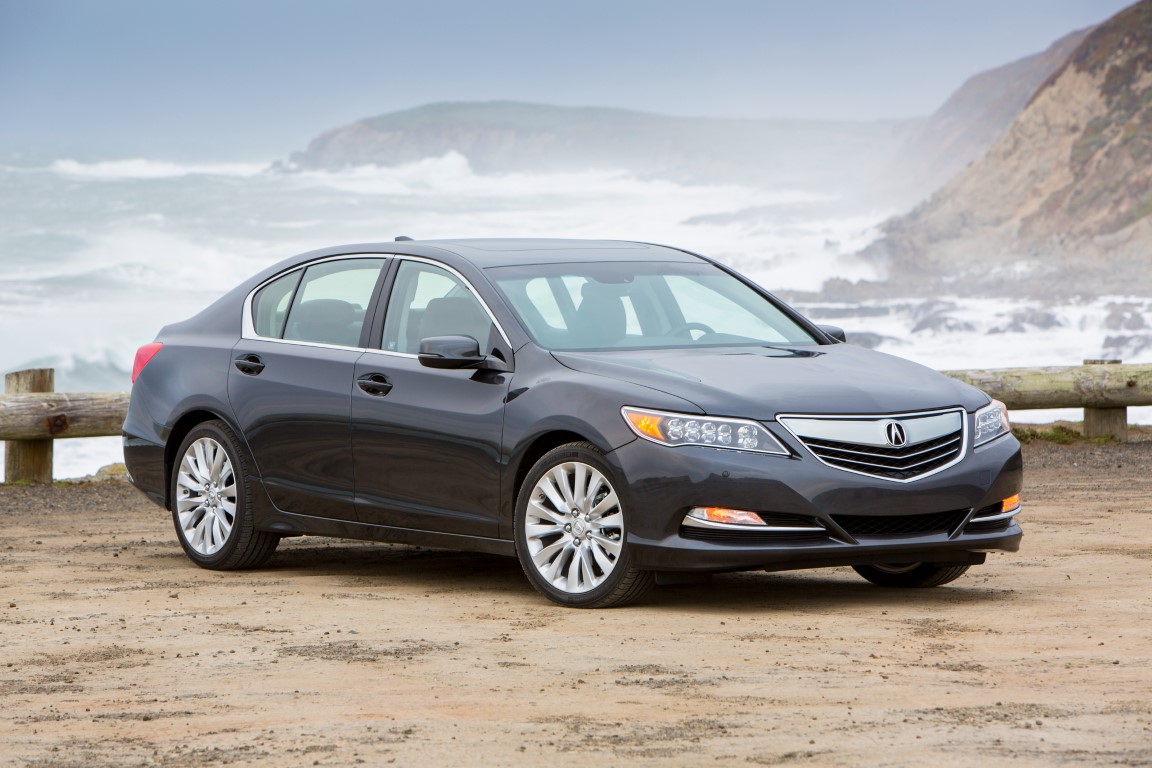
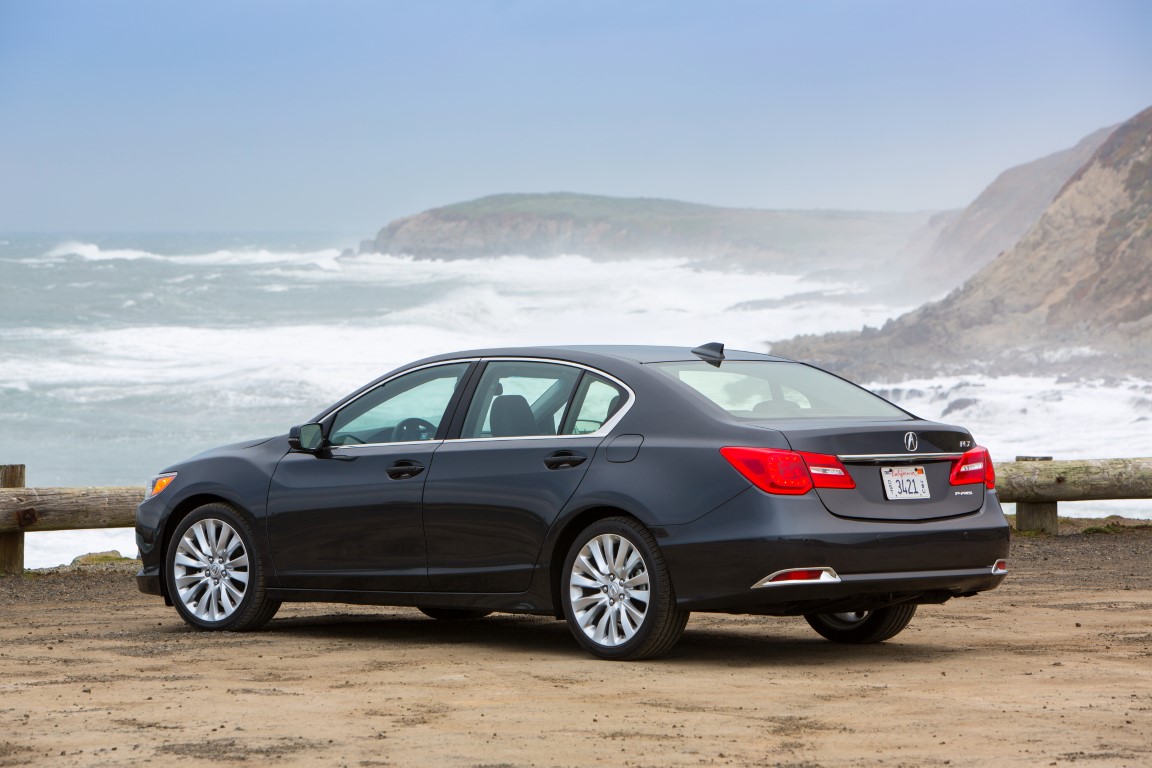
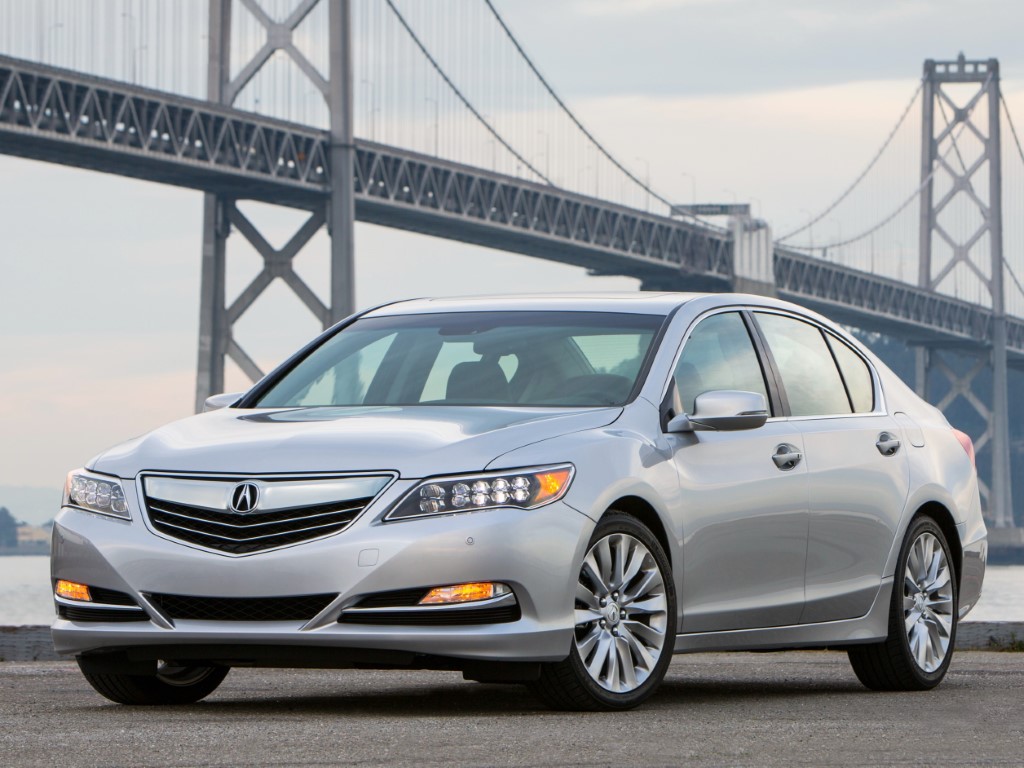
The Acura RLX was introduced to the North American market in March 2013 as the 2014 model year, taking over the position of flagship sedan for Honda's luxury division. The vehicle's development was led by designers Hideaki Uchino and Michelle Christensen, with centralized assembly at the Sayama plant in Saitama, Japan. In the Japanese market, the sedan was sold under the traditional name of Honda Legend.
Acura's decision to create a larger and more sophisticated sedan stemmed from internal changes to the brand's portfolio. The physical growth and power increase of the mid-size Acura TL sedan created an overlap that made the older Acura RL commercially unviable, requiring a new flagship model with a roomier cabin and mechanical innovations capable of competing with rival executive sedans. The RLX was introduced in two distinct mechanical configurations: a basic front-wheel-drive version equipped with active rear-wheel steering, marketed as Precision All-Wheel Steer (P-AWS), and an all-wheel-drive hybrid variant, known as Sport Hybrid Super Handling All-Wheel Drive (SH-AWD).
Dimensions, Structure, and Chassis Characteristics
The dimensions and structure of the Acura RLX were designed to maximize onboard comfort and impact safety, managing the additional weight generated by luxury equipment and electrical components. The chassis adopted a double wishbone front suspension with a lower double joint and hydraulic bushings, while the rear used a multi-link arrangement. Both configurations were integrated with Amplitude Reactive Dampers supplied by ZF Sachs, which employed two piston valves per damper to balance stability and impact absorption.
The following table presents the physical dimensions, weights, and volumetric capacities of the Acura RLX versions at their launch:
| Dimension / Specification | Acura RLX P-AWS (2014–2017) | Acura RLX Sport Hybrid (2014–2017) |
|---|---|---|
| Length | 4,982 mm (196.1 inches) | 4,982 mm (196.1 inches) |
| Width | 1,890 mm (74.4 inches) | 1,890 mm (74.4 inches) |
| Height | 1,465 mm (57.7 inches) (1,480 mm in the Legend) | 1,465 mm (57.7 inches) |
| Wheelbase | 2,850 mm (112.2 inches) | 2,850 mm (112.2 inches) |
| Tank Capacity | 18.5 gallons (70 liters) | 15.1 gallons (57 liters) |
| Trunk Volume | 14.9 cubic feet (422 liters) | 11.0 cubic feet (311 liters) |
| Turning Circle | 40.5 feet (12.3 meters) | 40.5 feet (12.3 meters) |
| Curb Weight | 1,800 to 1,816 kg | 1,956 to 1,977 kg (1,990 kg in the Legend) |
The RLX's unibody structure utilized Acura's Advanced Compatibility Engineering (ACE) concept, optimized to absorb collision energy. Approximately 55% of the vehicle's basic structure employed high-strength steel, with the application of hot-stamped steel in critical collision areas.
Acura integrated aluminum components to reduce weight and offset the impact of the batteries in the hybrid version, resulting in a reduction of 76.1 pounds (about 34.5 kg) compared to the use of conventional steel. This decrease was achieved through an all-aluminum hood and hybrid-construction doors, which combined aluminum outer panels and steel inner panels. Additionally, the front subframe was cast in aluminum. The cabin's acoustic insulation was reinforced by acoustic glass in the windshield and side windows, as well as 19-inch alloy wheels with harmonic noise reduction technology via integrated resonators, which came standard on the hybrid version and were optional on the conventional version.
Powertrains and Steering Systems of the Two Initial Versions
The Acura RLX powertrain was based on a 3.5-liter V6 gasoline engine belonging to the Earth Dreams family (code J35Y4). This engine featured an aluminum block, a 24-valve single overhead camshaft (SOHC) cylinder head, an i-VTEC control system for the intake valves, an "X"-shaped magnesium intake manifold, and an 11.5:1 compression ratio. Fed by direct fuel injection with multi-hole injectors, the engine generated a maximum output of 310 hp at 6,500 rpm and a maximum torque of 272 lb-ft (369 Nm) at 4,500 rpm in the conventional version and at 4,700 rpm in the hybrid version.
The Variable Cylinder Management (VCM) system acted in an integrated manner with the combustion engine, allowing it to deactivate three of the six cylinders to save fuel on highway cruising routes. The engine was supported by active vibration control mounts (ACM), which canceled noises and eliminated the need to operate in four-cylinder mode. In the front-wheel-drive version, the initial transmission was a 6-speed automatic with a traditional coupling. To counteract the understeer tendency inherent to large front-wheel-drive vehicles, Acura integrated Precision All-Wheel Steer (P-AWS), which allowed electric actuators to independently adjust the angle of the rear wheels during corners and hard braking to keep the vehicle stable.
The Sport Hybrid SH-AWD variant adopted an electrified all-wheel-drive architecture based on the Acura NSX supercar. This version dispensed with the traditional driveshaft and utilized three electric motors associated with the 3.5-liter V6 engine. A 35 kW (47 hp) motor was integrated into the 7-speed dual-clutch transmission (DCT), acting directly on the front axle to assist in acceleration, perform regenerative braking, and act as a starter for the combustion engine. On the rear axle, a Twin Motor Unit (TMU) housed two electric motors of 27 kW (36 hp) each, responsible for individually driving the rear wheels using electricity from a 72-cell lithium-ion battery, with a capacity of 1.3 kWh and a voltage of 260 V, located behind the rear seat backrest.
The hybrid system delivered a combined output of 377 hp and 341 lb-ft (462 Nm) of torque, allowing the sedan to run solely on the rear electric motors at speeds of up to 58 mph (93 km/h) under light acceleration. During cornering, the all-wheel-drive system applied positive torque (drive force) to the outside wheel and negative torque (regenerative braking) to the inside wheel. This created a yaw moment that helped the sedan navigate corners precisely.
The 2018 Facelift: Aesthetic Redesign and Transmission Evolutions
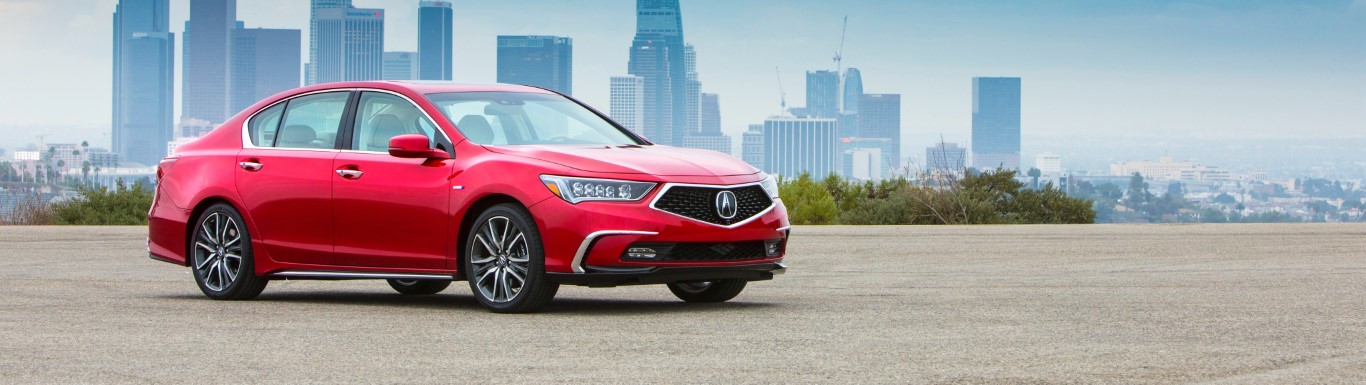
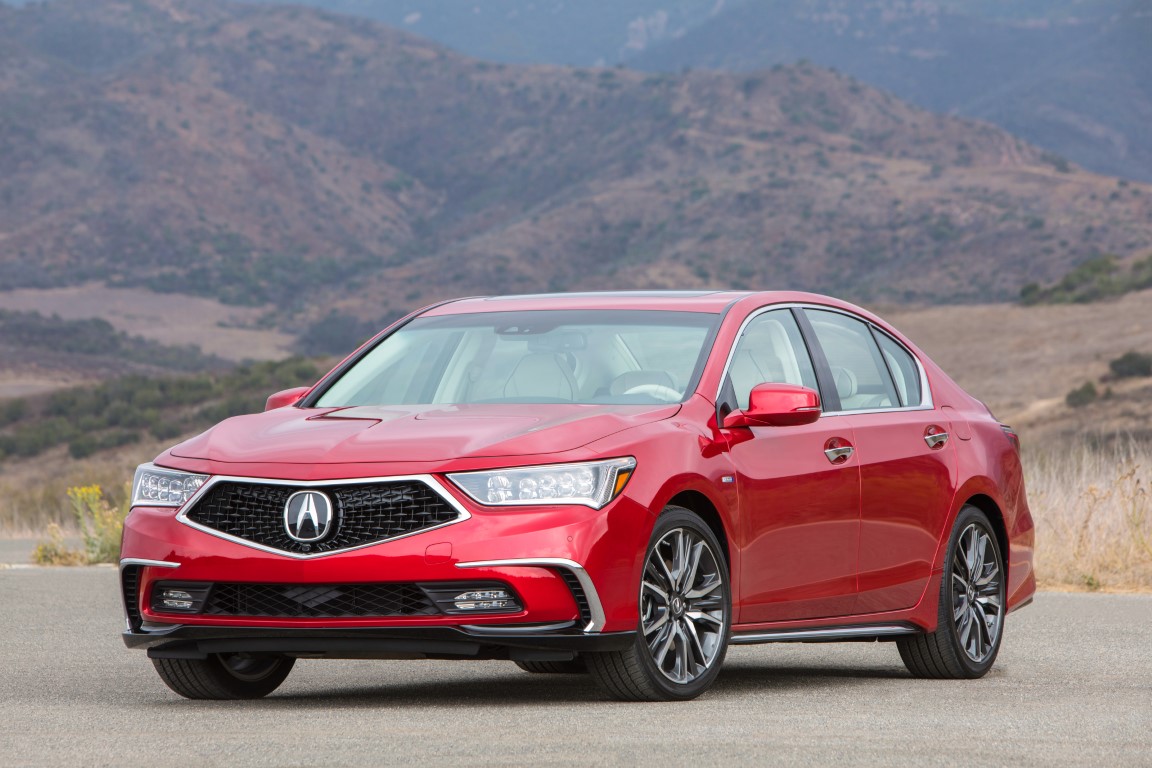
Revealed in August 2017 during Monterey Automotive Week and launched as the 2018 model year, the Acura RLX facelift updated the vehicle's lines according to the brand's "Precision Crafted Performance" design philosophy. The old front grille with a horizontal chrome shield (popularly known as the "beak") was replaced by the diamond pentagon grille with a chrome surround. The redesign included a hood with more pronounced creases, sculpted front fenders, new lower side moldings, a rear bumper with a gloss black diffuser, and dual chrome exhaust outlets. The lighting setup was renewed with Jewel-Eye LED headlights, LED daytime running lights (DRL), and LED taillights. Due to the new bumper shape, the sedan's overall length increased from 4,982 mm to 5,032 mm.
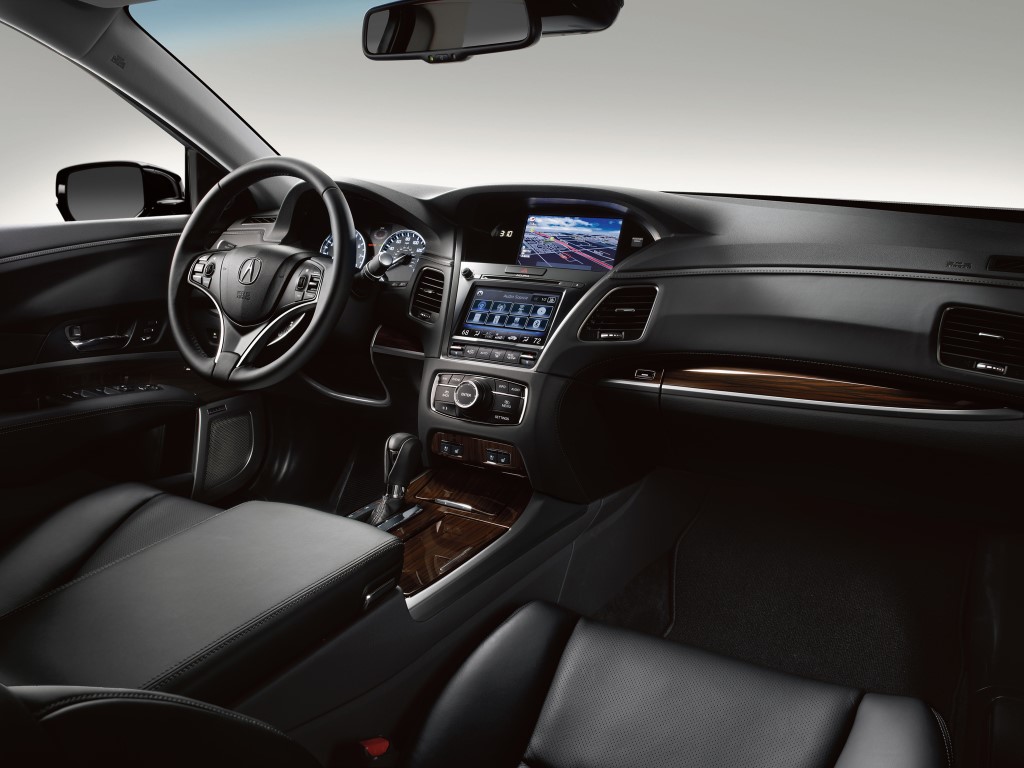
Inside, the RLX received redesigned seats upholstered in Milano leather with contrasting stitching and piping, a Milano leather steering wheel with European-style stitching, and a new brown color option (Espresso). The shift-by-wire gear selection system became standard equipment on both versions. Although the interior finish was improved, the vehicle maintained a dashboard with two integrated screens and did not receive compatibility with Apple CarPlay and Android Auto systems.
The most relevant mechanical update for the front-wheel-drive (P-AWS) model was the replacement of the old 6-speed automatic gearbox with a new 10-speed automatic transmission. This new transmission improved acceleration and passing speeds due to better gear distribution. The suspension on both variants received shock absorbers with slightly softer tuning to reduce impacts and vibrations, while the electric power steering and dynamic chassis controls were adjusted to make steering responses more direct and linear.
On the Sport Hybrid SH-AWD, Acura replaced the Intelligent Power Unit (IPU) with a lighter and more compact lithium-ion battery pack. This physical reduction freed up usable space in the trunk, increasing rear cargo capacity from 11.0 to 12.0 cubic feet (approximately 340 liters). The control logic of the hybrid system was also optimized based on data obtained from the NSX supercar, improving the responses of the rear electric motors and the all-wheel-drive system when the driver engaged Sport mode. The AcuraWatch active safety suite now included Traffic Jam Assist, capable of keeping the vehicle centered in its lane and following the flow of traffic at low speeds semi-autonomously.
Chronology of Acura RLX Updates (2014-2020)
The updates and modifications implemented by Acura over the production cycle of the RLX occurred annually, as detailed in the following comparison chart:
| Model Year | Main Changes, Novelties, and Evolutions of the Period |
|---|---|
| 2014 | Market introduction. Availability of the FWD model with P-AWS system (3.5L V6, 6-speed automatic transmission) and the Sport Hybrid SH-AWD version (3.5L V6, 3 electric motors, and 7-speed DCT transmission). |
| 2015 | The vehicle was carried over with no powertrain or visual changes. The top-of-the-line Advance Package received the addition of a heated steering wheel. |
| 2016 | Discontinuation of the base entry-level version, making the "Technology Package" the access configuration. 19-inch alloy wheels with 245/40R19 tires became standard on all versions. Chassis rigidity was revised and suspension tuning was softened. The AcuraWatch active safety suite became standard across the lineup. |
| 2017 | The sedan returned to the market without technical or aesthetic changes, retaining the previous equipment packages. |
| 2018 | Introduction of the mid-cycle facelift. Replacement of the 6-speed transmission with the new 10-speed automatic transmission in the P-AWS version. Reduction in the battery size of the hybrid model. Integration of Traffic Jam Assist. |
| 2019 | Continued sales with no aesthetic changes or mechanical updates compared to the facelifted 2018 model. |
| 2020 | Final model year of vehicle production, sold without changes. Production at the Sayama plant ended in June 2020. |
Price Analysis, Limited Production, and Market Performance
The commercial positioning of the Acura RLX was marked by high prices and restricted production volumes, factors that limited its reach in the premium market. The Sport Hybrid variant, for example, had extremely controlled production in its early manufacturing years, with only 250 units produced for the 2014 model year and another 250 units assembled for the 2016 model year.
The table below shows the evolution of the starting Manufacturer's Suggested Retail Price (MSRP) in the North American market between 2014 and 2020:
| Model Year | Starting Retail Price (MSRP - Dollars) |
|---|---|
| 2014 | $48,450 |
| 2015 | $49,990 |
| 2016 | $50,950 |
| 2017 | $54,450 |
| 2018 | $54,900 |
| 2019 | $54,900 |
| 2020 | $54,900 |
At the launch of the 2018 facelift, Acura applied an aggressive pricing strategy to try to reverse the drop in the sedan's sales. The price of the Sport Hybrid SH-AWD version suffered a significant reduction of $4,050, while the front-wheel-drive P-AWS variant saw a $450 increase in its suggested price.
Despite this reduction and the addition of new equipment, the model failed to attract new buyers, facing poor sales performance throughout its commercial run. The following table consolidates the annual sales volume recorded for the Acura RLX in key North American markets:
| Calendar Year | Sales in the United States | Sales in Canada | Sales in Mexico |
|---|---|---|---|
| 2013 | 5,014 | 53 | 59 |
| 2014 | 3,413 | 24 | 38 |
| 2015 | 2,195 | 18 | 28 |
| 2016 | 1,478 | 107 | N/A |
| 2017 | 1,237 | 59 | N/A |
| 2018 | 1,931 | 64 | N/A |
| 2019 | 1,019 | 55 | N/A |
| 2020 | 1,054 | 23 | N/A |
| 2021 | 214 | 2 | N/A |
| 2022 | 3 | N/A | N/A |
| Cumulative Total | 17,978 | 790 | 75 |
The commercial weakening of the Acura RLX in the US and Canadian markets was due to multiple factors. First, there was a significant and widespread shift in the preferences of the luxury consumer, who increasingly opted for large sport utility vehicles (SUVs), such as the Acura MDX and RDX, over traditional three-box sedans.
In terms of image, the brand's insistence on using a front-wheel-drive platform for the base RLX model limited its acceptance among buyers accustomed to rear-wheel-drive platforms offered by European rivals. Although the Sport Hybrid SH-AWD technology delivered excellent dynamic behavior and good energy efficiency for its size, it added great technical complexity and pushed the car's purchase price to levels very close to established competitors in the premium market.
Finally, the physical growth and refinement of the Acura TLX created unfavorable internal competition for the RLX. Being smaller, cheaper, and more modern, the TLX ended up cannibalizing sales of the flagship sedan, making its continuation in the market financially unviable and leading to the decision to discontinue the RLX after the 2020 model year concluded.
Conclusion: The Technological Legacy of the Acura RLX
The Acura RLX represented the pinnacle of Honda's engineering development aimed at the large premium sedan market. The introduction of active rear-wheel steering (P-AWS) and the sophisticated electrified all-wheel-drive powertrain (Sport Hybrid SH-AWD) demonstrated the brand's potential to develop solutions that eliminated the need for traditional mechanical components, such as heavy driveshafts and center differentials, prioritizing electronic torque control and fuel efficiency.
Although the model faced commercial difficulties due to shifting consumer demands toward sport utility vehicles and strong internal competition from the Acura TLX, it fulfilled its role as a showcase for new technologies that were later applied to other models of the brand. The definitive end of its production in 2020 consolidated Acura's decision to focus investments on developing new SUVs and transitioning to the full electrification of its lineup, leaving the RLX as a historical benchmark of mechanical boldness and refinement in its dynasty of executive sedans.