
Introduction and Historical Context
Acura's Strategic Positioning at the Turn of the Millennium
In the early 2000s, Honda's luxury division, Acura, found itself at a crucial moment of redefining its corporate identity. Established in 1986 as the first Japanese luxury brand, Acura built its reputation on pillars of precision engineering and reliability, solidified by iconic models like the Legend and the Integra. However, as the North American automotive market evolved, the brand identified the need to elevate its status to compete more directly with European powerhouses, such as BMW and Audi, which dominated the premium sports sedan and coupe segment.
The Acura RSX, introduced to the North American market in July 2001 as a 2002 model, was not just a mechanical successor to the revered Acura Integra; it was a key instrument in this brand recalibration. The decision to abandon the "Integra" name — which held immense brand equity among enthusiasts — in favor of the alphanumeric nomenclature "RSX" (Rally Sportscar eXperimental) was part of a deliberate strategy to shift consumer focus from the model name to the brand name. Acura wanted consumers to aspire to own an "Acura", not just an "Integra" or "Legend". Thus, the RSX joined a lineup that already included the CL, TL, RL, and the recently launched MDX SUV, creating a cohesive and uniform product hierarchy.
Despite this nomenclature change in North America and Hong Kong, the vehicle's heritage remained unchanged in its domestic market. In Japan, the DC5 chassis continued to carry the Honda Integra name, maintaining the direct lineage of the fourth generation of this historic sporty compact. This duality of identity — Acura RSX in the West and Honda Integra in the East — reflects the global nature of the platform and Honda's specific adaptation to the marketing demands of different regions.
The Sports Coupe Segment and the Competition
The launch of the RSX occurred at the height of the "golden age" of front-wheel-drive sporty compacts. The market was saturated with competent competitors, including the Toyota Celica GT-S, the Mitsubishi Eclipse, and later, the Scion tC. Furthermore, the cultural landscape was being heavily influenced by the rise of "tuner" culture, catalyzed by popular media and movies like The Fast and the Furious, released contemporaneously with the RSX's debut.
The RSX was designed to capture this young, upwardly mobile demographic. Acura positioned the vehicle as the entry point to the brand, offering a mix of accessible performance, cutting-edge technology (introduction of i-VTEC), and interior refinement superior to an ordinary Honda Civic, but at a price that allowed acquisition by early-career professionals. Vehicle production was centralized in Japan, at the Sayama (Saitama) and Suzuka (Mie) plants, ensuring that every unit sold in North America was a "Made in Japan" (J-VIN) vehicle, a factor that historically connotes superior assembly quality for consumers in this niche.
Engineering and Platform Architecture (DC5)
Structural Rigidity and Chassis Design
The transition from the DC2 (Integra) to the DC5 (RSX) platform represented a quantum leap in terms of structural rigidity. Honda engineers focused intently on reducing chassis flex, a natural enemy of handling precision. The RSX utilized high-strength steels in critical areas and additional structural reinforcements that were not present in the seventh-generation Civic (sister platform ES/EM2), resulting in a body shell significantly stiffer in torsion and bending.
This enhanced rigidity allowed the suspension to work more efficiently, better isolating road imperfections and permitting more precise calibration of the dampers and springs. Additionally, noise insulation (NVH - Noise, Vibration, and Harshness) received special attention, with the application of sound-deadening materials in the roof and doors, aiming to fulfill the Acura brand's "luxury" promise, distancing the RSX from the more raw and noisy nature of the previous Integra.
The Suspension Controversy: MacPherson vs. Double Wishbone
One of the most debated topics in the engineering history of the RSX was Honda's decision to abandon the double wishbone front suspension, which was a Honda trademark in the 90s, in favor of a MacPherson strut arrangement (Control-Link MacPherson Strut).
The double wishbone suspension is revered for its ability to keep the tire perpendicular to the road (negative camber gain) during suspension compression in corners, maximizing grip. However, it is expensive to produce and takes up considerable space in the engine bay. The shift to MacPherson in the RSX was motivated by two main factors:
- Crash Safety: The MacPherson design takes up less transverse width, allowing for larger crumple zones for impact absorption, meeting the increasingly stringent safety standards of the early 2000s.
- K-Series Engine Packaging: The new K20 engine was physically tall and mounted differently from the old B-Series engines. The K engine rotated clockwise (viewed from the pulley) and had the exhaust manifold facing the firewall (rear), requiring a rearrangement of the engine bay that favored the compactness of the MacPherson strut towers.
To mitigate the dynamic disadvantages inherent to the MacPherson design (such as camber loss during body roll), Acura developed a "Control-Link" geometry, positioning the steering rack high on the chassis and using long control arms to improve directional stability and toe control. At the rear, the RSX retained a compact double-wishbone independent suspension, which preserved trunk space while offering excellent rear axle control, allowing the car to rotate in corners when provoked.
The K-Series Engine Revolution
The Acura RSX served as the debut vehicle in North America for Honda's "K" series of engines, a family of engines that would redefine 4-cylinder tuning and performance for the next two decades. The main innovation was the i-VTEC (intelligent Variable Valve Timing and Lift Electronic Control) technology, which combined traditional VTEC (changing the camshaft profile) with VTC (Variable Timing Control).
K20A3: Efficiency and Torque (Base and Premium Models)
The K20A3 engine powered the RSX Base (USA/Canada) and RSX Premium (Canada) models. Although it shared the same basic aluminum block architecture and 2.0-liter displacement as the Type-S, its internal operation was fundamentally different.
Specifications:
- Power: 160 HP @ 6,500 rpm.
- Torque: 141 lb-ft @ 4,000 rpm.
- Compression Ratio: 9.8:1.
- Redline: 6,800 rpm.
VTEC Mechanism: In the K20A3, VTEC operates only on the intake valves. At low rpms, one of the two intake valves in each cylinder opens only minimally, creating a swirl effect that improves the air-fuel mixture and efficiency. From 2,200 rpm, the mechanism locks the rocker arms, forcing both intake valves to follow the same standard cam profile. There is no aggressive "second high-performance cam" like in the Type-S; the focus here is on torque spread and economy.
Construction: It uses a variable-length plastic (polymer) intake manifold to optimize airflow across different engine speeds, prioritizing mid-range response.
K20A2: Pure Performance (Type-S 2002-2004)
This engine represented the true spiritual successor to the B18C of the Integra Type-R, albeit more civilized.
Specifications:
- Power: 200 HP @ 7,400 rpm.
- Torque: 142 lb-ft @ 6,000 rpm.
- Compression Ratio: 11.0:1.
- Redline: 7,900 rpm (Rev limiter at ~8,100 rpm).
VTEC Mechanism: The "true" performance VTEC. The system acts on both the intake and exhaust valves. The engine has three cam lobes per pair of valves. Below ~5,800 rpm, the valves follow mild lobes. Upon reaching the VTEC crossover point, oil pressure locks the rocker arms to the central (largest) lobe, drastically increasing valve lift and duration. This allows for the massive airflow necessary to generate 100 horsepower per liter.
Components: High-strength forged crankshaft, oil jets for piston cooling, reinforced connecting rods, and a cast aluminum intake manifold (PRB) designed for high flow at high engine speeds.
K20Z1: The Final Evolution (Type-S 2005-2006)
With the 2005 facelift, Acura sought to extract the maximum potential from the naturally aspirated 2.0L engine to remain competitive.
Specifications:
- Power: 210 HP @ 7,800 rpm (Previous SAE standard) / 201 HP @ 7,800 rpm (Revised SAE J1349 standard 08/04).
- Torque: 143 lb-ft @ 7,000 rpm.
- Redline: 8,100 rpm (Rev limiter at ~8,300 rpm).
Technical Improvements: The K20Z1 inherited the camshafts (cams) from the Honda Integra Type-R (Japanese DC5), which featured even more aggressive profiles. Additionally, the exhaust system was resized with a higher-flowing catalytic converter, and the air intake duct was optimized.
Note on Power (201 vs 210 HP): In 2006, the SAE (Society of Automotive Engineers) revised its net horsepower testing procedures. Under the new protocol, the K20Z1 engine was rated at 201 HP. This caused confusion, as it seemed like a reduction compared to the 210 HP advertised in 2005. In reality, the 2006 engine is mechanically identical to the 2005 one and, in practice, is more powerful than the 200 HP K20A2 (2002-2004). The "decline" in the numbers was purely bureaucratic.
Transmissions and Driving Dynamics
The driving experience of the RSX was defined not only by the engine but by the excellence of its manual transmissions, widely considered among the best in the market in terms of mechanical feel and precision.
5-Speed Manual Transmission (W2M5)
Standard on Base and Premium models. Designed for comfort and efficiency. The gear ratios are longer, allowing for lower rpms at highway cruising speeds, which favors fuel economy (reaching up to 31-33 mpg on the highway).
Gear Ratios (Approximate): 1st: 3.267, 2nd: 1.880, 3rd: 1.212, 4th: 0.921, 5th: 0.738. Final Drive: 4.389.
5-Speed Automatic Transmission with Sequential SportShift
Optional on Base and Premium models. One of the first applications of 5-speed automatic transmissions in compact cars (many competitors still used 4 speeds). The Sequential SportShift system allowed the driver to manually select gears by moving the lever to a side gate. The torque converter was calibrated to offer smoothness, but the transmission also used Grade Logic Control to prevent unnecessary shifts on uphills or downhills.
6-Speed Manual Transmission (X2M5/NSN4) - Type-S Exclusive
The crown jewel of the RSX's engineering.
- Close-Ratio Gears: The gears are extremely closely spaced to ensure that, upon making an upshift at the rev limit (e.g., 8,000 rpm), the rpms drop exactly into the VTEC engagement range ("sweet spot") in the next gear. This is critical to keeping the engine "on the boil" during spirited driving.
- Final Drive Difference (2002-04 vs 2005-06):
- 2002-2004: Final drive of 4.389.
- 2005-2006: Final drive shortened to 4.765. This mechanical change resulted in much greater torque multiplication at the wheels. Although the theoretical top speed in each gear decreased slightly, the car's actual acceleration improved noticeably, making the post-facelift Type-S much more aggressive exiting corners and overtaking.
- Carbon Synchronizers: Introduced in 5th and 6th gears on the 2005+ model to smoothen shifts and increase durability under heavy use.
- The Lack of LSD: A constant criticism of the RSX Type-S in North America was the absence of a Helical Limited-Slip Differential (LSD), which was standard on the Japanese Honda Integra Type-R and later on the Civic Si (2006+). The lack of an LSD hampered traction during aggressive corner exits, causing the inside wheel to spin ("one-tire fire").
Comparative Gear Ratios Table (Manual)
| Gear | Base/Premium (5MT) | Type-S (6MT) 2002-04 | Type-S (6MT) 2005-06 |
|---|---|---|---|
| 1st | 3.267 | 3.267 | 3.267 |
| 2nd | 1.880 | 2.130 | 2.130 |
| 3rd | 1.212 | 1.517 | 1.517 |
| 4th | 0.921 | 1.147 | 1.147 |
| 5th | 0.738 | 0.921 | 0.921 |
| 6th | N/A | 0.738 | 0.738 |
| Reverse | 3.583 | 3.583 | 3.583 |
| Final Drive | 4.389 | 4.389 | 4.765 |
Chronological Evolution and Versions
2002: The Launch
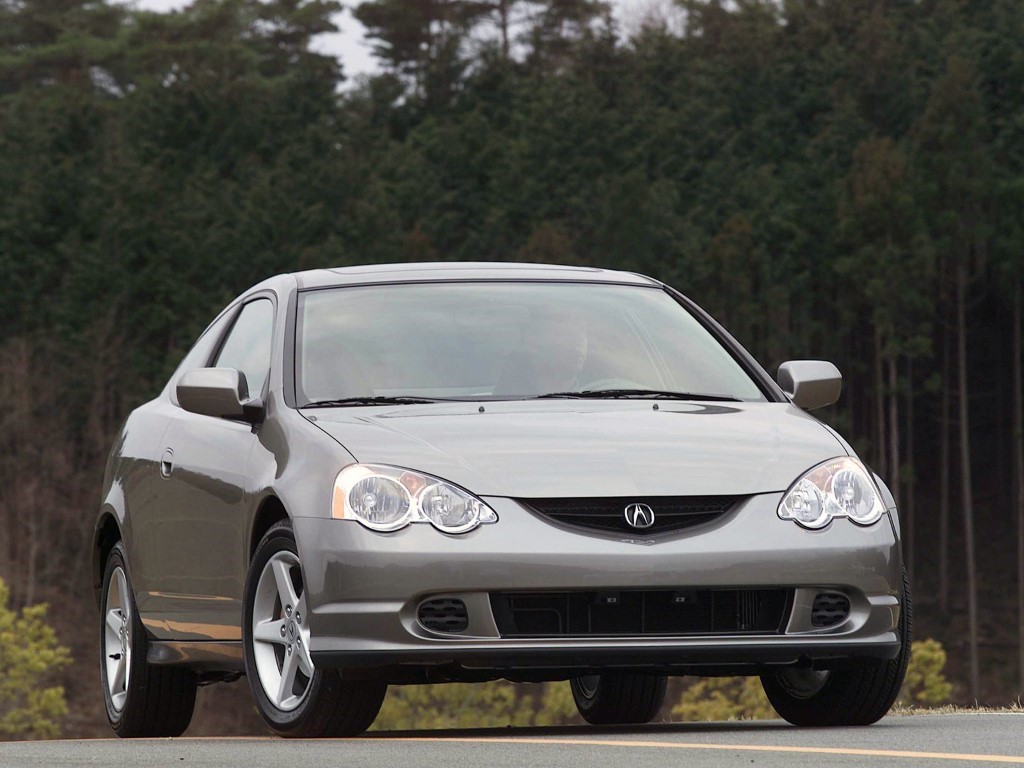
The 2002 model year marked the debut. The design was clean, characterized by headlights with a "half-moon" on the bottom and taillights with amber turn signals. 16-inch alloy wheels were standard on all models (5-spoke design for Base/Premium and split 5-spoke for Type-S).
2003-2004: Refinements and A-Spec
Few aesthetic changes occurred, but there were internal adjustments to material quality to reduce noise (NVH).
Introduction of the "Factory Performance" Package (2003): Renamed to A-Spec in 2004. This dealer-installed kit was crucial for the performance image.
A-Spec Content: Full suspension (dampers and springs) that lowered the car by approximately 1 inch and was significantly stiffer (track-tuned); exclusive 17-inch alloy wheels with high-performance tires; aerodynamic kit (front/rear spoilers, side skirts) and a distinct high rear wing. The A-Spec package radically transformed the car's handling, eliminating much of the body roll criticized in the standard model.
2005-2006: The "Facelift" (MMC - Minor Model Change)
The 2005 update was extensive and aimed to address the dynamic criticisms of the first phase.
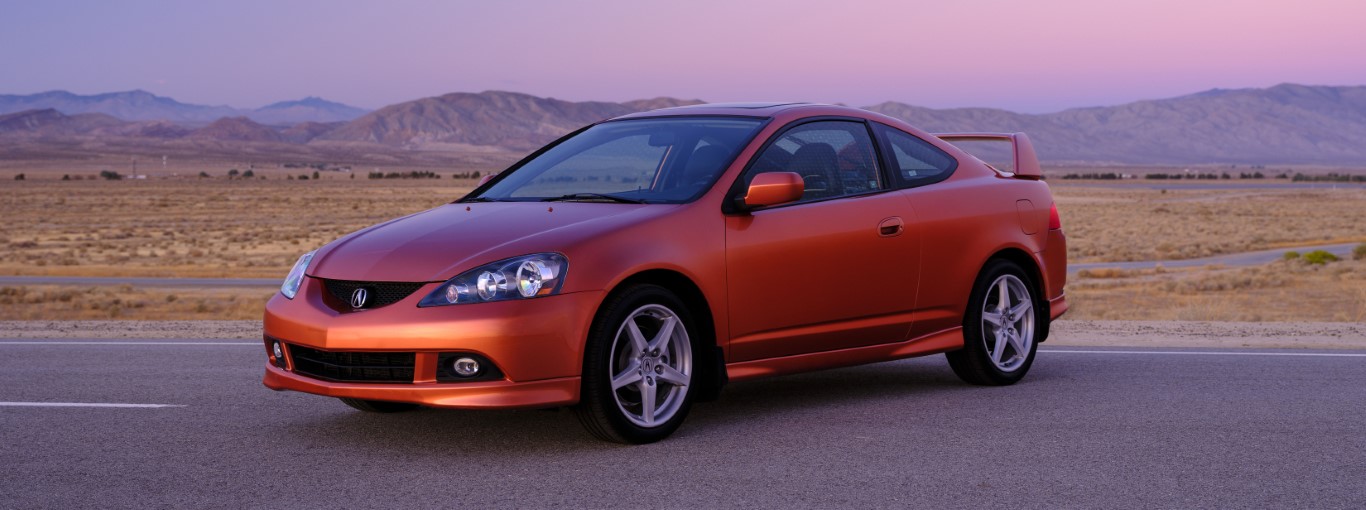
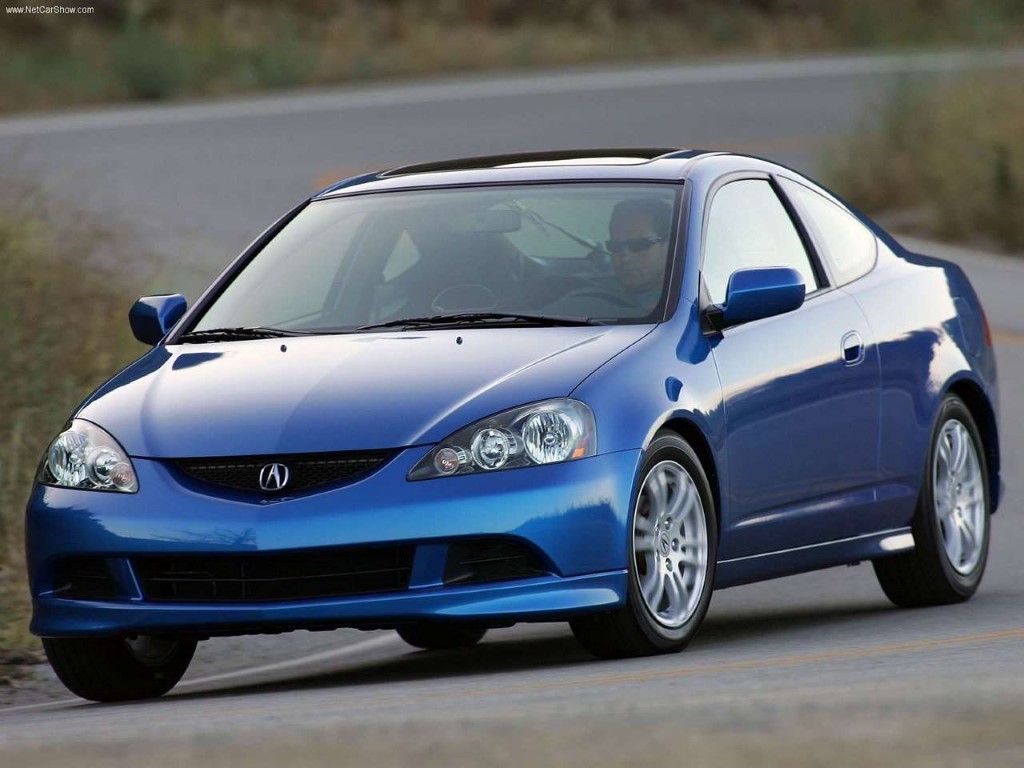
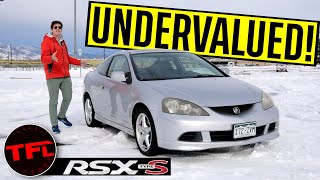
- Exterior Aesthetics: The headlights lost the bottom curve ("half-moon"), adopting a more rectangular and aggressive look with blackout housings. The taillights became completely red and white (no amber). The front and rear bumpers were redesigned to look wider and sportier.
- Wheels and Tires: The Type-S received factory 17-inch wheels (wide 5-spoke design) with 215/45R17 tires, improving lateral grip. The Base model kept 16-inch wheels but with a new 12-spoke design (Enkei).
- Suspension and Steering (Critical Changes):
- The car's height was reduced by 7mm.
- The front springs were inversely wound to neutralize lateral forces on the damper piston, improving steering response.
- Caster was increased to improve straight-line stability.
- The steering column and subframe were reinforced to increase rigidity and precision.
- Interior: Redesigned seats with deeper side bolsters and longer cushions for greater comfort. The instrument cluster received white (Type-S) or silver (Base) faces and enhanced titanium trim accents.
Regional Variations and Sales
Understanding the RSX's specifications requires a clear distinction between markets, as nomenclatures and equipment varied significantly.
United States (USDM)
The American market, focused on offering simplicity, received only two trim levels:
- RSX Base: Standard cloth seats (optional leather), no sunroof on some early configurations, smaller brakes.
- RSX Type-S: Standard perforated leather, Bose sound system with a subwoofer (mounted inside the spare tire), larger front brakes (11.8 inches vs 10.3 on the Base).
Canada (CDM)
Due to the climate and demand for more luxurious small cars, Canada had a three-tier structure:
- RSX Base: Similar to the American one, cloth seats, steel wheels with hubcaps (in some years) or simple alloy wheels. No sunroof, no heated seats.
- RSX Premium: An exclusive version that bridged the gap.
- Mechanics: K20A3 engine (160 HP) and Base model suspension.
- Equipment: Brought the luxury of the Type-S to the economical engine. Included leather seats (often heated), power sunroof, 16-inch alloy wheels, and fog lights (optional). It was the ideal choice for those who wanted the look and comfort but prioritized fuel economy and cheaper insurance.
- RSX Type-S: Similar to the USDM, but with crucial additions for winter: heated front seats and heated side mirrors were standard, items that were often unavailable on the American Type-S.
Sales Analysis and Production Numbers
Although Honda does not release exact production numbers by chassis, North American sales data (which represented the vast majority of global RSX production) allow for an accurate estimate of total volume.
United States Sales: Data indicates a strong early cycle, followed by a natural decline as the market shifted toward SUVs and larger sedans.
| Calendar Year | Total Sales | Context Notes |
|---|---|---|
| 2001 | ~16,000+ | Partial sales (July Launch). |
| 2002 | ~30,117 | First full year. Peak popularity. |
| 2003 | ~24,000+ | Stabilization. |
| 2004 | ~20,000+ | Market awaiting the facelift. |
| 2005 | 20,809 | Renewed momentum from the facelift and K20Z1 engine. |
| 2006 | 17,987 | Last year of production. Competition with Civic Si. |
| 2007 | 296 | Remaining inventory sales. |
| 2008 | 1 | Final unit. |
| Estimated Total | ~130,000 to 140,000 | Total volume in the US. |
Canadian Sales: The RSX was proportionally very successful in Canada, dominating the import coupe segment. An estimated total of 12,000 to 15,000 units (2002-2006). The sum of both markets suggests a total North American production in the range of 150,000 units.
Aesthetics, Maintenance, and Legacy
Aesthetics and Color Palette
Acura offered a range of vibrant colors, many exclusive to the RSX to attract the young demographic.
| Code | Color Name | Years | Availability/Description |
|---|---|---|---|
| B-92P | Nighthawk Black Pearl | 2002-06 | All. Deep black with metallic blue flakes visible in the sun. |
| NH-624P | Premium White Pearl | 2002-06 | Type-S (Primarily). Pearlescent white, a classic performance color. |
| NH-578 | Taffeta White | 2002-06 | Base. Bright solid white, no pearl. |
| B-507P | Arctic Blue Pearl | 2002-04 | Type-S (Exclusive). Vibrant mid-blue, the "signature" launch color. |
| B-520P | Vivid Blue Pearl | 2005-06 | All. Lighter, electric blue that replaced Arctic Blue. |
| R-81 | Milano Red | 2002-06 | All. Classic solid red. Prone to fading if not polished. |
| YR-552M | Blaze Orange Metallic | 2005-06 | Type-S (Rare). Metallic burnt orange, facelift launch color. |
| G-523M | Jade Green Metallic | 2005-06 | Base/Type-S. Elegant dark green, replaced more neutral colors. |
| NH-675M | Magnesium Metallic | 2005-06 | Type-S. Technical gunmetal grey, very popular on late models. |
Owner's Guide: Reliability and Maintenance
The RSX is mechanically robust, but it has well-documented endemic flaws that affect almost all units at some point.
- Transmission Issues (3rd Gear Grind): This is the most infamous issue. On
fast, high-rpm shifts, 3rd gear tends to "grind" or pop out on the 6-speed manual transmission.
- Diagnosis: Premature wear of the brass synchronizer rings or inefficiency of the original Honda transmission fluid under extreme heat.
- Solutions: Acura issued Technical Service Bulletins (TSBs) recommending the replacement of the synchronizer set. In the aftermarket, the most common and effective solution is changing the transmission fluid to synthetic, high-friction modified options (like GM Synchromesh). Replacing the original Clutch Master Cylinder (CMC) with one from an EM2 Civic also helps drastically.
- VTC Actuator Rattle: A loud metallic rattle that occurs for 1-2 seconds after a cold start. The locking pin of the VTC gear fails, allowing it to oscillate. The definitive solution is replacing the VTC actuator and, ideally, the timing chain and tensioner.
- Water Leaks (Taillights): It is common to find water in the spare tire well. The original gaskets degrade and flatten out. Replacing them with new gaskets (preferably thicker ones) is essential.
Culture and Modification ("Tuning")
The DC5 RSX became an icon of tuning culture, inheriting the throne from the previous Civic and Integra. The ease of extracting power from the K-Series engines drove a billion-dollar aftermarket industry.
- Hondata K-Pro: The programmable engine management system (ECU) by Hondata allowed tuners to remap the VTC and VTEC, unlocking significant power (gains of 20-30 HP just with tuning and bolt-ons) and correcting the torque curve.
- K-Swap: The RSX donated its "heart" to countless older Civics. The K20 engine from the Type-S became the gold standard for engine swaps due to its high-flowing cylinder head.
Discontinuation and Succession
The end of RSX production in August 2006 marked the end of an era for Acura. The decision was multifaceted:
- Cannibalization by the Civic Si (2006): The launch of the 8th generation Civic Si brought to market a car with the same engine, the same performance, but with a more modern chassis and, crucially, a factory Limited-Slip Differential (LSD) — an item the RSX Type-S never had in the US. The Civic Si was cheaper and dynamically superior in corners.
- Identity Change: Acura was looking to mature, and the RSX's demographic profile did not align with the brand's new aspirations.
Successors: In Canada, it was replaced by the Acura CSX. In the US, the segment was left vacant until the Acura ILX. Only in 2023 did Acura revive the Integra name, bringing back a 4-door liftback based on the Civic.
Conclusion
The Acura RSX remains one of the best examples of Japanese automotive engineering from the early 2000s. It successfully balanced the need for modernization with the sporty soul that defined Honda of that era. For the modern enthusiast, the RSX — especially in the 2005 and 2006 Type-S versions — represents the pinnacle of the analog experience: a high-revving naturally aspirated engine, a tactile manual transmission, and a communicative chassis, qualities that are increasingly rare in today's automotive market.