






Introduction and Strategic Context
The Trajectory of "Touring Luxury"
The trajectory of the Acura TL represents one of the most fascinating and transformative chapters in the history of the Japanese luxury automotive industry in North America. Launched in the mid-1990s, the TL was not just a new model in Acura's portfolio; it was the vehicle that symbolized the brand's transition from an importer of niche Japanese designs to an engineering and manufacturing powerhouse focused on the North American consumer.
The creation of the TL occurred at a critical moment for Acura. After initial success with the Legend and the Integra in the late 80s, the brand faced an identity crisis and fierce competition from Lexus (Toyota) and Infiniti (Nissan), as well as the resurgence of German luxury brands. The decision to abandon evocative names like "Legend" and "Vigor" in favor of alphanumeric designations — RL and TL, respectively — was a deliberate strategy to shift consumer focus from the car names to the "Acura" brand itself. The "TL", an acronym for "Touring Luxury", carried the responsibility of being the brand's main sales volume driver, positioned in the highly competitive mid-size luxury sedan segment.
Over its four generations, the TL evolved from a niche car with a five-cylinder engine to a world-class sports sedan capable of challenging the BMW 3 Series and Audi A4, culminating in the implementation of revolutionary technologies like SH-AWD with torque vectoring.
First Generation (UA1–UA3): 1996–1998
The Vigor's Heritage and Longitudinal Engineering
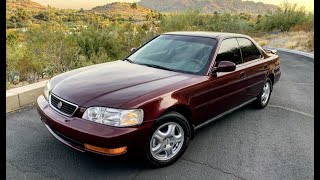
The first generation of the Acura TL, introduced to the market in 1995 as a 1996 model, was the last to maintain deep and direct ties to Honda's purely domestic Japanese engineering. Manufactured at the Sayama plant in Saitama, Japan, the first-generation TL (chassis codes UA1, UA2, and UA3) was derived from the Honda Inspire and Honda Saber models sold in Japan.
Design Philosophy and Mechanical Configuration
Unlike most front-wheel drive (FWD) sedans that opt for a transverse engine mount to maximize interior space, Honda engineers chose an unusual and sophisticated configuration for the first TL: longitudinal engine mounting. Although power was still sent to the front wheels, the engine was positioned front-to-back, similar to a rear-wheel-drive vehicle.
This engineering decision had profound implications for the vehicle's behavior and aesthetics:
- Weight Distribution: The longitudinal mounting allowed the transmission to be positioned behind the engine, shifting weight behind the front axle. This significantly improved weight distribution (getting closer to 60/40 rather than the typical 65/35 of FWD cars), reducing the tendency for "nose dive" during hard braking and improving balance in corners.
- Luxury Aesthetics: The layout allowed for a much shorter front overhang (the distance between the center of the front wheel and the front of the car) and a longer hood, giving the TL an elegant and prestigious silhouette, reminiscent of larger rear-wheel-drive sedans like the Acura Legend.
- Refinement: The longitudinal layout facilitated the use of more sophisticated hydraulic engine mounts and vibration isolation, contributing to the car's "Touring Luxury" character.
The Engine Duel: 2.5 TL vs. 3.2 TL
Acura launched the TL with a two-pronged strategy, offering two distinct engines that fundamentally altered the car's personality. The launch of the V6 model was slightly delayed due to a trade dispute between the US and Japan.
1. The Sporty One: 2.5 TL (UA2 Chassis)
The entry-level model, the 2.5 TL, inherited the spirit of its predecessor, the Acura Vigor. It was equipped with a 2.5-liter inline 5-cylinder engine (code G25A4).
- Specifications: This 20-valve SOHC engine produced 176 HP at 6300 rpm and 170 lb-ft of torque at 3900 rpm.
- Character: Acura positioned the 2.5 TL as the sporty option. The 5-cylinder engine was lighter than the V6, resulting in a more agile front end and more direct steering response.
- Wheels and Tires: It came equipped with 15x6.0-inch alloy wheels and Bridgestone 205/60 R15 tires.
2. The Luxurious One: 3.2 TL (UA3 Chassis)
The top-of-the-line model aimed to compete with the Lexus ES300 and the Infiniti I30, prioritizing smoothness and torque. It used the 3.2-liter V6 engine (code C32A6), derived from the second-generation Legend.
- Specifications: This 24-valve SOHC engine delivered 200 HP at 5300 rpm and 210 lb-ft of torque at 4500 rpm.
- Differentiators: Besides the engine, the 3.2 TL offered a quieter ride and additional equipment. To handle the extra weight and power, it used Michelin 205/65 R15 tires on slightly wider 15x6.5-inch wheels.
Transmission: Both engines were exclusively mated to a 4-speed automatic transmission with Grade Logic Control, which prevented gear "hunting" on uphill and downhill gradients. The lack of a manual option was an initial criticism from enthusiasts.
Equipment and Annual Evolution
- 1996: The debut year brought striking features like frameless windows, which gave the sedan a coupe-like feel, and automatic climate control.
- 1997: Acura added a power moonroof as standard equipment on all 2.5 TL and 3.2 TL models.
- 1998: In the final year of this generation, Acura simplified the lineup. The "Premium" model was discontinued, and its features (like heated leather seats) became standard on all cars.
Second Generation (UA4–UA5): 1999–2003
The American Revolution and Commercial Ascent
The second generation of the TL, launched in 1998 as a 1999 model, represented a seismic shift in Acura's philosophy. Production was moved from Japan to the Honda plant in Marysville, Ohio. This was not just a logistical move; the car was designed, developed, and manufactured in the US, specifically for American tastes. This generation marked the TL's transformation from a supporting player to the brand's sales protagonist.
New Platform and "Speedboat" Design
The second-generation TL abandoned the exclusive longitudinal platform in favor of Honda's mid-size global platform, shared with the Honda Accord (American version). This meant a shift to transverse engine mounting.
- Benefits of the Change: The transverse mounting freed up significant cabin space, resolving the main complaint of the first generation (cramped rear space). The car grew in width and legroom, becoming a true, comfortable 5-seat sedan.
- Aesthetics: The design was inspired by offshore speedboats. This translated into a high beltline, an aggressive front end with a prominent pentagonal grille, and a truncated rear with dual exhaust tips, suggesting power.
Powertrain Consolidation: The End of the 5 Cylinders
The complexity of offering two different engines was eliminated. The 5-cylinder engine was discontinued, and all TLs began using Honda's J-series V6 engine, an aluminum engineering marvel with VTEC technology.
3.2L V6 VTEC Engine (J32A1): The base 1999 model debuted with 225 HP, a substantial jump from the 200 HP of the previous generation. The VTEC technology allowed the engine to be docile and efficient at low RPMs, but aggressive and powerful at high RPMs.
Pioneering Technology: Navigation and Bluetooth
The second-generation TL was a technology laboratory for Honda.
- Navigation: In 1999, it was one of the first cars to offer a touchscreen navigation system. In 2000, the system was upgraded from CD to DVD, allowing the entire map of the continental United States to fit on a single disc.
- Connectivity: Later models of this generation introduced the OnStar system (2003) and laid the groundwork for Bluetooth integration.
The Emergence of the Type-S (2002–2003)
In 2002, Acura carried out a facelift that introduced the legendary Type-S badge to the TL sedan.
- Performance: The TL Type-S received a high-performance version of the 3.2L engine (J32A2). Thanks to a dual-stage intake system, larger intake valves, and a high-flow exhaust, power jumped to 260 HP at 6100 rpm and 232 lb-ft of torque.
- Chassis: The suspension was stiffened, 17-inch wheels were installed, and the car received VSA (Vehicle Stability Assist) as standard. The interior gained simulated carbon fiber trim and a sporty metallic/white-faced instrument cluster.
The Achilles' Heel: The Automatic Transmission Crisis
Despite its success, the second-generation TL is tainted by a severe mechanical flaw: the fragility of its 5-speed automatic transmission (with sequential SportShift).
- The Problem: Introduced in 2000 to replace the 4-speed gearbox, the new transmission suffered from overheating and insufficient lubrication in third gear. This led to the disintegration of the clutch packs and total failure.
- Legal Impact and Recall: The failure rate resulted in class-action lawsuits, and Honda was forced to extend the warranty on the transmissions to 7 years or 109,000 miles for 2000 to 2003 models.
- Solution: Initially, an "oil jet kit" was installed for cooling. However, only transmissions manufactured or remanufactured after March 2005 contained a robust internal redesign that definitively resolved the problem.
Third Generation (UA6–UA7): 2004–2008
The Pinnacle of Design and the Golden Era
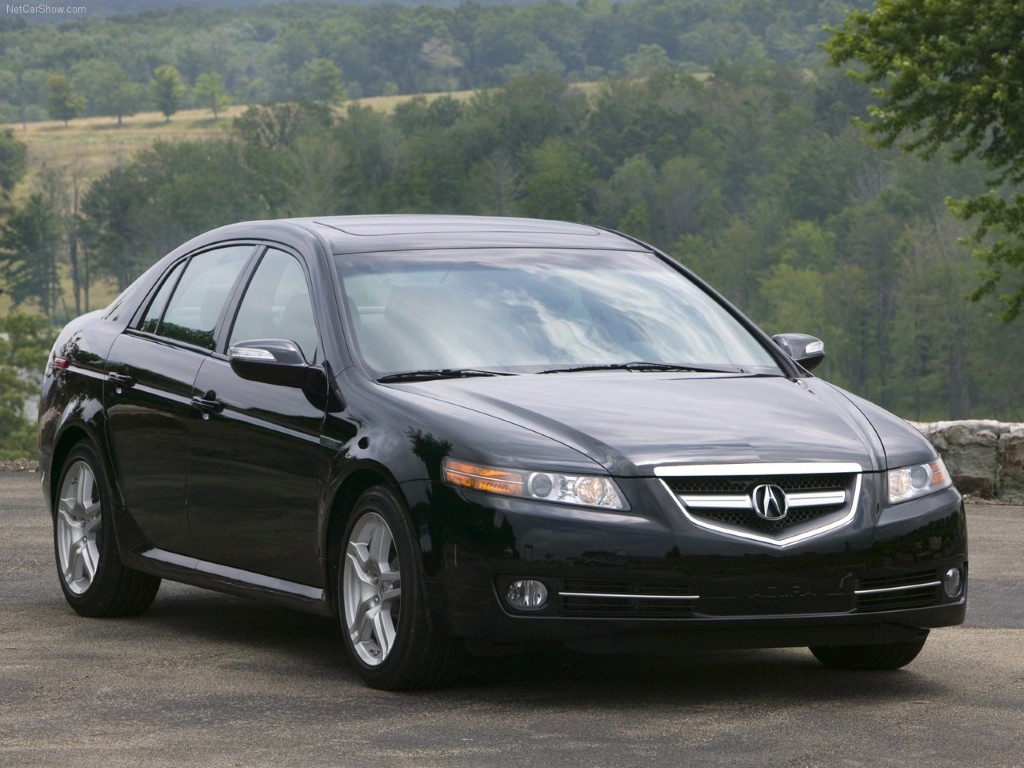
If the second generation put the TL on the map, the third generation (launched in 2003 as a 2004 model) elevated it to icon status. Designed under the leadership of Jon Ikeda, the third-generation TL broke with conservatism. With taut lines, deep side creases, and a wide stance, the car exuded a "Bauhaus" European aesthetic that has aged remarkably well.
Performance and Driving Dynamics
The chassis was rigidly reinforced, and the use of aluminum in the front (double-wishbone) and rear (multilink) suspension reduced unsprung mass.
- Powertrain: The 3.2L V6 engine (J32A3) was improved to produce 270 HP (old SAE rating; adjusted to 258 HP SAE Net in 2006).
- Manual Transmission: For the first time, Acura offered a 6-speed manual transmission with a helical limited-slip differential (LSD) and 4-piston Brembo front brakes. This setup transformed the TL into a true sports sedan.
Audio Revolution: ELS Surround and Bluetooth
The third-generation TL pioneered cabin technology:
- DVD-A Audio: Introduced the 5.1-channel ELS Surround sound system, developed with Elliot Scheiner. It was the first automotive system capable of playing DVD-Audio discs, offering 500 times the resolution of a CD and 6 discrete audio channels.
- HandsFreeLink: Popularized Bluetooth integration for wireless phone calls.
- Notorious Problem (Bluetooth): The Bluetooth module (HFL) of this generation has a design flaw where it fails to enter sleep mode, causing a parasitic battery drain if the car sits for a few days.
The Return of the Type-S (2007–2008)
In 2007, the TL received a facelift and the return of the Type-S model (UA7 chassis) to compete with the Infiniti G35 and BMW 335i.
- 3.5L Engine: Equipped with a 3.5L V6 engine (J35A8) producing 286 HP.
- Aesthetics: Quad exhaust tips, exclusive dark gray "Waffle" style wheels, black chrome badging, red instrument cluster lighting, and aluminum pedals.
- Transmission: Available with a 5-speed automatic (beefed up and featuring paddle shifters) or a 6-speed manual with LSD.
The A-Spec Package
For enthusiasts, Acura offered the A-Spec package, which included lowered suspension (0.5 to 1 inch) with firmer tuning, exclusive 18-inch wheels, a full aerodynamic kit, and a steering wheel with distinct stitching. This package significantly improved cornering response.
Aesthetic Problems: The Cracked Dashboard
The third generation is infamous for dashboard cracking. The material used reacted poorly to heat and sun cycles, resulting in long fissures over the passenger airbag and the instrument cluster.
Fourth Generation (UA8–UA9): 2009–2014
The "Keen Edge" Era and SH-AWD Technology
The fourth and final generation of the TL was launched in 2009, based on a stretched version of the eighth-generation Honda Accord platform. The goal was to move the TL into a higher category in size and technology.
The Design Controversy: "Power Plenum"
Acura adopted the "Keen Edge Dynamics" language. The central element was the metallic shield-shaped front grille, dubbed the "Beak" or "Bottle Opener." The negative backlash was intense. In response, Acura carried out a facelift in 2012, reducing the size of the grille and softening the bumpers.
The Mechanical Masterpiece: SH-AWD
The biggest technical innovation was the Super Handling All-Wheel Drive (SH-AWD) system. Unlike common systems, it is proactive and utilizes real torque vectoring.
- How it Works: The system can send up to 70% of engine torque to the rear axle and direct 100% of that torque to a single rear wheel (the outside wheel in a curve).
- The Effect: By accelerating the outside rear wheel (which spins faster than the front ones), a "yaw moment" is created that pushes the car into the turn, eliminating understeer and making the heavy sedan handle like an agile sports car.
Trims and Specifications
The fourth generation was divided into two performance tiers:
1. TL FWD (Front-Wheel Drive - UA8)
- Engine: 3.5L V6 (J35Z6) producing 280 HP and 254 lb-ft of torque.
- Transmission: 5-speed automatic (2009-2011) or 6-speed automatic (2012-2014).
- Focus: Efficiency and comfort. Electric power steering (EPS).
2. TL SH-AWD (All-Wheel Drive - UA9)
- Engine: 3.7L V6 (J37A4) — the most powerful ever made for the TL, with 305 HP and 273 lb-ft of torque.
- Additions: Stiffer suspension, EPS tuned for performance, larger brakes, and brake cooling ducts.
- The Rare Manual (The "Unicorn"): From 2010 to 2014, Acura offered the TL SH-AWD with a 6-speed manual transmission. This version was lighter (~110 lbs / 50 kg less), had exclusive engine/suspension mounts, and is extremely rare and coveted today.
Special Edition (2013): Based on the entry-level FWD model, it added 18-inch wheels, a spoiler, and a Keyless Access system, offering a sporty look at a lower cost.
Production Analysis, Sales, and Conclusion
Sales Analysis: Rise and Fall
US sales data tells the economic story of the TL, from explosive growth to post-recession decline.
| Year | US Sales | Generation | Market Context |
|---|---|---|---|
| 1996 | ~24,000 | 1st Generation | Launch; Vigor replacement. |
| 1999 | 56,566 | 2nd Generation | Boom: US production and competitive pricing. |
| 2004 | 77,895 | 3rd Generation | Historical Record: Acclaimed design. |
| 2005 | 78,218 | 3rd Generation | Absolute Sales Peak. |
| 2008 | 46,766 | 3rd Generation | Impact of the global financial crisis. |
| 2009 | 33,620 | 4th Generation | Controversial debut ("Grille"); steep decline. |
| 2012 | 33,572 | 4th Generation | Slight recovery after facelift. |
| 2014 | 10,616 | 4th Generation | End of production; transition to TLX. |
Conclusion: The TL's Legacy and the Transition to the TLX
The end of Acura TL production in 2014 marked the closing of an era. Acura decided to simplify its lineup, merging the TL and the TSX to create the Acura TLX (2015 model).
The TL left a lasting legacy:
- Democratization of Technology: It made GPS navigation, Bluetooth, and surround audio accessible in the entry-level luxury segment.
- FWD Performance: It proved that a front-wheel-drive car could be thrilling (especially the 3rd generation Type-S).
- Torque Vectoring: The 4th generation's SH-AWD system remains an industry benchmark, used to this day in Acura's newest models.
For the current used market, the TL ranges from a "youngtimer" classic (1st generation) to a robust performance bargain (4th generation SH-AWD), with the 3rd generation manual Type-S being the most highly valued collector's item.