1st Generation
(2015 - 2017)
Technical specifications, versions, and history for the Acura TLX.
Select a generation to see available versions
(2015 - 2017)
(2018 - 2020)
(2021 - 2023)
(2024 - 2025)
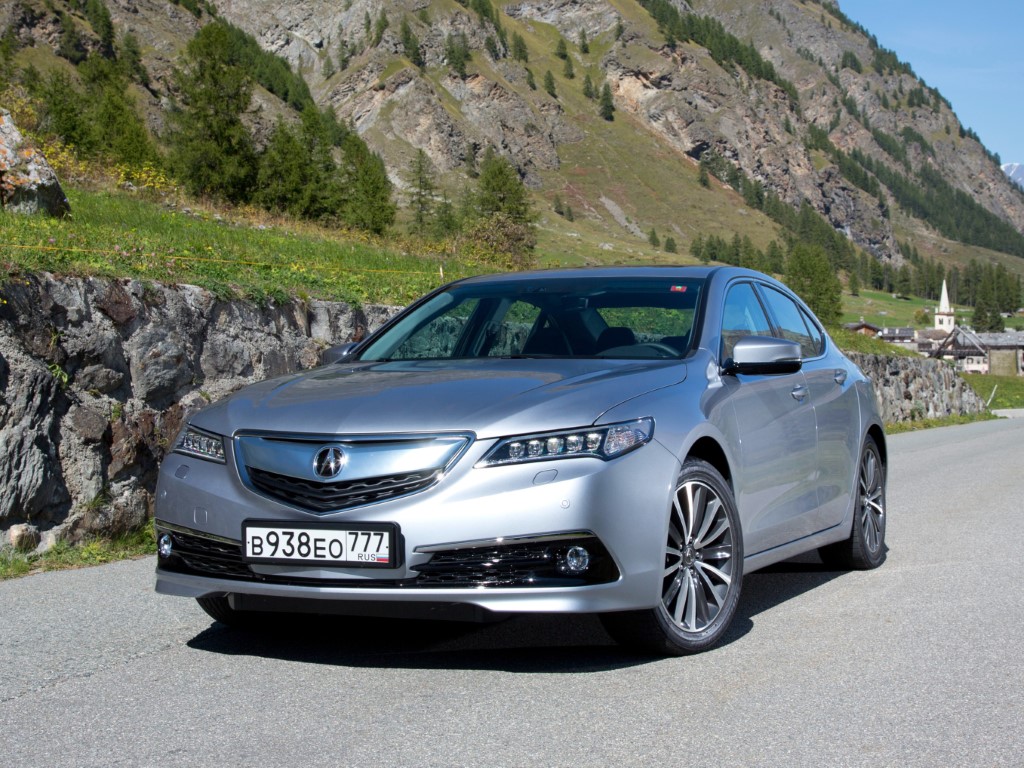
The Acura TLX was conceived in 2014 for the 2015 model year with the goal of unifying and replacing two consolidated sedans in Honda's luxury brand lineup: the compact sporty TSX and the mid-size TL. Developed at the Acura Los Angeles Design Studio, the car sought to synthesize the agile sportiness of the TSX with the space and refinement of the TL. With the discontinuation of the flagship RLX sedan after the 2020 model year, the TLX took over the position of the brand's flagship sedan, playing the role of the primary showcase for the manufacturer's engineering and sporty dynamics. Its production took place at the Marysville Auto Plant in Ohio, United States, extending from July 2014 until July 2025, when the manufacturer ceased its activities to restructure the plant toward electrification.
Initially presented as the "TLX Prototype" at the Detroit Auto Show in January 2014, the final production model debuted at the New York Auto Show in April of that year, beginning sales in August. The original design project was penned by designer Jarad Hall in 2011.
Built on the global mid-size platform shared with the ninth-generation Honda Accord (sharing only the floor stampings), the sedan sought a balance between sporty dynamic behavior and interior refinement under the conceptual philosophy of a "Red Carpet Athlete". Unlike its direct predecessors, the first generation adopted a simplified MacPherson strut front suspension, abandoning the double wishbone system present in the previous TL and TSX. The old TL's aluminum front subframe was also replaced by a friction-welded steel and aluminum hybrid piece to optimize cost and weight.
The first generation of the TLX had 4,834 mm (190.3 inches) of overall length in the initial models, with a wheelbase of 2,776 mm (109.3 inches), a width of 1,854 mm (73.0 inches), and a height of 1,447 mm (57.0 inches). The curb weight varied significantly depending on the powertrain and drivetrain system: the base four-cylinder model registered 1,580 kg (3,483 lbs), while the top-of-the-line version equipped with a V6 engine and SH-AWD all-wheel drive weighed 1,712 kg (3,774 lbs).
The first generation offered two distinct naturally aspirated powertrain and transmission options, focusing on audiences with different priorities:
The first-generation SH-AWD system utilized a torque-vectoring rear differential capable of actively directing up to 70% of engine power to the rear axle, and up to 100% of that amount specifically to the outside wheel during cornering, drastically reducing understeer (front-end push) and improving directional stability.
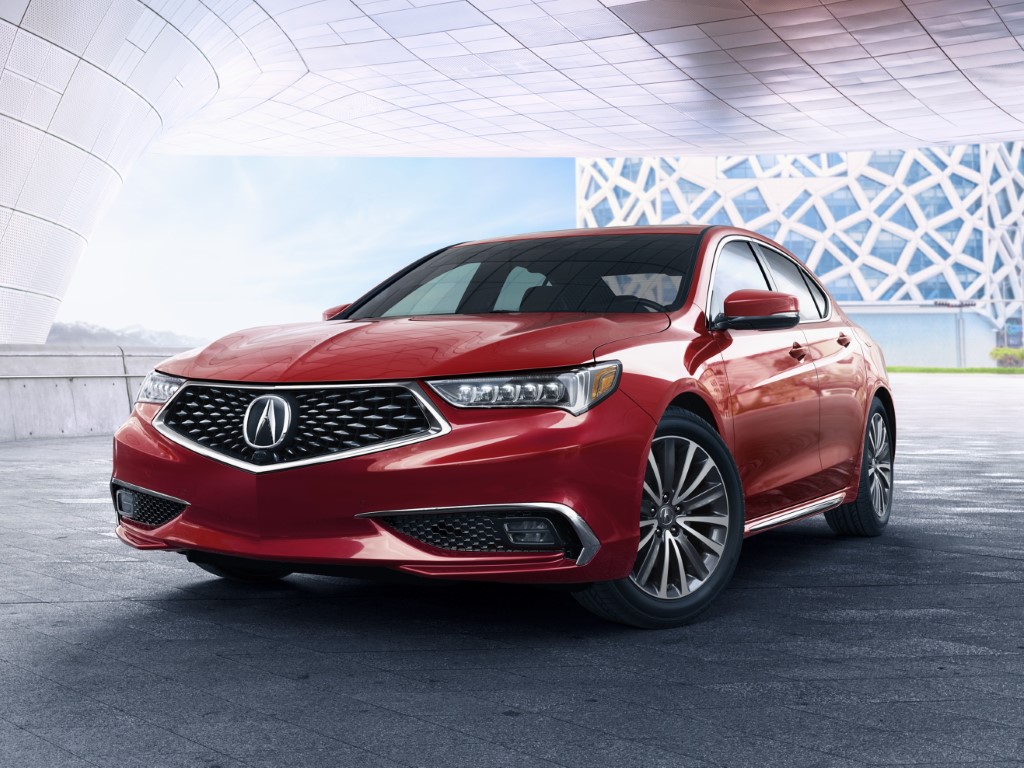
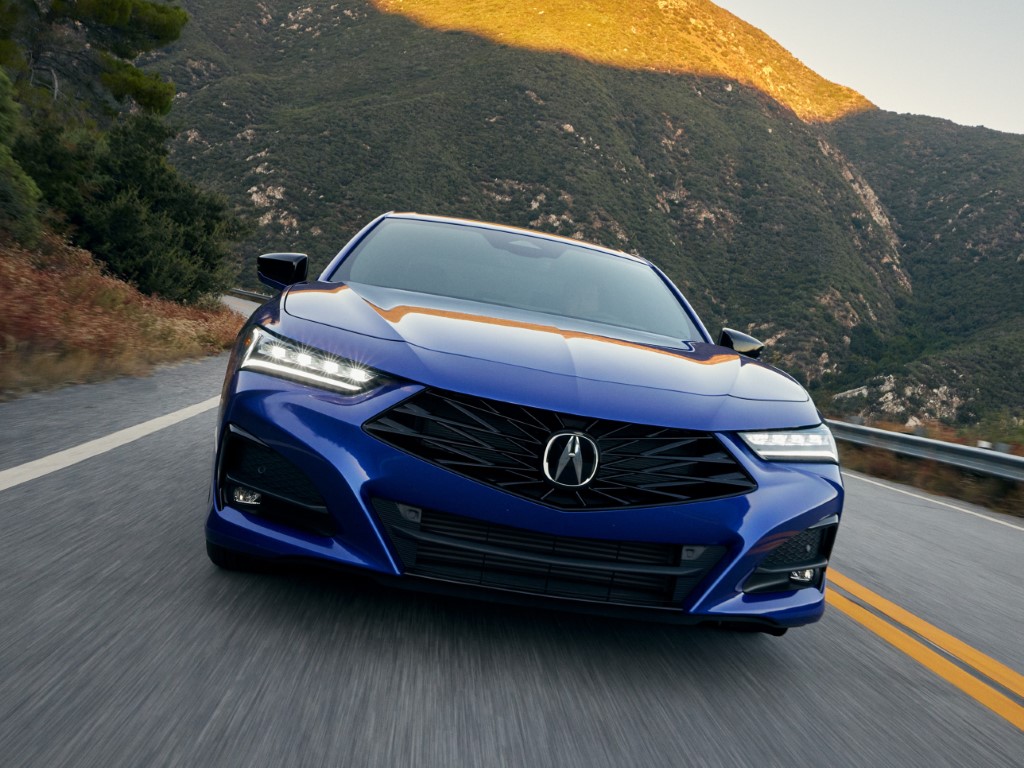
Introduced in April 2017 for the 2018 model year, the first facelift eliminated the old front grille with a horizontal gray bar (known as the "beak grille") in favor of Acura's new visual identity: the Diamond Pentagon grille. The front bumper, fenders, hood, and LED "Jewel Eye" headlights were completely redesigned to give a wider and more aggressive stance.
Inside, the biggest evolution was the update of the dual-screen infotainment system. The software received processing improvements for faster responses, simplified menus, and the highly anticipated compatibility with Apple CarPlay and Android Auto systems.
With the restyling, Acura introduced the A-Spec sports version for V6 models. The package featured 19-inch gray wheels, gloss black exterior accents, a rear spoiler, large-diameter circular exhaust outlets, seats with greater lateral support upholstered in Milano leather with Alcantara inserts, as well as a firmer steering calibration, stiffer springs, and a thicker rear sway bar. For the 2019 model year, the A-Spec visual package also became available for the 2.4-liter four-cylinder engine.
Aiming to meet the strong demand of the Chinese corporate market for additional cabin space, Acura revealed the TLX-L at the Chengdu Motor Show in August 2017. Produced locally in Guangzhou by the Guangqi Honda joint venture, the sedan had its wheelbase extended to 2,900 mm (114.2 inches), which increased the overall length to 4,931 mm (194.1 inches). Under the UB4 chassis code, the TLX-L was offered exclusively with the 2.4-liter engine tuned to yield 208 hp and 247 Nm of torque, mated to the 8-speed dual-clutch transmission and retaining the P-AWS rear-wheel steering system.
As a celebration of the end of the first generation, Acura produced the limited special PMC Edition in 2020. Each unit was hand-assembled by the same elite technicians who built the NSX supercar at the Performance Manufacturing Center (PMC) in Marysville, Ohio.
The major differentiator was the application of the special "Valencia Red Pearl" nano-pigment paint with a clear coat finish cured in a special oven, previously exclusive to the NSX. The model combined the 290 hp V6 engine with the SH-AWD traction system, utilizing the A-Spec version's dynamic suspension and steering tuning paired with the complete list of luxury equipment from the Advance package, including Milano leather and Alcantara sports seats with red stitching.
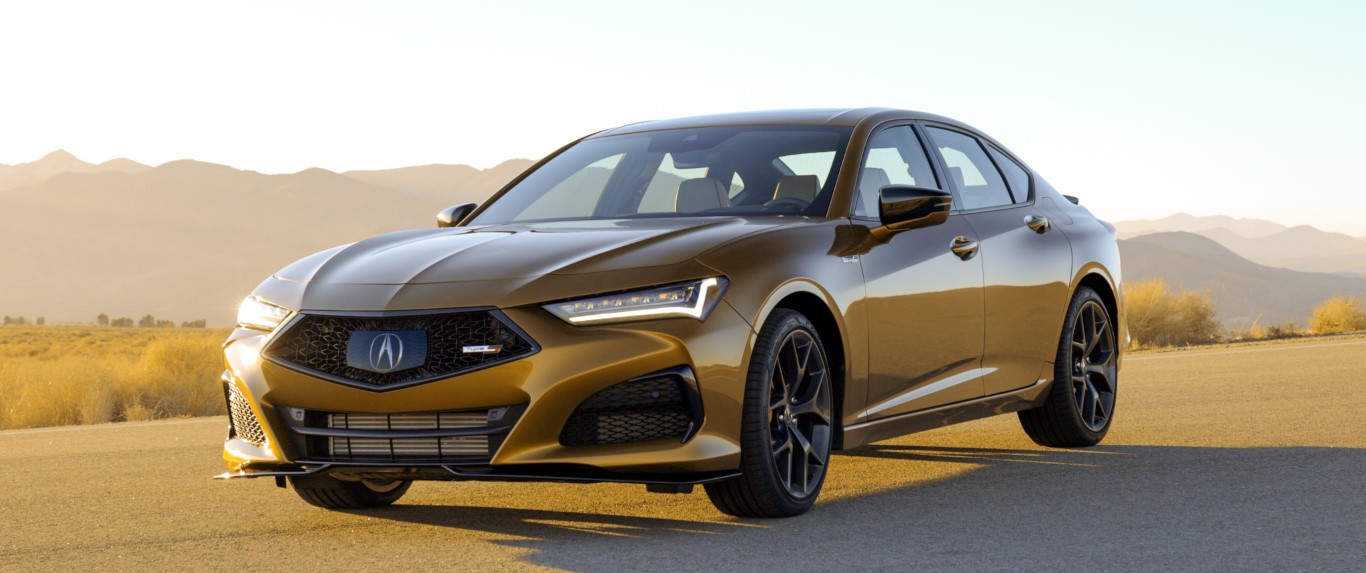
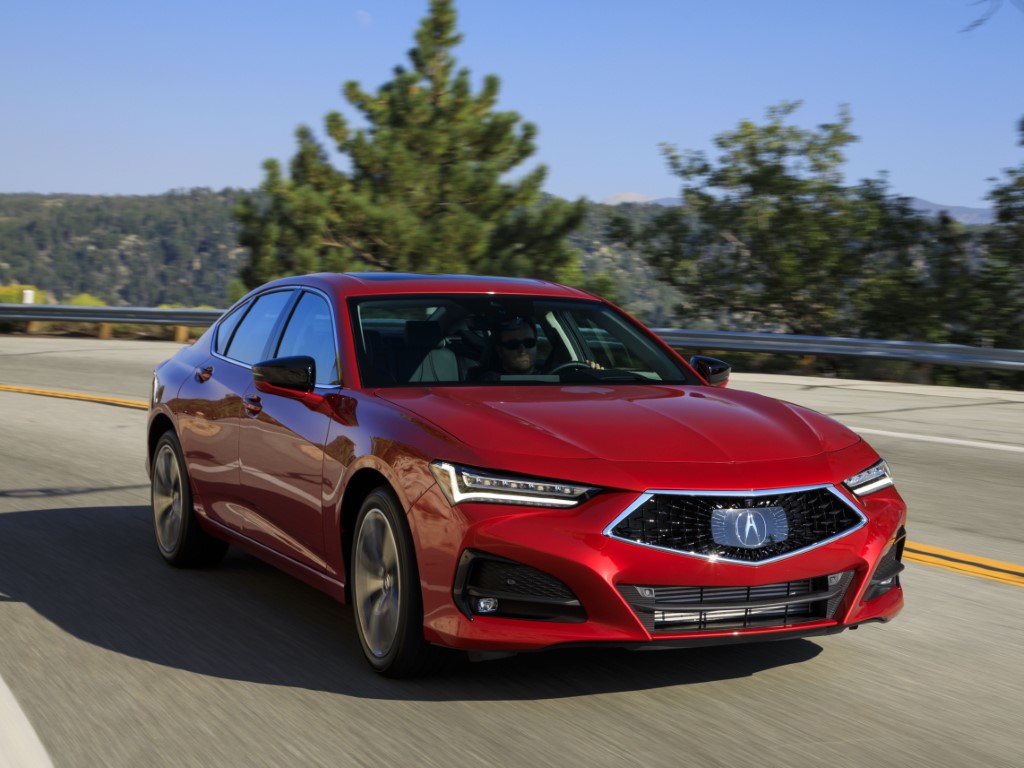
Presented digitally in May 2020 and beginning production in August of the same year, the second generation debuted in the North American market for the 2021 model year. The biggest milestone of this generation was the complete abandonment of the shared architecture with the Honda Accord in favor of an Acura-exclusive simulated rear-wheel-drive and all-wheel-drive sports platform. The visual design project was penned by Ben Davidson in 2018.
To position the TLX in direct competition with European sports sedans, Acura focused on the dynamic enhancement of the platform. The main evolution was the return of the double wishbone front suspension, replacing the MacPherson struts of the previous generation. This system utilized forged aluminum lower control arms mounted to cast aluminum damper towers. As a direct result, front lateral stiffness increased by 85%, while rear stiffness grew by 45%, providing much more precise steering responses and keeping the tire contact patch constant with the ground under severe lateral acceleration.
The body was constructed with 64% of its mass composed of high-strength steel (HSS) and aluminum. Ultra-high-strength steel sheets of 1,500 MPa were applied to critical points like the door pillars (accounting for 10.1% of the structure). To improve the static front/rear weight distribution, the front fenders became aluminum and the battery was relocated to the trunk. Additionally, the central floor tunnel was reinforced longitudinally with 980 MPa steel to increase torsional rigidity.
The second generation replaced the conventional vacuum brake booster with an integrated electro-servo brake-by-wire system calibrated based on dynamic feedback developed for the second-generation NSX supercar. The top-of-the-line Type S models additionally received high-performance 4-piston Brembo brake calipers on the front axle with larger-diameter ventilated discs.
The second generation entirely abandoned naturally aspirated engines, adopting modern turbocharged powertrains with direct fuel injection:
Just as in the previous generation, Acura offered a limited run of the Type S hand-assembled at the Performance Manufacturing Center in 2023. This special version featured three special paints from the NSX catalog: Curva Red (with black interior), 130R White (with red interior), and Long Beach Blue (with Orchid interior). It came factory-equipped with 20-inch "Y" spoke forged alloy wheels painted in copper, Pirelli P-Zero 255/35 high-performance tires, a gloss black roof and door handles (Berlina Black), as well as a rear spoiler, a rear air diffuser, and interior dashboard accents crafted in real carbon fiber.
In the 2024 model year, the TLX received a mid-cycle facelift that prioritized modernizing the cabin and enhancing active driver assistance systems. The entry-level (Base) model was discontinued from the catalog to position the A-Spec and Type S versions as the standard market configurations, adding more standard value.
The main evolutions applied in the restyling included:
The table below gathers the specifications of all engines and transmissions officially offered by Acura throughout the two generations of the TLX on a global scale:
| Generation / Chassis Code | Engine / Code | Configuration | Maximum Power | Maximum Torque | Transmission Type | Drivetrain | Production Years |
|---|---|---|---|---|---|---|---|
| 1st Gen (UB1) | 2.4L naturally aspirated (K24W7) | Inline 4-cyl, 16v, i-VTEC | 206 hp @ 6,800 rpm | 182 lb-ft @ 4,500 rpm | 8-speed dual-clutch (DCT) with torque converter | Front-wheel drive (FWD) with P-AWS system | 2014–2020 |
| 1st Gen (UB4 - China) | 2.4L naturally aspirated (K24W7) | Inline 4-cyl, 16v, i-VTEC | 208 PS (205 hp) @ 6,800 rpm | 247 Nm (182 lb-ft) @ 4,500 rpm | 8-speed dual-clutch (DCT) with torque converter | Front-wheel drive (FWD) with P-AWS system (Long wheelbase) | 2017–2020 |
| 1st Gen (UB2/UB3) | 3.5L naturally aspirated V6 (J35Y6) | 60° V6, 24v, i-VTEC, VCM | 290 hp @ 6,200 rpm | 267 lb-ft @ 4,500 rpm | 9-speed conventional automatic (ZF) | Front-wheel drive (FWD) with P-AWS or All-Wheel Drive SH-AWD | 2014–2020 |
| 2nd Gen (UB5/UB6) | 2.0L Turbo I4 (K20C6) | Inline 4-cyl, 16v, VTEC, Turbo | 272 hp @ 6,500 rpm | 280 lb-ft @ 1,600–4,500 rpm | 10-speed conventional automatic | Front-wheel drive (FWD - UB5) or All-Wheel Drive SH-AWD (UB6) | 2020–2025 |
| 2nd Gen (UB7 - Type S) | 3.0L Turbo V6 (J30AC) | 60° V6, 24v, Twin-Scroll Turbo | 355 hp @ 5,400 rpm | 354 lb-ft @ 1,400–5,000 rpm | 10-speed conventional automatic (Sport Calibration) | Standard SH-AWD All-Wheel Drive | 2021–2025 |
The Acura TLX obtained excellent commercial acceptance in its early market years, driven by the novelty and the unification of the customer bases from the TSX and TL lineups. However, the model's commercial trajectory was impacted in subsequent years by the global rise of sport utility vehicles (SUVs) in the brand's portfolio (represented by the RDX and MDX lines) and, internally, by the arrival of the redesigned Acura Integra in late 2022. The Integra, offered for a substantially lower price in its entry-level version, ended up cannibalizing the sales of the four-cylinder TLX versions.
Below are the officially recorded annual sales figures in the United States, Canada, and China markets throughout the vehicle's life cycle:
| Calendar Year | Annual US Sales | Annual Canada Sales | Annual China Sales |
|---|---|---|---|
| 2014 | 19,127 | 3,497 | - |
| 2015 | 47,080 * | 5,075 / 5,056 | - |
| 2016 | 37,156 | 4,137 | - |
| 2017 | 34,846 | 4,205 | 134 |
| 2018 | 30,468 | 3,826 | 1,596 |
| 2019 | 26,548 | 3,360 | 1,053 |
| 2020 | 21,785 | 2,704 | 17 |
| 2021 | 26,100 | 2,450 | - |
| 2022 | 11,508 * | 1,422 | - |
| 2023 | 16,731 | 977 | - |
| 2024 | 7,478 * | 840 | - |
| 2025 | 8,030 | - | - |
*Note: Minimal recording variations between local registration databases and Honda Motor Co.'s corporate billing reports justify minor discrepancies in specific US sales years (in 2015, some databases indicate 45,204 units; in 2022, 11,253 are recorded; and in 2024, 6,343 are recorded).
The data reveals a steep decline in sales volume starting in 2022. The drop of more than 55% in the vehicle's market billing between 2023 (16,731 units) and 2024 (7,478 units) in the United States accelerated the parent company's decision to end the product cycle. The market demonstrated that the vast majority of traditional sedan buyers have definitively migrated to SUVs or more accessible premium compact models.
Although promotional newsletters from regional dealerships even projected cosmetic novelties for a prospective "2026 Acura TLX", the industrial reality confirmed that the sedan's production was definitively concluded in July 2025 at the Marysville plant in Ohio. There are no new TLX vehicles being assembled for the 2026 model year; any model marketed as "new" from late 2025 onwards consists of remaining inventory of the final units manufactured until July 2025.
The cancellation of the TLX ended a historic 30-year trajectory of premium mid-size sedans for Honda's luxury brand, which began in 1995 with the classic Acura TL. In the cumulative history of three decades of this segment, Acura sold more than 1 million sedans of this size in North America.
Three main market forces motivated the end of the sedan's production line:
The Acura TLX consolidated itself in automotive engineering history as one of the most balanced and competent luxury sedans developed by the brand. The model started from an initial project focused on cost-benefit in 2015, based on the conventional Honda Accord platform, and evolved into a high-level sports platform in its second generation, characterized by the excellent dynamic behavior of its double wishbone front suspension and the brutality of the Type S configurations.
The TLX's trajectory illustrates the end of the traditional sports sedan cycle with internal combustion engines, making way for electrification and sport utility vehicles. The remaining units produced in 2025 represent the pinnacle of Acura's mechanical dynamic development, offering true torque-vectoring systems (SH-AWD) highly valued by enthusiasts seeking pure dynamic engagement in daily driving.