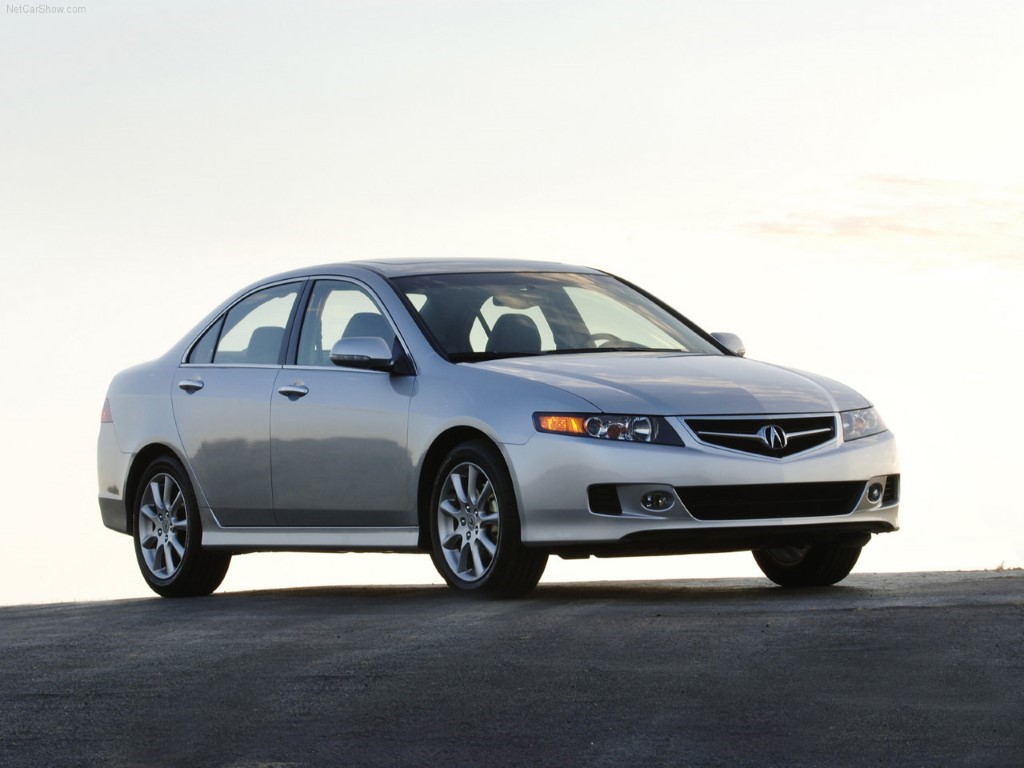
1st Generation
(2004-2005)
The masterpiece of four-cylinder engineering within an impeccably balanced chassis.
Select a generation to see available versions
(2004-2005)
(2006-2008)
(2009-2010)
(2011-2014)
Select a powertrain to view full technical specifications
In the early 2000s, Acura faced a dilemma regarding identity and product positioning in North America. The brand had built its reputation in the 90s with the legendary Acura Integra, a model that offered sedan and coupe variants, serving as the entry point to the brand. However, with the transition from the Integra to the RSX in 2002, Acura made the strategic decision to offer the RSX exclusively as a two-door coupe. This created a significant vacuum in the product lineup: there was no compact, sporty sedan to compete with the growing popularity of the BMW 3 Series (E46 generation) and the Audi A4 (B6 generation), which dominated the "Yuppie" (young urban professionals) market.
The Acura TL sedan, although popular, was growing in size and price, moving into a higher segment. Acura needed a vehicle that was smaller, more agile, and focused on pure driving dynamics, something that would revive the spirit of the Integra Sedan, but with a superior level of refinement (NVH - Noise, Vibration, and Harshness), suitable for maturing buyers.
Honda's solution to this problem was a brilliant exercise in global platform leveraging. At the time, Honda produced two distinct lines of vehicles under the "Accord" name:
Acura decided to import the Japanese/European version of the Accord to North America, rebranding it as the Acura TSX (Touring Sport eXperimental). The model would be positioned as a premium sports sedan, filling the gap left by the Integra Sedan and serving as the new entry point for the brand's sedan lineup.
This strategic decision was fundamental. Unlike the American Accord, which utilized simplified suspensions in some versions and prioritized isolation, the TSX inherited the sophisticated double wishbone front suspension and multi-link rear suspension from the Japanese Accord Euro R, ensuring a superior dynamic foundation from the start.
The first-generation TSX, internally designated by the chassis code CL9, is widely considered by automotive enthusiasts and engineers as one of Honda's high points in terms of mechanical balance. Produced exclusively at the Sayama plant in Japan, the model arrived at dealerships in April 2003 as a 2004 model.
The heart of the first-generation TSX is the 2.4-liter inline four-cylinder engine, code K24A2. This was not a "standard" Honda engine; it differed drastically from the versions of the K24 engine found in the CR-V or the American Accord of the time.
The TSX offered two transmission options, both of high technical quality:
Suspension and Rigidity: The double wishbone front suspension architecture allowed for superior camber control during aggressive cornering, keeping the tire in optimal contact with the ground. This contrasted with the cheaper MacPherson strut suspension common in competitors, which tended to lose geometry under intense lateral load. The CL9 chassis was extremely rigid, utilizing high-strength steel in key points, which allowed Acura engineers to tune the suspension to be firm without being uncomfortable.
2004: Official launch. The car came very well equipped right out of the box, a strategy by Acura to differentiate itself from the Germans (BMW/Audi) who charged extra for almost everything. Items like a moonroof, heated leather seats, Xenon (HID) headlights, and a premium sound system were standard.
2005: Minor updates. The radio system gained XM Satellite Radio compatibility. There were tweaks to interior lighting, and heated side mirrors became standard on all trims.
The 2006 model year brought the most profound changes in the history of the first generation. Although visually the alterations were subtle, mechanically the car was re-engineered.
The SAE Horsepower Controversy: In 2006, the official listed power output rose to 205 HP (from 200 HP). However, this hides a much larger improvement. In 2005/2006, the SAE (Society of Automotive Engineers) revised its horsepower measurement standards to be much more stringent. If the 2004 engine (200 HP) had been measured by the new 2006 standards, it would have been rated around 189 HP. Therefore, the 2006 engine didn't just gain 5 horsepower; it gained about 15 to 16 true horsepower compared to the previous model, a significant performance jump that often goes unnoticed.
To achieve this real gain, Honda performed surgery on the K24A2 engine:
2007: Introduction of the Tire Pressure Monitoring System (TPMS) as standard. Few mechanical changes, consolidating the reliability of the 2006 package.
2008: The final year of the first generation. Acura launched new color options and kept the car unchanged, setting the stage for the next generation. This year is frequently the most sought-after in the used market as it is the most "mature" and bug-free version of the CL9 chassis.
Launched in March 2008 as a 2009 model, the second-generation TSX (CU2 chassis) arrived during a turbulent economic time (the global financial crisis). Acura's goal was to maintain sportiness but add more comfort, space, and technology, responding to criticisms that the first generation was "too small" by American luxury standards.
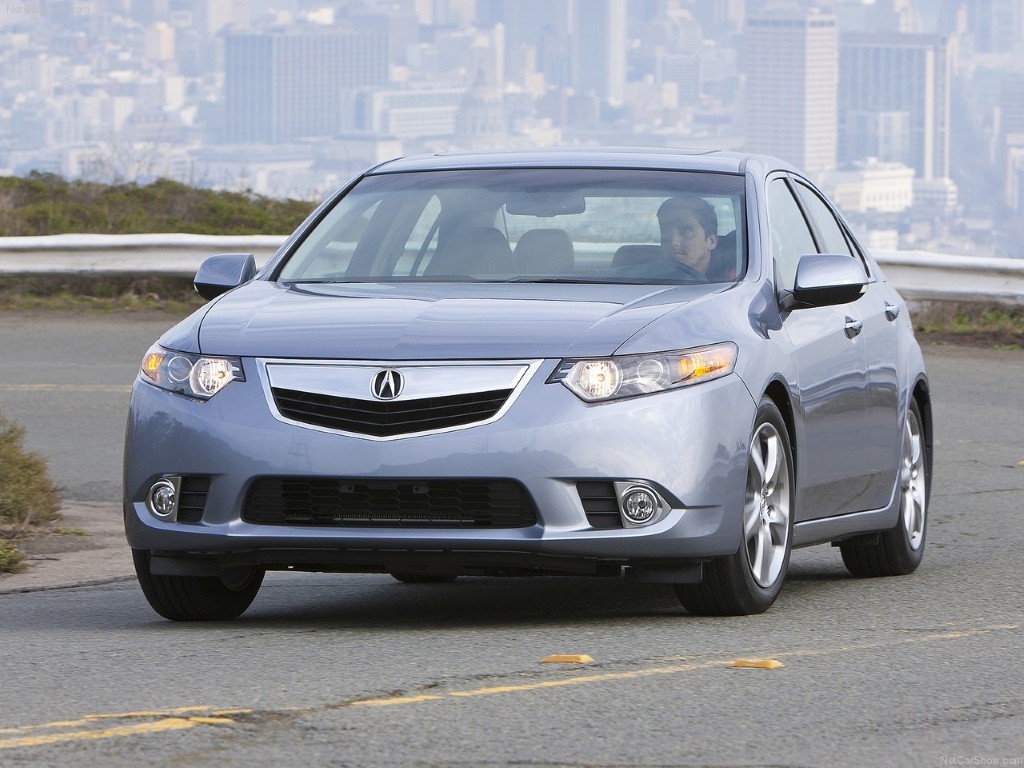
The new TSX grew. The width increased significantly (72.4 inches), and the wheelbase was extended to 106.5 inches. The design adopted Acura's controversial "Keen Edge" visual language, characterized by the prominent metallic front grille (dubbed the "beak" or "power plenum"), which proved divisive among purists.
The base 4-cylinder engine evolved into the K24Z3.
The second generation saw Acura attempt to expand the TSX's appeal into two new sub-segments, resulting in some of the rarest and most interesting versions in the model's history.
In 2010, responding to demands that the TSX needed "more engine" to compete with the BMW 328i and Lexus IS350, Acura introduced the 3.5-liter J35Z6 V6 engine to the sedan.
Launched as a 2011 model, the TSX Sport Wagon is perhaps the most cult-followed version of the model. It was, essentially, the Honda Accord Tourer sold in Europe, brought to the US to compete with the Audi A4 Avant and the BMW 3 Series Touring.
2009: Launch. Introduction of the "Technology Package," which included the acclaimed 10-speaker ELS Surround sound system designed by Grammy-winning audio engineer Elliot Scheiner. This system is frequently cited as one of the best factory audio systems in any car under $50,000 at the time.
2010: Launch of the V6 model. Updates to the navigation system to include real-time traffic and weather.
The 2011 model brought crucial refinements to address complaints about noise and aesthetics.
Special Edition (SE): Launched in 2012 to celebrate the sportiness of the 4-cylinder engine. The SE included a more aggressive aerodynamic kit (front, side, and rear underbody spoilers), exclusive 17-inch dark-finish polished wheels, and an interior with perforated suede seats (Lux Suede) featuring red stitching. There were no power changes, but the aesthetics evoked the old Euro R.
2013-2014: Final years of production. The TSX remained largely unchanged as Acura prepared its successor, the TLX (which would replace both the TSX and the TL).
It is crucial to position the TSX correctly on Honda's global map to understand its unique characteristics.
Many consumers confuse the TSX with the Honda Accord sold in Brazil or the US.
The TSX was designed to attack the BMW 325i/328i and the Audi A4 1.8T/2.0T.
The TSX's credibility as a sports car was cemented on the track by the Wisconsin-based RealTime Racing team.
The TSX's sales trajectory directly reflects the economic health of the US and the shift in consumer preference toward SUVs.
| Calendar Year | Total Sales | Wagon (Only) | Contextual Analysis |
|---|---|---|---|
| 2003 | 18,932 | N/A | Partial launch (April-Dec) |
| 2004 | 30,365 | N/A | First full year. Immediate success. |
| 2005 | 34,856 | N/A | Continuous growth. |
| 2006 | 38,035 | N/A | Historical peak. The facelift boosted demand. |
| 2007 | 33,037 | N/A | Stabilization. |
| 2008 | 31,998 | N/A | Resilience despite the financial crisis. |
| 2009 | 28,650 | N/A | Decline (Global recession/Gen 2 launch). |
| 2010 | 32,076 | 126* | Recovery with V6. (*Pre-production units). |
| 2011 | 30,935 | 3,210 | Official Wagon launch. |
| 2012 | 28,865 | 4,234 | Wagon sales peak. Gen 2 Facelift. |
| 2013 | 17,484 | 1,976 | Abrupt drop (Cannibalization by ILX/RDX). |
| 2014 | 5,647 | 640 | End of production. Remaining stock. |
| 2015 | 352 | - | Final inventory sales. |
| Total | ~292,000 | ~10,188 |
Data Interpretation: The Sport Wagon represents less than 4% of total production throughout the TSX's history, confirming its status as a "unicorn." The peak in 2006 demonstrates how well-received the mid-cycle refresh was. The drop in 2013/2014 was accelerated by Acura's decision to introduce the ILX as the new entry-level car.
For current and future owners, the TSX is an extremely reliable car, but it has specific weak points that require attention.
The Acura TSX occupies a unique place in automotive history. It represented the pinnacle of Honda's philosophy of "accessible luxury through superior engineering." While its successors (ILX and TLX) focused more on digital technology and visual design, the TSX – especially the first-generation CL9 – remained true to mechanical purity: double wishbone suspension, high-revving naturally aspirated engines, and tactile transmissions. With just under 300,000 units sold over a decade in the US, the TSX wasn't a mass-market volume car like the Toyota Camry, but it built a loyal fanbase. The V6 and Sport Wagon versions stand as testaments to Acura's willingness to experiment, and today they are coveted pieces in the used market. For the enthusiast seeking Japanese reliability with the soul of a European sports sedan, the TSX undeniably remains one of the best options ever produced.
Images of the Acura TSX