Acura ZDX EV

Acura ZDX EV

Technical specifications, versions, and history for the Acura ZDX EV.

Acura ZDX EV Generations

Select a generation to see available versions

Acura ZDX EV G1

1st Generation

(2024 - 2025)

Permanent Magnet Electric Motors 506 cv

Technical Data and History: Acura ZDX EV

Introduction

The Acura ZDX represents one of the most unique and daring journeys in the modern history of Honda's luxury division. The model existed in two completely distinct eras, separated by more than a decade. In its first appearance, the ZDX challenged traditional industry aesthetic standards by blending the lines of a sporty coupe with the height and ruggedness of a sport utility vehicle (SUV). In its second incarnation, the ZDX returned entirely reformulated as Acura's first purely electric vehicle, symbolizing a crucial step in the manufacturer's energy transition before a new shift in strategic direction.

Origin and First Generation (YB1; 2010–2013)

The first generation of the Acura ZDX, identified internally by model code YB1, originally debuted at the New York International Auto Show in April 2009 as a 2010 model. The vehicle marked an era by being the first project developed from start to finish at Acura's then-new design studio in Torrance, California, under the leadership of designer Michelle Christensen. During the conceptual phase, designer Damon Schell also played an active role in defending the aggressive and polarizing proportions that characterized the prototype.

Visual Conception and Design Challenges

The design team's intention was to create an automobile that would break the monotony of traditional sport utility vehicles. Michelle Christensen described the ZDX as a "four-door luxury sports coupe" due to the sharp slope of its roof towards the rear. The model featured a high beltline, narrow side windows that created an armored-cabin atmosphere, and rear door handles seamlessly integrated into the glass pillars, mimicking the appearance of a two-door coupe.

Mechanically, the ZDX had no relation to the Honda Crosstour, which was based on the Accord sedan. Acura's crossover shared its architecture with the large Acura MDX SUV and the Honda Pilot, being assembled by Honda Canada Manufacturing in Alliston, Ontario, Canada. Although the cabin offered an excellent hand-stitched leather finish and ergonomic front seats with heating and ventilation, the exterior design severely hindered interior packaging. The curvature of the roof drastically reduced rear-seat passenger headroom, while the narrow trunk opening limited its practical utility for hauling bulky cargo, factors that weighed negatively on the vehicle's public acceptance.

Engineering, Powertrain, and Driving Dynamics

Under the hood, Acura adopted a single large-displacement powertrain to give the crossover agile behavior. The engine used was the J37A5, a 3.7-liter V-type six-cylinder (V6) block made of die-cast aluminum. This engine featured a single overhead camshaft (SOHC) system and variable valve timing and lift electronic control (VTEC). With an 11.2:1 compression ratio, the powerplant delivered 300 horsepower at 6,300 rpm and 270 lb-ft (366 Nm) of torque at 4,500 rpm, requiring the exclusive use of premium high-octane gasoline.

The engine worked in tandem with a six-speed automatic transmission, which was the first six-speed gearbox developed by Acura. The transmission featured the Sequential SportShift system, which allowed for manual gear changes via steering-wheel-mounted paddle shifters, as well as Grade Logic Control electronic monitoring to optimize shifts on steep climbs and descents. Engine power was distributed by the Super Handling All-Wheel Drive (SH-AWD) permanent all-wheel-drive system. This system actively engaged in torque vectoring, directing power not only between the front and rear wheels, but also individually between the rear wheels to push the vehicle into corners, drastically reducing the understeer tendency common in heavy SUVs.

Versions, Equipment, and Technology Packages

At its launch, the Acura ZDX was marketed with three standard equipment levels. The base model already featured refined items such as a dual panoramic sunroof with power sunshades and 19-inch, seven-spoke alloy wheels, which were the brand's largest standard wheels at the time.

Consumers seeking greater technical refinement could opt for the Technology Package, which added a voice-command navigation system, an 8-inch central VGA display, a multi-angle rearview camera, and a 435-watt premium Acura/ELS surround audio system with a 15-gigabyte internal hard drive for music storage.

At the top of the range was the Advance Package, which brought a pioneering suite of safety and dynamic technologies, including blind-spot monitoring, the Collision Mitigating Braking System (CMBS) for automatic emergency braking, and adaptive cruise control (ACC). The Advance Package also added the Integrated Dynamics System (IDS), a system that allowed the driver to adjust the firmness of the steering and the active magneto-rheological dampers, which instantly altered the stiffness of the suspension assembly according to the selected driving mode.

The Farewell Facelift and Lineup Simplification (2013)

In late 2012, in light of commercial results well below expectations, Acura announced that it would discontinue the ZDX after the end of the 2013 model year. To optimize the production line and reduce final costs, the manufacturer completely restructured the vehicle's offering, eliminating optional packages and marketing the crossover in a single, highly equipped trim level.

Visual and Functional Updates

The 2013 model received discrete aesthetic tweaks to grant a more mature and modern appearance. On the front end, the controversial shield-shaped grille was redesigned, losing heavy chrome elements in favor of a cleaner and more elegant look. The front and rear bumpers were subtly shaped to accommodate factory-integrated parking sensors.

The vehicle also began featuring power-folding exterior mirrors with automatic dimming, as well as wheels with a dark two-tone internal finish. In the cabin, the center console received a black finish replacing the previous silver tone, new high-contrast leather options were made available, and the steering wheel received a thicker grip, with no visible stitching in the driver's hand contact area.

Mechanical and Technological Cost-Reduction Adjustments

Although it added desirable features in the 2013 facelift, Acura removed some of the car's most complex and expensive engineering systems. Adaptive cruise control (ACC), radar-based CMBS braking, and the active suspension with adjustable magnetic dampers (IDS) were completely discontinued. To maintain competitiveness in active safety, the brand replaced these systems with camera-based technologies mounted on the windshield, which included Forward Collision Warning (FCW) and Lane Departure Warning (LDW).

These changes simplified the car's chassis, which reverted to using conventional dual-acting shock absorbers, though recalibrated to maintain sportiness. The vehicle's suggested retail price for 2013 rose to $50,920 (plus an $895 destination charge, totaling $51,815), a $4,800 increase over the previous year's base model, making the ZDX the most expensive vehicle in the Acura range until the arrival of the RLX sedan the following year.

End of First Generation Production

Production of the first-generation ZDX was permanently ended in early 2013 at the Alliston plant. This move coincided with the relocation of the assembly lines for the MDX SUV (which shared the same platform) to the Honda plant in Lincoln, Alabama. Throughout its four years on the market, the model recorded an extremely low sales volume, totaling only 7,191 units sold in North America, making it one of the rarest and most exclusive vehicles ever manufactured by the Japanese brand.

Second Generation (2024–2025): The Era of Electrification

After a hiatus of more than a decade, Acura resurrected the ZDX name in 2024. This time, the vehicle abandoned its internal combustion powertrain and coupe crossover format to transform into a mid-to-large size, fully electric SUV, inaugurating the brand's zero-emissions era in North America.

Strategic Partnership with General Motors and Project Leadership

The creation of the electric ZDX was made possible through technical and commercial cooperation between Honda and General Motors. The model utilized GM's BEV3 electric vehicle platform, commercially known as Ultium, sharing several structural components, motors, and batteries with the Cadillac Lyriq. The ZDX EV was produced at GM's factory in Spring Hill, Tennessee, which previously operated as a facility for the Saturn brand.

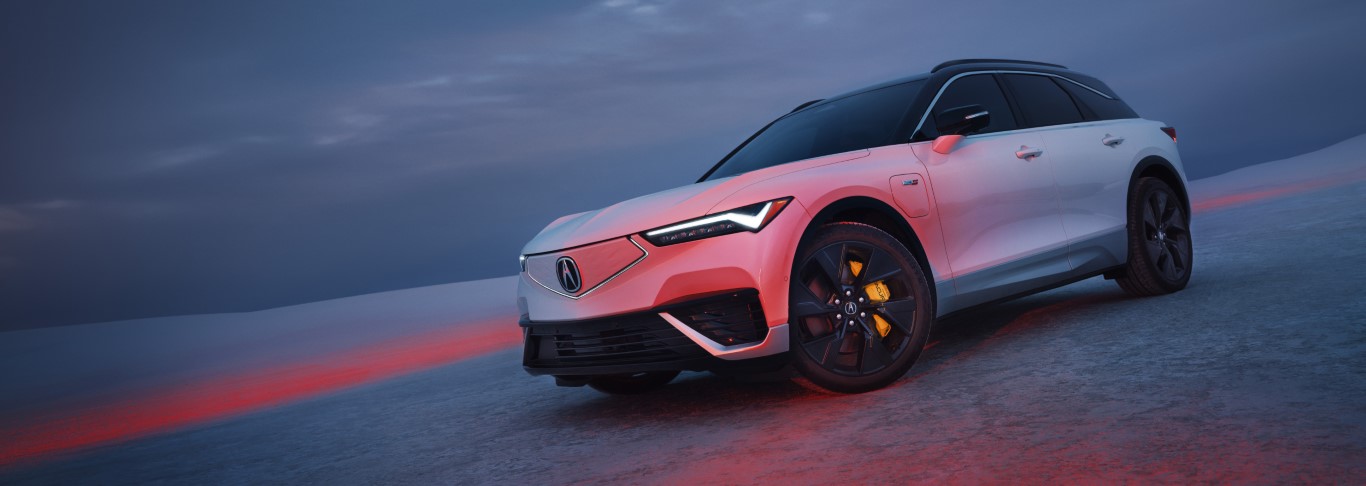
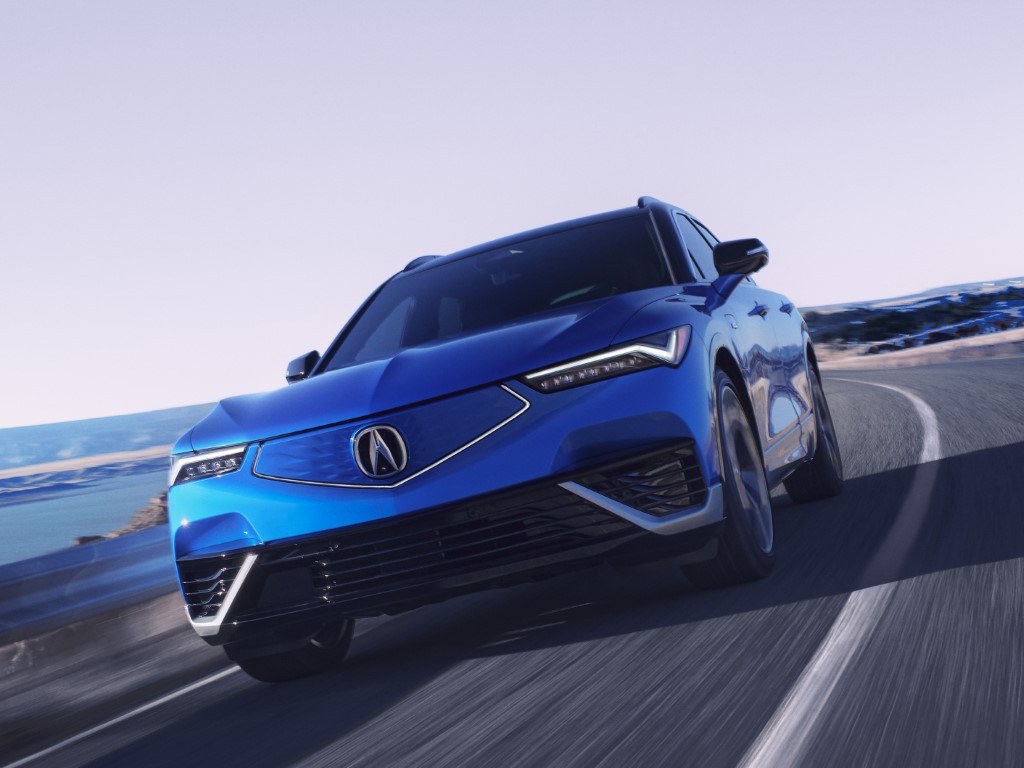
The development team was led by engineers from both brands, with John Hwang serving as the overall development project leader, Hajime Igami managing dynamic performance, and Joe Riggsby developing the structural design of the bodywork. Aesthetically, the project was coordinated by Dave Marek, Acura's Executive Creative Director, who ensured the car carried the brand's new visual identity based on the Precision EV concept. The model featured an imposing front end that sported a closed pentagon grille with three-dimensional patterns and an LED-illuminated border, accompanied by Jewel Eye headlights and Chicane-style LED daytime running lights.

Technical Details of the Ultium Platform and Battery Architecture

The high-voltage battery used across all versions of the ZDX EV had a gross capacity of 102 kWh. This pack contained lithium-ion cells in a large pouch format, individually measuring roughly 23 by 4 by 0.4 inches and weighing 3.0 lbs each. The internal chemistry of the cells was NCMA, combining Nickel, Cobalt, Manganese, and Aluminum to achieve a high energy density of 280 Wh/kg and greater thermal stability.

The pack's electrical architecture operated at a nominal voltage of 400 Volts and utilized an innovative wireless battery management system (wBMS), developed in partnership with Analog Devices. Eliminating 90% of the pack's internal wiring reduced total weight and the physical volume structurally occupied by the batteries, facilitating liquid cooling tasks performed via plates circulating a glycol-based additive.

Powertrains, Performance, and Driving Dynamics

The Acura ZDX EV was made available in three distinct powertrain configurations, offering choices of rear-wheel drive or intelligent all-wheel drive.

A-Spec RWD (Rear-Wheel Drive)

The entry-level version utilized a single permanent-magnet synchronous electric motor mounted on the rear axle, developing 358 horsepower and 324 lb-ft (439 Nm) of torque. This version prioritized energy efficiency and smoothness in daily traffic, delivering the longest driving range of the entire lineup, estimated at up to 313 miles (504 km) on a single charge.

A-Spec AWD (All-Wheel Drive)

For consumers requiring all-wheel drive for use in cold-climate regions or better stability during acceleration, Acura offered the ZDX A-Spec with twin electric motors (one on each axle). This setup generated a combined output of 490 horsepower and 437 lb-ft (592 Nm) of torque, slightly reducing the estimated range to 304 miles (489 km).

Type S AWD (High Performance)

The top-tier variant carried the high-performance Type S badge, featuring sports calibration for the twin electric motors. The system delivered a combined output of 499 horsepower (commercially marketed as 500 hp) and a massive 544 lb-ft (738 Nm) of torque, capable of launching the nearly three-ton utility vehicle from zero to 60 mph (96 km/h) in just 4.3 seconds. The EPA-certified range for this sports version was 278 miles (447 km) due to the performance focus and the aerodynamic drag caused by larger wheels and tires.

To optimize dynamic behavior, the Type S came equipped with an advanced adaptive air suspension (with electronic ride-height adjustment), active high-performance dampers, and an over-sized Brembo braking system consisting of 15.3-inch ventilated front discs clamped by six-piston yellow-painted aluminum calipers. An optional package added 22-inch alloy wheels with high-performance summer tires for maximum lateral grip. The Double Apex Blue Pearl exterior paint was a launch exclusivity reserved for the Type S range.

Towing and Recharging Capacity

All versions of the ZDX EV possessed a maximum towing capacity of 3,500 lbs (1,587 kg). Regarding charging speed, the vehicle supported rates of up to 190 kW on DC fast chargers. Under ideal temperature conditions, the A-Spec RWD model could regain up to 81 miles (130 km) of range in just 10 minutes of charging, while the time required to recover from 20% to 80% of battery capacity was 42 minutes for all versions.

Equipment, Cabin Experience, and Active Safety

The second-generation ZDX cabin followed a more conventional family SUV layout, offering ample interior space for five adults thanks to the flat floor typical of electric vehicles and a long 121.8-inch wheelbase.

Connectivity and Interior Features

The dashboard featured two high-definition displays: an 11-inch screen positioned in front of the steering wheel for driver data and an 11.3-inch central infotainment display. The infotainment system came built-in with the Google ecosystem, including Google Assistant and Google Play. The system supported wireless Apple CarPlay and Android Auto, a high-speed wireless smartphone charger, and a digital rearview mirror with rear camera projection. Seats were wrapped in perforated Milano leather, featuring up to 16-way power adjustments for the driver in the Type S package.

AcuraWatch Safety Suite

Acura distributed the ZDX active safety features into two distinct tiers based on the chosen trim level:

  • AcuraWatch (Standard on A-Spec trims): Included forward collision warning with autonomous emergency braking, pedestrian detection, lane keeping assist, blind-spot monitoring with active steering assist, rear cross-traffic alert with automatic braking, and standard adaptive cruise control.
  • AcuraWatch 360+ (Standard on Type S trim): Added Hands-Free Cruise, which permitted the driver to remove their hands from the wheel on compatible mapped highways, along with automatic parking assist, a 360-degree surround-view camera system, and rear pedestrian cross-traffic braking.
Discontinuation of the Acura ZDX EV and Next Strategic Steps

Just as occurred with the pioneering gasoline model, the electric Acura ZDX had a very brief commercial lifespan. In September 2025, after only a year and a half of production, Acura officially announced the final termination of ZDX EV sales.

Market Factors and Operational Costs

Several market variables forced the early retirement of the electric model. The global slowdown in demand for luxury luxury electric utility vehicles dampened initial sales momentum, requiring Acura to offer highly aggressive discounts of up to $21,000 per unit in the second quarter of 2025 to keep the car competitive at dealerships. Another determining factor was the loss of sales appeal caused by the imminent expiration of federal EV tax incentives in North America, which acted as a major draw for ZDX lease agreements.

Additionally, technical reliance on GM's Ultium platform limited Acura's engineering freedom to create entirely brand-exclusive software features and driving dynamics. Because the ZDX shared most of its structural components with Chevrolet and Cadillac products, the brand identified that continuing the project could dilute premium exclusivity perceptions among its clients.

Transition to Honda's Proprietary Platform and the Future Acura RSX EV

The discontinuation of the ZDX does not signal Acura's exit from the electrification segment, but rather a profound shift in industrial strategy. The manufacturer decided to end the partnership with General Motors in this mid-size category to focus all of its financial and human resources on finalizing its own next-generation electric architecture.

This new platform, developed entirely by Honda and Acura engineers, will give rise to an unprecedented family of electric vehicles. The first representative of this new phase will be the electric Acura RSX, a high-performance SUV scheduled to debut in the second half of 2026, promising greater software integration and genuine sports dynamics from the Japanese manufacturer.

Comparative Data and Statistics of the Acura ZDX

The following tables consolidate technical information, physical dimensions, and the commercial history of the Acura ZDX across its two runs in the international market.

Table 1: Comparative History of Dimensions and Physical Capacities

The evolution between generations shows a significant increase in wheelbase and weight in the transition to the Ultium electric platform.

Dimension or Capacity First Generation (2010–2013) Second Generation EV (2024–2025)
Overall Length 192.4 inches (4,887 mm) 197.7 inches (5,022 mm)
Width (without mirrors) 78.5 inches (1,994 mm) 77.0 inches (1,956 mm)
Overall Height 62.8 inches (1,595 mm) 64.4 inches (1,636 mm)
Wheelbase 108.3 inches (2,751 mm) 121.8 inches (3,094 mm)
Track Front / Rear 67.7 inches / 67.7 inches 66.2 inches / 66.3 inches
Ground Clearance 7.9 inches (200 mm) 7.0 inches (178 mm)
Curb Weight 4,410 to 4,452 lbs (2,000 to 2,019 kg) 5,421 to 6,052 lbs (2,459 to 2,745 kg)
Passenger Volume (EPA) 91.2 cubic feet (2,582 liters) 105.1 cubic feet (2,976 liters)
Rear Cargo Volume 26.3 cubic feet (744 liters) 28.7 to 29.7 cubic feet (812 to 841 liters)

Table 2: Engine Technical Specifications and Range by Version

The table details the powertrain differences between the classic gasoline V6 and the new electric motor options.

Model / Version Engine Type / Fueling Maximum Power Maximum Torque Drivetrain / Transmission Estimated Range (EPA)
First Generation V6 Gasoline 3.7L V6 (J37A5) 300 hp @ 6,300 rpm 270 lb-ft @ 4,500 rpm SH-AWD / 6-speed Automatic ~336 miles (City)
EV A-Spec RWD Rear Synchronous Electric 358 hp 324 lb-ft RWD / Direct Drive (Single-speed) 313 miles (504 km)
EV A-Spec AWD Dual Electric Motors 490 hp 437 lb-ft AWD / Direct Drive (Single-speed) 304 miles (489 km)
EV Type S AWD Dual Motors (Sports Calibration) 499 hp 544 lb-ft AWD / Direct Drive (Single-speed) 278 miles (447 km)

Table 3: Annual Sales History in the US Market

The commercial history reflects the limited production and niche character of both generations throughout their trajectories.

Calendar Year Units Sold (First Generation) Units Sold (Second Generation EV)
2009 79
2010 3,259
2011 1,564
2012 775
2013 362
2014 78
2015 2
2024 7,391
2025 (Jan to Jul) 11,000
Totals 7,191 units (Total First Generation) ~19,000 units (Total Estimated Production)

Technical data based on: • Official manufacturer catalogs • EPA / WLTP documentation when available • Official press releases

Editorial content produced by Gabriel Carvalho. | Última revisão: Dezembro/2025.