Historical Context and Design Philosophy
The Origin of the Concept
Development of the first-generation ZDX began in the mid-2000s, a period of optimism and expansion for Acura.
The brand sought to elevate its prestige to compete directly with the major German (BMW, Mercedes-Benz,
Audi) and Japanese (Lexus, Infiniti) luxury houses. Honda leadership identified a gap in the market for a
vehicle that combined the robust presence of an SUV with the elegance and performance of a sports coupe.
The ZDX was the brand's first vehicle to be designed entirely at the Acura Design Studio in Torrance,
California, marking a significant shift in the autonomy of the North American division relative to the
headquarters in Japan. The project was led by Michelle Christensen, who made history as the first woman to
head the exterior design of an Acura vehicle. Her vision was to create a "sculpture in motion," a vehicle
that evoked pure emotion, even if it meant sacrificing the traditional functionality associated with the
brand.
The "Keen Edge" Design Language
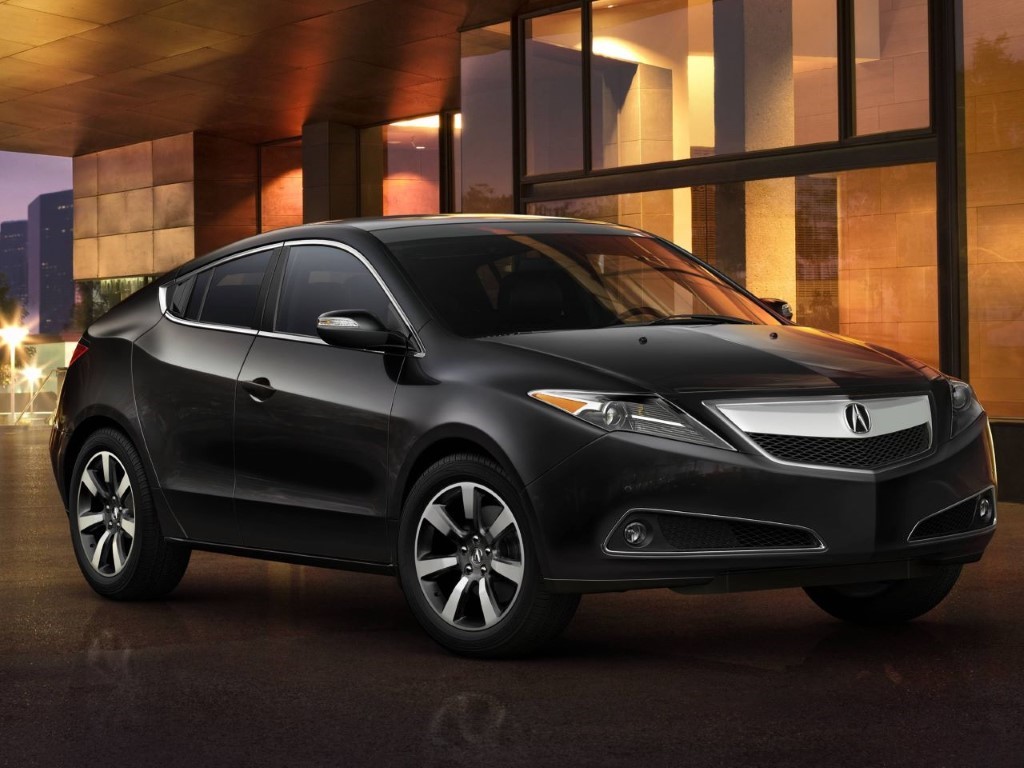
The ZDX was the ultimate expression of Acura's "Keen Edge" design language. The most controversial and
distinct element was the front grille, known internally as the "Power Plenum" and pejoratively by the public
as "the beak."
- Silhouette: The roofline featured a dramatic curvature that began to descend
immediately after the B-pillar, converging into a high, truncated rear. This created an extremely
aerodynamic profile for a crossover.
- Concealment: To maintain the appearance of a two-door coupe, the rear door handles were
hidden in the C-pillar, a design technique that cleaned up the side of the car and directed the eye to
the wide "shoulders" over the rear wheels.
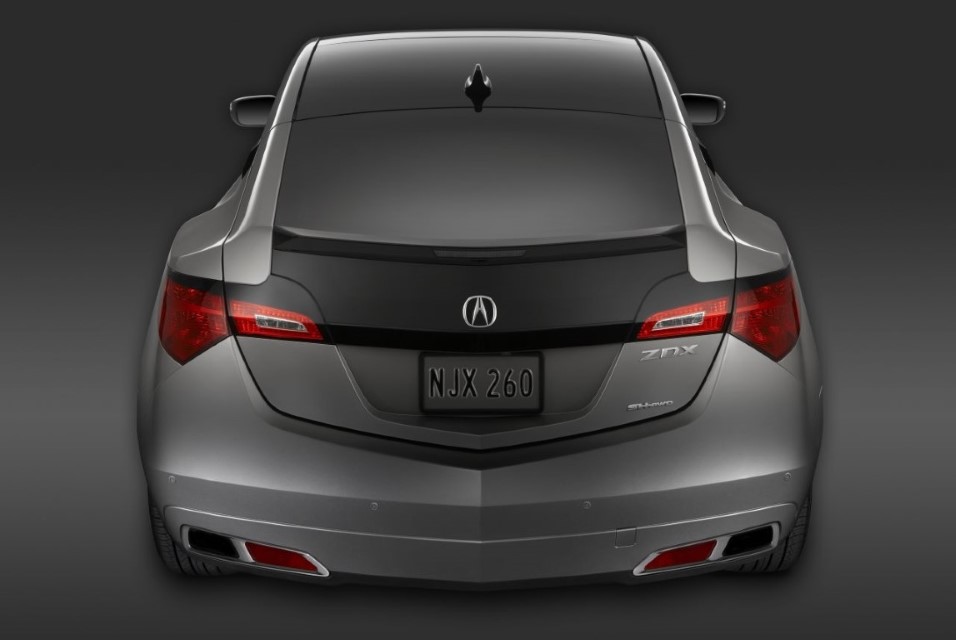
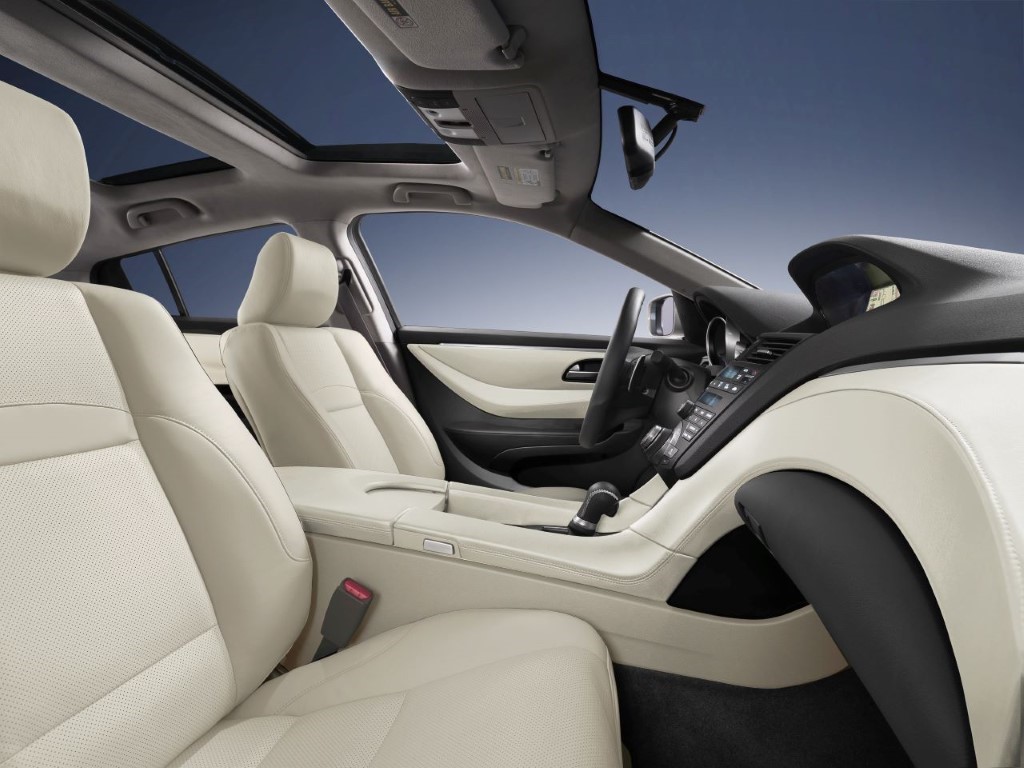
- Glass: The roof was almost entirely made of glass, creating a continuous panoramic
sunroof that stretched to the trunk lid, visually connecting the windshield to the rear window.
The production model remained remarkably faithful to the "ZDX Concept" revealed at the 2009 New York
International Auto Show, a rarity in the industry where concepts are typically diluted before manufacturing.
Engineering and Technical Specifications (Gen 1)
While the design was revolutionary, the mechanical basis of the ZDX was derived from Honda's global light
truck platform, shared with the Acura MDX and Honda Pilot. However, the engineering was substantially
modified to offer sporty driving dynamics.
Powertrain: The J37 V6
All first-generation units were equipped with the same powerplant, one of the most powerful versions of
Honda's J-Series engine family.
- Engine Code: J37A5.
- Configuration: 3.7-liter V6 (3664 cc), SOHC (Single Overhead Cam).
- Technology: VTEC (Variable Valve Timing and Lift Electronic Control) on both intake and
exhaust valves, an important distinction since many Honda V6s had VTEC only on the intake side.
- Power: 300 hp at 6,300 rpm.
- Torque: 366 Nm (270 lb-ft) at 4,500 rpm.
- Compression Ratio: 11.2:1, requiring premium gasoline for maximum performance.
This engine was known for its linear power delivery and quick throttle response, essential characteristics
for a vehicle with sporting pretensions.
Transmission and SH-AWD
Power was managed by a 6-speed automatic transmission with Sequential SportShift.
- Manual Control: The driver could take control of shifts via steering wheel-mounted
paddle shifters.
- Grade Logic: The transmission software detected inclines and declines, holding gears to
avoid unnecessary "hunting" and providing engine braking.
The most important technical differentiator of the ZDX was the SH-AWD (Super Handling All-Wheel Drive)
system, standard on all versions.
- Torque Vectoring: Unlike passive AWD systems that only react to slip, SH-AWD was
proactive. It could send up to 70% of the engine's total torque to the rear axle.
- Lateral Distribution: Of that 70% rear torque, the system could direct up to 100% to a
single wheel (left or right). In a sharp turn, the system accelerated the outside rear wheel, creating a
yaw moment that helped the vehicle turn, drastically reducing the understeer typical of heavy
front-engine vehicles.
Chassis and Suspension
The ZDX used independent four-wheel suspension, tuned at the famous Nürburgring circuit in Germany.
- Front: MacPherson struts with stabilizer bars.
- Rear: Multi-link with trailing arms.
- Ground Clearance: Approximately 16 cm (6.3 inches), allowing it to handle light snow
and dirt roads while maintaining a lower center of gravity than a traditional SUV.