


Origin and Market Positioning
The Alfa Romeo 2600, designated internally as Tipo 106, was produced between 1962 and 1968 as the flagship and top-of-the-line model for the traditional Italian brand. Officially unveiled to the public at the Geneva Motor Show in March 1962, the vehicle emerged as the direct successor to the Alfa Romeo 2000 series (Tipo 102). Historically, the 2600 occupies a prominent place in the manufacturer's trajectory for being the last Alfa Romeo passenger car equipped with a classic inline six-cylinder engine featuring double overhead camshafts (DOHC). This engine architecture represented the brand's very technical identity since the 1920s, but it eventually lost ground after World War II to four-cylinder engines, which were more economical, simplified, and suited to the new reality of mass production that began in 1950.
In the global market at the time, the Alfa Romeo 2600 was positioned as a vehicle aimed at customers with high purchasing power, competing directly in the luxury segment with internationally prestigious brands. The initial selling price of approximately $4,500 in the United States or about 25,000 Deutsche Marks (DM) in Germany — which was double the price charged for a contemporary Alfa Romeo Giulia — restricted the model to a select group of owners. Beyond its main production line at the Portello plant in Milan, the manufacturer also exported completely knocked down (CKD) kits to East London, South Africa, where the sedan version was additionally assembled between 1963 and 1968.
The development of the 2600 occurred during a period of limited resources for Alfa Romeo, which chose to focus its investments on developing the modern mid-size Giulia line. As a consequence of this strategic decision, the Alfa Romeo 2600 was not conceived as a completely new design from scratch, but rather as a specific restyling and mechanical update of the previous 2000 series. Since the 2000 line itself was already a visual update launched in 1958 on the old platform of the 1950 Alfa Romeo 1900, the 2600 arrived on the market in 1962 carrying structural and chassis components that added up to more than ten years of continuous use, which directly impacted its performance compared to more modern competitors.
Detailed Analysis of Main Body Versions
To cater to different profiles of prestige customers, Alfa Romeo offered three main body variations in its initial range, each developed by distinct and renowned design studios.
Berlina (Sedan)
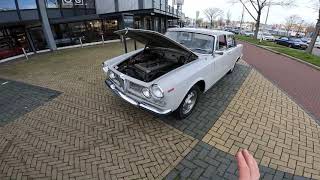
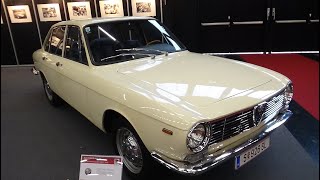
The Alfa Romeo 2600 Berlina was a four-door sedan developed internally by Alfa Romeo's factory styling department and assembled at their own facilities. Unlike the sporty models in the range, the Berlina's bodywork featured straight and sober lines that did not please the majority of the public, being widely criticized for having a design considered antiquated, heavy, and overly conservative for the 1960s.
Internally, the sedan featured a configuration focused on family comfort, equipped with two sofa-style bench seats and a gear lever mounted directly on the steering column. Regarding the technical aspect of its engine, the Berlina had a peculiarity in its tuning to prioritize low-end grunt: while the other versions used three carburetors, the Berlina used only two twin-choke Solex carburetors, which reduced its maximum power to 130 horsepower. However, this change allowed it to achieve a higher maximum torque of 209 Nm at lower rev ranges, whereas the variants equipped with three carburetors generated 197 Nm of maximum torque. The controversial looks and less agile drivability resulted in weak sales for this version, making the Berlina a true rarity in today's collector market.
Spider (Convertible)
The Alfa Romeo 2600 Spider was the two-seater convertible configuration with auxiliary rear seats (2+2 style), whose elegant design and manufacturing were the responsibility of the traditional Carrozzeria Touring in Milan. Although Touring was internationally recognized for developing extremely lightweight aluminum bodies based on its patented Superleggera assembly technique, the manufacturer chose to build the Spider's body panels out of conventional steel to optimize costs and ensure structural rigidity for the convertible model.
Aesthetically, the Spider inherited the clean forms of its predecessor, the 2000 Spider, and exhibited strong visual similarities to the smaller Giulietta Spider. Because it was a significantly longer, wider, and heavier car than the Giulietta, contemporary critics pointed out that the 2600 Spider had lost some of the delicate aesthetic balance and natural agility of the smaller model. Still, the model offered an excellent level of comfort for long journeys, featuring a high-quality folding canvas top, the possibility of installing a factory-supplied removable hardtop for weather protection, and a five-speed transmission with a floor-mounted shifter. In the British market, the tuning company Ruddspeed officially offered high-quality factory conversions of the 2600 Spider to right-hand drive, creating a sub-variant that is extremely rare and valued to this day.
Sprint (Coupe)
The Alfa Romeo 2600 Sprint was the two-door coupe version with genuine capacity to transport four adult occupants on long-distance journeys at high speed. The Sprint's bodywork was designed by the prestigious Carrozzeria Bertone, penned by the young Giorgetto Giugiaro, who was starting one of the most influential automotive design careers in the world right there. To differentiate the 2600 Sprint from the previous 2000 model and to make room for the engine's two additional cylinders, Giugiaro added a functional horizontal air intake on the hood and lengthened the vehicle's wheelbase by three inches (approximately 7.6 cm).
The Sprint combined refined sporty temperament with a package of convenience features very advanced for the 1960s, which included power windows as standard, a rear window defroster, two-speed windshield wipers, and full instrument panel trim in stitched leather and hardwood in later years. This combination of modern elegance and high-luxury comfort made the Bertone coupe the absolute best-seller of the entire 2600 line. In 1963, Bertone itself even built a unique convertible prototype based on the Sprint's straight lines, but the project was never approved for large-scale production, remaining only as an exhibition model.
Special Editions, Concepts, and Rare Prototypes
Beyond the three catalog versions, the robust mechanics of the Alfa Romeo 2600 were used as a base for creating extremely limited series and highly exclusive experimental vehicles.
Sprint Zagato (SZ)
Initially presented as a prototype at the 1963 Turin Motor Show, the 2600 SZ was a high-performance sporty fastback coupe designed by Ercole Spada for Carrozzeria Zagato. The first 1963 concept featured a striking look, painted in yellow, characterized by a short Kamm-type aerodynamic rear and a massive front grille prominently featuring the traditional Alfa Romeo shield. The design underwent profound aesthetic modifications in its front assembly and debuted its final production version at the 1965 Frankfurt Motor Show.
With an absolute focus on aerodynamics and weight reduction to improve dynamic performance, Zagato utilized steel panels for the bodywork instead of aluminum. The vehicle was assembled on a shortened wheelbase chassis inherited from the 2600 Spider. Thanks to its compact forms, the SZ weighed about 136 kg less than the standard Bertone coupe, resulting in much lighter steering and considerably faster acceleration. The engine received special sporty tuning fed by three twin-choke carburetors, reaching the highest power of the entire lineup at 165 horsepower. With a production of only 105 units built between 1965 and 1967, the 2600 SZ is today one of the most valuable pieces of the Italian brand.
Berlina De Luxe (OSI)
Developed by the Officine Stampaggi Industriali (OSI) studio from a conceptual design penned by designer Giovanni Michelotti, the De Luxe version emerged in 1965 as an extreme luxury alternative to the factory sedan. The vehicle exhibited a modern look, characterized by straight lines and a broad body with six side windows that created excellent interior lighting and visibility. Buyers could order the version equipped with the standard two-carburetor engine (130 hp) or with the 145 hp three-carburetor tune typical of the coupe and convertible. Only 54 units were assembled, making this luxurious sedan an extremely rare vehicle.
Pininfarina Speciale Prototypes
Carrozzeria Pininfarina also designed two exclusive concepts using the Tipo 106 mechanics. The first was the Alfa Romeo 2600 Cabriolet Speciale, a two-seater convertible unveiled at the 1962 Turin Motor Show. The second was the Alfa Romeo 2600 Coupé Speciale, presented at the Brussels Motor Show in 1963. Both models helped dictate aesthetic trends, although they never reached the regular production line.
Mechanical Engineering and Dynamic Performance
The technical heart of the Alfa Romeo 2600 was its inline six-cylinder engine with a total displacement of 2,584 cc, equipped with a block and cylinder head entirely cast in aluminum alloy to reduce the assembly's weight. This engine featured timing chain-driven double overhead camshafts, a crankshaft supported by seven main bearings to ensure smooth operation, and hemispherical combustion chambers that increased fuel burn efficiency. A common technical vulnerability reported in these aluminum blocks was the tendency for excessive wear and blown head gaskets when subjected to long periods without proper coolant maintenance.
Fuel delivery relied on two basic mechanical arrangements:
- Dual Solex Carburetor: Used in the Berlina and part of the OSI models, focused on linear torque.
- Triple Solex 44 PHH Carburetor: Used in the Sprint, Spider, SZ, and OSI De Luxe. The twin-choke Solex carburetors used a vacuum-operated second-stage actuation system under maximum acceleration to improve high-rpm responses. If the vacuum lines became dirty or the control capsules stuck due to lack of lubrication, the carburetor pistons would jam in the open position, leaning out the fuel mixture in the chambers and causing overheating that resulted in burnt valves.
The chassis and suspension of the Tipo 106 maintained the conceptual architecture introduced in the 1950s with the Alfa Romeo 1900. The front suspension utilized unequal-length double A-arms with coil springs, hydraulic shock absorbers, and an anti-roll bar. The solid rear axle featured coil springs, lower trailing arms, and a triangular link arm connected to the top of the differential to limit transverse oscillations.
Driving dynamics generated conflicting opinions at the time of its launch. While contemporary journalists praised its stability on flat roads, excellent visibility, and the comfort provided by the synchronized five-speed gearbox, later evaluations pointed out that the extra weight of the six-cylinder engine over the front axle hindered agility on twisty stretches. The Pirelli Cinturato CA67 radial tires in the original 165HR400 size (or optional Michelin X), mounted on steel wheels that required the use of Michelin 16E inner tubes, were considered too narrow to support the car's weight and torque in sharp corners. Thus, the model established itself not as a quick-response sports car for circuits, but rather as an authentic luxury Grand Tourer designed to cross continents at high speed with extreme comfort.
The following table presents the details of dimensions and physical specifications compared between the three main catalog body styles of the Alfa Romeo 2600 line:
| Feature / Dimension | Berlina (Sedan) | Sprint (Coupe) | Spider (Convertible) |
|---|---|---|---|
| Wheelbase | 2,720 mm | 2,580 mm | 2,500 mm |
| Overall Length | 4,700 mm | 4,580 mm | 4,500 mm |
| Overall Width | 1,700 mm | 1,706 mm | 1,690 mm |
| Curb Weight | 1,380 kg | 1,370 kg | 1,220 kg |
| Factory Tire Size | 165HR400 | 165HR400 | 165HR400 |
| Drivetrain Layout | Rear-wheel drive (FR) | Rear-wheel drive (FR) | Rear-wheel drive (FR) |
Evolution Over the Years and Differences Between Series
The Alfa Romeo 2600 line did not undergo drastic changes in its exterior design, but the mechanical and trim updates that occurred throughout production divided the coupe and convertible versions into two very distinct series in the classic car market.
Series 1 (1962–1963)
The models produced in their first two years on the market were equipped with a mixed braking system, consisting of hydraulic brake discs on the front axle and traditional drum brakes on the rear wheels. The electrical system relied on a conventional dynamo to charge the vehicle's battery. Visually, the instrument panel featured simpler details, consisting of painted metallic finishes or grey plastic.
Series 2 (Late 1963–1968)
Gradually introduced in late 1963 and consolidated as the standard in 1964, Series 2 brought crucial improvements in safety, luxury, and electrical reliability:
- Girling Brake System: Alfa Romeo adopted servo-assisted Girling disc brakes on all four wheels, increasing the model's braking capacity and active safety at high speeds.
- Electrical Upgrade: The dynamo was replaced by a high-capacity alternator, essential to stably power the vehicle's electrical system and the electric window motors of the Sprint model.
- Dashboard and Trim: The interior received a much more sophisticated finish with the introduction of a hardwood veneer on the front instrument panel, new quilted leather upholstery on the doors and seats, and dials with refined metric scales for the European market. In the case of the Series 2 Spider, the engine hood adopted a front hinge with a rear latch mechanism to prevent accidental openings at high speeds.
The Role of the Alfa Romeo 2600 in Italian Police Service
Although the Alfa Romeo 2600 had a modest career in motorsports due to its weight and size geared towards comfort, the Sprint model played a legendary role in Italy's public safety in the 1960s. The Italian government acquired fleets of the Bertone-designed coupe to serve as special highway interceptor vehicles.
The vehicles destined for the State Police received the traditional green or dark grey paint and earned the codename "Pantera" (Panther) due to the rapid intervention team's emblem. In turn, the vehicles destined for the Carabinieri (Italian military police) received dark blue paint with a white roof and were dubbed "Gazzella" (Gazelle). Thanks to the agility provided by the synchronized five-speed transmission and the high cruising speed that exceeded 200 km/h, the 2600 Sprints became fundamental tools in pursuits against armed gangs using fast cars on the newly opened Italian highways. This strong presence in the country's daily life turned the coupe into a true star of Italian action cinema of that era, appearing in several police movies of the genre.
Restoration and Conservation Challenges in the Classic Market
For modern collectors and restorers, the Alfa Romeo 2600 represents a project that requires high investments and a high level of technical expertise. Unlike more popular models from the brand, such as the Giulietta and Giulia series, many of the 2600's trim pieces and replacement components are no longer available on the market and lack authorized reproductions (parts classified as NLA - No Longer Available).
In terms of bodywork, the hand-built bodies of the era featured complex metal folds that created hidden areas prone to collecting moisture and dirt, technically known as "mud traps". These zones accelerated the appearance of structural rust, requiring expensive and time-consuming sheet metal reconstruction work. Small decorative details, such as the chrome clips for attaching the exterior side trims, are extremely rare and difficult to find.
The interior finish also demands high-level craftsmanship: the upper instrument panel features French-style double stitching and pleated leather that require experienced leather tailors to reproduce the factory pattern. In the case of the Sprint coupes, problems with the electric window switches or the internal door drive motors become frequent headaches, as these specific period electrical parts are difficult to replace.
Detailed Annual Production Statistics
The production of the Alfa Romeo 2600 was carried out continuously between the years 1962 and 1968, with a few additional examples of chassis finished or licensed up to the first quarter of 1969. The following table presents the complete and official data of the annual production count for each body variation and steering type of the model:
| Production Year | Berlina LHD | Berlina RHD | Berlina CKD | Spider LHD | Spider RHD | Sprint LHD | Sprint RHD | SZ Zagato | OSI De Luxe | Total by Year |
|---|---|---|---|---|---|---|---|---|---|---|
| 1962 | 670 | 0 | 52 | 515 | 0 | 1,277 | 1 | 0 | 0 | 2,515 |
| 1963 | 382 | 0 | 373 | 984 | 1 | 2,855 | 0 | 0 | 0 | 4,595 |
| 1964 | 102 | 35 | 0 | 589 | 102 | 1,521 | 219 | 0 | 0 | 2,568 |
| 1965 | 226 | 65 | 0 | 64 | 0 | 640 | 362 | 32 | 16 | 1,405 |
| 1966 | 73 | 0 | 0 | 0 | 0 | 109 | 15 | 59 | 26 | 282 |
| 1967 | 30 | 0 | 0 | 0 | 0 | 0 | 0 | 14 | 12 | 56 |
| 1968 | 26 | 0 | 0 | 0 | 0 | 0 | 0 | 0 | 0 | 26 |
| 1969 | 4 | 0 | 0 | 0 | 0 | 0 | 0 | 0 | 0 | 4 |
| Model Total | 1,513 | 100 | 425 | 2,152 | 103 | 6,402 | 597 | 105 | 54 | 11,451 |
Explanatory note: "LHD" refers to left-hand drive vehicles (continental standard); "RHD" refers to right-hand drive (guida destra); "CKD" refers to exported knocked-down kits.