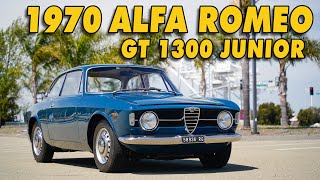
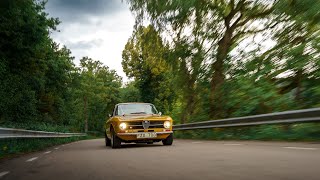
The Tipo 105 coupe line evolved through two main branches: the high-performance line (GT and GTV) and the
lower-cost entry-level line (GT Junior).
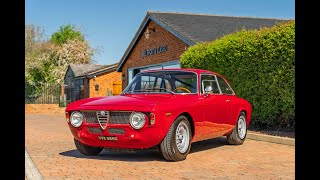
Giulia Sprint GT (1963–1966)
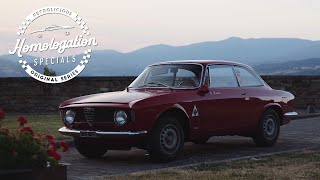
The debut model used the bodywork with the "scalino" hood and flat dashboard. It was powered by the 1.6-liter
Twin Cam engine fed by two Weber 40 DCOE twin-choke carburetors, generating 106 horsepower.
Giulia Sprint GT Veloce (1965–1968)
Launched to bring more refinement to the lineup, the 1.6-liter GT Veloce (GTV) received an updated engine
with larger exhaust valves. This raised the power to 109 horsepower and significantly increased torque at
low revs, making the driving more vigorous. The model retained the "scalino" body style.
1750 GT Veloce (1967–1972)
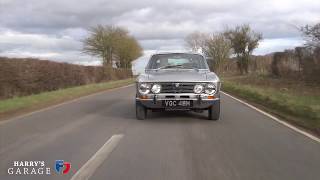
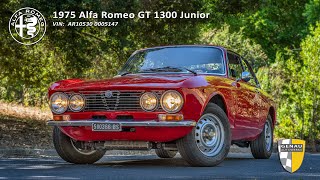
This version marked the first major aesthetic restyling and profound mechanical evolution of the line. The
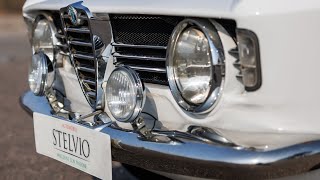
"scalino" hood was abandoned and replaced by the smooth front equipped with four circular headlights (two
larger ones at the ends and two smaller ones in the inner grille).
To optimize dynamic behavior and high-speed control, the suspension was geometrically recalibrated and
received a rear anti-roll bar. The 15-inch wheels were replaced by 14-inch diameter wheels, but wider (5.5
inches), allowing for the fitting of better-performing tires.
The 1750 GTV was divided into two distinct phases:
- Series 1 (1967–1969): Maintained the brake and clutch pedals hinged to the floorpan and
the clean bumpers. Examples exported to the United States from 1969 onwards received the SPICA
mechanical fuel injection system to comply with local emission rules.
- Series 2 (1969–1972): Introduced suspended pedals attached to a new pedal box under the
instrument panel (except for right-hand drive cars, which kept the floor pedals due to a lack of
physical space near the carburetors). The braking system was upgraded to a dual safety circuit.
Visually, it adopted slimmer bumpers with integrated rubber overriders and dashboard instruments with
more pronounced cowls.
2000 GT Veloce (1971–1977)
Equipped with the 2.0-liter (1,962 cc) engine producing 130 to 132 horsepower, the 2000 GTV replaced the 1750
model. The top speed rose to 195 km/h, and the 0 to 100 km/h acceleration time fell to about 9 seconds.
Visual modifications included a new front grille with horizontal chrome slats that formed the outline of Alfa
Romeo's traditional central shield, significantly larger integrated taillights, and wheels with small center
caps exposing the lug nuts, with the option of "Turbina" style sports alloy wheels. The interior lost some
of the wood trim on the dashboard, and all instrument dials were concentrated directly behind the steering
wheel, improving driver visibility. Mechanically, the car received larger brakes and a limited-slip
differential (LSD) as standard equipment.