



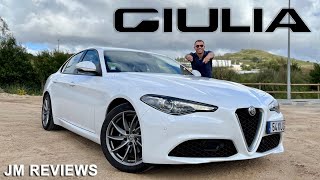
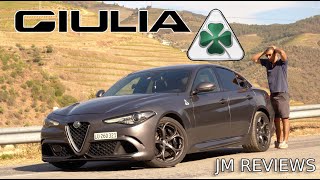

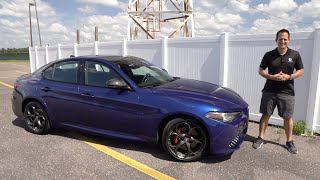

Context and Development of the Tipo 952
The Alfa Romeo Giulia, identified by the internal code Tipo 952, was officially presented in June 2015 to coincide with the brand's 105th anniversary, and sales began in February 2016. This model marked a historic moment for the Italian manufacturer, as it was the first rear-wheel-drive sedan with a longitudinal engine produced on a large scale since the discontinuation of the Alfa Romeo 75 in 1992. The vehicle filled the gap left by the end of the Alfa Romeo 159 in 2011.
The development of the Giulia was surrounded by great commercial secrecy and led by Philippe Krief, an engineer who had served as technical director at Ferrari. The car's visual design was elaborated at the Centro Stile Alfa Romeo by a team coordinated by Marco Tencone, which included designers Andrea Loi for the exterior, Inna Kondakova heading the cabin design, and Manuele Amprimo for the interior design. The project experienced delays because the then-president of Fiat Chrysler Automobiles (FCA), Sergio Marchionne, demanded that the initial designs be redone from scratch to ensure a competitive product against German competitors. The Giulia debuted with the slogan "La meccanica delle emozioni" (The mechanics of emotions), also bringing a renewed logo for the brand.
The Giorgio Platform and Model Engineering
The engineering of the Giulia relies on the Giorgio platform, a rear-wheel and all-wheel-drive base designed to redefine the vehicle's driving behavior. The focus of the project was to achieve a weight distribution of 50% at the front and 50% at the rear, ensuring superior dynamic balance. To reduce overall weight and increase structural rigidity, Alfa Romeo employed advanced lightweight materials. All versions use a driveshaft (propeller shaft) made entirely of carbon fiber. The shock absorber towers, suspension components, front fenders, and doors were made of lightweight aluminum alloy. Thanks to these solutions, the model features an aerodynamic drag coefficient (Cd) of just 0.28.
The suspension uses overlapping double wishbones with a semi-virtual steering axis at the front, which provides quick steering with just two turns lock-to-lock. At the rear, the multi-link Alfalink system ensures ideal tire contact with the ground and comfort in daily use. The vehicle also features an integrated electronic braking system (brake-by-wire), which improves response time and the actuation of the stability control.
Annual Evolution, Versions, and Facelifts
As the Giulia has remained in its first mechanical generation since launch, its timeline is marked by constant annual equipment updates and two main mid-cycle restylings (facelifts).
The first major facelift occurred for the 2020 model year, with improvements focused on the cabin. The center console was remodeled to offer better materials, new cupholders, and a wireless phone charger. The multimedia center received an 8.8-inch touchscreen with simpler menus, accompanied by Level 2 driver assistance systems that allow semi-autonomous driving functions on highways and in traffic jams.
In 2023, Alfa Romeo launched the model's most striking restyling, bringing new LED headlights with adaptive Matrix technology and a three-element visual signature ("3+3"), inspired by the classic SZ Zagato model. The interior received a fully digital 12.3-inch instrument panel and historical vehicle registration technology via NFT.
The table below summarizes the main evolutions applied over its years on the market:
| Model Year (MY) | Main Changes and Model Evolutions |
|---|---|
| 2017 - 2018 | Official launch; introduction of Apple CarPlay and Android Auto (2018); new option packages. |
| 2019 | Diesel engines adapted to Euro 6d using AdBlue; Ti Sport version gets 19" wheels; Nero Edizione and Carbon Fiber packages. |
| 2020 (Facelift) | New standard 8.8" touch multimedia screen; redesigned center console with new materials and wireless charger; Level 2 semi-autonomous driving ADAS systems. |
| 2021 - 2022 | Simplification of packages and minor adjustments to standard equipment. |
| 2023 | Launch of the Estrema version (active suspension, limited-slip differential, and Harman Kardon sound) and Lusso edition. |
| 2024 (Facelift) | New "3+3" Matrix LED headlights; 12.3" digital dashboard in binocular format; digital history via NFT; new Competizione version. |
| 2025 - 2026 | Simplified lineup to "Core" version with optional packages in the US; Tributo Italiano special edition and Intensa series; temporary end of the gasoline V6 engine in the US. |
Powertrains and Technical Specifications
The Giulia's powertrains were designed to offer high performance and fast responses. The 2.0-liter gasoline four-cylinder engines feature an aluminum cylinder head, twin-scroll turbo (2-in-1), direct fuel injection at 200 bar of pressure, and the MultiAir electro-hydraulic valve control system. The 2.2-liter diesel options use MultiJet II direct injection technology and an electronically controlled variable geometry turbine.
In the sporty Quadrifoglio line, the highlight is the 2.9 V6 Bi-Turbo engine designed with the support of engineers from Ferrari, which generates 510 hp of power in Europe and 505 hp in the United States, having received an increase to 520 hp starting with the 2023 facelift. All engines are mated to an 8-speed automatic transmission manufactured by ZF, with the non-Quadrifoglio models offering the option of all-wheel drive under the Q4 designation.
The following table details all available powertrains in the Giulia lineup:
| Engine | Fuel | Power (hp / PS) | Torque | Transmission | Drivetrain Type |
|---|---|---|---|---|---|
| 2.0 Turbo MultiAir | Gasoline | 200 hp @ 5,000 rpm | 330 Nm @ 1,750 rpm | 8-speed Automatic | Rear (RWD) |
| 2.0 Turbo MultiAir Q4 | Gasoline | 280 hp @ 5,250 rpm | 400 Nm (306 lb-ft) @ 2,250 rpm | 8-speed Automatic | Rear (RWD) or All-Wheel Drive (Q4) |
| 2.2 MultiJet II (Low) | Diesel | 150 hp @ 4,000 rpm | 380 Nm @ 1,500 rpm | 8-speed Automatic | Rear (RWD) |
| 2.2 MultiJet II (Mid) | Diesel | 180 hp @ 3,750 rpm | 450 Nm @ 1,750 rpm | 8-speed Automatic | Rear (RWD) |
| 2.2 MultiJet II (Facelift) | Diesel | 160 hp @ 3,500 rpm | 380 Nm @ 1,500 rpm | 8-speed Automatic | Rear (RWD) |
| 2.2 MultiJet II (Q4) | Diesel | 210 hp @ 3,750 rpm | 470 Nm @ 1,750 rpm | 8-speed Automatic | All-Wheel Drive (Q4) |
| 2.9 V6 Bi-Turbo (Quadrifoglio) | Gasoline | 510 cv / 505 hp @ 6,500 rpm | 600 Nm (443 lb-ft) @ 2,500 rpm | 8-speed Automatic / 6-speed Manual (Europe) | Rear (RWD) |
| 2.9 V6 Bi-Turbo (Post-2023) | Gasoline | 520 hp @ 6,500 rpm | 600 Nm @ 2,500 rpm | 8-speed Automatic | Rear (RWD) |
| 2.9 V6 Bi-Turbo (GTA / GTAm) | Gasoline | 540 hp @ 6,500 rpm | 600 Nm @ 2,500 rpm | 8-speed Automatic | Rear (RWD) |
Special Series and Limited Editions
To elevate the brand's prestige and cater to collectors, Alfa Romeo produced several limited-run special series.
In 2018, the NRING series celebrated the records obtained by the Giulia at the German Nürburgring circuit. The model featured carbon-ceramic brakes, Sparco sports seats, and exposed carbon fiber exterior trims. The following year, the Alfa Romeo Racing limited edition paid homage to the Formula 1 team, bringing a special white and red paint job, a 28 kg weight reduction, an Akrapovič titanium exhaust, and engine calibration tuned to 520 hp.
In 2020, the historic return of the legendary GTA and GTAm acronyms represented the ultimate track expression of the Giulia. Developed with aerodynamic support from Sauber Engineering, these editions reduced weight by 100 kg and raised power to 540 hp. The GTAm version completely eliminated the rear seats to make room for a roll cage. At the close of the V6 engine cycle in North America, the manufacturer launched the 100th Anniversary and Super Sport commemorative editions.
The table below presents the volume details of these exclusive editions:
| Special / Limited Edition | Launch Year | Quantity Produced (Global) | Main Characteristics |
|---|---|---|---|
| Quadrifoglio NRING | 2018 | 163 units (108 Euro / 55 US) | Matte gray color, carbon-ceramic brakes, exposed carbon roof. |
| Alfa Romeo Racing | 2019 | Not specified (extremely rare) | F1-inspired paint, Akrapovič exhaust, -28 kg, 520 hp engine. |
| Giulia GTA / GTAm | 2020 | 500 units (250 GTA / 250 GTAm) | Sauber aerodynamics, -100 kg, 540 hp engine, 2-seater GTAm. |
| Quadrifoglio 100th Anniversary | 2024 | 100 units | Gold stitching, commemorative logo, exclusive trim details. |
| Quadrifoglio Super Sport | 2024 | 275 units | Farewell to the V6 engine in North America, special darkened trim. |
Production Data, Commercial Performance, and the Future
The Giulia is manufactured at the Cassino plant, located in southern Italy. In its first months of manufacturing in mid-2016, the plant operated at a rate of 160 to 200 vehicles per day, accumulating 4,678 units produced by June of that year. At its peak period of activity, the Cassino plant produced around 280 units of the Giulia daily. However, the market preference for sport utility vehicles (SUVs) negatively affected the demand for mid-size sedans worldwide. In 2025, total production at the Cassino plant (combining Giulia, Stelvio, and Maserati Grecale) dropped to just 19,364 units due to low demand and assembly line stoppages.
In terms of sales, Alfa Romeo sold a global volume of over 73,000 cars in 2025, driven by the new Junior compact model. The European market accounted for more than 80% of this commercial volume. In the United States, the Giulia accumulated a total of 54,594 units sold between 2016 and 2025, suffering a sharp contraction in its last years on the market.
The table below details the Giulia's annual sales history in the United States:
| Commercial Year | Sales in the United States (Units) |
|---|---|
| 2016 | 36 |
| 2017 | 8,904 |
| 2018 | 11,519 (Historical sales peak) |
| 2019 | 8,704 |
| 2020 | 8,203 |
| 2021 | 7,634 |
| 2022 | 4,913 |
| 2023 | 1,831 |
| 2024 | 1,682 |
| 2025 | 1,168 |
| Cumulative Total | 54,594 units |
Although Alfa Romeo's original plans pointed to transitioning the Giulia to an exclusively electric lineup starting in 2025, instability in demand for electric vehicles caused Stellantis to change strategy. Manufacturing of the current Giulia with combustion and diesel engines has been extended at the Cassino plant until the end of 2027.
The model's successor will be built on the new STLA Large modular platform. This technical base was designed to accept both fully electric powertrains and internal combustion options, including Stellantis's Hurricane twin-turbo inline-six engine. The next Giulia will also adopt a fastback-style body, abandoning the traditional three-box sedan format to improve fuel efficiency and offer more space to occupants.


