750C
(1955 - 1959)
1.3 L I4 8V
65 cv

Technical specifications, versions, and history for the Alfa Romeo Giulietta Berlina.
Select a generation to see available versions
(1955 - 1959)

(1959 - 1961)

(1961 - 1964)

(1977 - 1981)

(1981 - 1983)

(1983 - 1985)
The history of the Alfa Romeo Giulietta is one of the most relevant trajectories for understanding the evolution of the European automotive industry in the post-war period. The model symbolized Alfa Romeo's successful transition from an artisanal manufacturer of very low-volume luxury cars to a modern mass-production industry, without sacrificing engineering refinement or the sporty temperament of its vehicles. The original concept of the Giulietta consisted of equipping light and compact passenger sedans with dynamic, high-revving engines, laying the foundation for the modern sports sedan segment.
This report analyzes in depth the historical evolution, engineering details, visual updates (facelifts), and performance specifications of the first two generations of the Giulietta Berlina (four-door sedan) and its rare cargo and mixed-use variants — popularly known as Promiscua or Giardinetta —, covering the Tipo 750/101 (1955–1965) and Tipo 116 (1977–1985) platforms.
Presented to the public at the Turin Motor Show in April 1955, the Giulietta Berlina (sedan) followed the launch of the Sprint coupe in 1954, consolidating Alfa Romeo's entry into the 1.3-liter engine class. The design utilized a steel unibody that combined lightness and high torsional rigidity, resulting in a curb weight of just 915 kg.
The front suspension featured independent overlapping wishbones with coaxial coil springs and hydraulic shock absorbers. At the rear, the car used a solid axle very well located by longitudinal arms and a Y-shaped upper reaction rod anchored to the aluminum differential housing. The braking system consisted of finned hydraulic drums on all four wheels, with excellent cooling capacity.
The heart of this generation was the innovative inline four-cylinder 1,290 cc engine, manufactured entirely from light aluminum alloy (block and cylinder head). The powerplant adopted cast-iron wet cylinder liners, a crossflow cylinder head with hemispherical combustion chambers, and two valves per cylinder actuated directly by double overhead camshafts (DOHC) driven by a double timing chain. With a bore of 74 mm and a stroke of 75 mm, it was a free-revving and highly efficient engine by the standards of the time.
The first generation of the Berlina evolved through three distinct production series, accompanied by mechanical and styling improvements:
Since the Portello plant lacked the capacity or structured production lines to manufacture mixed-use vehicles, Alfa Romeo outsourced the production of estate variants to specialized independent converters:
The table below gathers the technical specifications, chassis codes, and the total number of examples produced for the sedan and station wagon versions of the first generation.
| Version / Model | Type Code | Production Period | Engine / Displacement | Compression Ratio | Carburetor / Fuel Delivery | Maximum Power | Top Speed | Total Production (Units) |
|---|---|---|---|---|---|---|---|---|
| Berlina Normale (Series I) | 750C | 1955–1959 | 1,290 cc DOHC | 7.5:1 | 1 single-barrel Solex | 50–53 PS | 135 km/h | Included in Series II |
| Berlina Normale (Series II) | 101.00 | 1959–1961 | 1,290 cc DOHC | 7.5:1 | 1 single-barrel Solex | 50–53 PS | 135 km/h | Included in Series III |
| Berlina Normale (Series III) | 101.28 | 1961–1963 | 1,290 cc DOHC | 7.5:1 | 1 single-barrel Solex | 62 PS | 140 km/h | 39,057 (Series I, II, and III) |
| Berlina T.I. (Series I) | 753 / 750C | 1957–1959 | 1,290 cc DOHC | 8.0:1 | 1 twin-choke Solex | 65 PS | 150 km/h | Included in Series II |
| Berlina T.I. (Series II) | 101.11 / 101.13 | 1959–1961 | 1,290 cc DOHC | 8.0:1 | 1 twin-choke Solex | 65 PS | 150 km/h | Included in Series III |
| Berlina T.I. (Series III) | 101.29 / 101.09 | 1961–1964 | 1,290 cc DOHC | 8.5:1 | 1 twin-choke Solex | 74 PS | 155 km/h | 89,408 (Series I, II, and III - LHD) |
| Berlina T.I. RHD (Guida Destra) | 101.09 | 1960–1963 | 1,290 cc DOHC | 8.5:1 | 1 twin-choke Solex | 74 PS | 155 km/h | 780 |
| Berlina T.I. CKD (Local Assembly) | N/A | 1961–1963 | 1,290 cc DOHC | 8.5:1 | 1 twin-choke Solex | 74 PS | 155 km/h | 2,540 |
| Promiscua (Colli Wagon) | 750C / 101.22 | 1957–1960 | 1,290 cc DOHC | 7.5:1 | 1 single-barrel Solex | 50–53 PS | 135 km/h | 91 |
| Weekendina (Boneschi Wagon) | 750 | 1957–1960 | 1,290 cc DOHC | 7.5:1 | 1 single-barrel Solex | 50–53 PS | 135 km/h | ~20 |
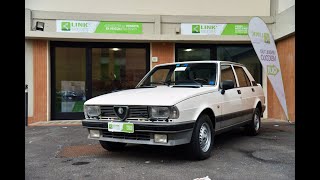
In November 1977, Alfa Romeo reintroduced the Giulietta name to the automotive market. Popularly known as the Nuova Giulietta, the Tipo 116 generation was designed as a mid-size executive sedan, positioned to replace the aging Giulia line (Tipo 105) and fill the product catalog between the compact front-wheel-drive Alfasud and the larger Alfetta sedan.
The Giulietta Tipo 116 shared the Alfetta's sophisticated mechanical platform. The engine was positioned longitudinally in the front, but the clutch assembly, five-speed manual gearbox, and drive differential were grouped into a single casing mounted on the rear axle (transaxle configuration).
This component layout ensured a weight distribution close to the ideal ratio of 50% on each axle, minimizing sudden dynamic load transfers and resulting in excellent stability and ease of control in corners.
The front suspension used overlapping wishbones associated with longitudinal torsion bars acting on the lower arms and vertical hydraulic shock absorbers. The rear suspension utilized an advanced De Dion-type solid axle system, supported by coil springs and laterally stabilized by a Watt's linkage. The rear disc brakes were installed inboard, mounted directly at the differential output rather than at the wheels, which reduced the chassis' unsprung mass.
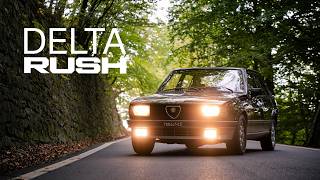
The three-box bodywork was designed internally by the Centro Stile Alfa Romeo, under the direction of designer Ermanno Cressoni. The car featured a pronounced wedge-shaped front end with a very short, high rear end equipped with a small aerodynamic spoiler molded directly into the steel trunk lid.
The vehicle's interior featured ergonomic and functional details that were highly peculiar for European standards at the time:
Over its eight years on the market, the Giulietta Tipo 116 underwent two aesthetic and mechanical restylings:
Developed by Autodelta (Alfa Romeo's official racing and tuning division), the Giulietta Turbodelta was the last sports car to bear the tuner's official factory seal before its definitive closure. Equipped with the 1,962 cc engine, the Turbodelta adopted a KKK brand turbocharger that blew pressure into two Weber twin-choke horizontal carburetors.
With an output of 170 hp and 283 Nm of torque, the model accelerated from 0 to 100 km/h in 7.5 seconds and reached a top speed of 206 km/h. Exclusive and with only 361 units produced, the Turbodelta was characterized by its two-tone metallic grey and black painted bodywork, 14-inch Speedline wheels, and an interior trimmed in salmon-red velour with red synthetic leather details named Texalfa.
Alfa Romeo never officially sold a station wagon version of the Tipo 116 platform. However, partner coachbuilders maintained the tradition of creating such utility versions to order:
The table below compiles the main gasoline and diesel engines applied to the Giulietta Tipo 116 throughout its three historical production series.
| Version / Model | Engine Code | Displacement | Fuel System / Induction | Maximum Power | Maximum Torque | Top Speed | Production Period | Estimated Production (Units) |
|---|---|---|---|---|---|---|---|---|
| Giulietta 1.3 | AR 01644 | 1,357 cc | 2 Twin-choke carburetors | 95 PS (70 kW) at 6,000 rpm | 121 Nm at 4,500 rpm | 165 km/h | 1977–1983 | 50,890 |
| Giulietta 1.6 | AR 01600 | 1,570 cc | 2 Twin-choke carburetors | 109 PS (80 kW) at 5,600 rpm | 143 Nm at 4,300 rpm | 175 km/h | 1977–1985 | ~180,000 (estimated) |
| Giulietta 1.8 | AR 01678 | 1,779 cc | 2 Twin-choke carburetors | 122 PS (90 kW) at 5,300 rpm | 167 Nm at 4,000 rpm | 180 km/h | 1979–1985 | ~100,000 (estimated) |
| Giulietta 2.0 | AR 01655 / AR 11671 | 1,962 cc | 2 Twin-choke carburetors | 130 PS (96 kW) at 5,400 rpm | 178 Nm at 4,000 rpm | 185 km/h | 10/1980–1985 | ~17,000 (estimated) |
| Giulietta 1.8 Turbo | AR 01354 | 1,779 cc | Turbocharger and Carburetor | 150 HP (110 kW) at 5,500 rpm | 206 Nm at 3,500 rpm | 200 km/h | 1984–1985 | ~3,000 |
| Giulietta Turbodelta | AR 01699 | 1,962 cc | KKK Turbocharger and 2 Carburetors | 170 PS (125 kW) at 5,000 rpm | 283 Nm at 3,500 rpm | 206 km/h | 1982–1985 | 361 |
| Giulietta Turbodiesel | VM HR488 (VM 4 HT) | 1,995 cc | VM Motori Turbocharger | 82 PS (60 kW) at 4,300 rpm | 162 Nm at 2,300 rpm | 155 km/h | 1982–1985 | ~28,700 (estimated) |
The trajectory of the Alfa Romeo Giulietta Berlina demonstrates the central role that this name played in the corporate stability and engineering identity of the Milanese brand over time. Each of the generations performed different strategic functions in the market:
The first generation (Tipo 750/101) definitively altered the prevailing market standards for small sedans. Until its introduction, popular European sedans were slow and heavy, aimed exclusively at utilitarian purposes. The Milanese model's light-alloy Twin Cam engine and dynamic behavior showed that sportiness and racing technologies could be excellently applied to an affordable, everyday family automobile. With the introduction of Colli's pioneering Promiscua version, Alfa Romeo opened the market for the emergence of the luxury sports estate concept in Europe, anticipating a significant commercial trend.
The second generation (Tipo 116) acted as a major technical and commercial response in a market that was restructuring itself based on new polluting emissions and automotive safety regulations. By reusing the Alfetta chassis, Alfa Romeo kept the spirit of rear-wheel drive with perfect weight distribution alive, which was a differentiator against the growth of compact front-wheel-drive models from other manufacturers. The pioneering use of forced induction by turbo in the street Turbodelta editions and in the diesel speed record-breaking prototypes demonstrated that Milanese engineering remained at the forefront of pressured propulsion efficiency.
Production of the Tipo 116 generation was definitively ended in 1985, accumulating approximately 380,000 units manufactured. Its market replacement was the Alfa Romeo 75, a model that inherited almost the entire transaxle mechanical and structural base of the Giulietta to perpetuate the classic sporty behavior of the brand's vehicles for another decade.