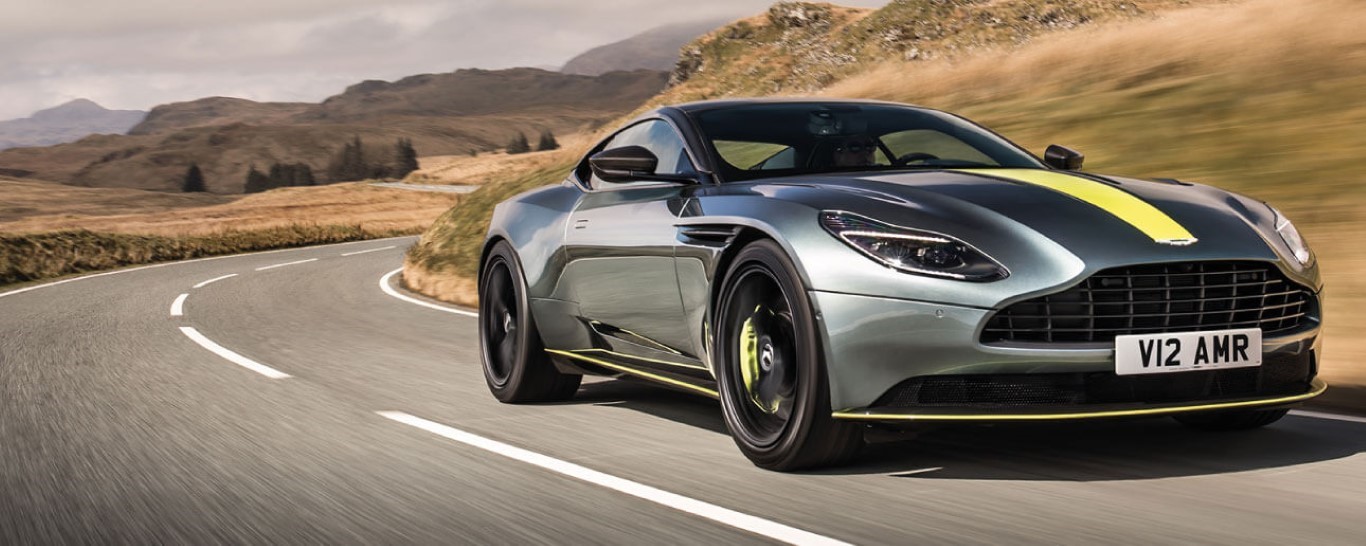
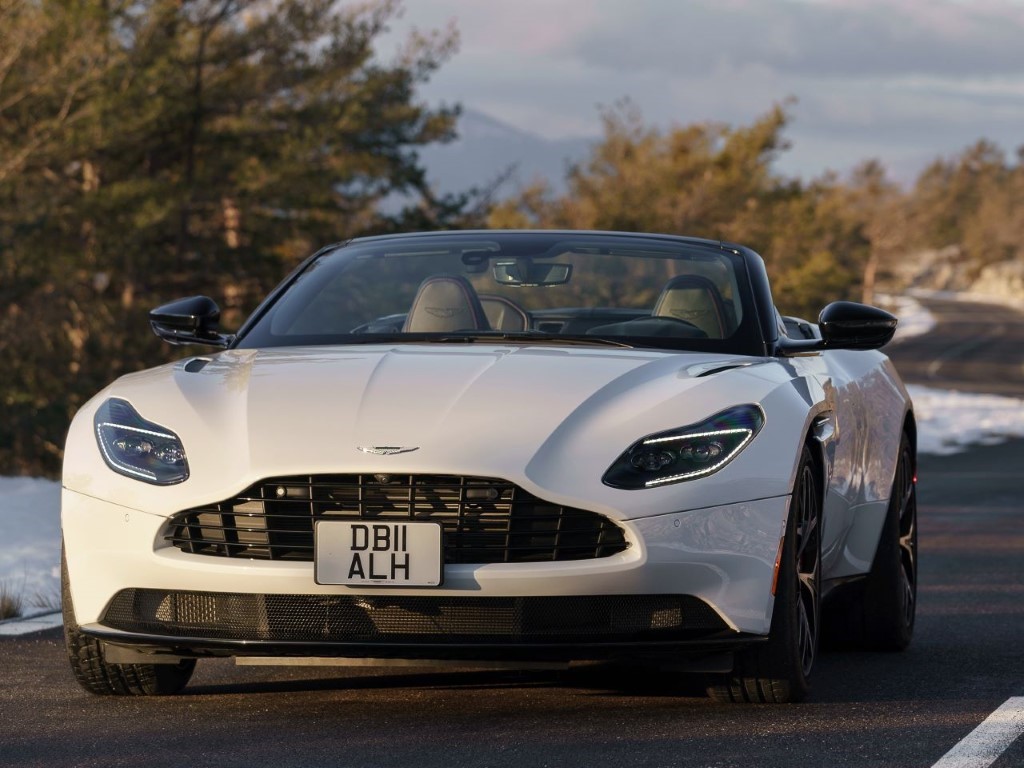
Aston Martin DB11 Volante

Aston Martin DB11 Volante

The perfect harmony between agile Twin-Turbo V8 performance and the sensory pleasure of a luxury roadster.

Aston Martin DB11 Volante Generations

Select a generation to see available versions

Aston Martin DB11 Volante G1

1st Generation

(2018-2023)

4.0 Twin-Turbo 535 cv

Technical Data and History: Aston Martin DB11 Volante

Rebirth and Strategic Context

The Rebirth of an Icon: Context and The "Second Century Plan"

The history of the Aston Martin DB11 cannot be dissociated from the critical moment the British manufacturer found itself in during the mid-2010s. The launch of this model at the 86th Geneva International Motor Show in March 2016 did not represent merely the introduction of a new product, but rather the cornerstone of the brand's corporate survival and strategic redefinition.

For twelve years, Aston Martin relied on the venerable DB9 and the VH (Vertical Horizontal) architecture, developed under Ford's ownership. Although the DB9 was aesthetically acclaimed, its technology and chassis dynamics had fallen behind competitors that were rapidly advancing in aluminum engineering and embedded electronics. The DB11 was, therefore, the first tangible fruit of the "Second Century Plan", an aggressive strategy orchestrated by then-CEO Andy Palmer, aiming to stabilize the company's finances and ensure its sustainability for the next hundred years.

This model symbolized the beginning of a new era of design, engineering, and manufacturing processes. Official production began on September 28, 2016, at the company's headquarters in Gaydon, Warwickshire. In a symbolic act demonstrating the commitment to quality — an area where the brand historically faced criticism —, Andy Palmer personally inspected the first 1,000 units that rolled off the assembly line, signing the engine inspection plates as a final guarantee.

The economic importance of the DB11 was immediate and profound. Aston Martin Lagonda's financial reports indicate that, driven by DB11 deliveries, retail sales volume grew 58% in 2017 compared to the previous year, surpassing the 5,000-unit mark for the first time since 2008. This commercial success generated the vital cash flow that allowed the subsequent development of the new Vantage and, crucially, the DBX SUV.

Design, Aerodynamics and Structure

The Revolution in Design and Aerodynamics

Under the leadership of Marek Reichman, Aston Martin's design team faced the challenge of evolving the brand's classic visual language without falling into the "retro design" trap. The goal was to create a Grand Tourer (GT) that respected the golden ratio of 1:3 between the glass area and the bodywork, but that introduced futuristic and functional elements.

The Engineering of the "Clamshell" Hood

One of the most distinctive and technically complex features of the DB11 is its clamshell hood. It is a single piece of pressed aluminum that extends across the entire front of the vehicle. This design decision eliminated the unsightly cut lines (panel gap seams) that normally cross the hood and fenders on conventional cars.

Besides aesthetic purity, the clamshell hood serves a safety purpose. Due to its large area and deformation capacity, it is exceptionally effective at dissipating energy in the event of an impact with pedestrians. This allowed engineers to dispense with heavy and complex pyrotechnic systems that raise the hood in collisions, saving weight and space in the engine compartment. The hood's opening, hinged at the front, is a direct homage to brand classics, such as the 1950s DB2, offering a theatrical view of the V12 or V8 engine.

Patented Aerodynamic Innovations

The DB11 broke with the tradition of using large rear aerofoils or spoilers that could compromise the elegant silhouette of a GT. Instead of using visible solutions, the engineering team integrated aerodynamics within the bodywork through two main innovations: the Curlicue and the AeroBlade.

Aerodynamic Feature Location Technical Function
Curlicue Front fenders A molded air vent inside the wheel arch that extracts the turbulent high-pressure air generated by the spinning wheels. This reduces lift on the front axle and smooths the airflow along the sides of the car.
AeroBlade C-Pillars and Trunk Lid Air is captured by discreet intakes at the base of the rear pillars (C-pillars), channeled through internal ducts in the bodywork, and expelled vertically through a slot in the trunk lid. This jet of air creates a "virtual spoiler", pushing the rear down without the need for a physical wing.

The AeroBlade system is complemented by a small active spoiler (Gurney flap) that rises automatically at very high speeds to increase the effectiveness of the air jet, ensuring stability without penalizing the drag coefficient at cruising speeds.

Structure and Chassis: The New Aluminum Platform

The DB11 debuted an entirely new bonded and riveted aluminum architecture. Unlike the previous VH platform, this new structure was optimized to be lighter, stiffer, and more efficient in terms of internal space utilization.

The construction uses a combination of extruded aluminum for the main side members and complex castings for the suspension mounting points, ensuring superior torsional rigidity. The doors are manufactured in magnesium, an exotic material choice that reduces weight in a critical area and makes closing easier with a premium feeling of solidity.

The suspension adopts a double wishbone configuration at the front and a multi-link system at the rear. Dynamic behavior is managed by adaptive Bilstein dampers, which offer three distinct modes selectable by the driver: GT, Sport, and Sport Plus. These modes alter not only the damping stiffness, but also the throttle response, gear shift speed, and the weight of the electric power-assisted steering (EPAS) — the first time an Aston Martin DB used electric steering.

Engines and Variants

Detailed Analysis of Engines and Variants

The trajectory of the DB11 is marked by the evolution of its powertrains and the clear distinction between the personalities of the V8 and the V12.

The Pioneer: DB11 V12 Coupé (2016–2018)

The launch model was equipped with the new AE31 engine, a 5.2-liter twin-turbo V12 developed in-house by Aston Martin. This engine marked the transition from the naturally aspirated era (the old 6.0L V12) to forced induction, necessary to meet emissions and performance targets.

  • Technical Specifications: The V12 produces 600 bhp (608 PS) and 700 Nm of torque available from just 1,500 rpm.
  • Technology: The engine incorporates intelligent cylinder deactivation, allowing it to operate as an inline-six under low load to save fuel, alternating the cylinder banks to keep the catalyst temperatures uniform.
  • Performance: Acceleration from 0 to 100 km/h in 3.9 seconds and a top speed of 322 km/h (200 mph).

Despite being the most powerful model at launch, the original V12 (2016-2018) received mixed reviews regarding its dynamics. Journalists pointed out that the rear suspension was excessively soft, resulting in vertical body movements (float) on undulating roads when driven to the limit. It was, essentially, a GT focused on supreme comfort.

The Dynamic Alternative: DB11 V8 Coupé (2017–2023)

In 2017, Aston Martin introduced the V8 variant, equipped with the 4.0-liter twin-turbo M177 engine supplied by Mercedes-AMG. This was the first major manifestation of the technical partnership between the two companies.

  • British Adaptation: Although the block was German, Aston Martin developed its own intake, exhaust, and ECU (engine control unit) mapping systems. The goal was to alter the deep, "muscular" sound typical of AMG to a higher-pitched, more technical tone, consistent with Aston Martin's tradition.
  • Weight Advantage: The removal of four cylinders and the associated components resulted in a weight reduction of 115 kg (253 lbs) over the front axle.
  • Transformed Dynamics: With less weight at the front, the center of gravity moved backward, altering the mass distribution. This transformed the car's behavior: the V8 is described as more agile, with a front end more "glued" to the ground and more immediate steering responses than the V12.
  • Visual Distinction: The V8 has only two hood vents (compared to the V12's four), black headlight bezels, and wheels with a specific finish.

The Convertible: DB11 Volante (2018–2023)

Launched in October 2017, the DB11 Volante replaced the DB9 Volante. A crucial engineering decision defined this model: it was offered exclusively with the V8 engine. Aston Martin justified this choice based on weight; installing the heavy V12 in the front of a convertible (which already has heavy structural reinforcements) would unacceptably compromise driving dynamics.

  • Soft-top Engineering: The 8-layer "K-Fold" roof is a marvel of acoustic engineering. It isolates wind noise and weather conditions so effectively that the closed-cabin experience rivals that of the coupe. The mechanism takes 14 seconds to open and 16 to close, operating at speeds up to 50 km/h (31 mph). When folded, the stack height of the fabric is exceptionally low, keeping the car's beltline clean.
  • Structural Reinforcements: To mitigate the loss of rigidity caused by removing the roof, Aston Martin reinforced the rocker panels by increasing the thickness of the metal walls and introduced a transverse crossmember known as the "Garden Gate" at the front suspension mounting points. The result was a torsional rigidity of 22 kNm/degree — lower than the coupe's 34 kNm/degree, but drastically higher than the old DB9 Volante's 14.4 kNm/degree.
  • Performance: Due to the additional weight of approximately 110 kg compared to the V8 coupe, the 0-100 km/h time increased slightly to 4.1 seconds.

The Final Evolution: DB11 AMR (2018–2022)

In May 2018, Aston Martin replaced the original DB11 V12 with the DB11 AMR (Aston Martin Racing). This model was engineering's response to criticisms about the excessive softness of the original V12 and marked the influence of Matt Becker, the vehicle dynamics chief hired from Lotus.

  • Power Increase: The V12 engine was recalibrated to deliver 630 bhp (639 PS), an increase of 30 bhp. This reduced the 0-100 km/h time to 3.7 seconds and raised the top speed to 334 km/h (208 mph), making it the brand's fastest series-production car at the time.
  • Chassis Refinement: The most important changes were invisible: stiffer rear subframe bushings, a thicker rear anti-roll bar, and reprogrammed dampers. This increased the car's connection with the road without destroying ride comfort, creating a balance that the 2016 model lacked.
  • Visual Identity: The AMR abolished almost all external chrome in favor of monochrome or gloss carbon fiber finishes. Smoked taillights and a gloss black roof became standard.

2022 Updates (End of the AMR Era)

For the 2022 model year, Aston Martin simplified the nomenclature. The "AMR" badge was dropped, and the car became known simply as the DB11 V12, maintaining the 630 bhp specifications of the AMR. Simultaneously, the V8 engine received a power boost, going from 503 bhp to 528 bhp (535 PS), allowing for a new top speed of 309 km/h.

In this update, Aston Martin also restructured the interior trim options into three "environments" to facilitate configuration:

  • Inspire: Focused on traditional luxury, with perforated semi-aniline leather and intricate stitching.
  • Accelerate: Focused on sportiness, with extensive use of Alcantara and Sports Plus seats.
  • Create: Focused on bolder and more modern design combinations.
Comparative Table of Technical Specifications
Specification DB11 V12 (2016-2018) DB11 V8 (2017-2021) DB11 V8 (2022-2023) DB11 Volante (2018-2023) DB11 AMR / V12 (2018-2023)
Engine 5.2L Twin-Turbo V12 (AE31) 4.0L Twin-Turbo V8 (M177) 4.0L Twin-Turbo V8 (M177) 4.0L Twin-Turbo V8 (M177) 5.2L Twin-Turbo V12 (AE31)
Maximum Power 600 bhp (608 PS) 503 bhp (510 PS) 528 bhp (535 PS) 503 / 528 bhp 630 bhp (639 PS)
Maximum Torque 700 Nm 675 Nm 675 Nm 675 Nm 700 Nm
Acceleration 0-100 km/h 3.9 s 4.0 s 4.0 s 4.1 s 3.7 s
Maximum Speed 322 km/h (200 mph) 300 km/h (187 mph) 309 km/h (192 mph) 300 km/h (187 mph) 334 km/h (208 mph)
Weight (Dry/Kerb) ~1,770 kg ~1,655 kg (-115kg vs V12) ~1,655 kg ~1,765 kg (+110kg vs V8) ~1,765 kg
Weight Distribution 51% Front / 49% Rear More weight at the rear More weight at the rear 47% Front / 53% Rear 51% Front / 49% Rear
Launch Price £157,900 (UK) £144,900 (UK) Variable £159,900 (UK) £174,995 (UK)
Special Editions, Interior and Technology

Special and Limited Editions: The Strategy of Exclusivity

Aston Martin used special editions, often developed by the "Q by Aston Martin" division, to maintain interest in the model and increase the average profit margin per unit.

DB11 Shadow Edition (2020/2021)

Limited to 300 global units, the Shadow Edition was a visual package available only for the V8 models (Coupé and Volante). The intention was to attract a younger audience that preferred a "blacked-out" aesthetic instead of traditional chrome.

  • Exclusive Details: Gloss black hood blades, 20-inch directional black wheels, black chrome "Wings" badges, and black anodized sill plates.
  • Interior: Sports steering wheel wrapped in Obsidian Black leather and Pure Black Alcantara.
  • Performance: Mechanically identical to the standard V8, with no power increase.

DB11 AMR Signature Edition (2018)

At the launch of the AMR, Aston Martin offered an ultra-exclusive series of 100 units called the Signature Edition.

  • Configuration: Stirling Green paint with a central stripe and vibrant Lime (lime green) details, replicating the livery of the Aston Martin Racing team's race cars in the world endurance championship (WEC).
  • Interior: Dark Knight leather with Lime stitching and accents, plus satin carbon fiber on the center console.

Henley Royal Regatta Edition (2017 and 2018)

Celebrating the partnership with the famous English rowing regatta, the Q division created two unique examples that served as a basis for personalized configurations.

  • Coupé Version (2017): Diavolo Red paint with a Satin Scintilla Silver roof. Interior reversing the scheme, with metallic black leather and red details.
  • Volante Version (2018): White Stone paint (a white with a blue-gray tone), Red Oxide leather interior, and hand-painted crossed oar motifs in pale blue on the carbon fiber.

North Coast 500 Edition (2017)

A tribute to Scotland's scenic route, limited to an extremely small number (approx. 12 units).

  • Details: Seychelles Blue paint, Bison Brown leather interior, and authentic use of Dunbeath Tweed (Scottish wool fabric) on the door cards and sun visors, plus route-related embroidery.

Interior and Technology: The Leap and the Limitation

The DB11's interior represented a quantum leap over the DB9, but also brought perception challenges. The collaboration with Daimler allowed Aston Martin to abandon the old Volvo/Ford electrical architecture.

  • Materials: The focus on craftsmanship remained absolute. Leathers from Scottish suppliers (Bridge of Weir), open-pore woods, and real carbon fiber. The introduction of techniques like broguing (decorative perforations in the leather, similar to classic shoes) and "Nexus" quilting brought visual complexity to the seats.
  • Infotainment: The system used the architecture of the previous generation Mercedes-Benz COMAND (NTG 5.0 or 5.5), with a rotary controller and touchpad. Although it was infinitely more reliable and functional than Aston's previous systems, critics noted that the graphics and interface already looked dated at launch compared to Mercedes' own more modern MBUX systems or Audi/Porsche systems. The 8-inch central screen was not a touchscreen in the early versions, relying entirely on the physical controller.
  • Space: The DB11 significantly improved habitability. Headroom increased by 10mm in the front and 54mm in the rear, while rear legroom grew by 87mm, although the rear seat remained suitable only for small children or extra luggage.
Production, Sales and Legacy

Production, Sales and Financial Impact

The production of the DB11 was vital to Aston Martin's financial health. Analyzing annual reports and statements, it is possible to draw a clear picture of its market performance.

Production Volumes

Total DB11 production (all variants) is estimated between 10,000 and 12,000 units over its seven-year lifespan (2016-2023).

  • 2016: Production started in September. Low volume of initial deliveries.
  • 2017: The peak year. Brand retail sales grew 58%, driven almost entirely by the DB11 V12 and the arrival of the V8 late in the year. Company revenue rose 48% to £876 million. By May 2018, the brand confirmed having sold around 4,200 units of the V12 version alone.
  • 2018-2019: Volumes sustained by the launch of the Volante and the AMR. Wholesale volume (sales to dealerships) reached 6,441 cars in 2018 for the entire brand.
  • 2020-2023: Natural decline in the life cycle and a shift in the company's focus to the DBX SUV. In 2021, the DBX alone sold 3,001 units, surpassing the sum of all sports cars (Vantage, DB11, DBS).

The Importance of the V12 Engine

Although the V8 engine became the best-seller in the final years due to taxes and efficiency, the AE31 V12 engine is historically significant. It is estimated that between 4,000 and 5,000 V12 engines were produced for the DB11 before its discontinuation, making these units potential future classics.

Legacy and Succession

Production of the Aston Martin DB11 officially ended in late June 2023. It was replaced by the Aston Martin DB12, which the brand described no longer as a "Grand Tourer", but as the world's first "Super Tourer", indicating an even greater leap in performance and dynamics.

The DB11 leaves a legacy of transformation. It proved that Aston Martin could survive without Ford, could create a world-class aluminum architecture, and could integrate modern technology without losing its soul. It solved the brand's existential problem in the 2010s and paved the financial and technological way for the company's current product range. The V12 model, in particular, stands as one of the last great twelve-cylinder GTs in automotive history, a milestone of an era that is rapidly coming to an end.

Technical data based on: • Official manufacturer catalogs • EPA / WLTP documentation when available • Official press releases

Editorial content produced by Gabriel Carvalho. | Última revisão: Dezembro/2025.