
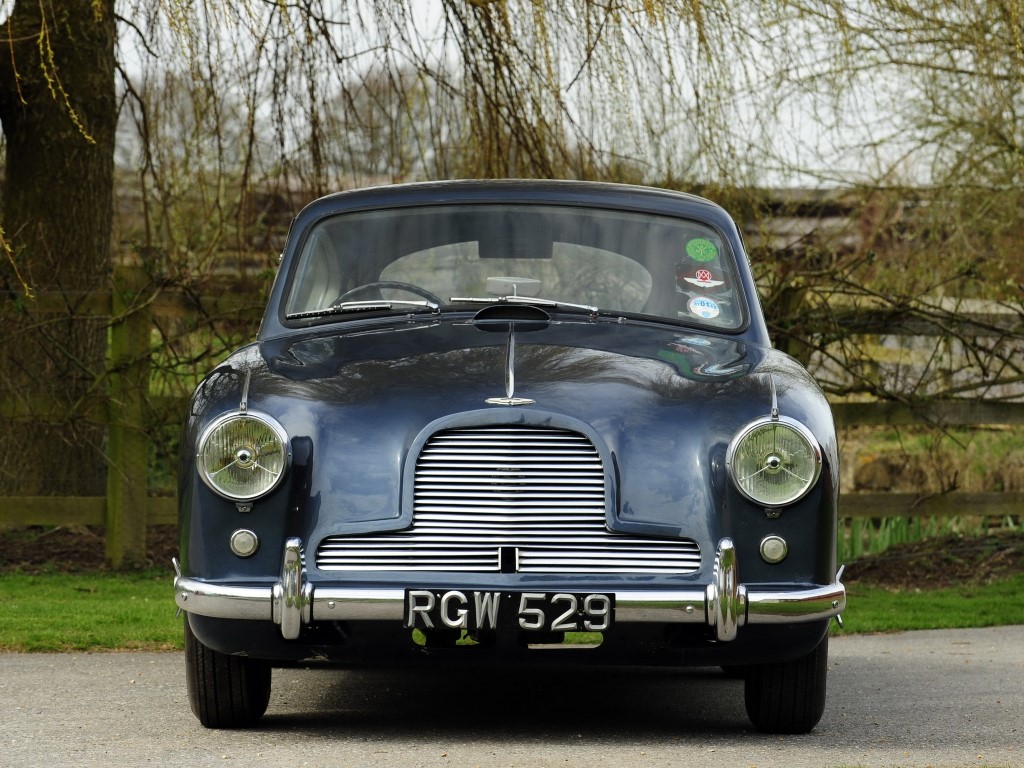
Mk I
(1953 - 1955)
2.9 L L6 12V
142 cv
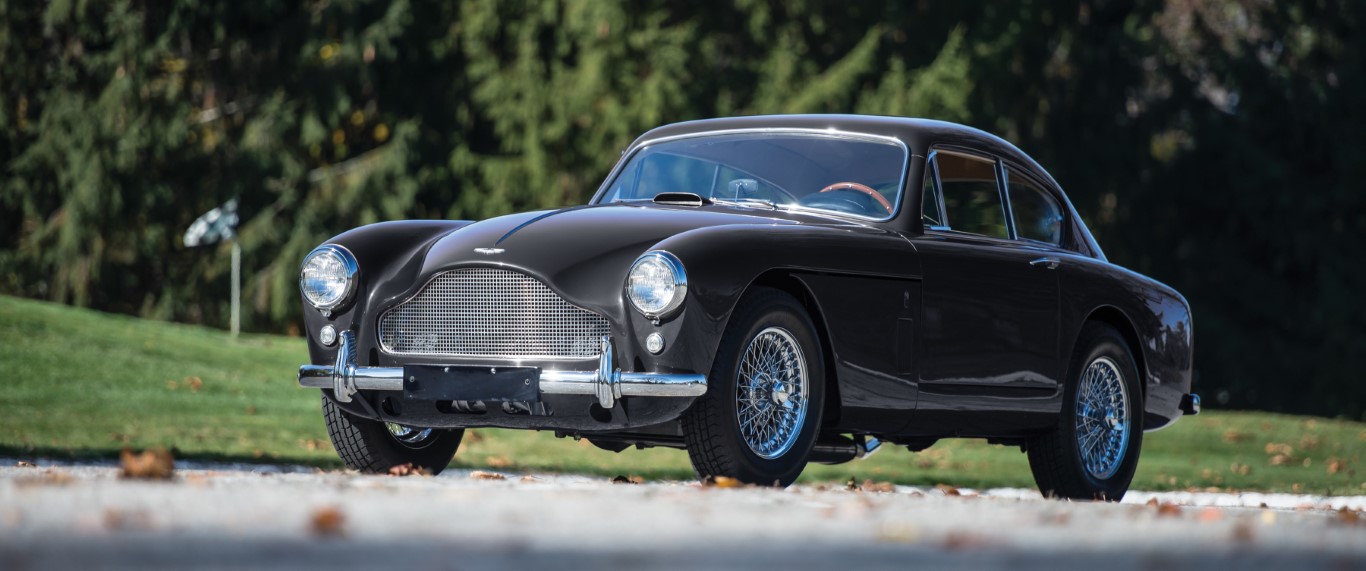
Technical specifications, versions, and history for the Aston Martin DB2/4 Saloon.
Select a generation to see available versions
(1953 - 1955)
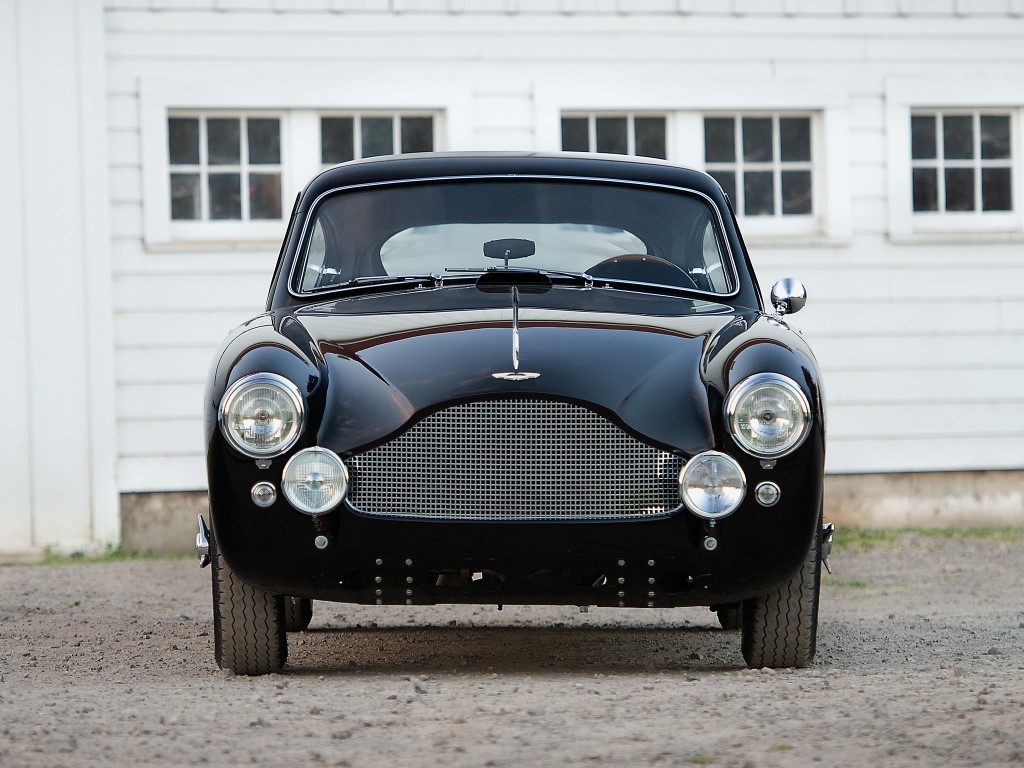
(1955 - 1957)
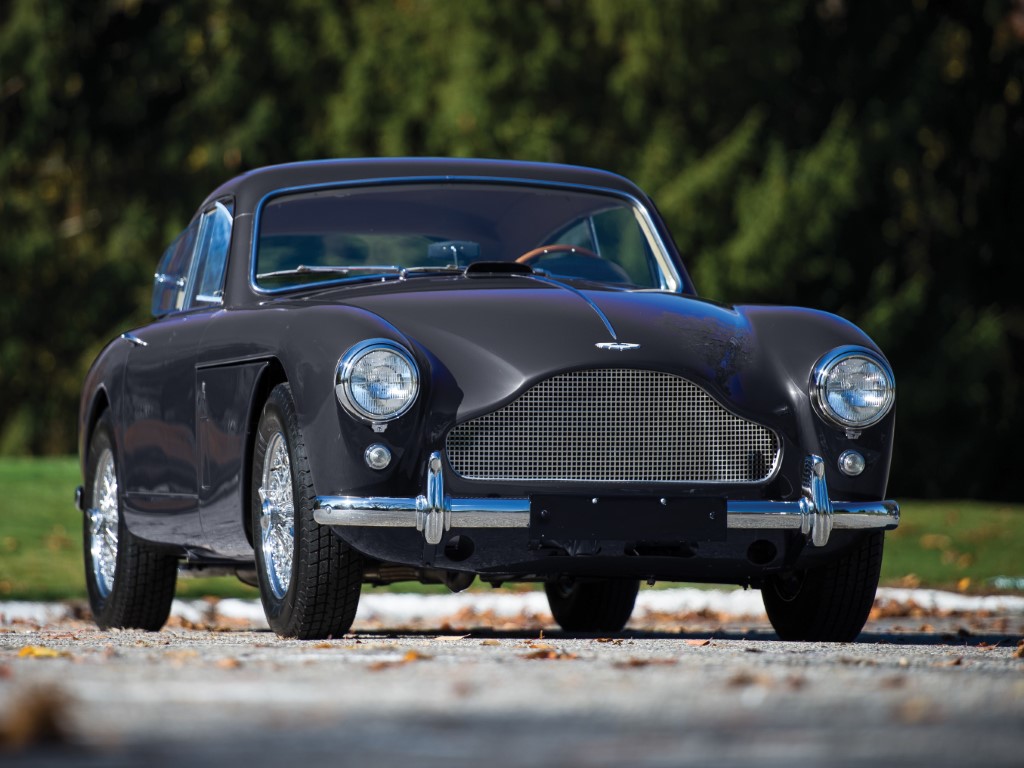
(1957 - 1959)
The trajectory of the DB2 lineage represents the exact moment when Aston Martin evolved from a niche automobile manufacturer into a global powerhouse of engineering and sporting prestige. Shortly after acquiring Aston Martin in 1947, industrialist Sir David Brown realized that the tubular chassis designed by Claude Hill and the four-cylinder engine powering the pioneering DB1 lacked the breath to compete in the high-luxury international market. The solution came with the strategic acquisition of the Lagonda brand, also in 1947. The primary asset of this transaction was the refined inline six-cylinder engine with double overhead camshafts (DOHC), designed by the legendary W.O. Bentley.
Before reaching the assembly lines, the mechanics were put to the test under extreme conditions. Three pre-production prototypes were entered into the 1949 24 Hours of Le Mans. One of them utilized Lagonda's new six-cylinder engine, while the other two used Aston Martin's four-cylinder engine. The prototype with the Lagonda engine, driven by Leslie Johnson, retired due to water pump overheating, while one of the four-cylinder models suffered a fatal crash that claimed the life of driver Pierre Maréchal. The extreme heat and confined space of these experimental cabins earned the prototypes the nickname "Sweatboxes".
Aware of these limitations, designer Frank Feeley redesigned the bodywork for the production model, slightly raising the roofline to expand internal space and drastically improving airflow to both the engine and the occupants. With these corrections, the definitive model of the Aston Martin DB2 made its official debut at the New York Motor Show in April 1950, initiating an era of commercial and sporting prestige.
The DB2 was originally launched as a two-seater closed coupe (referred to by the factory as a Sports Saloon), and was complemented in late 1950 by a convertible variant, the Drophead Coupé (DHC). The chassis consisted of a shortened version of the tubular steel structure designed by Claude Hill for the DB1, clothed in a lightweight, hand-shaped aluminum body. The suspension utilized an independent trailing-arm system at the front with coil springs and an anti-roll bar, combined with a rigid axle at the rear with coil springs and Girling-brand hydraulic drum brakes on all four wheels.
The first 49 units of the DB2, produced between 1950 and 1951, are known worldwide as the "Washboard" series due to their specific design solutions. These initial units featured a chrome front grille split into three distinct parts and large rectangular louvered vents located behind the front fenders to assist in cooling the engine bay. Additionally, these early units featured decorative chrome trim along the side sills.
Starting from the 50th produced chassis, Aston Martin simplified the assembly line and the car's appearance. Journalist Laurence Pomeroy from *The Motor* magazine convinced David Brown that the side vents cluttered the car's visual lines, leading to the definitive elimination of these elements and the replacement of the three-piece grille with a single piece featuring horizontal slats. The front hood was front-hinged and tilted forward. At the rear of the vehicle, there was no conventional trunk lid; there was only a small upper access hatch to reach the spare tire. Luggage had to be stowed in a generous space behind the front seats, accessible only from inside the cabin.
In the mechanical aspect, Aston Martin offered two configurations of the 2.6-liter engine. The standard version used the block code LB6, while the high-performance version, named Vantage, utilized structural modifications to extract more power. Due to post-war austerity measures in Great Britain, which limited local fuel to standard gasoline of just 72 octane, the first DB2 Vantage models were primarily allocated to the North American market, where higher-quality fuel permitted the use of higher compression ratios. The first Vantage unit produced (chassis LML 50/21) was delivered to and raced by the famous driver and builder Briggs Cunningham.
| Technical Specifications | Standard DB2 (LB6 Engine) | DB2 Vantage (LB6V/LB6E Engine) |
|---|---|---|
| Displacement | 2,580 cc (Inline 6-cylinder) | 2,580 cc (Inline 6-cylinder) |
| Fuel System | 2x 1.5-inch SU H4 Carburetors | 2x 1.75-inch SU HV6 Carburetors |
| Compression Ratio | 6.5:1 | 8.16:1 |
| Maximum Power | 105 bhp @ 5,000 rpm | 125 bhp @ 5,000 rpm |
| Maximum Torque | Approx. 170 Nm @ 3,000 rpm | Approx. 190 Nm @ 2,750 rpm |
| Transmission | 4-speed Manual (column or floor shift) | 4-speed Manual (column or floor shift) |
| 0-96 km/h Acceleration | ~11.2 seconds | ~10.5 seconds |
| Top Speed | 187 km/h | 193 km/h |
| Total Production | 307 Units (Coupes) | 98 or 102 Units (DHC / Convertibles) |
The first examples of the DB2 left the factory equipped with a steering column-mounted gear lever (DBR code transmission) to allow three people to sit on the single bench front seat, a common requirement of the North American market at the time. However, the preference for sporty driving led Aston Martin to adopt the floor-mounted shifter (DBC code) starting from chassis LML/50/17, a standard that was later retrofitted to most of the older units. In total, DB2 production reached between 410 and 411 units before being concluded in April 1953.
Although the DB2 was dynamically exemplary, the market for a car with only two seats and restricted trunk access was limited. To resolve this issue, Aston Martin presented the DB2/4 at the 1953 London Motor Show, a direct evolution designed on a slightly modified chassis to accommodate more passengers and luggage. The brand developed an experimental prototype in 1952 (chassis LML/50/221) with an extended roof and a large rear window that opened upward. This solution gave rise to the first production sports profile hatchback in the world, allowing the two rear seats to be folded down to create a flat and voluminous cargo area.
The main aesthetic and functional changes of the DB2/4 Mark I compared to the DB2 included:
In the first months of production, the DB2/4 utilized the well-known 2.6-liter engine with 125 bhp Vantage specifications. In September 1953, Aston Martin introduced an important update with the launch of the 2.9-liter VB6J engine, which offered greater drivability in urban traffic thanks to an increase in low-end torque.
| Engineering Parameters | DB2/4 Mark I (Initial Version) | DB2/4 Mark I (1953 Update) |
|---|---|---|
| Engine Code | Lagonda VB6E (2.6 Liters) | Lagonda VB6J (2.9 Liters) |
| Displacement | 2,580 cc | 2,922 cc (83 mm cylinder bore) |
| Maximum Power | 125 bhp @ 5,000 rpm | 140 bhp @ 5,000 rpm |
| Maximum Torque | 190 Nm @ 2,750 rpm | 195 Nm @ 2,400 rpm |
| 0-96 km/h Acceleration | ~11.0 seconds | ~10.5 seconds |
| Top Speed | 190 km/h | 193 km/h |
| Body Style Production | Saloon (2+2) and Drophead Coupé (2-seater) | Saloon (2+2) and Drophead Coupé (2-seater) |
During this period, the manufacturer sold 12 rolling chassis of the DB2/4 to independent coachbuilders to create bespoke designs. Of these units, eight received bodywork from Italy's Carrozzeria Bertone, commissioned by North American importer Stanley "Wacky" Arnolt. Among these special cars, three open racing models (Bertone Spiders) designed by Franco Scaglione and a single unique coupe unit (Berlinetta chassis LML/765) commissioned for businessman Charles A. Ward stand out. The partnership between Arnolt and Bertone was abruptly cut short because Aston Martin began refusing to supply additional chassis, viewing Arnolt's elegant Italian designs as direct competitors to its own models. Other special chassis received unique bodywork developed by renowned firms such as Switzerland's Graber (chassis LML 562), as well as a single unit made by Vignale (LML/802) and another by Allemano (LML/761). In total, 565 units of the DB2/4 Mark I were produced.
Launched at the October 1955 London Motor Show, the DB2/4 Mark II marked a significant shift in processes for Aston Martin. David Brown had purchased the Tickford coachbuilder, located in Newport Pagnell, in late 1954. This allowed the transfer of bodywork production from Mulliners (in Birmingham) directly to the Tickford facilities, unifying manufacturing and establishing the historic production base that the brand would use for decades.
The Mark II exhibited styling refinements and practical solutions compared to the Mark I:
Although most Mark II units left the factory equipped with the well-known 2.9-liter, 140 bhp engine, the brand made available a factory high-performance tuning kit, known as the Special Series.
[Intake Flow of the Special Series VB6J/L Engine]
Polished Intake Ports -> Enlarged Diameter Valves -> High Lift Camshaft -> 8.6:1 Compression -> 165 bhp
This powerplant, identified by the suffix "L" or "L1" stamped on the block, adopted an 8.6:1 compression ratio, larger diameter intake and exhaust valves, and camshafts with a higher lift profile. This configuration raised maximum power to 165 bhp (hp) at 5,000 rpm, allowing models equipped with this package to break the 200 km/h top speed barrier. In total, only 199 examples of the DB2/4 Mark II were built.
The final model of this family was presented at the Geneva Motor Show in March 1957 under the official designation of the DB Mark III. The car gathered the greatest engineering evolutions under the Claude Hill chassis and the mechanical platform designed by W.O. Bentley, correcting previous dynamic and usability flaws.
Aesthetically, the DB Mark III was the first road car to adopt the classic asymmetric front grille designed by Bert Thickpenny (inspired by the victorious DB3S sports racing prototype). This grille shape became Aston Martin's definitive visual signature and is still used today in its supercars. Inside, the old central instrument panel was replaced by a cluster positioned directly behind the three-spoke steering wheel. The upper contour of the wooden dashboard identically replicated the curved design of the vehicle's front grille. At the rear, the car received vertical taillights inherited from the Humber Hawk sedan.
For the first time on a model of the brand, modern engineering solutions focused on vehicle control and driver comfort were applied:
The renowned Polish engineer Tadek Marek, newly arrived at Aston Martin, carried out a meticulous work of re-engineering on the 2.9-liter engine. He redesigned the block with stiffer cylinder liners, developed an upgraded forged steel crankshaft, resized the oil pump, and designed a cylinder head with larger valves and intake ports based on the track experiences of the DB3S model.
The manufacturer offered four powertrain versions to meet different customer profiles:
In total, 551 units of the DB Mark III were produced between 1957 and 1959. Of the three available body styles, the hatchback (Saloon) totaled 462 units, the Drophead Coupé had 84 units, and the Fixed Head Coupé had only 5 units constructed. Unlike the Saloon version, the convertible (DHC) and three-box coupe (FHC) models possessed conventional trunk lids hinged at the base, lacking the large integrated glass opening that characterized the pioneering hatchback.
The table below summarizes the technical evolution of all generations and facelifts produced by Aston Martin during this series.
| Generation / Model | Production Years | Chassis Range | Units Produced | Key Visual Identification Features |
|---|---|---|---|---|
| DB2 (Washboard Series) | 1950 to 1951 | Core chassis numbers range | 49 Units | Front grille split into three vertical sections; louvered side vents behind front fenders. |
| DB2 (Conventional Series) | 1951 to 1953 | Core chassis numbers range | 362 Units | Single front grille with horizontal bars; smooth sides with no vents. |
| DB2/4 Mark I (2.6 L) | 1953 to 1954 | Core chassis numbers range | Approx. 200 Units | First 2+2 hatchback body; curved single-piece windshield; higher headlights; larger bumpers. |
| DB2/4 Mark I (2.9 L) | 1954 to 1955 | Core chassis numbers range | Approx. 365 Units | Identical to the previous version, but equipped with the 2.9-liter, 140 bhp VB6J engine. |
| DB2/4 Mark II | 1955 to 1957 | Core chassis numbers range | 199 Units | Small fins on the rear fenders; bubble-type taillights; raised roof with chrome trim; hood cut horizontally above the wheel. |
| DB Mark III | 1957 to 1959 | Core chassis numbers range | 551 Units | New DB3S-style asymmetric front grille; redesigned instrument cluster; vertical taillights; standard front disc brakes. |
Total production of the DB2 family, combining all its variants and evolutions over nine years, reached the mark of 1,725 artisanally assembled automobiles. This series not only guaranteed Aston Martin's financial survival in the post-war era, but also structured the engineering and design philosophy that defined the brand in the following decades.
The transition from outsourcing bodywork assembly to direct control at the Tickford factory in Newport Pagnell allowed the establishment of a strict quality standard that enabled the development of more complex platforms. Likewise, constant improvements to the DOHC inline six-cylinder engine — from the first 105 bhp versions to the refined 195 bhp blocks modified by Tadek Marek — served as a school for developing racing powertrains that culminated in Aston Martin's victory in the 1959 World Sports Car Championship. Without the engineering foundation and commercial success of the DB2 series, Aston Martin would not have developed the legendary DB4 and DB5 models, which became the ultimate symbols of performance and elegance in the British automotive industry.