
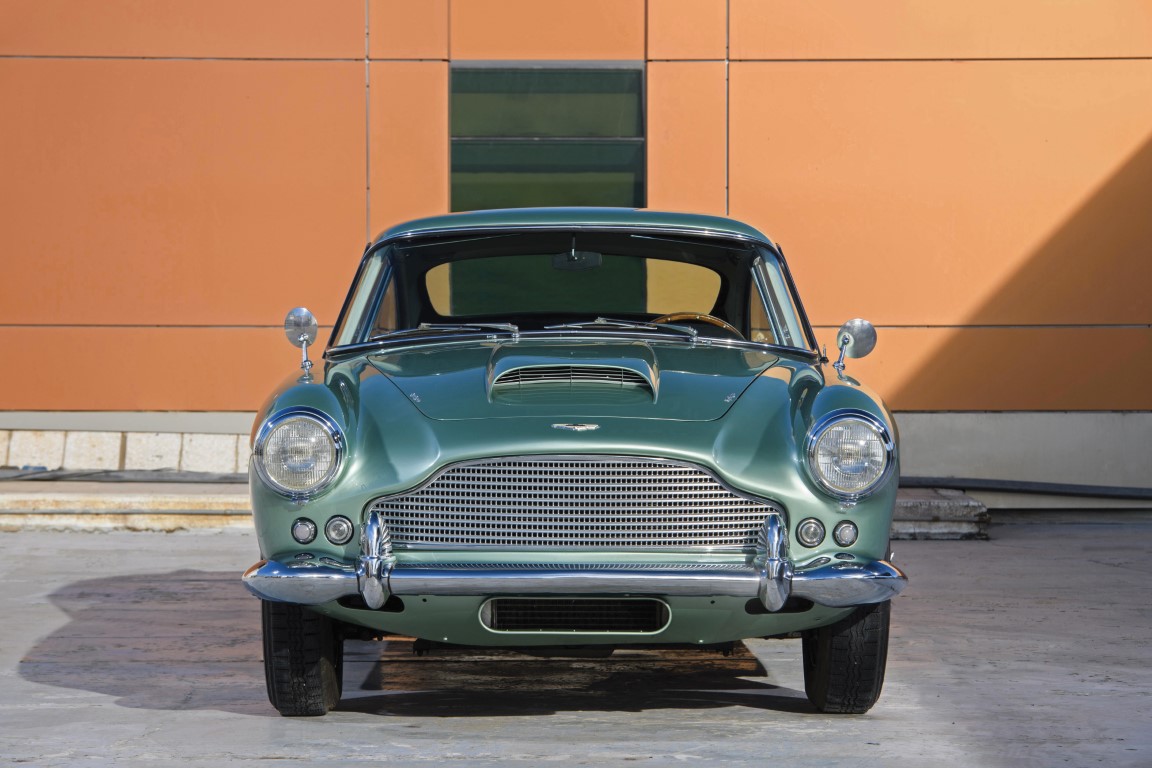
Series 1
(1958 - 1960)
3.7 L L6 12V
243 cv
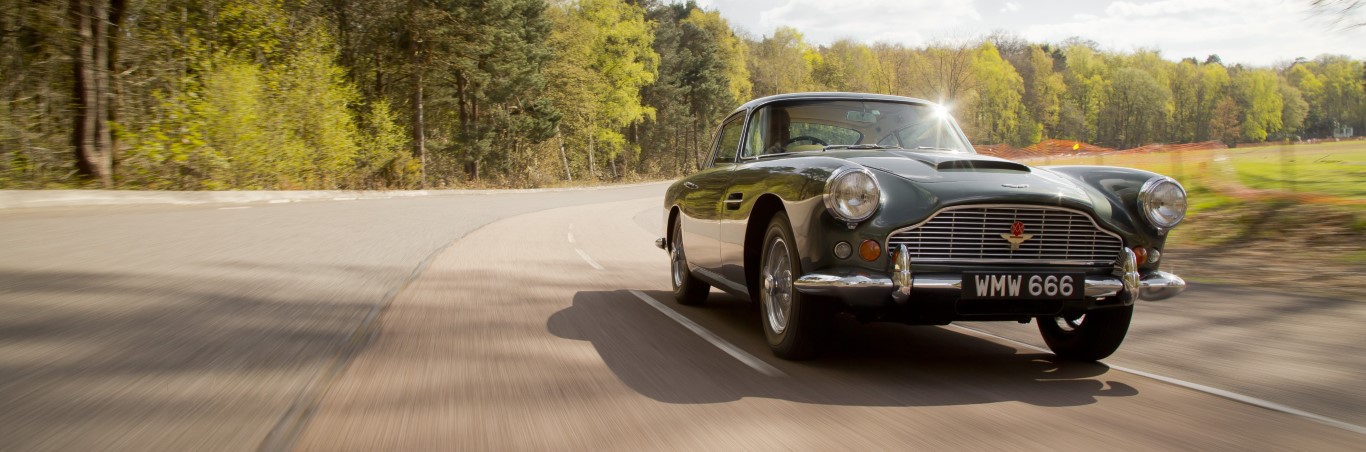
Technical specifications, versions, and history for the Aston Martin DB4.
Select a generation to see available versions
(1958 - 1960)
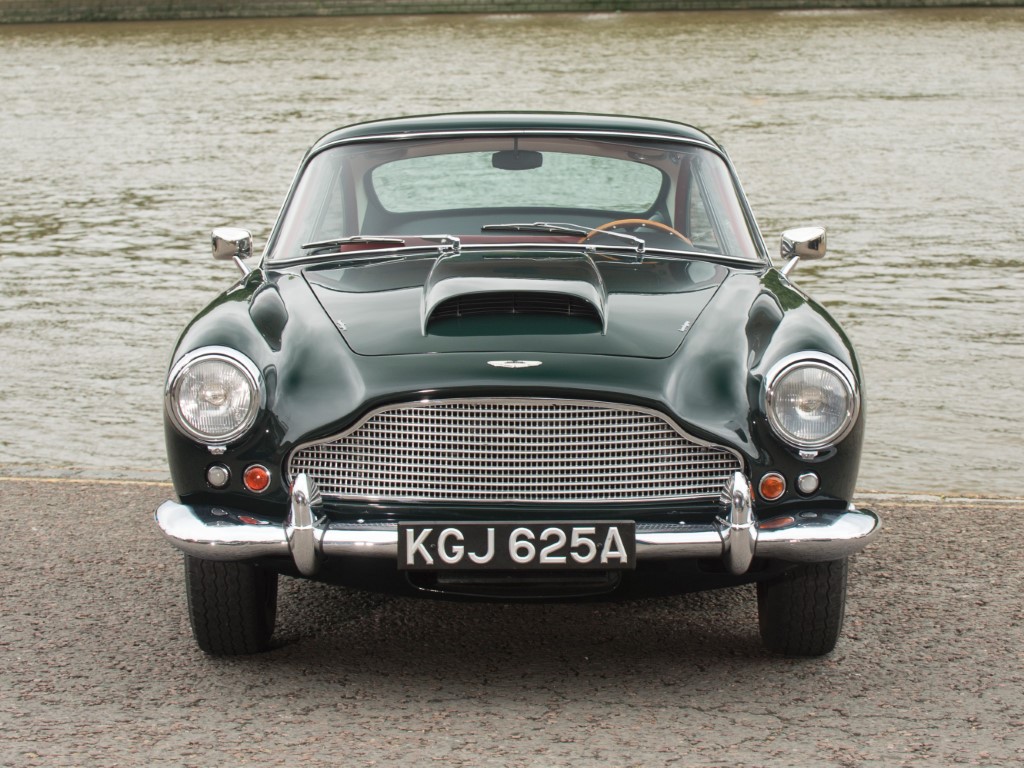
(1960 - 1961)
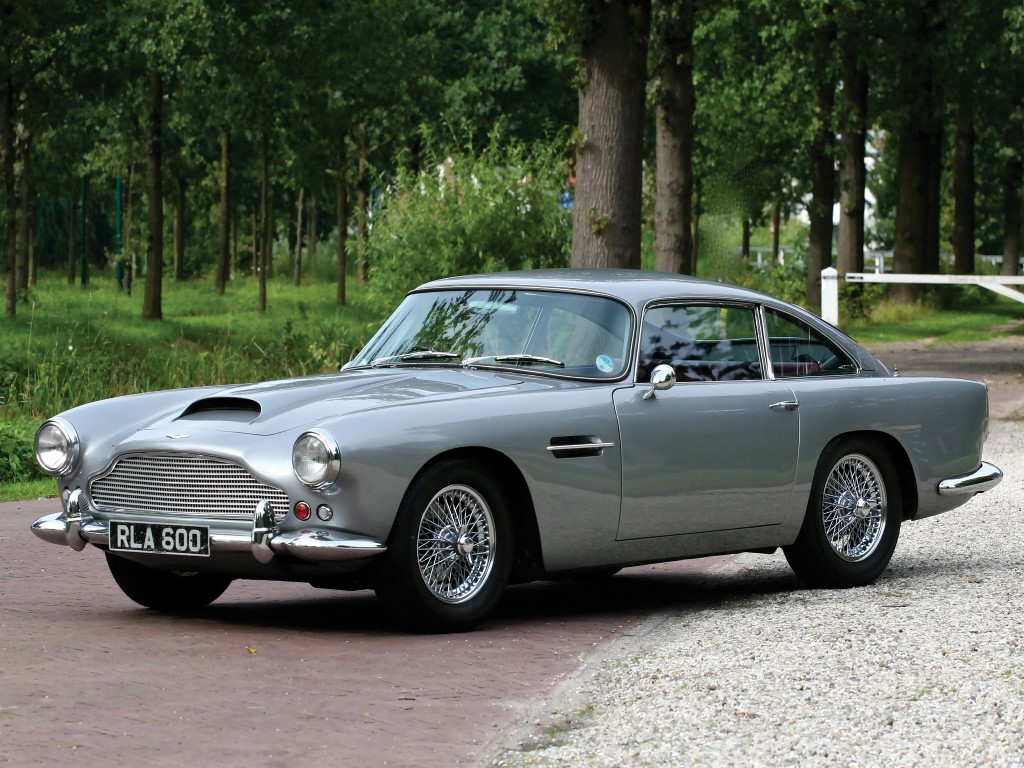
(1961-)
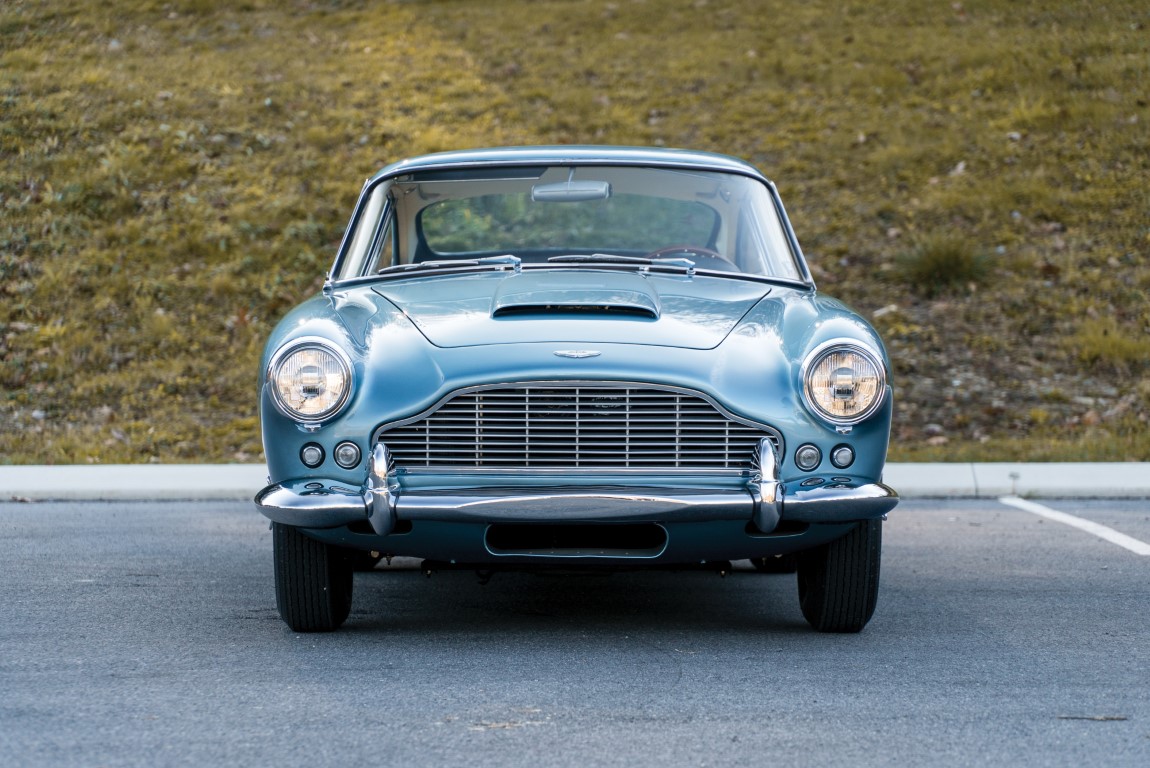
(1961 - 1962)
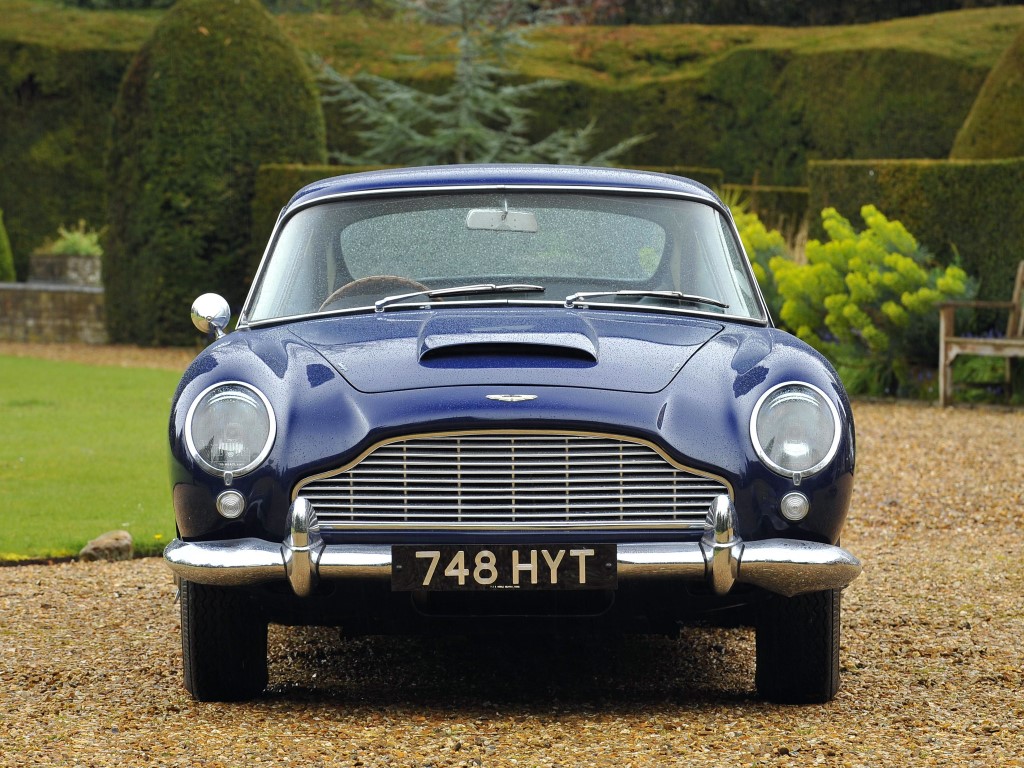
(1962 - 1963)
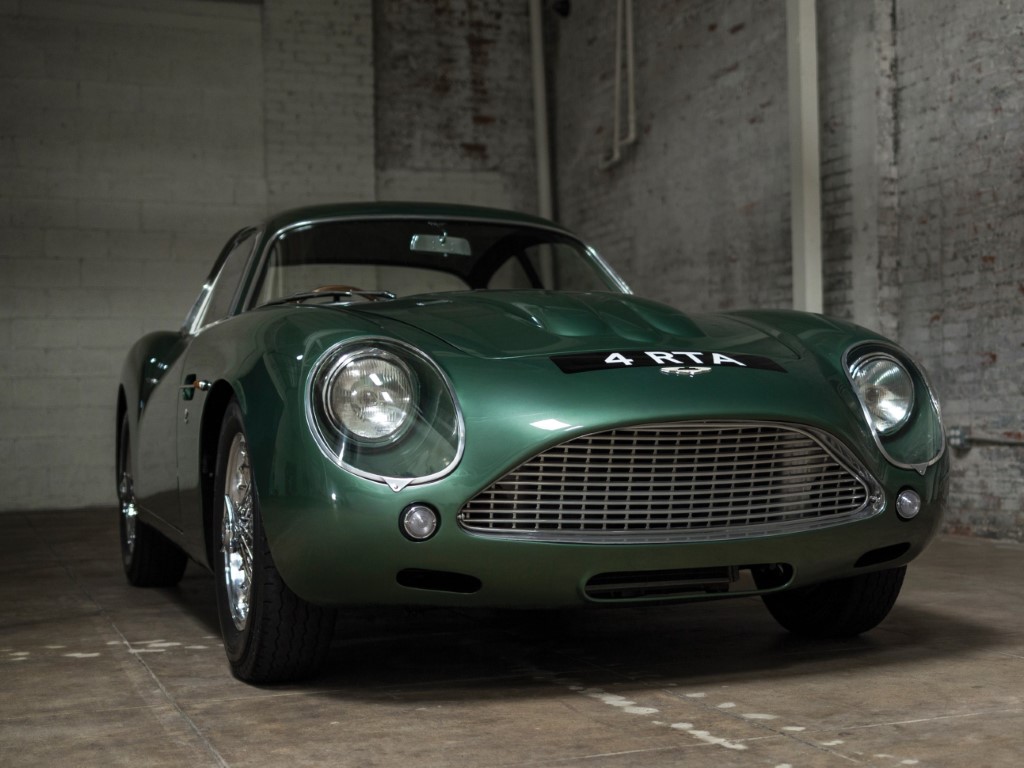
(1960 - 1962)
The development of the Aston Martin DB4 represented a turning point for the British manufacturer from Newport Pagnell in the late 1950s. Before the DB4, the brand's vehicles, such as the DB Mark III, were refinements of post-war designs. The DB4, however, was born as an entirely new automobile, designed from a blank sheet to compete directly with the world's best sports cars, especially models from Ferrari and Maserati.
The project's origin dates back to the beginning of 1952 with "Project 114," the planned successor to the DB2 line. Engineer Harold Beach designed the front suspension and a perimeter frame chassis for this project. However, the bodywork designed internally by Frank Feeley did not please the company's management. Seeking a more attractive and modern aesthetic, development director John Wyer decided to seek the assistance of Carrozzeria Touring of Milan, a renowned Italian coachbuilder.
Harold Beach was sent to Italy to work in partnership with Touring. The construction method patented by the Italian company, called *Superleggera* (superlight), consisted of fixing hand-molded aluminum panels onto a lattice of small-diameter steel tubes. This technique required a very rigid structural base. In response to this need, Harold Beach designed an innovative steel platform chassis in just six weeks, a structure that would prove so efficient that it would be used by Aston Martin until the 1970s. The fluid and balanced body design was sculpted by stylist Federico Formenti, from Touring.
The vehicle resulting from this joint effort united British engineering with Italian continental style. To make production viable, Aston Martin acquired the coachbuilder Tickford, in Newport Pagnell, centralizing all manufacturing there under license from Touring.
Mechanically, the Aston Martin DB4 featured advanced solutions for its time. The front suspension was independent, with overlapping arms (double wishbones), ball joints, coil springs, Armstrong telescopic shock absorbers, and an anti-roll bar. The rear suspension utilized a solid axle very well located by parallel trailing arms and a Watts linkage, as well as coil springs and Armstrong piston-type shock absorbers. The steering system adopted a rack-and-pinion mechanism, ensuring quick and precise responses for the driver.
The braking system featured servo-assisted disc brakes on all four wheels, initially using 11.5-inch Dunlop components, which were later replaced by Girling brand systems. Engine power was transmitted to the rear wheels via a four-speed manual transmission with full synchromesh, developed by the David Brown Corporation's gear division, working in conjunction with a 10-inch Borg & Beck single-plate dry clutch.
The heart of the DB4 was its 3.7-liter (3,670 cc) inline six-cylinder engine with double overhead camshafts (DOHC), designed by Polish engineer Tadeusz "Tadek" Marek. Marek, who had previously worked at the Austin Motor Company, developed this block entirely in light aluminum alloy (R.R. 50), reducing weight by 22 kg compared to traditional cast-iron blocks. The crankshaft was nitrided forged steel and spun on seven main bearings. With identical bore and stroke of 92 mm, the engine operated in a balanced manner.
In the standard configuration, with an 8.25:1 compression ratio and fed by two SU HD8 carburetors, the engine produced 240 hp at 5,500 rpm and 245 lb-ft of torque at 4,000 rpm. This assembly allowed the coupe to accelerate from 0 to 100 km/h in about 9 seconds, reaching a top speed of 224 km/h. The car became famous for the test of accelerating from a standstill to 100 mph (160 km/h) and stopping completely in less than 30 seconds (registering the historic mark of 27 seconds), which attested to the harmony between Marek's engine and the power-assisted disc brakes.
Despite the praiseworthy performance, the first engines suffered from chronic overheating due to an undersized cooling system, a detail that required constant engineering updates throughout production.
Aston Martin DB4 production spanned from October 1958 to June 1963, a period in which the model went through five series of updates. These changes, proposed by the factory and formally cataloged by the Aston Martin Owners Club (AMOC), accompanied the car's technical evolution.
This series represents the original and cleanest design of the DB4, with clean-lined bodywork, a honeycomb-style front grille, and single-piece taillights known as "cathedrals." The hood was rear-hinged, opening toward the windshield. The first 50 units were characterized by thin bumpers without overriders and door windows without chrome frames. The absence of door frames caused annoying wind whistling at cruising speeds, which led the factory to adopt metal frames starting with the 51st car.
Starting with chassis DB4/201, an aluminum air deflector was added to the radiator fan to mitigate overheating. 149 units of this series were produced, 73 of which were left-hand drive for export.
Aiming to definitively solve the cooling failures of the first customers, Series II brought important modifications under the hood. The engine oil sump was enlarged from 14 to 17 liters, and a higher-flow oil pump was installed. Optionally, buyers could equip the model with a front oil cooler, whose presence was indicated by a small additional air intake under the front bumper. The hood became front-hinged to prevent it from opening accidentally at high speed if the latch failed.
The rear opening side windows gained flat glass to replace the previous curved design, the bumpers became heavier and equipped with protective overriders, and the front brake calipers were resized for greater efficiency. As comfort options, power windows and a transmission equipped with an electric Laycock overdrive appeared. 349 units were produced.
The main visual change of Series III occurred at the rear. The single-piece "cathedral" taillights were replaced by three individual round lights mounted vertically on a chrome support plate. Inside, the dashboard received an electric tachometer, and the ventilation system was improved with five windshield defogger outlets instead of three.
The steering column controls were simplified from two stalks to just one, and the handbrake and pedal linkage received protective covers. The chassis began featuring dual hood support struts. Three rare units left the factory equipped with the track-specification engine of the DB4 GT. Only 165 units were built.
Series IV is easily recognized by its renewed front end. The classic honeycomb grille was replaced by a grille with prominent horizontal bars containing only seven vertical bars. The hood air intake was significantly lowered and lost its internal mesh. The oil cooler became standard equipment. Internally, the ashtray was repositioned from the top of the dashboard to the transmission tunnel console.
The highlight of this series was the introduction of high-performance engine tuning called Vantage (or Special Series engine). Equipped with three SU HD8 carburetors, larger valves, and a 9.0:1 compression ratio, this version generated 266 hp. Almost all Vantage units received the front design of the DB4 GT, characterized by embedded headlights covered by curved acrylic lenses with chrome bezels. 185 Series IV coupes were produced.
The last series of the DB4 served as a direct transition to the DB5. To provide more legroom in the back seat and expand trunk capacity, Aston Martin stretched the coupe's bodywork by 9 cm. The roofline was also slightly raised. To compensate for the increase in body size and maintain the total vehicle height unchanged at 132 cm, the 16-inch wire wheels were replaced by 15-inch diameter wheels.
At the rear, the three individual lights were slightly recessed relative to the body edge and began to integrate a reverse light, moving the red reflectors directly to the bumper. Under the hood, an air box for the carburetors was installed, an additional electric fan was placed in front of the radiator, and the ignition system received vacuum advance. The DB4 GT-style competition instrument panel became standard from chassis DB4/1001. Only 50 coupes were manufactured with the 240 hp engine and 90 coupes in the Vantage specification.
Presented at the London Motor Show in October 1961, the DB4 Convertible featured an elegant open body, also signed by Carrozzeria Touring of Milan. The model featured a chassis reinforced at strategic points to compensate for the structural loss of the hardtop. The Everflex material soft top had a simplified manual operation.
Inside, unlike the dark-grey dashboard of the coupes, the convertible's dashboard was often painted in the same color as the exterior bodywork. To accommodate the rear soft top folding structure, the single 19-gallon (86-liter) fuel tank was replaced by two interconnected tanks mounted on the inner sides of the rear fenders, totaling a reduced capacity of 16 gallons (72 liters). A rare factory-removable hardtop in steel was available as an option at an additional cost at the time.
Total production of the convertible model reached only 70 units. The first 30 units followed the Series IV front trim guidelines, while the remaining 40 adopted the lengthened chassis and 15-inch wheels of the Series V. In total, 32 of these convertibles left the factory equipped with the high-performance Vantage engine (11 units of Series IV and 21 units of Series V).
Presented in September 1959 at the London Motor Show, the DB4 GT was developed to compete in the FIA's Gran Turismo category. To increase agility and reduce dynamic weight in corners, the platform chassis had its wheelbase shortened by 13 cm. Body panels were made of thinner-gauge aluminum and magnesium alloy (18-gauge). The doors were smaller, the side rear windows and rear windshield were made of acrylic (Plexiglass), and the bumpers lacked overriders or protective trims. These reductions eliminated about 91 kg of total weight.
Marek's engine was reworked, receiving a twin-spark cylinder head (dual ignition), fed by two independent ignition distributors and three side-draft Weber 45 DCOE carburetors with an air box. With a 9.0:1 compression ratio, the engine delivered 302 hp at 6,000 rpm. The transmission used a 9-inch Borg & Beck twin-disc clutch, a manual gearbox with shorter gear ratios, and a standard Salisbury Powr-Lock limited-slip differential.
The interior featured an extended instrument panel containing seven gauges, highlighted by the tachometer calibrated to 7,000 rpm and the speedometer with a scale up to 180 mph. For the track, the fuel tank was replaced by a 30-gallon (136-liter) aluminum tank that occupied almost the entire trunk. 75 units were produced in the standard DB4 GT specification, 5 of which received a drilled chassis with lightening holes and additional aluminum components, known as the ultra-rare Lightweight factory versions.
Uniting the shortened competition chassis of the DB4 GT with the style of the Italian Zagato studio in Milan, designer Ercole Spada projected an extremely curvy, compact, and aerodynamic body. Massive use of aluminum in the panels and acrylic in the windows reduced weight by another 98 kg compared to the conventional DB4 GT.
The engine had its compression ratio raised to 9.7:1, developing a declared output of 314 hp at 6,000 rpm, allowing the vehicle to accelerate from 0 to 100 km/h in just 6.1 seconds and exceed 247 km/h top speed. Four original chassis units were manufactured to the ultra-light DP209 competition specification, easily identifiable by the lowered roof, expanded rear fenders, and a longer, more tapered front end.
Only 19 original units were produced due to the high cost at the time. Decades later, in 1987, Aston Martin approved the Sanction II project with the restoration shop of Richard Williams. Four remaining DB4/DB5 chassis were modified with structural torsion reinforcement, receiving identical bodywork from Zagato, but equipped with six-cylinder engines enlarged to 4.2 liters, 9.82:1 compression ratio, three Weber 50 DCO1/SP carburetors, and modern alternators. This setup produced 352 real hp at 6,000 rpm. Two additional units with these specifications were assembled in 2000, dubbed Sanction III.
A historical jewel of a single example, the "Jet" was mounted on the last original production chassis of the DB4 GT (chassis DB4GT/0201/L). Presented at the 1961 Geneva Motor Show, the notchback coupe was designed by young Giorgetto Giugiaro at the prestigious Bertone coachbuilder. Unlike the other light-weight versions aimed at competition by Aston Martin, the Bertone Jet had a body entirely molded in steel, a luxury interior with classic thick leather upholstery, and a 37-gallon (168-liter) fuel tank.
An extremely small number of customers chose to equip the long-wheelbase street bodywork of the DB4 with the powerful dual-ignition and three-Weber carburetor competition engine of the DB4 GT. This extremely rare combination, informally known by collectors as the "Vantage GT", had only 14 official units built by the factory: 3 in Series III, 5 in Series IV, and 6 in Series V.
The tables below consolidate production information, chassis numbering, and mechanical specifications of the Aston Martin DB4.
| Series / Vehicle Model | Production Period | Official Chassis Range | Production Volume (Coupe / Saloon) | Production Volume (Convertible) | Total Produced in Series |
|---|---|---|---|---|---|
| Series I | Oct/1958 – Jan/1960 | DB4/101/R to DB4/249/L | 149 | — | 149 |
| Series II | Jan/1960 – Apr/1961 | DB4/250 to DB4/600 | 349 | — | 349 |
| Series III | Apr/1961 – Sep/1961 | DB4/601 to DB4/765 | 165 | — | 165 |
| Series IV | Sep/1961 – Oct/1962 | DB4/766 to DB4/950 | 185 | 30 | 215 |
| Series V | Sep/1962 – Jun/1963 | DB4/1001 to DB4/1215 | 145 | 40 | 185 |
| DB4 GT | Sep/1959 – Jun/1963 | DB4GT/0101/L to DB4GT/0201/L | 75 | — | 75 |
| DB4 GT Zagato (Original) | Oct/1960 – Jun/1963 | DB4GT/0176/R to DB4GT/0200/R | 19 | — | 19 |
| Bertone Jet | March 1961 | DB4GT/0201/L (Unique) | 1 | — | 1 |
| Zagato Sanction II & III | 1991 (S.II) / 2000 (S.III) | Specific chassis numbers | 6 | — | 6 |
| Grand Total | 1958 – 1963 (Spec. Period) | — | 1,134 | 70 | 1,204 |
(Note: Adding the 6 homologated Sanction II & III recreations built later by the brand's workshops under official authorization, the total print run based on the platform reaches 1,210 units).
| Block Specification | Fuel System | Bore x Stroke | Compression Ratio | Ignition | Maximum Power | Maximum Torque | Models Equipped |
|---|---|---|---|---|---|---|---|
| 3.7L Standard | 2x SU HD8 Carburetors | 92 mm x 92 mm | 8.25:1 | Single (1 spark plug per cylinder) | 240 hp @ 5,500 rpm | 245 lb-ft @ 4,000 rpm | Series I, II, III, IV, and V |
| 3.7L Vantage (Special Series) | 3x SU HD8 Carburetors | 92 mm x 92 mm | 9.0:1 | Single (1 spark plug per cylinder) | 266 hp @ 5,750 rpm | 255 lb-ft @ 4,500 rpm | Optional on Series IV and V |
| 3.7L GT Engine | 3x Webers 45 DCOE | 92 mm x 92 mm | 9.0:1 | Dual (2 spark plugs per cylinder) | 302 hp @ 6,000 rpm | 270 lb-ft @ 5,000 rpm | DB4 GT and Series III/IV/V Vantage GT |
| 3.7L Original Zagato | 3x Webers 45 DCOE | 92 mm x 92 mm | 9.7:1 | Dual (2 spark plugs per cylinder) | 314 hp @ 6,000 rpm | 278 lb-ft @ 5,400 rpm | DB4 GT Zagato (Original) |
| 4.2L Sanction II & III | 3x Webers 50 DCO1/SP | Enlarged bore | 9.82:1 | Dual (2 spark plugs per cylinder) | 352 hp @ 6,000 rpm | 330 lb-ft @ 4,600 rpm | Zagato Sanction II / III Recreations |
The trajectory of constant mechanical and structural improvement of the Aston Martin DB4 reveals interesting dynamics about the post-war European luxury market. The DB4 succeeded in repositioning the British manufacturer from a traditional artisanal sports car builder to a highly prestigious global brand capable of directly rivaling the greatest names in the Italian automotive industry.
The continuous weight gain of the vehicle throughout the development of its five series (caused by the installation of new luxury equipment and safety reinforcements) generated direct effects on the engineering of the chassis and engine. The need to add the oil cooler as standard equipment in Series IV and the subsequent consolidation of the Vantage engine in the final production series demonstrate that the manufacturer needed to extract more power from Tadek Marek's powerplant to maintain the car's original speed and acceleration standards.
The union of the shortened chassis with designer Italian aerodynamic bodies, seen in the DB4 GT, the Zagato, and the exclusive Bertone Jet, created aesthetic and dynamic benchmarks that influenced industrial design for decades. The DB4 established the design traits that would define Aston Martin's own visual identity in subsequent models, such as the iconic DB5 and the refined DB6, consolidating the most successful lineage in the manufacturer's history.