
1st Generation
(1963 - 1966)
4.0 L L6 12V
330 cv
Technical specifications, versions, and history for the Aston Martin DB5 Convertible.
Select a generation to see available versions
(1963 - 1966)
Select a powertrain to view full technical specifications
The Aston Martin DB5 is widely considered the pinnacle of the British Grand Touring (GT) category of the 1960s. Launched in September 1963, the model did not emerge as a completely new project, but rather as a refined evolution of its predecessor, the DB4. Under the management of businessman David Brown — whose initials christen the celebrated "DB" lineage — the DB5 balanced the robust performance of English mechanical engineering with the visual sophistication of lines designed by the Italian studio Carrozzeria Touring Superleggera.
Although the exterior design was almost identical to the DB4 Series V, the technical and comfort updates were profound enough that Aston Martin's board chose to rename the car, rather than launch it just as a subsequent series of the DB4. Consequently, the model assumed its own identity, focused on a more luxurious, quieter, and more powerful driving experience, establishing the visual and mechanical standards that still serve as a reference for the brand's modern models.
The most striking evolution of the Aston Martin DB5 occurred under the hood. The original inline six-cylinder engine, built entirely from aluminum alloy with double overhead camshafts (DOHC), was designed by engine engineer Tadek Marek — also known for his work on British tanks during World War II. Marek enlarged the cylinder bore to 96 mm, raising the displacement from 3.7 liters to 4.0 liters (3,995 cc).
The engine was offered in two performance versions during the vehicle's regular production:
The standard version of the 4.0-liter block was fed by three SU HD8 carburetors. This assembly generated a power output of 282 bhp (approximately 286 hp) at 5,500 rpm and a maximum torque of 288 lb-ft (390 N·m) at 3,850 rpm. With this specification, the car accelerated from 0 to 97 km/h (0-60 mph) in 8 seconds and reached a top speed of 233 km/h (145 mph).
Introduced in September 1964, the Vantage specification was aimed at drivers who demanded sportier behavior. Aston Martin replaced the original carburetors with three twin-choke Weber carburetors (45DCOE) and adopted camshafts with a revised profile to optimize fuel flow at high revolutions. These changes raised power to 325 bhp (330 hp) at 5,500 rpm. The 0 to 97 km/h acceleration dropped to approximately 6.5 seconds, while the top speed exceeded 240 km/h. This power gain required an additional investment of £158 (plus purchase taxes of the time) over the vehicle's price.
Although the DB5 remained in production for only three years (from July 1963 to September 1965) and did not undergo profound aesthetic restyling, it received continuous mechanical and electrical improvements throughout its history.
At launch, the DB5 came equipped with a four-speed manual transmission with overdrive. This configuration was quickly discontinued in 1964 in favor of a new fully synchronized ZF five-speed manual gearbox, which was much more durable and precise. As a comfort alternative, buyers could opt for a three-speed Borg-Warner automatic transmission (initially the DG model, updated to the Borg-Warner Model 8 shortly before the end of production).
The car's electrical system also evolved with the replacement of the old dynamo with a modern alternator, ensuring better energy stability for the standard electric windows. The steel platform chassis, designed by engineer Harold Beach to support the Superleggera body panels, had its rigidity enhanced. The suspension system featured double wishbones and Armstrong telescopic shock absorbers at the front, while the rear used a solid axle with trailing links and a Watts linkage to contain lateral sway.
Driving dynamics were refined with the replacement of previous Dunlop brakes with solid steel Girling-brand discs assisted by two independent hydraulic servos, in addition to the installation of 15-inch wire wheels as standard. Sound insulation and thermal comfort were also improved with the inclusion of Triplex Sundym heat-rejecting glass, four exhaust silencers (replacing the DB4's dual system), and the optional offering of air conditioning.
| Technical Parameter | DB5 Saloon (Standard) | DB5 Vantage |
|---|---|---|
| Production Years | 1963 – 1965 | 1964 – 1965 |
| Block Configuration | Inline 6-cylinder, DOHC | Inline 6-cylinder, DOHC |
| Displacement | 3,995 cc (bore: 96 mm / stroke: 92 mm) | 3,995 cc (bore: 96 mm / stroke: 92 mm) |
| Fuel Delivery | 3x SU HD8 Carburetors | 3x Weber 45DCOE Carburetors |
| Maximum Power | 282 bhp @ 5,500 rpm | 325 bhp @ 5,500 rpm |
| Maximum Torque | 288 lb-ft (390 N·m) @ 3,850 rpm | 288 lb-ft (390 N·m) @ 4,500 rpm |
| Available Transmissions | 5-speed Manual (ZF) or 3-speed Automatic | 5-speed Manual (ZF) |
| Brake System | Girling solid discs with dual servo | Girling solid discs with dual servo |
| Acceleration (0 to 97 km/h) | 8.0 seconds | 6.5 seconds |
| Top Speed | 233 km/h (145 mph) | 241 km/h (150 mph) |
| Total Vehicle Weight | 1,502 kg | 1,502 kg |
The DB5 family was composed of four very distinct body configurations, each aimed at a specific niche of the luxury market at the time.
The two-door coupe body with an internal 2+2 seat configuration was the most popular in the lineup, serving as the base for developing the car that would achieve worldwide fame on the silver screen. Just over 800 units were produced in this classic configuration.
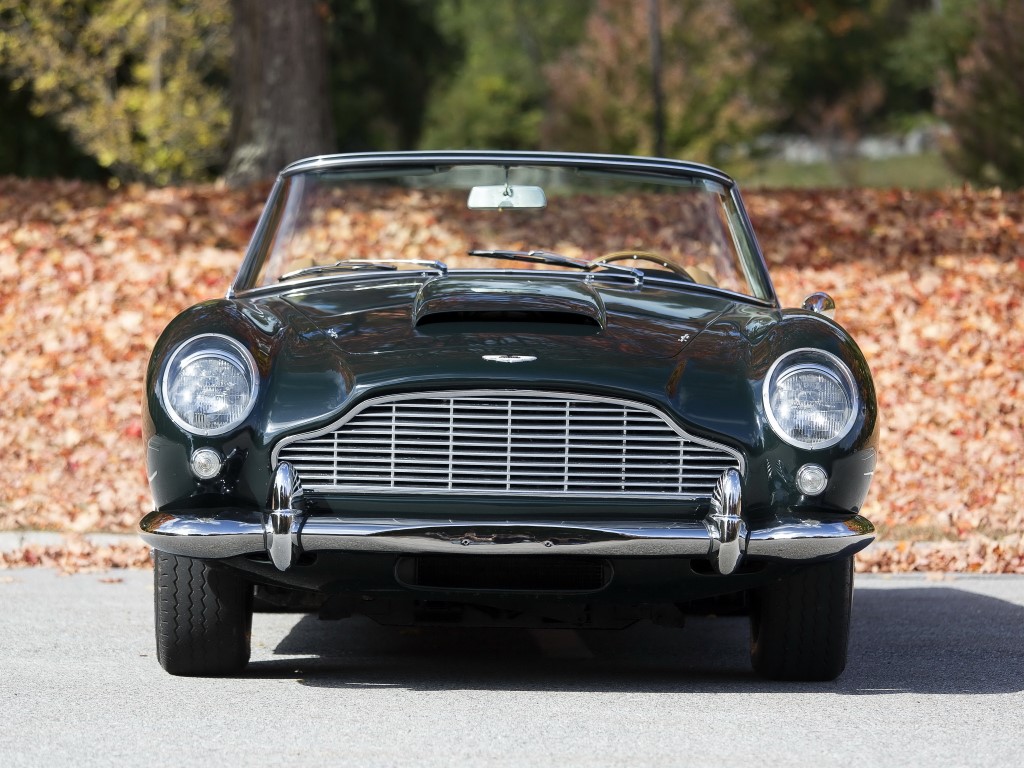
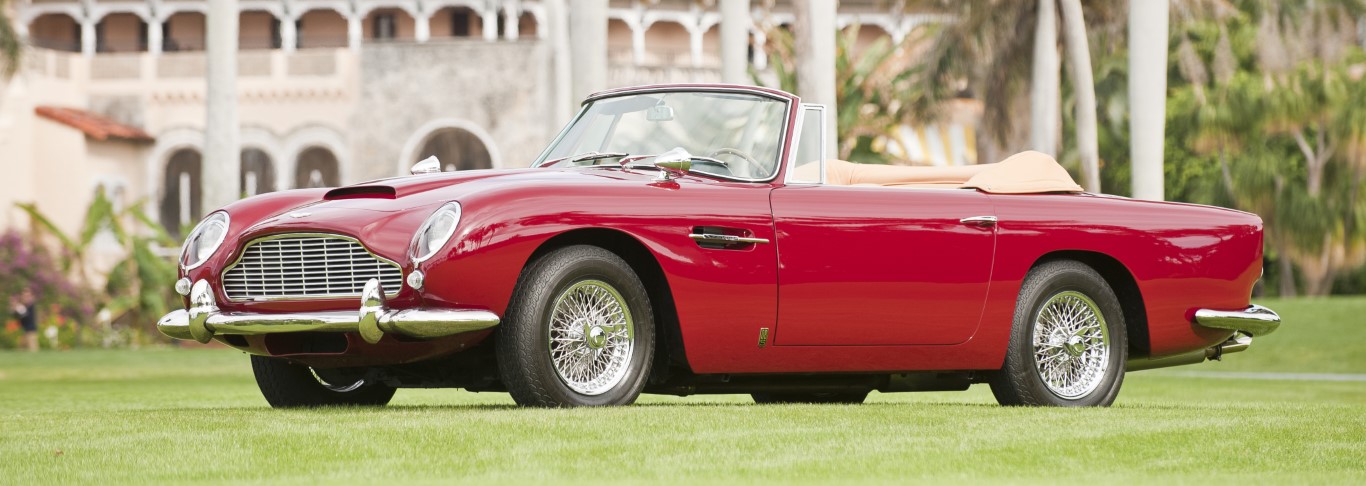
Launched shortly after the coupe's presentation, the two-door convertible model maintained the refinement and elegant lines of Touring Superleggera. Between 1963 and 1965, only 123 examples of the convertible were manufactured, making it considerably rarer than the coupe. Of this lot, only 19 units were originally produced with left-hand drive to cater to the export market. The interior finish displayed a dashboard painted in the exterior body color, and Aston Martin offered as a rare factory accessory a removable steel hardtop. Only 12 of these convertibles left the factory equipped with the Vantage engine setup.
At the end of DB5 production, in September 1965, 37 unused chassis remained at the factory. To utilize this structure efficiently while starting sales of the new DB6 (which had a lengthened wheelbase), the manufacturer launched a very exclusive transition series. Produced between October 1965 and October 1966, these 37 convertibles became known as the "Short Chassis" Volante. Under the bodywork, the vehicles were essentially DB5-series cars, but visually they featured styling elements from the DB6, such as split front and rear bumpers, in addition to vertical taillights borrowed from the Triumph TR4. It was the first time the brand used the "Volante" nomenclature to designate its luxury convertibles.
The luxury two-door estate car was born from David Brown's personal requirement. As a polo player and active hunter, he needed a vehicle that could accommodate his dogs and sports equipment without sacrificing the refinement and performance of his personal sports coupe. The prototype built for him immediately sparked interest from wealthy customers of the brand. Due to high demand on the main assembly line in Newport Pagnell, Aston Martin transferred the conversions to the traditional coachbuilder Harold Radford, in London.
Radford modified 12 coupes into the Shooting Brake format. The process required a significant reconstruction of the aluminum roof, the adaptation of a large top-hinged rear door, and the installation of folding rear seats to expand luggage space. To ensure vehicle stability after the change in weight and structure, the chassis received significant additional reinforcements. The cost of this modification increased the vehicle's list price by about £2,000, which was equivalent to the price of an entire house in the United Kingdom at the time, limiting the buyer base to a very select circle.
Although various historical records show slight variations in DB5 production numbers due to the inclusion of development prototypes and later conversions, the official statistics consolidated by Aston Martin detail a total production of exactly 1,059 original chassis.
The following table presents the exact math behind the count of all chassis variations built by the manufacturer between 1963 and 1966:
| Series / Vehicle Model | Chassis Quantity | Distribution and Engine Details |
|---|---|---|
| Saloon (Coupe) - Standard | 822 units | Originally equipped with the 282 bhp engine and SU carburetors. |
| Saloon (Coupe) - Vantage | 65 units | Original factory configuration with 325 bhp engine and Weber carburetors. |
| Convertible - Standard | 111 units | Regular convertibles with fabric top and standard specification engine. |
| Convertible - Vantage | 12 units | Extremely rare convertibles that left the factory with the original Vantage engine. |
| Shooting Brake (Radford) | 12 units | Authorized conversions of DB5 coupes performed artisanally by Radford. |
| Short Chassis Volante | 37 units | The final 37 DB5 convertible chassis finished with DB6-style visual elements. |
| Grand Total Original | 1,059 units |
Note: This count consolidates all mechanical and body variations produced in the 1960s.
The role of the Aston Martin DB5 as the vehicle of choice for secret agent James Bond in the film *Goldfinger* (1964) instantly transformed the model into an international pop icon, elevating the British brand to the stage of global desire. For the original film, four examples were used: two active cars for filming and two identical models for promotional purposes only. The main development chassis prototype with the functional spy gadgets installed (chassis DP/216/1) was stolen from an airport hangar in Florida in 1997 and remains missing to this day.
More than half a century after production ended, Aston Martin celebrated this successful partnership by recreating the car in a special run of just 25 customer units. Named the "DB5 Goldfinger Continuation", the series was hand-assembled in Newport Pagnell using the same jigs and classic structural drawings, coated with aluminum panels identical to those from the 1960s.
Each of these new units was sold for approximately £3.3 million (approximately 3.5 to 3.8 million dollars). Although the cars could not be registered for daily use on public roads due to current safety regulations, they featured an upgraded 4.0-liter engine to yield 290 bhp, in addition to all classic spy gadgets simulated under the supervision of the film franchise's special effects director, Chris Corbould.
The Aston Martin DB5 consolidated the British Grand Touring concept by aligning style, artisanal comfort, and mechanical power in an extremely harmonious package. More than a high-speed vehicle for its time, it represented a character shift at Aston Martin, moving away from rustic racetrack behavior to focus on long-distance luxury touring.
Even with a production volume quite small by the standards of any modern car manufacturer, the DB5 perpetuated its aesthetic and technical legacy in automotive history, being constantly valued as a true work of art on wheels by global collectors.
Images of the Aston Martin DB5 Convertible