
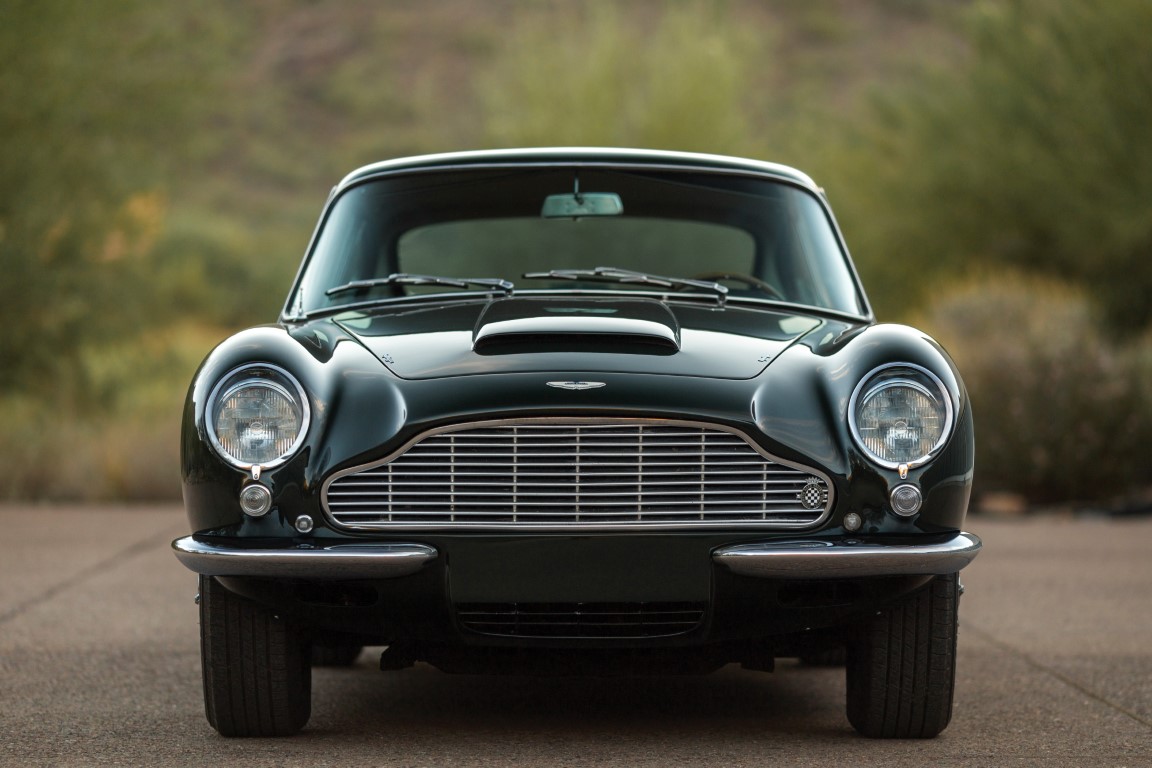
Mark I
(1965 - 1969)
4.0 L L6 12V
330 cv
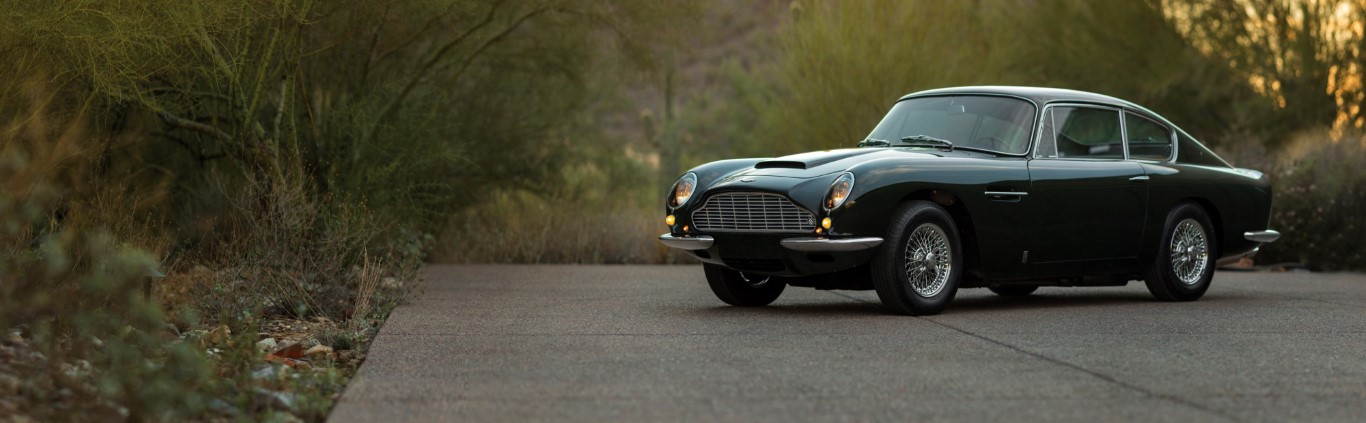
Technical specifications, versions, and history for the Aston Martin DB6.
Select a generation to see available versions
(1965 - 1969)
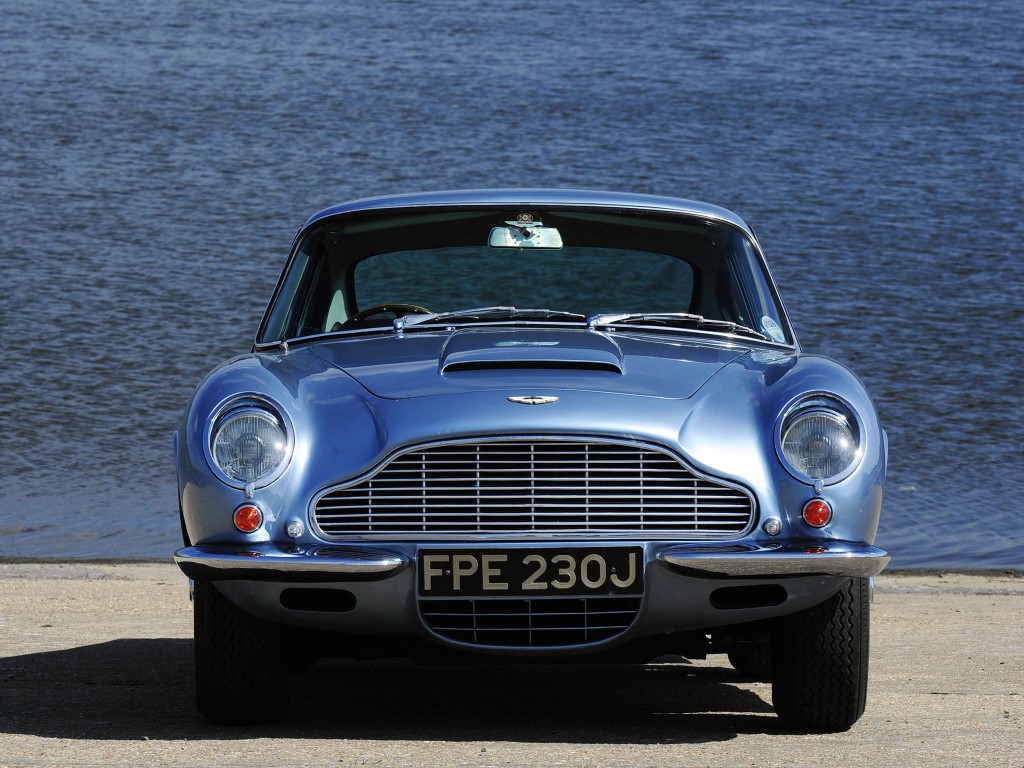
(1969 - 1971)
The Aston Martin DB6 was presented to the public at the Paris Motor Show in October 1965, debuting at the London Motor Show the following week. It emerged as the successor to the acclaimed DB5, which had achieved global fame due to its association with the James Bond films. The DB6 marked an important transition moment for the British manufacturer, being the first model developed and built entirely at the Newport Pagnell factory, following the transfer of original operations from Feltham.
The development of the DB6 occurred in a time of financial and operational challenges for Aston Martin. The manufacturer planned to introduce a new V8 engine and a completely remodeled platform, which would become the DBS model. However, delays in the reliability testing of the V8 engine during competitions forced engineering to extend the use of the well-established inline six-cylinder engine designed by Tadek Marek. To maintain market interest and amortize development costs while the DBS was not yet fully ready, the board decided to launch a final evolution of the classic lineage started with the DB4, focusing on luxury, interior space, and high-speed stability.
During this period, the artisanal production process in Newport Pagnell prioritized construction quality at the expense of quick profit margins. This mindset is exemplified by a well-known behind-the-scenes story involving the brand's owner, David Brown. When approached by a friend who requested to buy a new DB6 at "cost price," Brown readily accepted the request. Days later, the buyer received an invoice whose final amount exceeded the car's list price by £1,000. The episode illustrated that the manual manufacturing of each unit was so complex and costly that the actual production cost exceeded the suggested retail price.
Despite its high price of £5,014 at launch, the DB6 became a status symbol and high fashion, attracting famous owners such as Prince Charles, Paul McCartney, Mick Jagger, Twiggy, and Peter Sellers.
The design of the DB6 focused on solving a severe aerodynamic deficiency observed in the DB5. At speeds exceeding 177 km/h (110 mph), the airflow passing over the DB5's fastback rear generated positive lift. This rear lift reduced tire pressure against the ground, compromising traction and making steering unstable. To correct this flaw, Aston Martin began wind tunnel testing in February 1965 using a modified DB5 chassis, christened the MP 219 prototype.
Carrozzeria Touring of Milan, responsible for the styling of previous models, did submit a design proposal for the new car, but Aston Martin rejected the Italian project. The factory chose to develop the modifications internally, based on solutions tested in its Le Mans race prototypes, such as the DP 212 and DP 214. The result was the incorporation of a truncated rear with an integrated air deflector, a style known as "Kamm tail" or "Kammback". This rear reduced turbulence, eliminated unwanted lift, and provided greater stability at high speeds.
In addition to the Kamm tail, the DB6 featured striking visual differences compared to the DB5. The wheelbase was lengthened by 95 mm, totaling 2,585 mm, which required a reconfiguration of the entire side of the car. The roof was raised by about 2.5 cm, the windshield became more raked, and the rear side windows were redesigned. The front received a larger opening in the apron for the oil cooler, the front and rear bumpers were split into sections at the vehicle's corners, and the taillights gained a more modern, single-piece design.
One of the most profound engineering changes of the DB6 was the gradual abandonment of the *Superleggera* construction method patented by Carrozzeria Touring. The *Superleggera* system consisted of applying aluminum panels over a structure of thin steel tubes welded to the chassis. This process was extremely slow and limited the manufacturing pace on the assembly line. With the DB6, Aston Martin engineering migrated to a conventional unibody structure, using bent steel sheets and metal sections of varying thicknesses and strengths to support the bodywork. Although *Superleggera* badges were kept on the hood edges of some initial units until the badge stock ran out, the tubular construction technique was completely eliminated from the rear section.
Even with the increase in the overall body dimensions to better accommodate passengers, this structural transition ensured that the DB6's weight gain relative to the DB5 was minimal, ranging between 7.7 kg and 8.2 kg. The total curb weight of the coupe model stood at around 1,474 kg to 1,498 kg.
The front suspension used overlapping wishbones (double wishbones), coil springs, Armstrong telescopic shock absorbers, and an anti-roll bar. At the rear, the engineers maintained the classic solid axle arrangement with parallel trailing arms, coil springs, and a Watts linkage. The rear Armstrong Selectaride shock absorbers, which allowed the driver to adjust the set's stiffness directly from within the cabin via an electric selector, became standard equipment on the DB6. The brakes were servo-assisted Girling disc brakes on all four wheels, measuring 11.5 inches in diameter at the front and 10.8 inches at the rear. The wheels were 15-inch Borrani wire wheels with three-eared knock-off hubs, originally shod with Avon bias-ply tires or optional Pirelli Cinturato CA67 radials.
The car's fuel capacity was 19 imperial gallons (86 liters), divided into two tanks mounted in the rear fenders. When the customer opted for the installation of the enormous and heavy factory air conditioning system, the condenser was positioned in the trunk, which required reducing the fuel tank capacity to 16 gallons (72 liters) to accommodate the pipes and compressor.
The increase in wheelbase and roof height transformed the DB6 into a legitimate four-seat grand tourer, offering real leg and headroom in the back, although the rear space was still not entirely comfortable for tall adults on long trips. The interior finish was improved with Connolly leather seats with more sophisticated stitching, revised door panels with integrated ashtrays, and a flat headliner, which dispensed with the cutouts required by the old Superleggera structure tubes. The wider windshield improved visibility, and Aston Martin reunited moveable vent windows in the front doors to assist with internal ventilation.
In terms of mechanics and ergonomics, the DB6 brought an important correction to the ZF five-speed transmission. In the DB5, engaging reverse gear required a complex movement of pushing the lever to the side and pulling it up. This excessive effort caused frequent breakage in the linkage, leaving many drivers with a loose lever in their hands. In the DB6, engineering eliminated the need to lift the lever, making the shift direct and precise. The manual transmission was standard, while a three-speed Borg-Warner automatic transmission was offered as a no-cost option, though it was poorly received by buyers due to the considerable loss of agility.
The first generation of the DB6 concentrated the largest production volume of the model. During its life cycle, Aston Martin refined the vehicle by adding power-assisted steering as an optional item and, subsequently, making it standard on the last chassis produced in the Mark I line.
Launched in August 1969, the Mark II represented the final evolution of the DB6 chassis. This update was designed to unify the assembly line with the new DBS model, reducing factory production costs. The Mark II is easily identified by its slightly widened front and rear fenders (flares). This widening was necessary to house wider wire wheels, with 6-inch-wide rims inherited from the DBS, shod with 205VR15 Pirelli Cinturato CN72 radial tires or Avon bias-ply tires.
Inside, the Mark II adopted the same seats as the DBS, characterized by smooth, pleated central panels instead of traditional stitching. Power-assisted steering became standard equipment. To cope with the wheels' added weight and the grip of the new tires, the ZF manual transmission received a reinforced 10.5-inch Borg & Beck clutch (replacing the 9.5-inch unit of the Mark I) and a shorter first-gear ratio for more vigorous starts and better handling.
The DB6 used the inline six-cylinder engine with an aluminum alloy block and cylinder head and double overhead camshafts (DOHC) designed by Tadek Marek. This 3,995 cc engine (96 mm bore and 92 mm stroke) maintained the mechanical base established in the DB5 but underwent calibration refinements to meet different markets and regulatory standards.
The standard version was fed by three side-draft SU HD8 carburetors with an 8.9:1 compression ratio, generating 282 bhp at 5,500 rpm and 400 Nm (295 lb-ft) of torque at 4,500 rpm. The Vantage version used three Weber 45 DCOE carburetors and a compression ratio raised to 9.4:1, raising power to 325 bhp at 5,500 or 5,750 rpm and keeping torque at 393 Nm. In January 1966, the factory introduced three distinct specification settings for the Vantage engine, known as "VA", "VB", and "VC", which consisted of different carburetor internal diameters and jets to ensure optimal engine performance in varied altitudes and atmospheric conditions around the world.
In the Mark II model, Aston Martin offered the AE Brico electronic fuel injection system in conjunction with the high-compression cylinder head. Developed in Coventry from mid-1968 until the project's cancellation in 1971, the AE Brico system was a continuous, non-synchronized (untimed) injection technology. It used an electronic control unit (ECU) equipped with two OC28 power transistors that functioned as solid-state switches to trigger the injectors. The injectors were triggered in two blocks of three units per engine rotation of 720 degrees, based on magnetic timing signals emitted by a sensor mounted on the distributor or camshaft. Internally, the ECU housed a circular metal manifold pressure sensor to calculate engine load.
Although innovative, Brico technology was complex for the time and presented chronic operational problems, such as misfires, power loss, and electrical instability. Consequently, the factory produced only 46 Mark II units with the system (identified by the chassis prefix "DB6Mk2FI"). Due to wear and constant breakdowns, most of these vehicles were subsequently converted back to SU or Weber carburetor feed by the manufacturer's own service department. Currently, only a minimum number of cars maintain the original AE Brico system active.
In contemporary restorations and repairs conducted by specialists, many of these inline six-cylinder engines are reconditioned and have their displacement increased to 4.2 liters or even 4.7 liters for gain in reliability and power.
| Technical Parameter | Standard Engine (SU) | Vantage Engine (Weber) | AE Brico FI Engine |
|---|---|---|---|
| Fuel Delivery | 3x SU HD8 Carburetors | 3x Weber 45 DCOE Carburetors | AE Brico Electronic Injection |
| Compression Ratio | 8.9:1 | 9.4:1 | 9.4:1 |
| Maximum Power | 282 bhp (286 PS) @ 5500 rpm | 325 bhp (330 PS) @ 5500-5750 rpm | 325 bhp (330 PS) @ 5750 rpm |
| Maximum Torque | 400 Nm (295 lb-ft) @ 4500 rpm | 393 Nm (290 lb-ft) @ 4500 rpm | 393 Nm (290 lb-ft) @ 4500 rpm |
| Top Speed | 241 km/h (150 mph) | 245 km/h (152 mph) | 241 km/h (150 mph) |
| Acceleration (0 to 96 km/h) | ~ 8.4 seconds | ~ 6.0 seconds | ~ 6.2 seconds |
Before the lengthened DB6 chassis was ready to receive a topless version, Aston Martin utilized the last 37 DB5 short chassis remaining in the factory to create a special convertible series. Produced between October 1965 and October 1966 with chassis numbering from DBVC/2301/LN to DBVC/2337/R, these cars utilized the split front bumper and cosmetic details of the DB6 installed on the smaller 2,490 mm wheelbase base of the DB5. It was the first model of the brand to officially receive the "Volante" designation, which went on to name all subsequent convertible models from Aston Martin.
The definitive convertible built on the long DB6 platform debuted at the 1966 London Motor Show. The model utilized a high-quality fabric top with electric operation and offered the same improved interior space as the closed model. In the Mark I generation (produced from October 1966 to July 1969 with chassis DBVC/3600/R to DBVC/3739/R), 140 units were manufactured, of which 29 received the high-performance Vantage engine. With the transition to the Mark II model in July 1969, only 38 Volante units were assembled until November 1970 (chassis DB6Mk2VC/3751/R to DB6Mk2VC/3788/L), with only 9 produced with the Vantage engine, making the Mark II Volante one of the brand's rarest convertible models.
Following the sports wagon concept initially developed for David Brown by the coachbuilder Harold Radford, the production of this model was extended to the DB6 under custom orders of extremely high cost. Hand-made conversions were performed by two specialized London firms:
The official production numbers of the Aston Martin DB6 are closely followed by historians and collectors. Total model production, covering all body variants produced from 1965 to 1971, totals approximately 1,788 units.
The table below compiles the production distribution, known chassis ranges, and notes on special powertrains:
| Body Variant | Production Period | Total Produced | Chassis Range | Observations and Specifications |
|---|---|---|---|---|
| DB6 Mark I Saloon (Coupe) | Oct/1965 – Jul/1969 | 1,327 units | Start of regular chassis numbering | Includes 268 units equipped with factory Vantage engine. |
| DB6 Mark II Saloon (Coupe) | Jul/1969 – Nov/1970 | 240 to 248 units | DB6Mk2/4101/R to DB6Mk2/4345/R | Includes 46 units with AE Brico injection and 71 factory Vantage units. |
| Short-Chassis Volante | Oct/1965 – Out/1966 | 37 units | DBVC/2301/LN to DBVC/2337/R | Uses the short DB5 chassis with DB6-style front finishes. |
| DB6 Volante Mark I | Oct/1966 – Jul/1969 | 140 units | DBVC/3600/R to DBVC/3739/R | Convertible with standard long DB6 chassis; 29 with Vantage powertrain. |
| DB6 Volante Mark II | Jul/1969 – Nov/1970 | 38 units | DB6Mk2VC/3751/R to DB6Mk2VC/3788/L | Mark II convertible; only 9 produced with factory Vantage engine. |
| Shooting Brake (Radford) | 1965 – 1967 | 6 units | Artisanal custom conversions | Sports wagon; mostly with Vantage engine and left-hand drive. |
| Shooting Brake (FLM) | 1967 – 1969 | 3 units | Artisanal custom conversions | High-roof wagon; only 1 unit produced with left-hand drive. |
For mechanics, specialists, and collectors of classics, the maintenance and structural inspection of the Aston Martin DB6 require attention to critical points of degradation and wear. The chassis and bodywork of the vehicle have specific weaknesses resulting from the combination of distinct materials in their construction: