

The Rebirth of Newport Pagnell
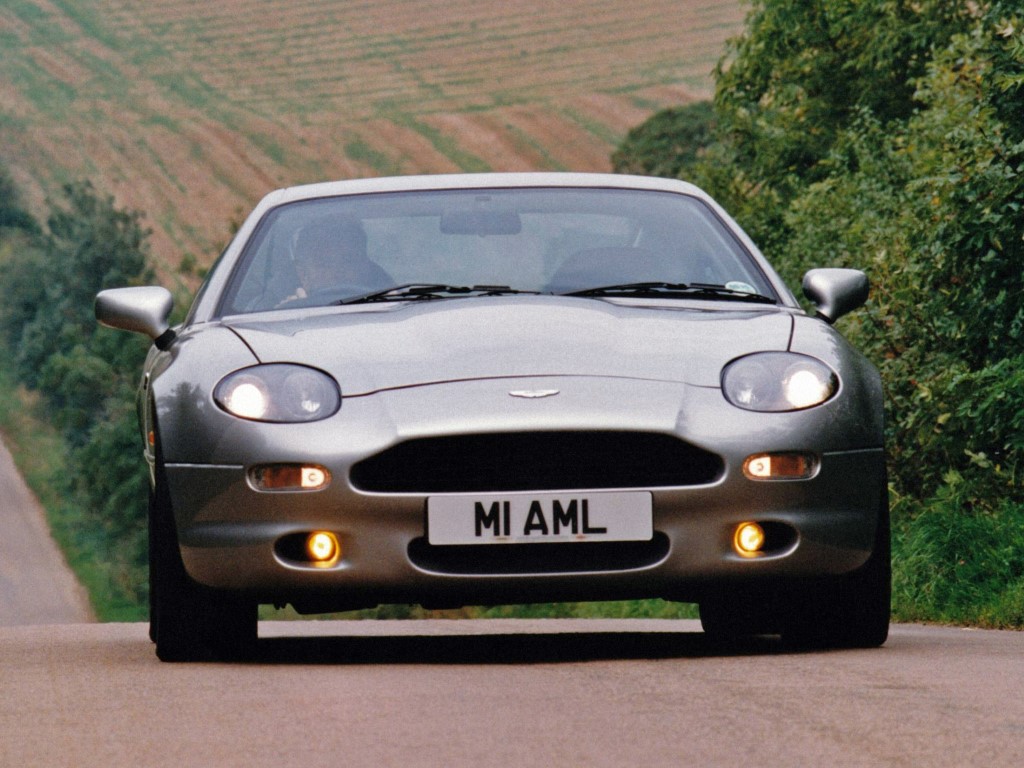
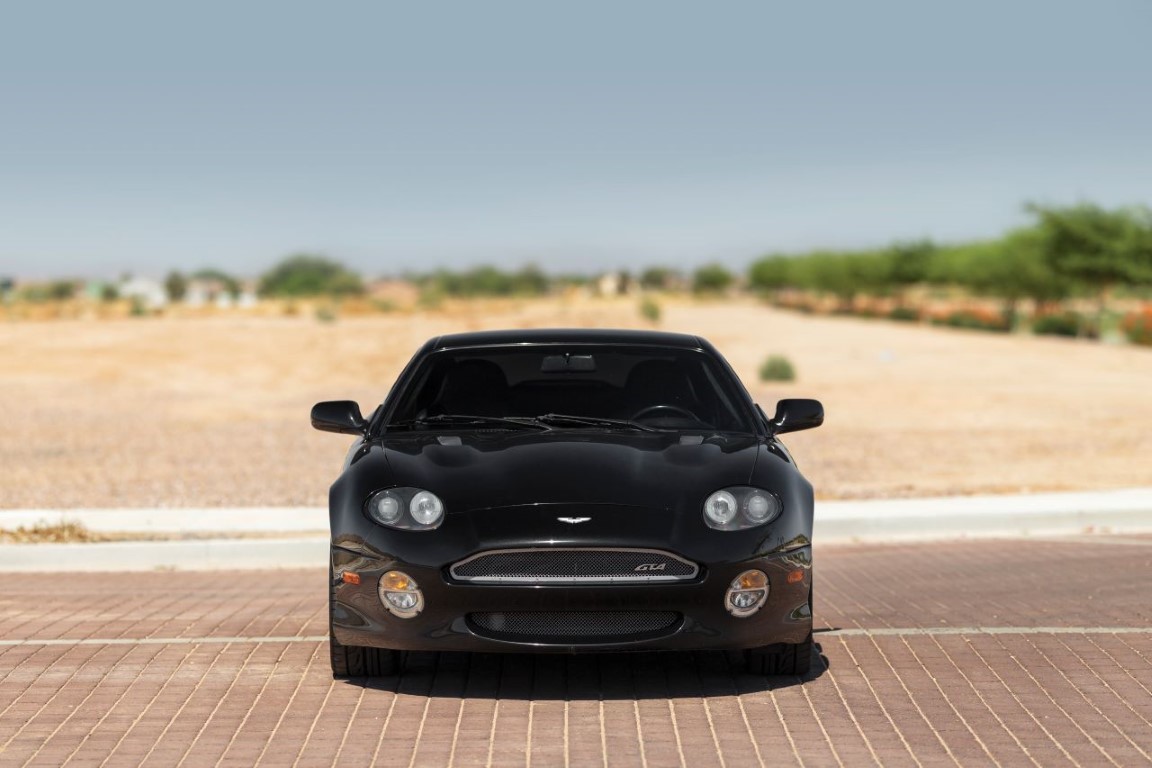
The Aston Martin DB7 occupies a unique and critical position in the historiography of Aston Martin Lagonda Ltd. Often described as the vehicle that "saved the company", the DB7 represents the turning point between the artisanal era, characterized by tiny production volumes and chronic financial instability, and the modern era of corporate ownership, series manufacturing, and global viability. Launched at a time when the brand's annual production struggled to reach three digits, the DB7 not only democratized access to the brand — in terms relative to the ultra-luxury market — but also established the visual language that would define Aston Martin's identity for the following two decades.
This report exhaustively examines the trajectory of the DB7, from its controversial origins as an aborted Jaguar project to its final evolution as a world-class V12 Grand Tourer. The analysis covers the technical details of each variant, the precise production numbers, the specificities of the limited editions, and the engineering solutions — often creative and based on component sharing — that allowed its existence.
Project Genesis: From Oxford to Aston Martin
The Forgotten Predecessor: Jaguar XJ41/XJ42
In the early 1980s, Jaguar began the development of a spiritual successor to the legendary E-Type and a technical replacement for the XJ-S. The project, internally designated as XJ41 (for the coupe) and XJ42 (for the convertible), aimed to create a modern, aerodynamic, and turbocharged sports car intended to compete with the Porsche 911 and the Chevrolet Corvette.
The development of the XJ41 extended throughout the 1980s, consuming significant resources. The projected vehicle was undoubtedly aesthetically pleasing and fast, but suffered from progressive "bloat" in terms of weight, technical complexity, and manufacturing costs. When the Ford Motor Company acquired Jaguar in 1989/1990, American auditors reviewed the XJ41 project. The conclusion was severe: the car was massively over budget and too heavy to achieve its performance goals. Consequently, Ford canceled the XJ41 project in 1990, instructing Jaguar to focus on updating the XJ-S and developing an entirely new platform for the future XK8.
TWR's Intervention and "Project XX"
The cancellation of the XJ41 left a vacuum, but also an opportunity. Tom Walkinshaw, founder of Tom Walkinshaw Racing (TWR), maintained a close relationship with Jaguar through the Group C racing program and the JaguarSport joint venture.
Walkinshaw, realizing the potential of the XJ41 design, proposed an alternative solution. He commissioned designer Ian Callum to adapt the overall lines of the XJ41 to an existing and already homologated platform: that of the Jaguar XJ-S. The idea was to create a car with the modern look of the canceled project, but with drastically reduced production costs, using the steel chassis of the XJ-S instead of the complex original engineering of the XJ41. This new concept was codified by TWR as "Project XX".
Walkinshaw's original intention was to sell Project XX back to Jaguar as an "off-the-shelf" and low-cost replacement for the XJ-S. However, Jaguar's management rejected the proposal. The reason, according to reports by Ian Callum, was a mix of internal politics ("not invented here") and the fact that Jaguar was already committed to the development of the XK8 under Ford's supervision.
The Walter Hayes Connection and the Birth of NPX
At this critical moment, the destinies of TWR and Aston Martin crossed. Aston Martin, also under Ford ownership at the time, was led by Walter Hayes. The brand was in a precarious financial situation, selling very few units of the expensive and heavy Virage. The brand desperately needed an "entry-level" model to increase volume and ensure its survival.
Hayes and Walkinshaw saw a perfect symbiosis: Aston Martin needed a new car but didn't have the budget to develop it from scratch; TWR had a nearly finished car (Project XX) but didn't have a brand to sell it under. Thus, the Project XX rejected by Jaguar was renamed "Project NPX" (Newport Pagnell Experimental). Ian Callum was then instructed to "Aston-martinize" the design, incorporating the brand's classic grille and adjusting the lines to evoke the DB lineage.
Engineering and Design: The "Parts Bin"
The Platform and Structure
The DB7 chassis is fundamentally an evolution of the Jaguar XJ-S platform, which in turn has roots dating back to 1975. TWR extensively modified this steel monocoque structure to accommodate the new bodywork and improve rigidity. It is important to note that, unlike previous Aston Martins that used hand-beaten aluminum, or later ones that would use bonded aluminum (VH platform), the DB7 was the first and only Aston Martin to use a steel unitary construction.
The "Parts Bin"
To keep the retail price competitive, the development team resorted to existing components from volume manufacturers. This practice was elevated to an art form in the DB7.
| Component | Donor Vehicle | Integration Details |
|---|---|---|
| Taillights | Mazda 323F (Astina) | The rear light units were taken directly from the Mazda hatchback. To disguise their origin, Aston Martin used a body-colored bezel that covered the edges and altered the visual profile of the lights, seamlessly integrating them into the rear panel. |
| Exterior Door Handles | Mazda 323 Estate | The flush door handles from the Mazda estate model were chosen for their aerodynamic and discreet profile, fitting into the DB7's flowing lines. |
| Interior Door Handles | Mazda MX-5 (Miata NA) | The chrome door release levers inside were inherited from the first generation of the Mazda roadster. |
| Exterior Mirrors | Citroën CX | The Citroën CX mirrors were chosen for their design, although the internal electric mechanism came from the Ford Scorpio. |
| Electrical Components | Ford Scorpio | Much of the interior switchgear, including the power window controls and mirror adjustment, as well as the air conditioning system, came from Ford's executive sedan. |
| Locks and Keys | Ford (Tibbe) | The key and cylinder system used Ford's "Tibbe" standard, although with an eight-disc layout (similar to Jaguar's) instead of the standard six-disc Ford layout, for greater security. |
| Automatic Transmission | GM / Hummer H1 | The 4-speed automatic gearbox (4L80-E) used in the i6 model was a robust General Motors unit, shared with trucks and the Hummer H1, chosen for its torque capacity. |
First Generation: The DB7 i6 (1994–1999)
Powertrain: The Supercharged AJ6
The heart of the first-generation DB7 was not a V8 or V12, but a 3.2-liter (3,228 cc) inline-six engine. Designated as the AJ6, this lightweight alloy block was derived from the unit used by Jaguar, but was heavily modified by TWR for the Aston Martin application.
The most significant technical decision was the adoption of an Eaton Roots-type mechanical supercharger, water-cooled and driven by a toothed belt from the camshaft. The choice of the supercharger, rather than the turbochargers used in the original Jaguar XJ41 project, aimed to provide an instantaneous and linear throttle response, essential characteristics for a luxury Grand Tourer, avoiding the "turbo lag" common in the technology of the time.
- Maximum Power: 335 bhp (340 hp) at 5,500 rpm.
- Maximum Torque: 368 lb-ft (499 Nm) at 3,000 rpm.
- Top Speed: 165 mph (266 km/h).
- 0-60 mph Acceleration: 5.8 seconds (manual).
Transmission and Dynamics
The DB7 i6 offered two transmission options:
- Manual: A 5-speed Getrag 290 gearbox.
- Automatic: The aforementioned 4-speed GM 4L80-E gearbox. Although robust, this gearbox was geared towards comfort and did not offer particularly sporty shifts.
The suspension used double wishbones at the front and rear. However, there was a significant change from traditional Jaguar architecture at the rear. While the XJ-S used "inboard" rear brakes, the DB7 adopted "outboard" rear brakes (mounted at the wheels). This change simplified maintenance and improved brake cooling.
The 12-Cylinder Revolution: DB7 V12 Vantage (1999–2003)
TWR's "Secret Project" and the New Engine
In 1999, the trajectory of the DB7 changed drastically. Faced with the need to elevate the model's prestige and differentiate it from the recently launched Jaguar XK8, Aston Martin introduced the DB7 V12 Vantage. The six-cylinder model was gradually phased out.
The production engine was developed by Ford and Aston Martin, in partnership with Cosworth: an all-new 6.0-liter (5,935 cc) V12. Although often simplistically described as "two Ford Duratec V6 engines joined together", the technical reality is more complex. The Aston Martin V12 shared the basic geometry and piston bore with the Duratec to utilize Ford's machining tools (reducing costs), but the block, cylinder heads, crankshaft, and intake/exhaust systems were exclusive and developed by Cosworth for Aston Martin.
- Engine: 5.9L V12, 48 valves, DOHC.
- Power: 420 bhp at 6,000 rpm.
- Torque: 400 lb-ft (542 Nm) at 5,000 rpm.
- 0-60 mph Acceleration: 4.9 seconds (manual).
- Top Speed: 186 mph (299 km/h) with manual gearbox; initially limited to 165 mph (265 km/h) on the automatic.
Mechanical and Aesthetic Evolution
The introduction of the V12 required a complete overhaul of the car.
- Transmission: A new 6-speed manual gearbox (Tremec T-56) was introduced. The automatic option became a 5-speed ZF 5HP30 gearbox, later updated with the "Touchtronic" system, which allowed sequential shifting via steering wheel buttons.
- Chassis and Brakes: The chassis was reinforced to handle the extra torque and the weight of the engine. The brakes were upgraded to large-diameter Brembo ventilated discs (front and rear) with four-piston calipers.
- Aesthetics: The Vantage gained a more aggressive appearance, designed by Ian Callum, with a larger front grille featuring wire mesh, new fog lights and integrated turn signals, and sculpted side skirts.
The Pinnacle of Performance: DB7 GT and GTA (2002–2003)
Aston Martin DB7 GT
The GT was designed as the driving purist's focused version.
- Engine Enhancement: The V12 received an injection remap and an active exhaust, raising power to 435 bhp (a 15 bhp gain) and torque to 410 lb-ft.
- Dynamics: The suspension was stiffened by 20%, with stiffer suspension bushes and revised dampers.
- Aerodynamics: The car received a functional "ducktail" rear spoiler, which reduced aerodynamic lift by 50%.
- Transmission: Available exclusively with a 6-speed manual gearbox, equipped with a twin-plate racing clutch and a short-throw shifter ("quick-shift"). The final drive ratio was shortened.
Aston Martin DB7 GTA
The GTA was the automatic variant of the GT. Mechanically, it retained the standard V12 engine from the Vantage (420 bhp) and the 5-speed Touchtronic automatic transmission, but incorporated all the aesthetic and suspension modifications of the GT model.
Special Editions and Body Variants
Collaborations with Zagato
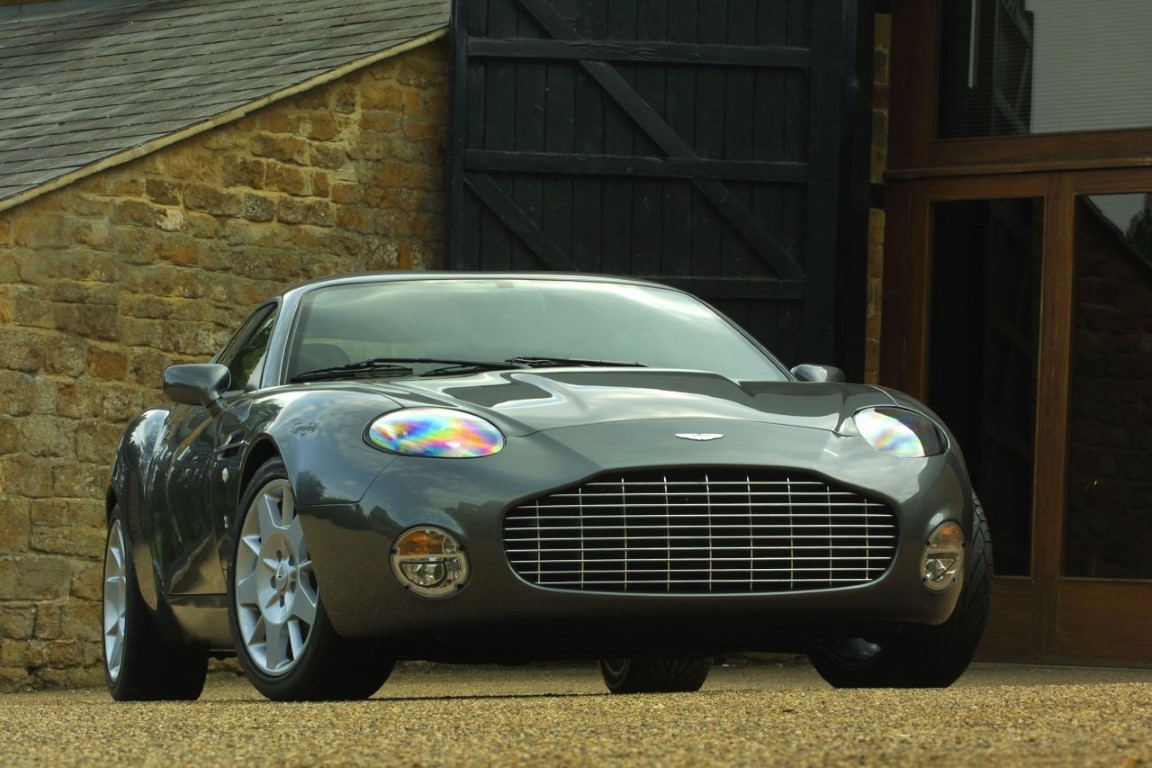
- DB7 Zagato (2002-2003): Built on a shortened version of the V12 Vantage chassis. The wheelbase was reduced by 60mm. With exclusively designed bodywork (including the "double bubble" roof), only 99 units were sold.
- DB AR1 (American Roadster 1) (2003): Created for the American market. It was a pure roadster, based on the standard-length Volante chassis, but with Zagato styling. It did not have a functional convertible roof, only an emergency rain cover. Production limited to 99 units.
Limited Trim Editions
| Edition | Year | Base | Quantity | Exclusive Features |
|---|---|---|---|---|
| Alfred Dunhill | 1998 | i6 | 78 | "Dunhill Silver" color, charcoal leather interior, wheel finish imitating lighters, and a built-in cigar humidor in the console. |
| Neiman Marcus | 1998 | i6 | 10 | "Jet Black" color, sold through the Neiman Marcus Christmas catalog. |
| Stratstone | 1999 | i6 | 19 | "Bowland Black" color, introduced carbon fiber trim on the dashboard for the first time. |
| Jubilee | 2002 | V12 | 50 | Celebration of Queen Elizabeth II's Golden Jubilee. "Jubilee Blue" color. |
| Keswick | 2002 | V12 | 10 | "Nero Daytona Black" color, 19-inch wheels, interior with metallic finishes. |
Production Statistics and Market Analysis
The DB7 was, until the arrival of the V8 Vantage (2005), the most produced Aston Martin in history. Its total production exceeded 7,000 units.
| Model / Variant | Production Years | Quantity Produced (Approx.) | Chassis Range (VIN) |
|---|---|---|---|
| DB7 i6 Coupé | 1994–1999 | 1,605 | SCFAA111VK 100001 - 102703 |
| DB7 i6 Volante | 1996–1999 | 879 | SCFAA311-TK 201001 onwards |
| DB7 V12 Vantage Coupé | 1999–2003 | 2,091 | SCFAB121-XK 300001 - 304458 |
| DB7 V12 Vantage Volante | 1999–2003 | 2,059 | SCFAB322-XK 400001 - 404297 |
| DB7 GT | 2002–2003 | 190 | Numbering included in the Vantage series |
| DB7 GTA | 2002–2003 | 112 | Numbering included in the Vantage series |
| DB7 Zagato | 2003 | 99 | SCFAE123-3K700001 - 700100 |
| DB AR1 | 2003 | 99 | Numbering specific to the AR1 series |
| TOTAL | 1994–2004 | ~7,165 |
Technical Aspects, Maintenance, and Legacy
Dimensions and Capacities
- Length: 4,631 mm (i6) / 4,692 mm (Vantage).
- Width: 1,820 mm (i6) / 1,830 mm (Vantage).
- Fuel Tank: Approximately 89 liters.
- Interior Space: Classified as a "2+2", but the rear space is virtually unusable for adult passengers.
Maintenance Points of Attention
- Air Conditioning: A common failure involves the air conditioning evaporators. Replacement requires complete removal of the dashboard.
- Suspension: The suspension bushes and radius arms suffer accelerated wear due to the weight of the car, especially in the V12.
- V12 Ignition: The V12 ignition coils are prone to failure if the engine is subjected to excessive heat, and replacing the rear spark plugs (cylinders 6 and 12) is labor-intensive.
Conclusion: The Legacy of the DB7
Production of the DB7 ended in December 2004, giving way to the DB9 and the new VH (Vertical/Horizontal) aluminum platform. The DB7 fulfilled its mission with honors: it not only saved Aston Martin from bankruptcy, but also transformed the brand's perception from a manufacturer of artisanal curiosities into a global powerhouse in the luxury segment.
Although born from a rejected Jaguar project and built with parts of various origins, the DB7 transcended its humble roots through a timeless design and constant mechanical evolution. The introduction of the V12 in the DB7 Vantage was the strategic move that allowed Aston Martin to compete directly with Ferrari in the following years. Today, the DB7 is recognized as a modern classic, valued both for its aesthetic beauty, penned by Ian Callum, and for its fundamental historical role in the survival and rebirth of the Aston Martin brand.