



The Rebirth of Gaydon
The trajectory of the Aston Martin DB9, produced between 2004 and 2016, does not merely represent the chronology of a Grand Tourer (GT) vehicle, but rather the living document of Aston Martin's industrial and corporate transformation in the 21st century. Under the aegis of Ford's Premier Automotive Group (PAG), the British brand faced an ultimatum in the early 2000s: evolve from a niche, artisanal, and financially unstable manufacturer into a global competitor capable of taking on Ferrari and Porsche in volume and technology, or face irrelevance.
The DB9 was the answer to this existential challenge. Launched at the 2003 Frankfurt Motor Show, it marked the end of the production era in Newport Pagnell and inaugurated the modern Gaydon facility in Warwickshire. Unlike its predecessor, the DB7 — which, despite saving the company in the 1990s, was derived from a modified Jaguar XJS platform — the DB9 was a "clean sheet" project. The commercial responsibility on the DB9's shoulders was immense: Ford projected an increase in the brand's annual sales from 1,500 to 8,000 units, and the DB9, strategically positioned between the Vantage and the top-of-the-line Vanquish, was the central pillar of this expansion.
This report exhaustively analyzes the engineering, design evolution, technical specifications, and market legacy of the Aston Martin DB9, dissecting how this model defined the brand's identity for over a decade.
Structural Engineering: The VH Platform
The most critical innovation introduced by the DB9 was not its engine or its exterior design, but rather the architecture that supported it. The model debuted the VH (Vertical/Horizontal) platform, an engineering philosophy that would dictate the construction of all Aston Martins of the "Gaydon Era" until the arrival of the DB11 in 2016.
The Bonded Aluminium Architecture
The term "Vertical/Horizontal" refers to the modular flexibility of the platform, allowing it to be stretched or shortened in vertical and horizontal dimensions to support different models — from the compact Vantage to the Rapide sedan — using the same manufacturing processes and fundamental mounting points. This allowed Aston Martin, a low-volume manufacturer, to dilute chassis development costs across multiple vehicles.
The construction of the DB9's chassis represented a technological break from the past. Abandoning traditional steel construction, Gaydon's engineers opted for an extruded and bonded aluminium chassis. The process involved joining aluminium panels and extruded beams using high-strength aerospace-grade epoxy adhesives, complemented by mechanical rivets.
- Technical Advantages: This technique, similar to that used in the Lotus Elise, avoids the heat of welding that can distort the metal, resulting in a structure with much more precise tolerances.
- Rigidity and Weight: The result was a chassis that weighed 25% less than the DB7's bodyshell but offered double the torsional rigidity. This rigidity is fundamental to suspension performance, allowing the dampers to work efficiently without the interference of chassis flex.
Composite Materials and Mass Distribution
To achieve optimal dynamic balance, Aston Martin employed a mixed-material strategy in the bodywork and structural components:
- Aluminium: Used for the bonnet, roof, and rear wings.
- Lightweight Composites: The front wings and boot lid were manufactured from composite materials to reduce weight at the vehicle's extremities, lowering the polar moment of inertia and improving cornering response.
- Magnesium: Employed in the steering column and internal door structures, saving crucial kilograms in high areas of the vehicle, which helps lower the center of gravity.
The weight distribution was meticulously planned to achieve the perfect 50:50 ratio between the front and rear axles. To do this, the gearbox was rear-mounted (transaxle configuration), connected to the engine by a lightweight alloy torque tube containing a carbon fiber driveshaft. The V12 engine was positioned in a "front-mid" configuration, meaning physically behind the front axle line, ensuring that most of the mass was contained within the wheelbase.
Design and Aesthetics: The Golden Ratio
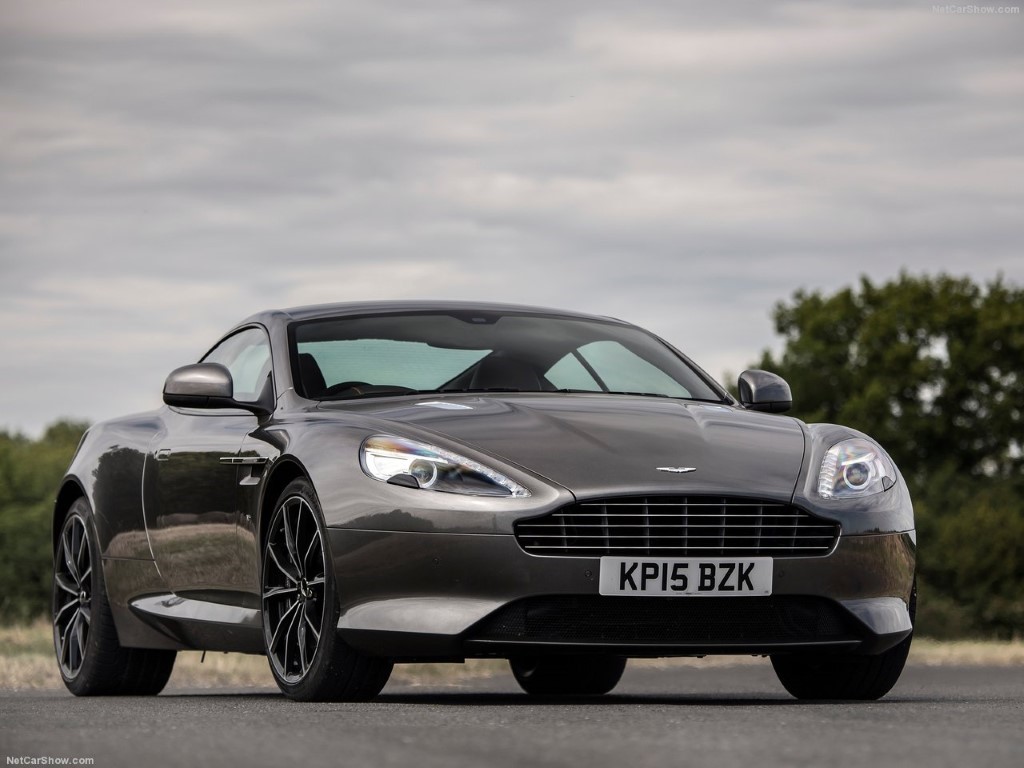
The DB9's design is widely cited as one of the most beautiful and timeless in modern automotive history. The initial project was led by Ian Callum, but was finalized and refined by Henrik Fisker before launch. The car's aesthetics were not based on ostentatious aggressiveness, but on the elegance of the classic proportions of a British GT: a long bonnet, set-back cabin, and a short rear end.
Distinctive Design Elements
- Front Grille: Aston Martin's traditional grille was reinterpreted with five horizontal anodized aluminium bars. Unlike previous designs, it was integrated more organically into the bumper, without looking like an add-on element.
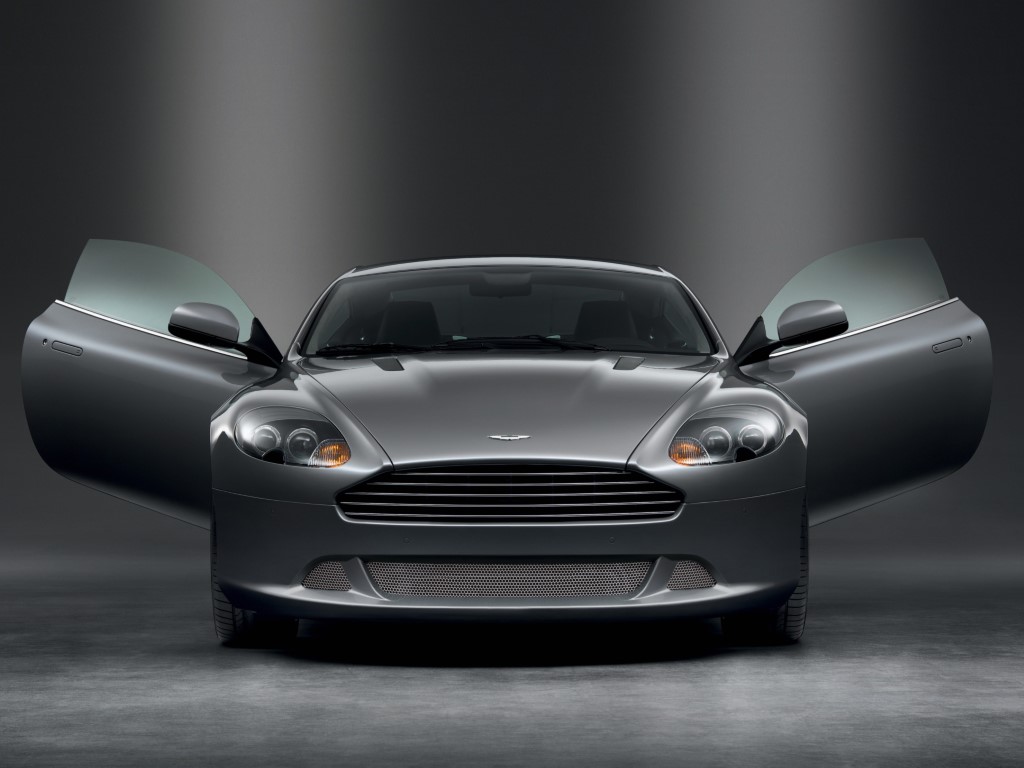
- "Swan Wing" Doors: The DB9 introduced doors that open slightly upwards, at a 12-degree angle. Although aesthetically dramatic, their primary function was practical: to allow the doors to clear high curbs without scraping, as well as to facilitate access to the low cabin due to the opening angle.
- Side Lines and Aerodynamics: The side profile is defined by a single, continuous waistline. The metal side strakes on the front wings became a visual signature that housed the directional indicators. Aerodynamically, the car avoided large spoilers. High-speed stability (the DB9 reached around 300 km/h) was ensured by a flat underbody and a rear diffuser that generated suction, keeping the car planted without ruining the purity of the upper lines.
- Muscular Rear: The car's rear "haunches" are wide and curved, evoking power. The boot lid features a subtle "flip" (which became more pronounced in post-2013 models) to aid aerodynamics.
V12 Powertrain: Evolution and Specifications
Throughout its entire production run, the DB9 was powered exclusively by a naturally aspirated 6.0-liter (5,935 cc) V12 engine. This engine, derived from the unit used in the original Vanquish, underwent constant refinements to increase power, efficiency, and throttle response.
| Production Period | Code/Generation | Maximum Power | Maximum Torque | 0-100 km/h | Top Speed |
|---|---|---|---|---|---|
| 2004 – 2008 | AM04 (Gen 1) | 450 bhp (456 cv) | 570 Nm | 4.9s (Auto) / 4.7s (Manual) | ~300 km/h |
| 2009 – 2012 | Gen 2 (Facelift) | 470 bhp (477 cv) | 600 Nm | 4.6s | 306 km/h |
| 2013 – 2015 | AM11 (Gen 4) | 510 bhp (517 cv) | 620 Nm | 4.5s | 295 km/h |
| 2016 (Final) | DB9 GT | 540 bhp (547 cv) | 620 Nm | 4.4s | 295 km/h |
Technical Details and Progressive Improvements
- Initial Phase (2004-2008): The original engine delivered 450 bhp and was praised for its linear response and characteristic sound. The construction was entirely of light alloy, with double overhead camshafts (DOHC) and 48 valves.
- 2009 Update: Aston Martin revised the cylinder head and electronic management to extract an additional 20 bhp (totaling 470 bhp) and increase torque, improving mid-range drivability.
- The AM11 Engine (2013): With the major 2013 facelift, the DB9 received the "AM11" code engine. This unit incorporated technologies from the Virage model and the new Vanquish, including dual variable valve timing, CNC-machined combustion chambers, and a higher-capacity fuel pump. Crucially, the engine was positioned 19mm lower in the chassis, further improving the center of gravity and meeting pedestrian safety regulations.
- The Pinnacle (DB9 GT): The final version, the DB9 GT, extracted 540 bhp from the V12, representing the development limit of this architecture in the DB9 chassis.
Transmissions: Touchtronic vs. Manual
The DB9's transmission system is a focal point for collectors and enthusiasts, defining the driving character of the vehicle. The car used a torque tube to connect the engine to the rear-mounted gearbox.
ZF "Touchtronic 2" Automatic (Standard)
The vast majority of DB9s were equipped with the ZF 6HP26 six-speed automatic transmission, marketed by Aston Martin as "Touchtronic 2".
- Interface: The system dispensed with the traditional gear lever. Gear selection (P, R, N, D) was made via crystal buttons on the dashboard (from 2009) or on the console, while manual shifts were operated by fixed magnesium paddle shifters on the steering column.
- Technological Limitation: It is important to note that, unlike the Vanquish and the Rapide S which received the modern 8-speed ZF gearbox (Touchtronic III) in their final years, the DB9 remained with the 6-speed gearbox until the end of its production in 2016. This is frequently cited as a disadvantage regarding the efficiency and performance of the final models.
Graziano 6-Speed Manual (The Rarity)
A conventional six-speed manual transmission, manufactured by Graziano, was offered as a no-cost option from launch until approximately 2011.
- Performance: The manual version was slightly faster in 0 to 100 km/h acceleration (4.7s against the automatic's 4.9s in early models) and offered a pure mechanical connection that purists value.
- Discontinuation: Due to extremely low demand — the typical profile of a DB9 buyer preferred the comfort of the automatic for GT use — the manual option was quietly removed from the catalogs in its final years.
Chassis Dynamics, Suspension, and Facelifts
The DB9 utilized independent double wishbone suspension on all four wheels, incorporating anti-dive geometry at the front and anti-squat at the rear to keep the body level under heavy acceleration and braking.
The "Sports Pack"
In response to early criticisms that the DB9 was overly focused on comfort and lacked dynamic sharpness compared to rivals, Aston Martin launched the optional "Sports Pack" in 2006/2007. This package transformed the car's behavior through significant physical alterations:
- Components: Included stiffer springs (a 68% increase in front stiffness and 64% in the rear), a modified front anti-roll bar, and revised dampers.
- Structure: A crucial change was the replacement of the load-bearing composite undertray with a structural aluminium piece, further increasing the chassis's torsional rigidity and steering precision.
- Lightweight Wheels: The package included exclusive 5-spoke forged aluminium wheels, secured by titanium wheel nuts, which saved about 1 kg of unsprung mass per wheel, improving suspension response.
Adaptive Damping System (ADS)
From the 2011/2012 facelift onwards, the Adaptive Damping System (ADS) became standard. This system monitored the throttle, brakes, and steering to adjust damper stiffness in real time, offering distinct modes like "Normal", "Sport", and later "Track" (in GT models), allowing the car to alternate between a comfortable cruiser and a stiff sports car at the touch of a button.
Detailed Chronology and the "Virage Saga"
The life of the model can be segmented into three main eras, marked by deep cosmetic and mechanical updates.
- Phase 1 (2004 – 2008): The first cars defined the purity of the original design. The interior featured a more conventional center console. The launch of the Volante (convertible) occurred shortly after the Coupe, in 2004/2005. The Volante's roof was a folding fabric top, operating in 17 seconds, and was designed to maintain the elegant silhouette of the Coupe when closed.
- Phase 2 (2009 – 2012): In 2008/2009, the DB9 received significant updates. Power rose to 470 bhp and the Touchtronic transmission received software updates. The center console was redesigned into a "waterfall" style. The most iconic change was the replacement of the conventional key with the "Emotion Control Unit" (ECU): a sapphire crystal and stainless steel key that is inserted into an illuminated slot in the center of the dash to start the engine.
- The Virage Interlude and Unification (2011 – 2013): In 2011, Aston Martin launched the Virage model, positioned between the DB9 and the DBS. The Virage had a more modern design and 490 cv, but failed commercially for being too similar to the DB9. In 2012/2013, Aston Martin discontinued the Virage and applied its design and engineering to the DB9. The "new" 2013 DB9 was essentially a rebranded Virage, receiving Carbon-Ceramic Matrix (CCM) brakes as standard.
- The Finale: DB9 GT (2016): The farewell model, launched as the 2016 model year. It sported "GT" badges, black details on the splitter and diffuser, and the maximum power of 540 bhp.
Special Editions and Production Statistics
Special Editions: Exclusivity and Collectability
- DB9 LM (Le Mans) - 2008: Created to celebrate the GT1 class victory at Le Mans. Only about 60-69 units produced in Sarthe Silver color, with the Sports Pack as standard.
- Carbon Edition (2014): Available in Carbon Black or Carbon White, with carbon fiber elements on the side strakes and taillights.
- Morning Frost - 2011: Luxurious styling with pearlescent white paint and Metallic Bronze leather interior.
- Centenary Edition - 2013: Limited to 100 units worldwide. Distinguished by "graduated" paint, solid sterling silver logos, and Deep Soft leather.
- DB9 GT Bond Edition - 2016: Limited to 150 units globally. Spectre Silver paint, "007 Bond Edition" badges, and included luxury accessories (Omega watch and Globe-Trotter suitcase).
- "Last of 9" - 2016: The absolute final series of just 9 units, with specifications by the "Q by Aston Martin" division.
Production Statistics: Rarity and Market
The total production volume of the DB9 over 12 years is estimated at approximately 16,500 units. Although it is a high number for the brand, certain configurations are extremely rare.
| Model / Variant | Estimated Global Production |
|---|---|
| Total DB9 (All versions) | ~16,500 units |
| DB9 Coupe Manual | ~385 units |
| DB9 Volante Manual | ~237 units |
| DB9 GT Bond Edition | 150 units |
| DB9 LM (Le Mans) | ~60-69 units |
| Last of 9 | 9 units |
The manual transmission combination is the "Holy Grail" for collectors. With fewer than 400 Manual Coupes produced worldwide, these cars command significantly higher prices in the used market. The rarity is accentuated in post-2009 models (with the 470 bhp engine and new dashboard), which are virtually non-existent with a manual gearbox.
Technology, Maintenance, and Legacy
Onboard Technology and the Infotainment Challenge
- Volvo Era (2004–2011): The first models used a DVD-based navigation system inherited from Volvo, with a retractable screen, considered obsolete today.
- Garmin Era (2012–2015): With the 2013 facelift, Aston Martin migrated to a system based on Garmin technology (AMi I) with a fixed screen and SD cards.
- AMi II (2016 - DB9 GT): Only in the final GT model did the car receive the AMi II system, with a more modern interface, but without Apple CarPlay/Android Auto.
Audio Systems: Varied between Linn Audio (950W, problematic), Alpine Premium (700W, standard and robust), and the optional Bang & Olufsen BeoSound (1000W, with motorized tweeters).
Maintenance and Reliability Guide
- Ignition Coils (Coil Packs): The V12 generates a lot of heat, degrading the coils. Replacement is labor-intensive (requires removing the manifold). Preventive replacement is recommended every 5-7 years.
- Rear Subframe Corrosion: The rear subframe is steel and prone to severe corrosion. Replacement is expensive (£3,000+). Regular inspections are essential.
- Water Drains and Headlights: Clogged drains cause leaks that damage electronic modules. Headlights suffer from condensation and are sealed units (replacement necessary).
- Transmission Maintenance: Regular changes of the automatic transmission fluid are recommended, contradicting the initial suggestion of it being "lifetime".
Conclusion
The Aston Martin DB9 Coupe ended its production in July 2016, being replaced by the DB11, but its legacy is indisputable. It was the "savior" that proved Aston Martin's viability as a modern manufacturer. With over 16,000 units sold, it democratized access to the British V12 engine without sacrificing the brand's exclusivity. For automotive history, the DB9 remains a design landmark — the perfect application of the Golden Ratio in metal. It combined the brute force of a 6.0-liter V12 with the sophistication of a bonded aluminium chassis, creating a Grand Tourer that, even decades after its launch, remains a benchmark of beauty and elegance.