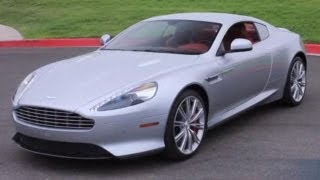
AM802
(2004 - 2008)
6.0 L V12 48V
450 cv

Technical specifications, versions, and history for the Aston Martin DB9.
Select a generation to see available versions
(2004 - 2008)
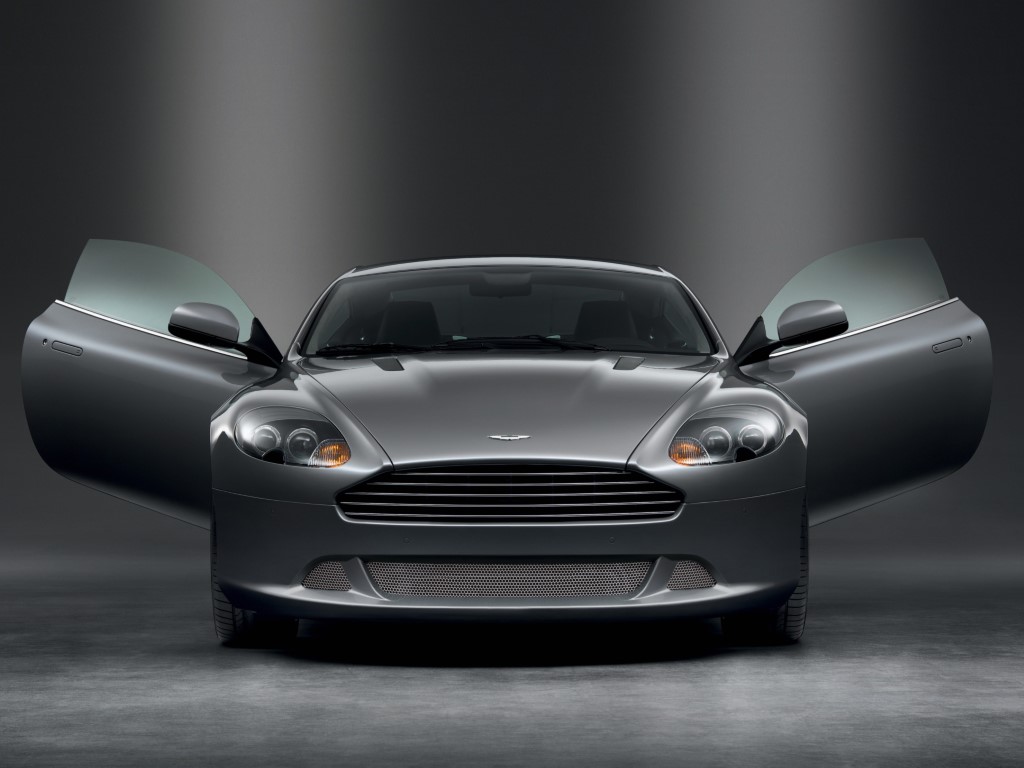
(2009 - 2010)

(2011 - 2012)
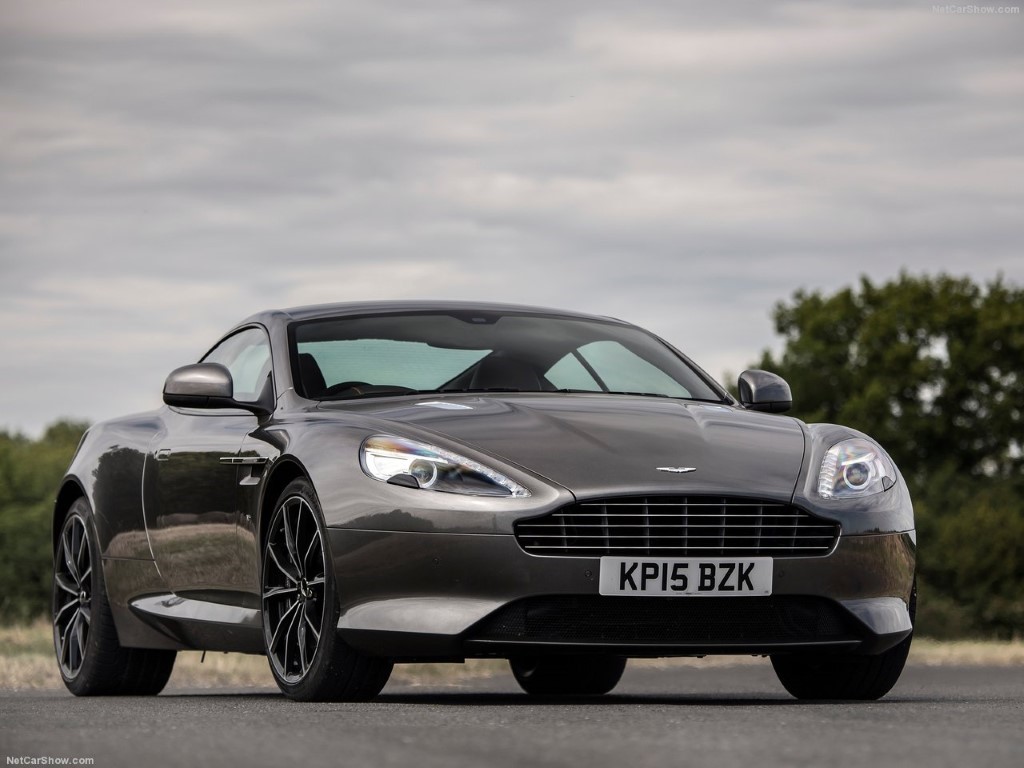
(2013 - 2016)
Select a powertrain to view full technical specifications
The trajectory of the Aston Martin DB9, produced between 2004 and 2016, does not merely represent the chronology of a Grand Tourer (GT) vehicle, but rather the living document of Aston Martin's industrial and corporate transformation in the 21st century. Under the aegis of Ford's Premier Automotive Group (PAG), the British brand faced an ultimatum in the early 2000s: evolve from a niche, artisanal, and financially unstable manufacturer into a global competitor capable of taking on Ferrari and Porsche in volume and technology, or face irrelevance.
The DB9 was the answer to this existential challenge. Launched at the 2003 Frankfurt Motor Show, it marked the end of the production era in Newport Pagnell and inaugurated the modern Gaydon facility in Warwickshire. Unlike its predecessor, the DB7 — which, despite saving the company in the 1990s, was derived from a modified Jaguar XJS platform — the DB9 was a "clean sheet" project. The commercial responsibility on the DB9's shoulders was immense: Ford projected an increase in the brand's annual sales from 1,500 to 8,000 units, and the DB9, strategically positioned between the Vantage and the top-of-the-line Vanquish, was the central pillar of this expansion.
This report exhaustively analyzes the engineering, design evolution, technical specifications, and market legacy of the Aston Martin DB9, dissecting how this model defined the brand's identity for over a decade.
The most critical innovation introduced by the DB9 was not its engine or its exterior design, but rather the architecture that supported it. The model debuted the VH (Vertical/Horizontal) platform, an engineering philosophy that would dictate the construction of all Aston Martins of the "Gaydon Era" until the arrival of the DB11 in 2016.
The term "Vertical/Horizontal" refers to the modular flexibility of the platform, allowing it to be stretched or shortened in vertical and horizontal dimensions to support different models — from the compact Vantage to the Rapide sedan — using the same manufacturing processes and fundamental mounting points. This allowed Aston Martin, a low-volume manufacturer, to dilute chassis development costs across multiple vehicles.
The construction of the DB9's chassis represented a technological break from the past. Abandoning traditional steel construction, Gaydon's engineers opted for an extruded and bonded aluminium chassis. The process involved joining aluminium panels and extruded beams using high-strength aerospace-grade epoxy adhesives, complemented by mechanical rivets.
To achieve optimal dynamic balance, Aston Martin employed a mixed-material strategy in the bodywork and structural components:
The weight distribution was meticulously planned to achieve the perfect 50:50 ratio between the front and rear axles. To do this, the gearbox was rear-mounted (transaxle configuration), connected to the engine by a lightweight alloy torque tube containing a carbon fiber driveshaft. The V12 engine was positioned in a "front-mid" configuration, meaning physically behind the front axle line, ensuring that most of the mass was contained within the wheelbase.
The DB9's design is widely cited as one of the most beautiful and timeless in modern automotive history. The initial project was led by Ian Callum, but was finalized and refined by Henrik Fisker before launch. The car's aesthetics were not based on ostentatious aggressiveness, but on the elegance of the classic proportions of a British GT: a long bonnet, set-back cabin, and a short rear end.
Throughout its entire production run, the DB9 was powered exclusively by a naturally aspirated 6.0-liter (5,935 cc) V12 engine. This engine, derived from the unit used in the original Vanquish, underwent constant refinements to increase power, efficiency, and throttle response.
| Production Period | Code/Generation | Maximum Power | Maximum Torque | 0-100 km/h | Top Speed |
|---|---|---|---|---|---|
| 2004 – 2008 | AM04 (Gen 1) | 450 bhp (456 cv) | 570 Nm | 4.9s (Auto) / 4.7s (Manual) | ~300 km/h |
| 2009 – 2012 | Gen 2 (Facelift) | 470 bhp (477 cv) | 600 Nm | 4.6s | 306 km/h |
| 2013 – 2015 | AM11 (Gen 4) | 510 bhp (517 cv) | 620 Nm | 4.5s | 295 km/h |
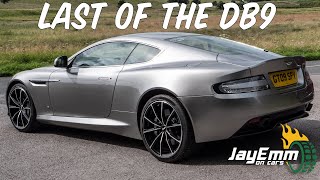
| 2016 (Final) | DB9 GT | 540 bhp (547 cv) | 620 Nm | 4.4s | 295 km/h |
The DB9's transmission system is a focal point for collectors and enthusiasts, defining the driving character of the vehicle. The car used a torque tube to connect the engine to the rear-mounted gearbox.
The vast majority of DB9s were equipped with the ZF 6HP26 six-speed automatic transmission, marketed by Aston Martin as "Touchtronic 2".
A conventional six-speed manual transmission, manufactured by Graziano, was offered as a no-cost option from launch until approximately 2011.
The DB9 utilized independent double wishbone suspension on all four wheels, incorporating anti-dive geometry at the front and anti-squat at the rear to keep the body level under heavy acceleration and braking.
In response to early criticisms that the DB9 was overly focused on comfort and lacked dynamic sharpness compared to rivals, Aston Martin launched the optional "Sports Pack" in 2006/2007. This package transformed the car's behavior through significant physical alterations:
From the 2011/2012 facelift onwards, the Adaptive Damping System (ADS) became standard. This system monitored the throttle, brakes, and steering to adjust damper stiffness in real time, offering distinct modes like "Normal", "Sport", and later "Track" (in GT models), allowing the car to alternate between a comfortable cruiser and a stiff sports car at the touch of a button.
The life of the model can be segmented into three main eras, marked by deep cosmetic and mechanical updates.
The total production volume of the DB9 over 12 years is estimated at approximately 16,500 units. Although it is a high number for the brand, certain configurations are extremely rare.
| Model / Variant | Estimated Global Production |
|---|---|
| Total DB9 (All versions) | ~16,500 units |
| DB9 Coupe Manual | ~385 units |
| DB9 Volante Manual | ~237 units |
| DB9 GT Bond Edition | 150 units |
| DB9 LM (Le Mans) | ~60-69 units |
| Last of 9 | 9 units |
The manual transmission combination is the "Holy Grail" for collectors. With fewer than 400 Manual Coupes produced worldwide, these cars command significantly higher prices in the used market. The rarity is accentuated in post-2009 models (with the 470 bhp engine and new dashboard), which are virtually non-existent with a manual gearbox.
Audio Systems: Varied between Linn Audio (950W, problematic), Alpine Premium (700W, standard and robust), and the optional Bang & Olufsen BeoSound (1000W, with motorized tweeters).
The Aston Martin DB9 Coupe ended its production in July 2016, being replaced by the DB11, but its legacy is indisputable. It was the "savior" that proved Aston Martin's viability as a modern manufacturer. With over 16,000 units sold, it democratized access to the British V12 engine without sacrificing the brand's exclusivity. For automotive history, the DB9 remains a design landmark — the perfect application of the Golden Ratio in metal. It combined the brute force of a 6.0-liter V12 with the sophistication of a bonded aluminium chassis, creating a Grand Tourer that, even decades after its launch, remains a benchmark of beauty and elegance.
Images of the Aston Martin DB9