


The Genesis of the "Brute in a Suit"
The DBS acronym within the Aston Martin Lagonda lineage transcends mere model nomenclature; it represents an engineering and design philosophy that has historically signaled the apex of the British brand's Grand Touring (GT) capability. Unlike the "DB" series (initials of David Brown), which focuses on elegance, the DBS models are conceived to offer a more visceral, powerful, and dynamic experience. Often referred to as a "brute in a suit," these vehicles combine the artisanal sophistication of Newport Pagnell and Gaydon with a latent mechanical aggressiveness.
This report compiles an exhaustive analysis of the model's three distinct generations (1967–1972, 2007–2012, and 2018–2024), detailing socioeconomic contexts, granular technical specifications, and precise production data. The DBS has consistently served as Aston Martin's road laboratory, introducing technologies such as mechanical fuel injection and active aerodynamics.
First Generation (1967–1972): Revolution and V8 Era
Historical Context and Design Rupture
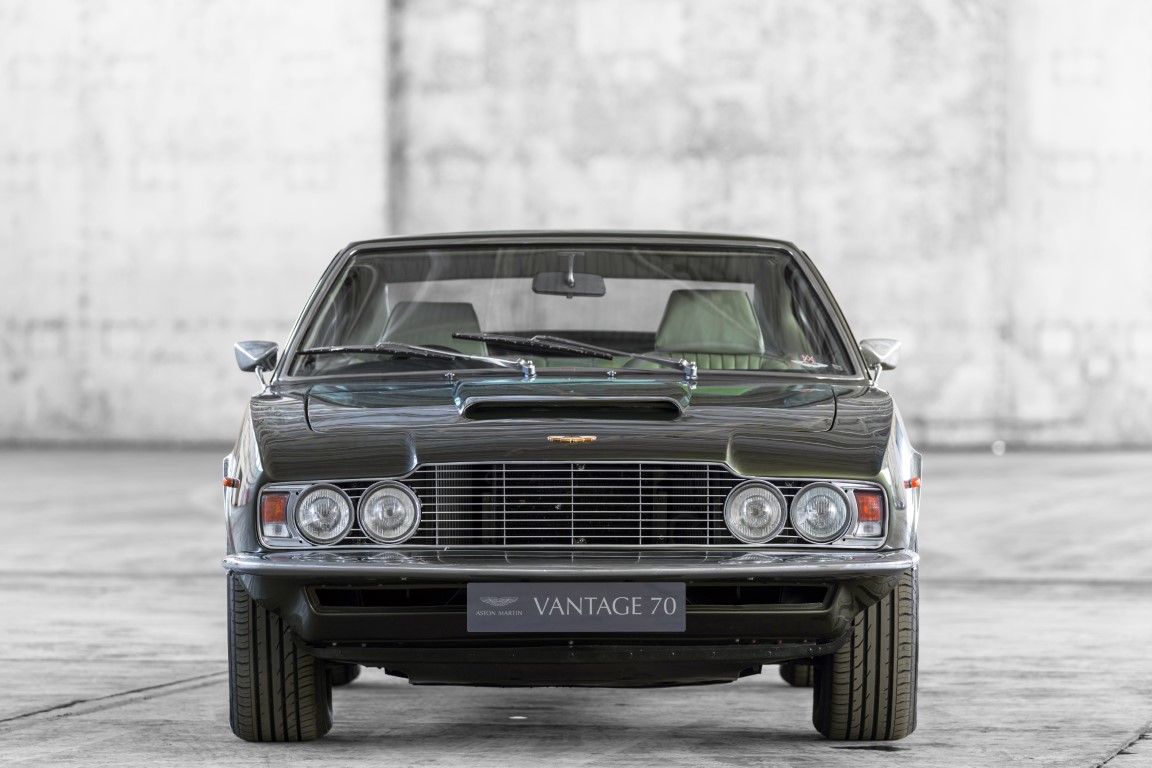
In the mid-1960s, Aston Martin needed to replace the DB6, whose DB4-based architecture was already dated. The market demanded GTs with more space and comfort. Following the bankruptcy of Carrozzeria Touring, design was internalized and entrusted to William Towns, who radically broke away from the previous smooth curves.
The DBS, introduced in 1967, exhibited a "fastback" aesthetic with straight lines, imposing width, and a front grille that spanned the entire width of the vehicle, housing four quartz-iodine headlights. It was a true four-seater, offering the interior space that the DB6 lacked.
The Six-Cylinder Engine Interregnum
The original plan foresaw the launch with a new V8 engine, but development delays forced the use of the 4.0-liter inline-six engine from the DB6. This created a paradox: the DBS was heavier than its predecessor, resulting in inferior performance. To mitigate this, the Vantage specification (with three Weber carburetors) was offered as a no-cost option.
The Arrival of the DBS V8 (1969)
In 1969, the original vision came to fruition with the DBS V8. The 5,340 cc engine designed by Tadek Marek, with quad overhead camshafts and Bosch mechanical fuel injection, transformed the car's dynamics.
- Estimated Power: ~320 bhp.
- Top Speed: ~257 km/h (160 mph), earning it the title of the "world's fastest four-seater production car".
- Visual Differences: 15-inch GKN alloy wheels and ventilated brake discs.
Production Data (1967–1972)
| Year | Quantity | Notes |
|---|---|---|
| 1967 | 3 | Started in September. |
| 1968 | 238 | First full year. |
| 1969 | 309 | Production peak. |
| 1970 | 180 | Decline with the arrival of the V8. |
| 1971 | 49 | Reduced production. |
| 1972 | 23 | End of production. |
| Total | 802 | Validated total. |
Technical Note: There are 26 chassis that started as 6-cylinders but received V8 engines, being reclassified.
Cinematic Legacy
The olive green 1969 DBS is immortalized in the film "On Her Majesty's Secret Service". Unlike the gadget-laden DB5, this was a raw and realistic machine, reflecting the more serious tone of the film and cementing the car's image as a symbol of melancholic elegance.
Second Generation (2007–2012): The Gaydon Era
Engineering: VH Platform and Carbon
Resurrected in 2007 as a replacement for the Vanquish S, the new DBS was built on the bonded aluminum VH platform. To justify its positioning as a flagship, Aston Martin focused on weight reduction:
- Carbon Fiber: First production Aston to extensively use carbon panels (hood, fenders, trunk), reducing the weight by 30 kg compared to the DB9.
- CCM Brakes: First road-going Aston with standard Carbon Ceramic brakes.
- Adaptive Suspension (ADS): Introduction of electronically adjustable dampers.
The Naturally Aspirated V12 Engine (AM11)
The heart was the 6.0-liter naturally aspirated V12, hand-assembled in Cologne.
- Power: 517 bhp (380 kW) at 6,500 rpm.
- Torque: 570 Nm.
- Variable Intake: A bypass system that opened extra valves above 5,500 rpm for greater airflow and an aggressive sound.
Production Analysis and Versions
| Variant | Total | Manual | Touchtronic 2 |
|---|---|---|---|
| Coupe | 2,534 | 984 | 1,550 |
| Volante | 845 | 44 | 801 |
| TOTAL | 3,379 | 1,028 | 2,351 |
Rarity: The DBS Volante Manual, with only 44 units, is one of the rarest configurations of the modern era.
Special Editions
- Carbon Black (2010): Exclusive paintwork and carbon/kevlar seats.
- UB-2010: Celebration of CEO Ulrich Bez's 10 years. Only ~23 units made.
- DBS Ultimate (2012): Farewell edition, limited to 100 units (estimated 59 Coupes). There is only 1 manual Ultimate Coupe in the world.
Third Generation (2018–2024): Superleggera and Turbo
Return as "Superleggera"
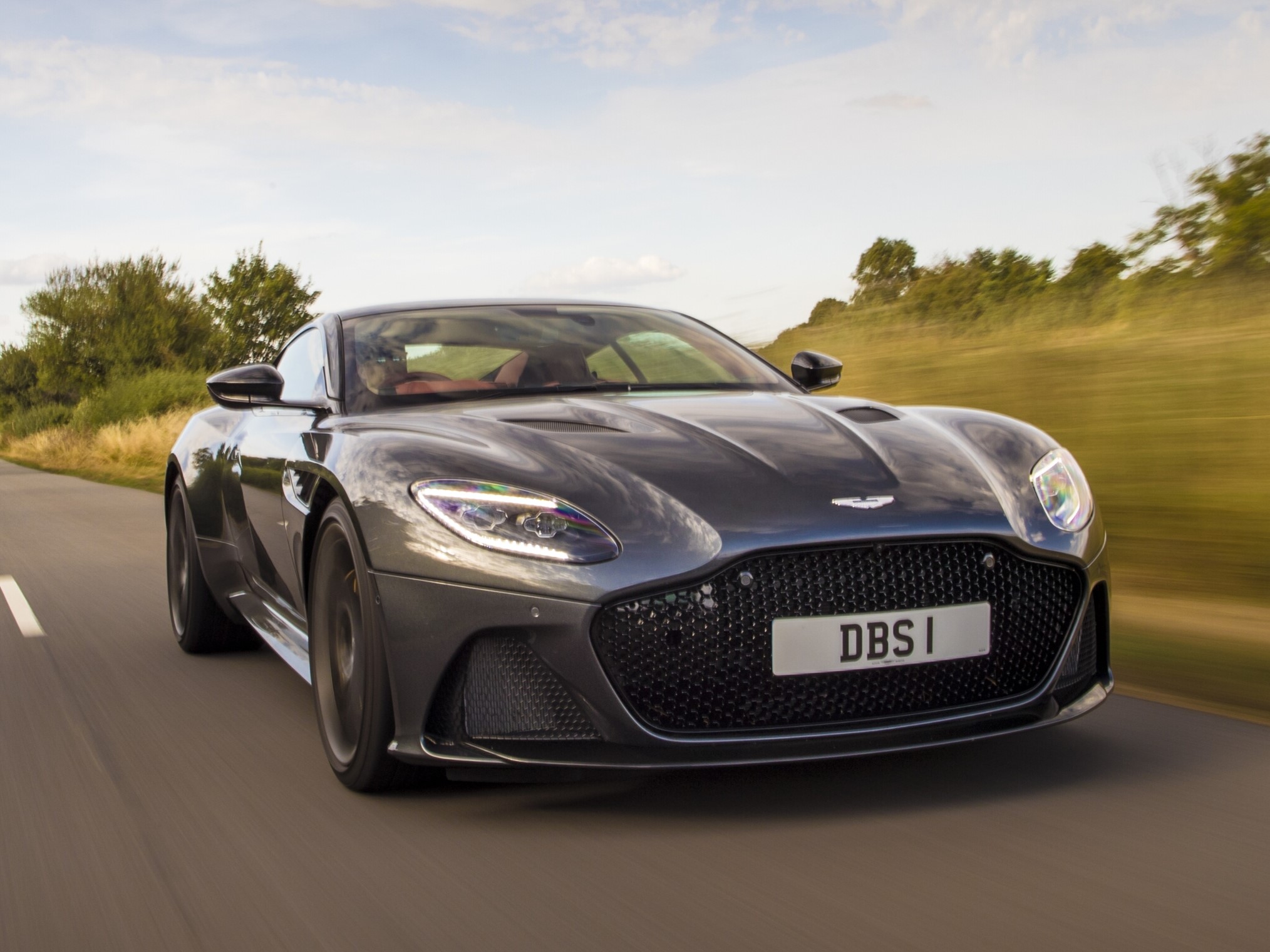
Launched in 2018, the Vanquish successor brought back the DBS name accompanied by the "Superleggera" suffix, paying homage to Carrozzeria Touring's lightweight construction technique. Positioned to compete with the Ferrari 812 Superfast, it sat at the top of the regular production range.
Engineering: Torque and Aerodynamics
Based on the DB11 architecture, but deeply modified to handle extreme torque.
- Engine: 5.2L Twin-Turbo V12 (AE31).
- Power: 725 PS (715 bhp).
- Torque: 900 Nm, available in a flat band.
- Transmission: Reinforced 8-speed ZF (8HP95).
- Aerodynamics: Generates 180 kg of downforce at top speed (340 km/h) through innovations like the "Curlicue" and the "Aeroblade II".
High-Value Special Editions
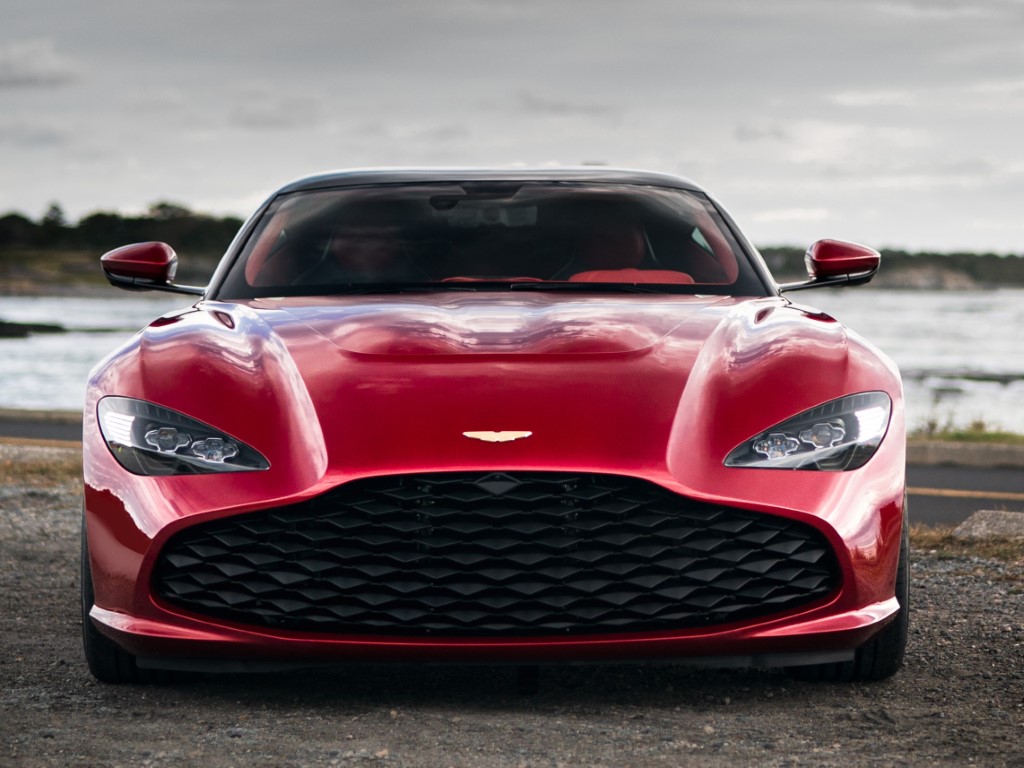
- DBS GT Zagato (2019): Part of the DBZ Centenary collection. Sold only as a pair with the DB4 GT Zagato Continuation for £6 million. Active "breathable" front grille and 760 bhp of power. Limited to 19 units.
- DBS 007 Edition (2020): Limited to 25 units, celebrating the film "No Time to Die".
- DBS 770 Ultimate (2023–2024): The final model. Power increased to 770 PS, stiffened chassis, and production limited to 499 units (all sold out before the announcement).
Comparison and Market Conclusion
Performance Evolution
| Parameter | Generation 1 (V8) | Generation 2 (V12) | Generation 3 (770 Ultimate) |
|---|---|---|---|
| Period | 1969–1972 | 2007–2012 | 2023–2024 |
| Engine | Naturally Aspirated 5.3L V8 | Naturally Aspirated 5.9L V12 | 5.2L Twin-Turbo V12 |
| Power | ~320 bhp | 517 bhp | 770 PS (759 bhp) |
| Torque | ~450 Nm | 570 Nm | 900 Nm |
| 0-100 km/h | ~6.0 s | 4.3 s | 3.2 s |
| Top Speed | 257 km/h | 307 km/h | 340 km/h |
Collectible Perspectives
Data analysis suggests clear trends:
- DBS V8 Manual (Gen 1): Appreciation for mechanical purity and absolute rarity (< 400 units).
- DBS Manual (Gen 2): A "Blue Chip". The last manual naturally aspirated V12. The Volante Manual version (44 units) is virtually unattainable.
- DBS 770 Ultimate and Zagato (Gen 3): Collectible value will concentrate on the numbered editions marking the end of the pure V12 era.
The Aston Martin DBS ends its trajectory in 2024 as a testament to the evolution of the British Grand Tourer. From an ambitious attempt at modernism in the 60s to a supercar capable of defying the laws of physics, the DBS has remained true to its premise: offering absolute power in an undeniably elegant package.