
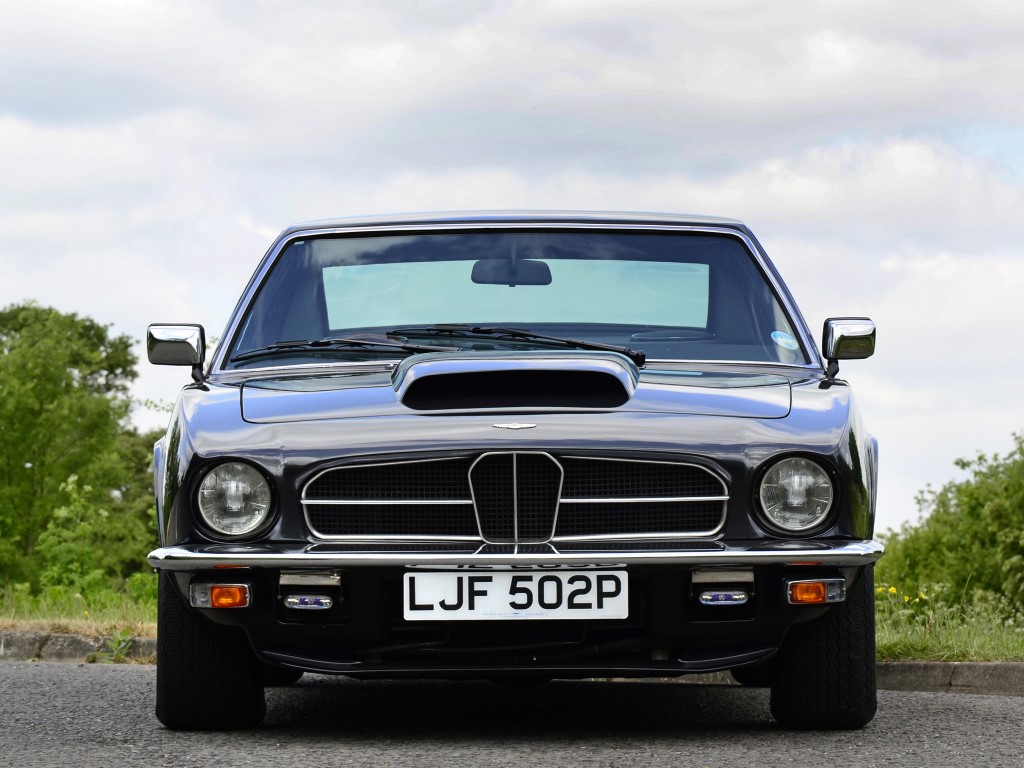
Series 1
(1974 - 1976)
5.3 L V8 16V
315 cv
Technical specifications, versions, and history for the Aston Martin Lagonda.
Select a generation to see available versions
(1974 - 1976)
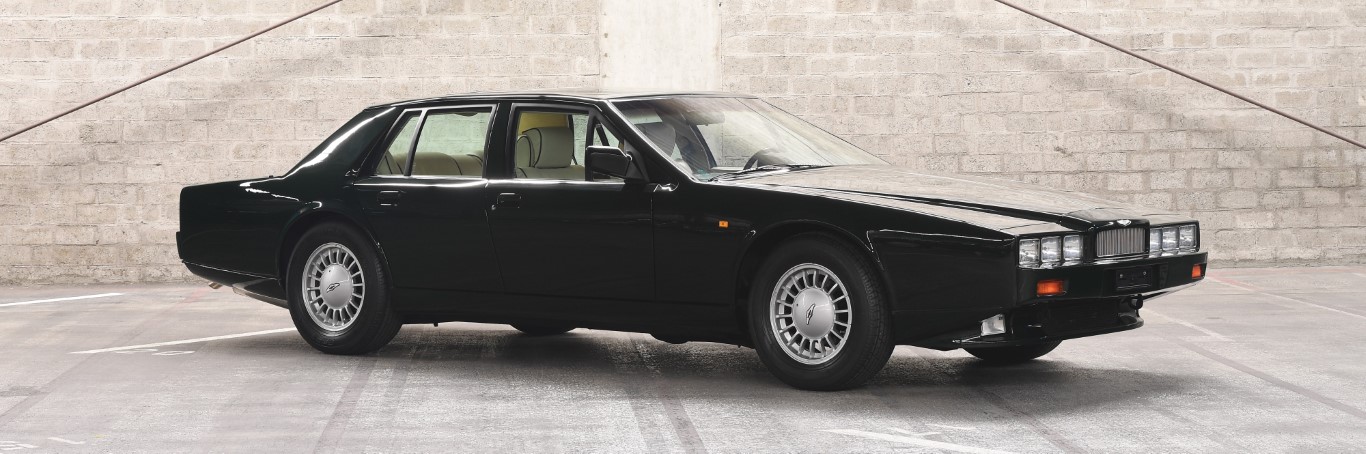
(1976 - 1986)
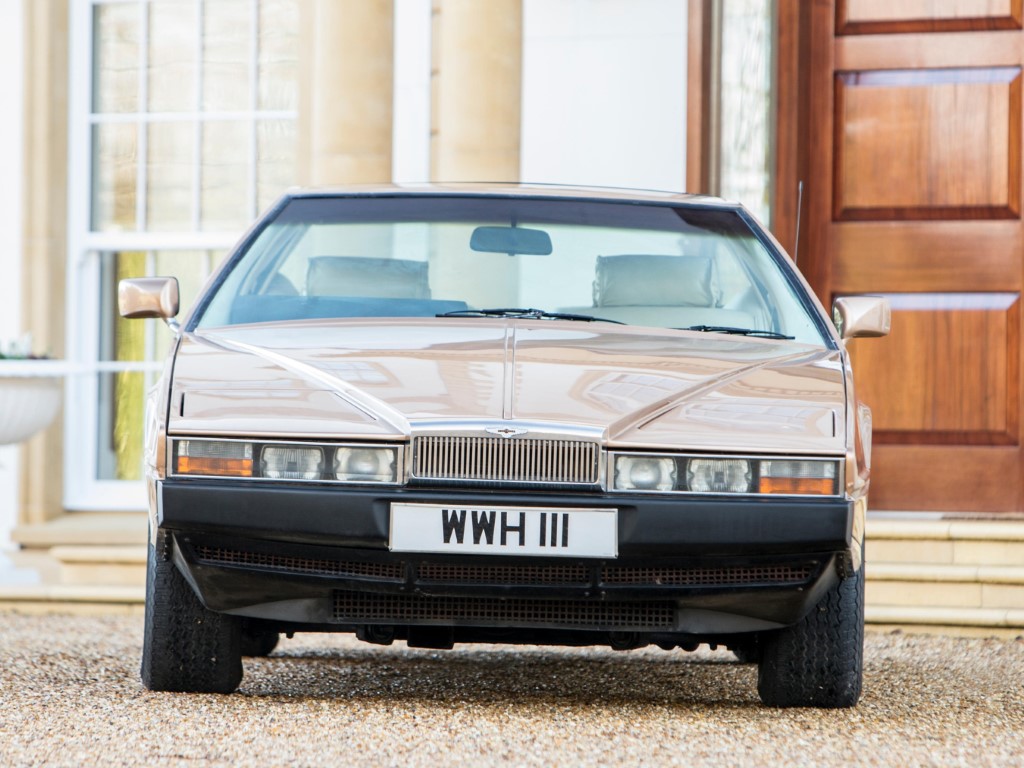
(1986 - 1987)
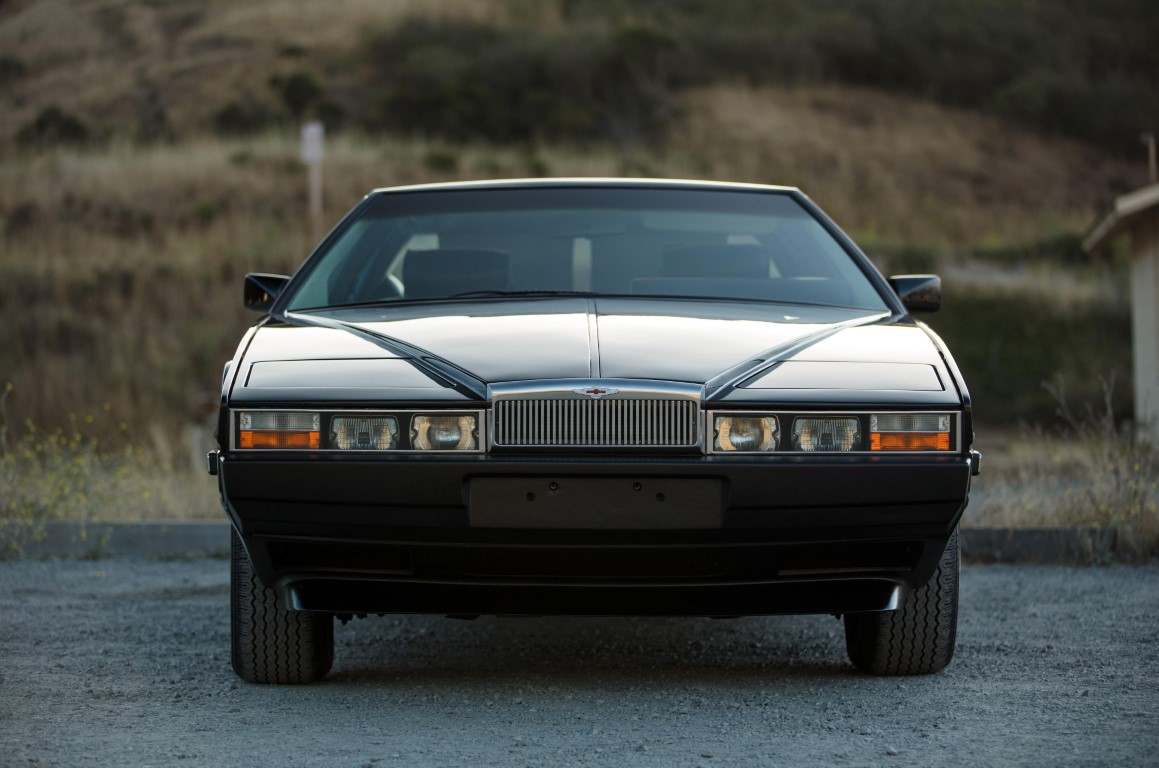
(1987 - 1990)
The Aston Martin Lagonda is one of the most unique, daring, and striking automobiles in the global automotive industry. Hand-built between 1974 and 1990 at the historic Newport Pagnell factory in England, this full-size luxury sedan challenged the styling and technological conventions of its era. The model was born at a time of extreme financial vulnerability for Aston Martin, which was facing the repercussions of the 1973 oil crisis and went as far as declaring bankruptcy in late 1974. The decision to create an ultra-luxury four-door sedan was a bold strategy to attract foreign capital, especially from the Middle East, guaranteeing the cash flow that saved the manufacturer from insolvency.
Throughout its sixteen-year history, the Lagonda underwent profound aesthetic and mechanical transformations, divided into four distinct series. The model evolved from a classic-shaped sedan based on the brand's sports coupe to a futuristic wedge design, also becoming the global pioneer in the use of digital instrument clusters in production cars. In total, only 645 units were produced, which ensures the model the status of a highly exclusive collector's item.
The name Lagonda harks back to a traditional British automobile manufacturer founded in 1906 by Wilbur Gunn. The brand achieved great prestige in the following decades, including a historic victory at the 1935 24 Hours of Le Mans with the M45R model. In 1947, industrialist David Brown acquired Lagonda shortly after buying Aston Martin, merging the two brands.
After the merger, the Lagonda brand gradually lost ground, being used only on highly exclusive four-door models, such as the Lagonda Rapide produced between 1961 and 1964, of which only 55 units were manufactured. The decision to reactivate the name in the 1970s was a direct attempt to diversify Aston Martin's catalog, which until then was known almost exclusively for its two-door sports coupes.
The first generation of the Aston Martin Lagonda, known as Series 1, was presented at the London Motor Show in October 1974. Unlike the futuristic format that would make the car famous years later, the Series 1 was essentially a lengthened four-door version of the Aston Martin V8 coupe (which in turn evolved from the DBS).
Designed by William Towns, the Series 1 had its steel chassis extended by 30.5 centimeters to offer comfortable space for rear-seat passengers, while retaining the hand-shaped aluminum panels over a box-section structure. The front look featured single headlights flanked by a typical Lagonda horseshoe-shaped grille.
The mechanical assembly utilized the 5.3-liter (5,340 cc) V8 engine with double overhead camshafts per bank (DOHC) and two valves per cylinder, fed by four Weber carburetors. This engine delivered 280 hp in the standard version, although high-performance estimates point to up to 320 hp. The transmission offered was a 5-speed manual ZF or a 3-speed automatic (BorgWarner on early models and Chrysler TorqueFlite later).
With a top speed of 240 km/h and acceleration from 0 to 96 km/h in 6.2 seconds, the Series 1 posted impressive performance numbers for a two-ton sedan. However, its retail price was extremely high (£14,040, about 24% more expensive than the V8 coupe), which limited sales to just 7 units during the active production period. An eighth unit was later assembled and authorized by the factory.
Among these rare units, three vehicles (chassis 12003, 12005, and 12006) were subsequently upgraded by tuner R.S. Williams to a 7.0-liter specification of the V8 engine, generating an estimated power output between 440 hp and 480 hp and 76 kgfm of torque.
Faced with the need to create a revolutionary product to attract global market attention and demonstrate the brand's capacity for innovation under new management, Aston Martin revealed the Lagonda Series 2 at the 1976 London Motor Show. Designer William Towns abandoned the classic look and adopted the "folded paper" or wedge design style, characterized by extremely angular lines, flat surfaces, and a very low and wide body. The exterior look featured pop-up headlights installed in the hood and a minute front grille that served as an air intake for the transmission oil cooler.
The model shared the lengthened chassis and independent suspension with double wishbones at the front and a De Dion axle with trailing links and a Watts linkage at the rear, along with Girling ventilated disc brakes on all four wheels (with the rear discs mounted inboard, next to the differential). The engine continued to be the 5.3-liter V8 with four twin-choke Weber 42DCNF carburetors, generating 280 cv at 5,000 rpm and 49.7 kgfm of torque at 3,000 rpm, coupled exclusively to a 3-speed Chrysler TorqueFlite automatic transmission. The average fuel consumption was quite high, sitting between 4 and 5 km/l.
Although the exterior design of the Series 2 generated great repercussion, customer deliveries only began in 1979 due to the enormous complexity in the development of its cabin. The Lagonda was the first production car in the world equipped with a fully digital instrument panel and touch-sensitive controls. The first phase of this electronic system used LED (Light Emitting Diode) displays and capacitive membrane buttons controlled by a Z80 microprocessor.
This initial system, developed in partnership with the Cranfield Institute of Technology, proved to be very unstable in practical testing, suffering from electrical failures caused by the heat generated by the complex wiring of more than 300 cables. To fix the problems, Aston Martin hired the American firm Javelina Corporation, specialized in the electronics of the F-15 Eagle fighter jets.
Starting in 1984, Javelina replaced the original arrangement with three cathode-ray tube (CRT) screens installed behind the steering wheel to display speed, fuel level, and engine parameters, in addition to adding a voice synthesizer for alerts in four languages. The development cost of this technology was enormous, representing about four times the budget of the rest of the car project.
The Series 2 received several updates throughout its nine years of production:
Presented at the New York Motor Show in January 1986, the Lagonda Series 3 maintained the wedge-shaped body lines developed for the Series 2, but introduced a mechanical modernization of great importance for the new emission laws: Weber-Marelli electronic fuel injection.
With the adoption of electronic injection, the 5.3-liter V8 engine delivered 300 cv of power in the European version and a maximum torque of 44.2 kgfm, providing more direct throttle responses. In the United States, to meet stricter anti-pollution rules, the declared power was limited to 240 cv. The 3-speed Chrysler TorqueFlite automatic transmission continued to equip the model.
Inside the Series 3, the instrument panel also evolved. The old cathode-ray tube (CRT) monitors, known for high heat dissipation and fragility, were replaced in early 1987 by vacuum fluorescent displays (VFD). This new technology featured a visual style similar to digital clocks of the era, operating in a much more stable and cooler manner. The vehicle's curb weight reached its peak at 2,096 kg in this generation due to the addition of new electronic systems.
The Series 3 remained in production for only one year, recording the closure of assembly with only 75 units manufactured. This low production volume grants the Series 3 the title of the rarest regular model in the entire marketed lineage of the wedge-shaped Lagonda.
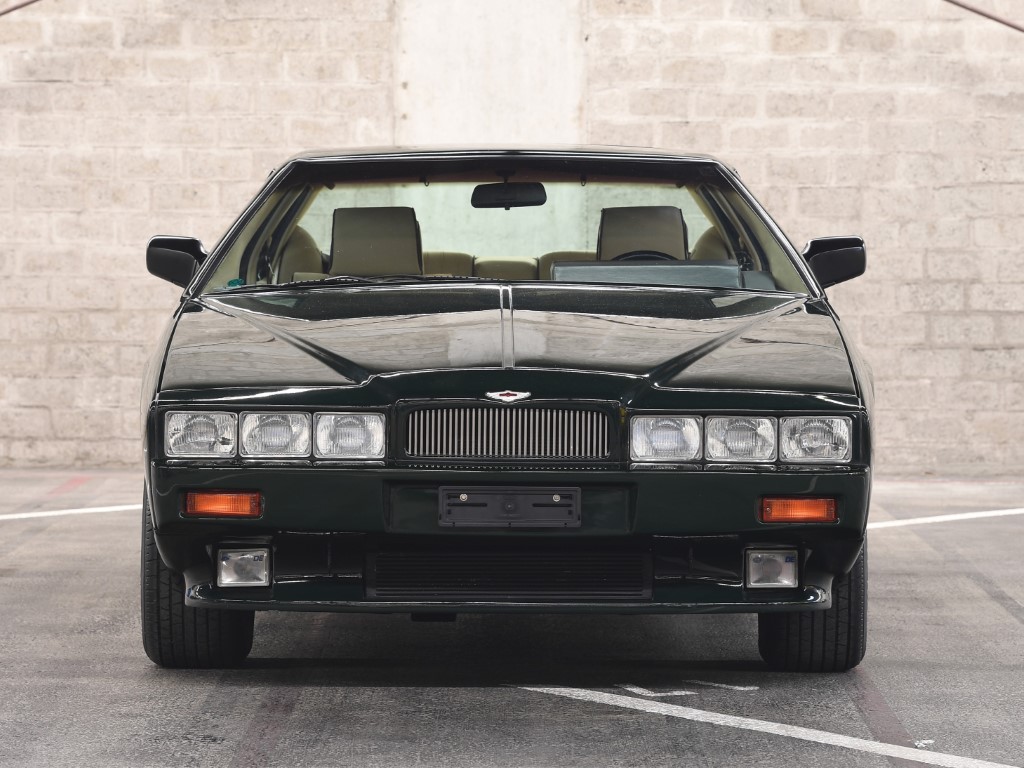
The Series 4 was revealed to the public at the Geneva Motor Show in March 1987, bringing the first major external visual change to the wedge bodywork since its original launch in 1976. William Towns was hired again to rejuvenate the car's design, with the mission of smoothing out the striking lines to adapt the sedan to the aesthetic trends of the late 1980s.
The main changes made to the design of the Series 4 were:
Mechanically, the Series 4 maintained the 5.3-liter V8 engine with Weber-Marelli electronic injection and two SU brand electric fuel pumps. The engine was tuned to deliver 289 cv at 5,000 rpm and 44.3 kgfm of torque at 3,000 rpm. Total curb weight was slightly reduced to 2,064 kg. Straight-line performance featured acceleration from 0 to 100 km/h in 8.4 seconds and a top speed of 233 km/h.
Production of the Series 4 extended until January 1990, when the last unit left the Newport Pagnell assembly line. 105 examples of the Series 4 were produced, with 72 being left-hand drive (LHD) and 33 being right-hand drive (RHD).
The artisanal manufacturing process of the Lagonda opened the way for highly customized versions by internal divisions and external workshops:
Presented at the London Motor Show in 1983 by Tickford, the internal customization division of Aston Martin, this model brought an aesthetic kit consisting of deep front spoilers, aluminum side skirts designed by Simon Saunders, and 15-inch BBS wheels with Pirelli P7 tires. The interior featured a walnut wood finish, leather-lined roof, two color televisions mounted on the console, a VCR, a drinks cabinet with custom crystal decanters, and a radio telephone. The retail price of £85,000 limited manufacturing to just 5 units.
In 1984, Tickford developed a version with a wheelbase lengthened by 25.4 centimeters (10 inches) and a roof raised by 5 centimeters (2 inches) to expand internal leg and headroom. The model featured an internal privacy partition, split rear windows, and a radio telephone integrated into the console. Sold for the record value of £110,000 at the time, it is estimated that only 4 units were effectively completed.
The Lagonda also served as the basis for rare estate versions developed by third-party workshops. The most famous of them was created by the Swiss company Roos Engineering, based on a 1987 Series 3 and finalized in 2000 after four years of work. The project included the creation of custom curved rear glass panels that cost around 40,000 Swiss francs. Another notable estate conversion was designed by Swede Ted Mannerfeldt, aiming to preserve William Towns' original C-pillar lines. Dutch enthusiast Harry Kielstra also independently developed an estate version in his own workshop for personal cargo use.
The concept of an extreme luxury sedan with the Lagonda signature remained inactive at Aston Martin for twenty-five years after the end of production in 1990. However, in 2014, the manufacturer announced the development of a spiritual successor under the Lagonda brand: the Lagonda Taraf.
Designed by Marek Reichman under the development codename "Project Comet", the Taraf (which means "ultimate luxury" in Arabic) sought direct visual inspiration from the geometric wedge lines created by William Towns in 1976. The model was assembled on Aston Martin's modular VH platform, shared with the DB9 and Rapide models.
The Taraf featured a body built entirely from carbon fiber-reinforced plastic panels to keep the final weight below 2,000 kg, offsetting the increase in its physical dimensions (5.40 meters in length). The model was equipped with the naturally aspirated 5.9-liter V12 engine produced in Cologne, Germany, delivering 540 cv of power and 64.2 kgfm of torque, mated to an 8-speed automatic transmission from German manufacturer ZF. With this setup, the Taraf accelerated from 0 to 100 km/h in 4.4 seconds and reached a top speed of 314 km/h.
Initially planned to be sold on a restricted invitation-only basis for the Middle East market with a production cap of 100 units, the Taraf had its marketing expanded to Europe, Singapore, South Africa, and the United States by CEO Andy Palmer, with the production limit adjusted to 200 units. The retail price of around US$1 million (approximately £580,000 in the United Kingdom) limited final demand. In total, only 120 units of the Taraf were effectively built between 2015 and 2016, consolidating the model as one of the rarest vehicles of Aston Martin's contemporary era.
The following tables consolidate dimensions, weights, mechanical specifications, and production volumes of the Aston Martin Lagonda in a comparative manner across generations:
| Series | Length | Width | Height | Wheelbase | Curb Weight |
|---|---|---|---|---|---|
| Series 1 (1974-1975) | 4,928 mm | 1,829 mm | 1,323 mm | 2,910 mm | 2,000 kg |
| Series 2 (1976-1985) | 5,281 mm | 1,791 mm | 1,302 mm | 2,916 mm | 2,023 kg to 2,064 kg |
| Series 3 (1986-1987) | 5,283 mm | 1,816 mm | 1,302 mm | 2,908 mm | 2,096 kg |
| Series 4 (1987-1990) | 5,283 mm | 1,816 mm | 1,302 mm | 2,908 mm | 2,064 kg |
| Series | Engine Type | Fuel System | Factory Transmission | Power | Maximum Torque | Top Speed |
|---|---|---|---|---|---|---|
| Series 1 | V8 5.3L DOHC 16v | Single carburetors | 5-speed ZF Manual / 3-speed BorgWarner Auto | 280 cv | 44.2 kgfm | 240 km/h |
| Series 2 | V8 5.3L DOHC 16v | 4 Weber 42DCNF carburetors | 3-speed Chrysler TorqueFlite Auto | 280 cv @ 5,000 rpm | 49.7 kgf.m @ 3,000 rpm | 238 km/h |
| Series 3 | V8 5.3L DOHC 16v | Weber-Marelli Electronic Injection | 3-speed Chrysler TorqueFlite Auto | 300 cv (Eur) / 240 cv (USA) | 44.2 kgfm | 230 km/h |
| Series 4 | V8 5.3L DOHC 16v | Weber-Marelli Electronic Injection | 3-speed Chrysler TorqueFlite Auto | 289 cv to 305 cv @ 5,500 rpm | 44.3 kgf.m @ 3,000 rpm | 233 km/h to 241 km/h |
| Model / Series | Years of Activity | Units Produced | Technical and Commercial Observations |
|---|---|---|---|
| Series 1 | 1974 – 1975 | 8 units | Based on the classic DBS chassis; 5 automatics and 3 ZF manuals. |
| Series 2 | 1976 – 1985 | 457 units | First car with a digital dashboard; introduction of Towns' wedge design. |
| Series 3 | 1986 – 1987 | 75 units | Technical transition to electronic fuel injection. |
| Series 4 | 1987 – 1990 | 105 units | Deep restyling with elimination of pop-up headlights. |
| Total Global | 1974 – 1990 | 645 units | Official final volume of hand-built chassis constructed. |
The Aston Martin Lagonda stands out in the history of automotive engineering as a radical gamble in terms of styling and technology, launched at a time when the brand relied on a high-impact product to guarantee its survival. The boldness of William Towns' wedge-shaped design and the pioneering spirit of introducing advanced electronic systems inside, despite facing severe mechanical and electrical reliability problems due to the technical limitations of the 1970s and 1980s, opened the doors for the digitization of cabins that became the standard of the contemporary automotive industry. With only 645 hand-built units finalized over sixteen years, the model remains one of the most extreme and exclusive demonstrations of luxury and innovation in the British industry.