Faced with the need to create a revolutionary product to attract global market attention and demonstrate the
brand's capacity for innovation under new management, Aston Martin revealed the Lagonda Series 2 at the 1976
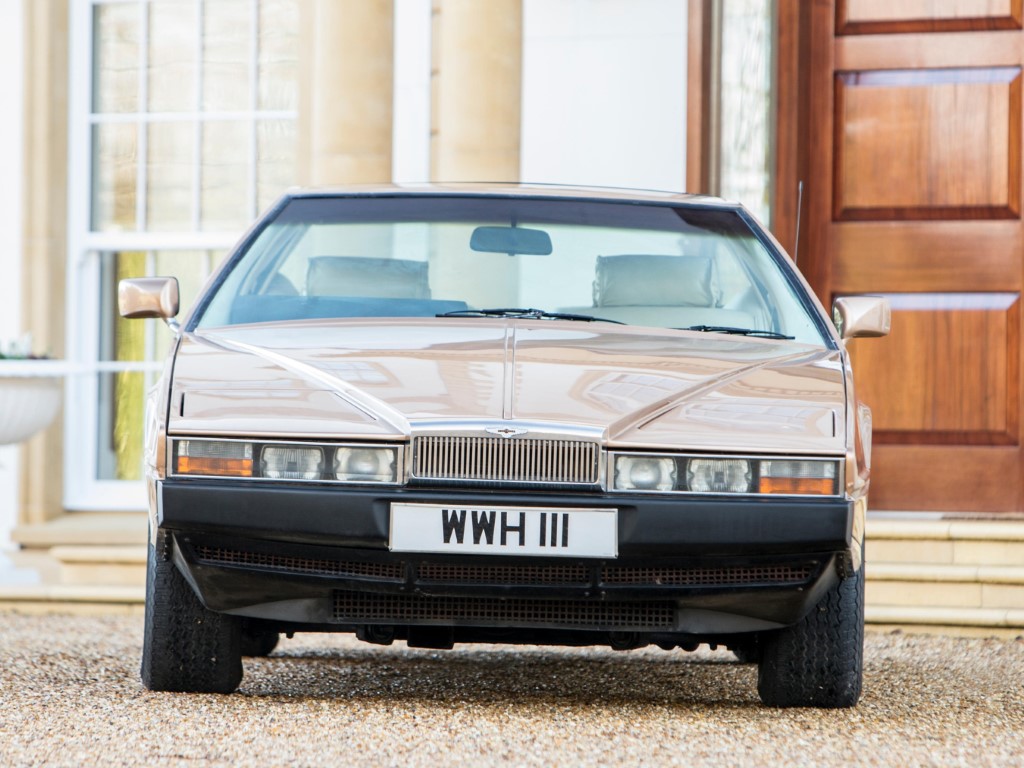
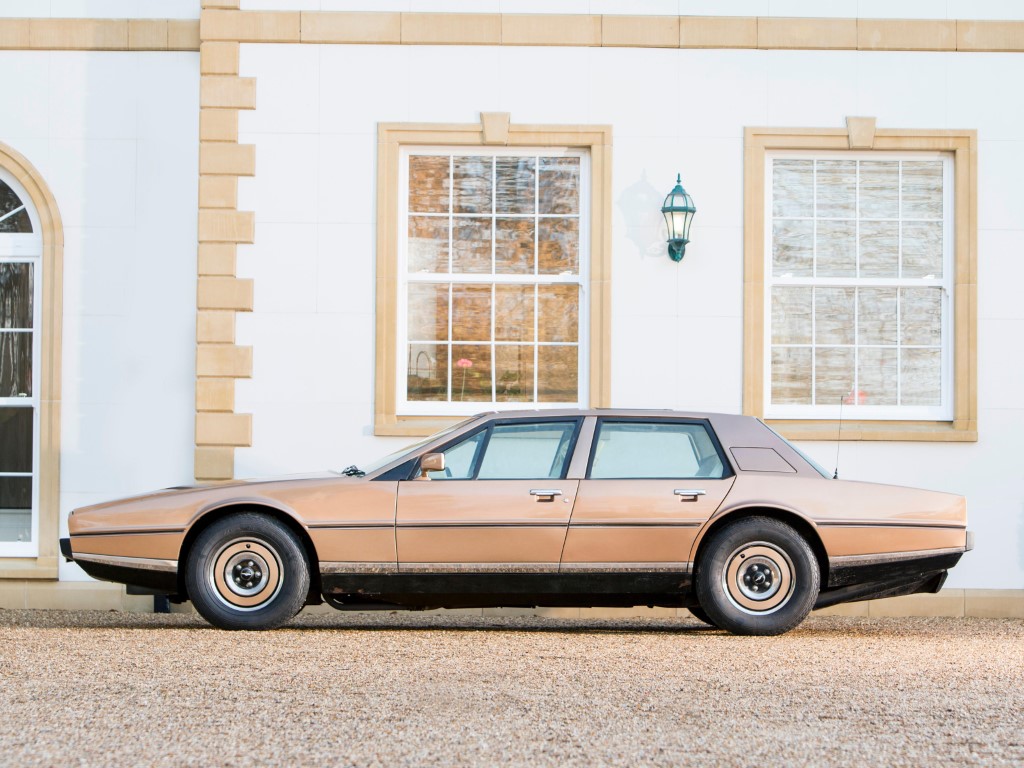
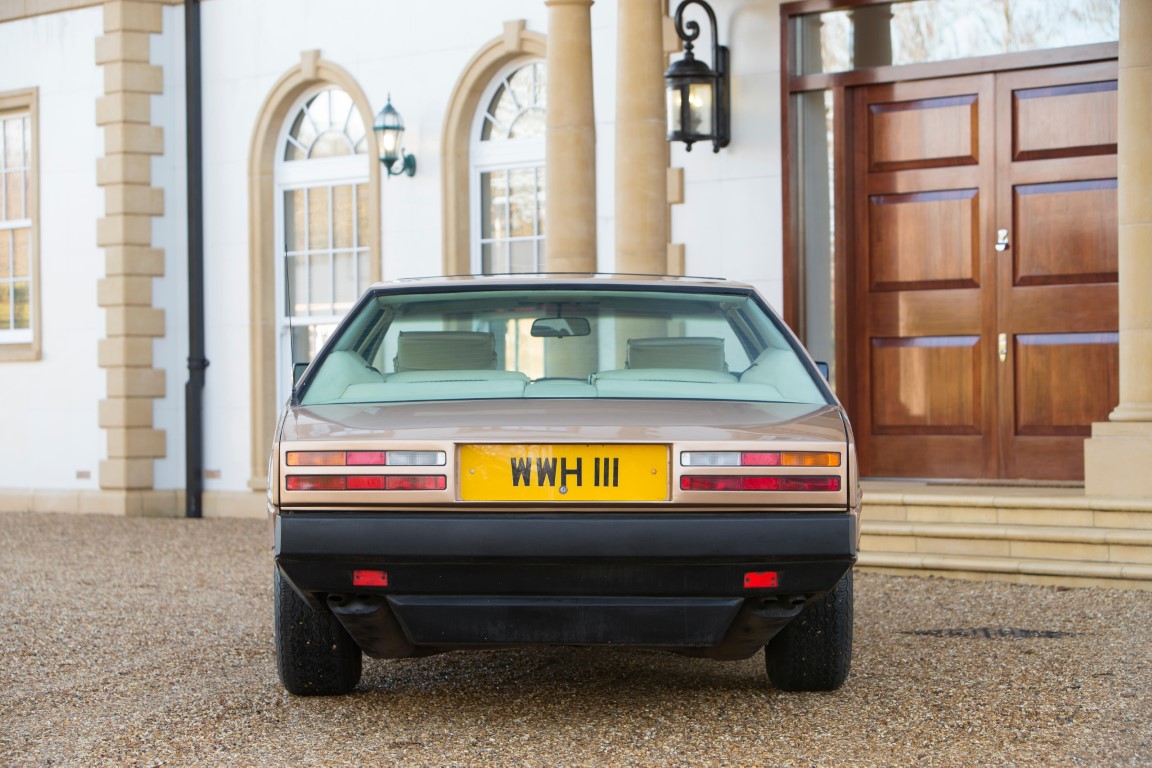
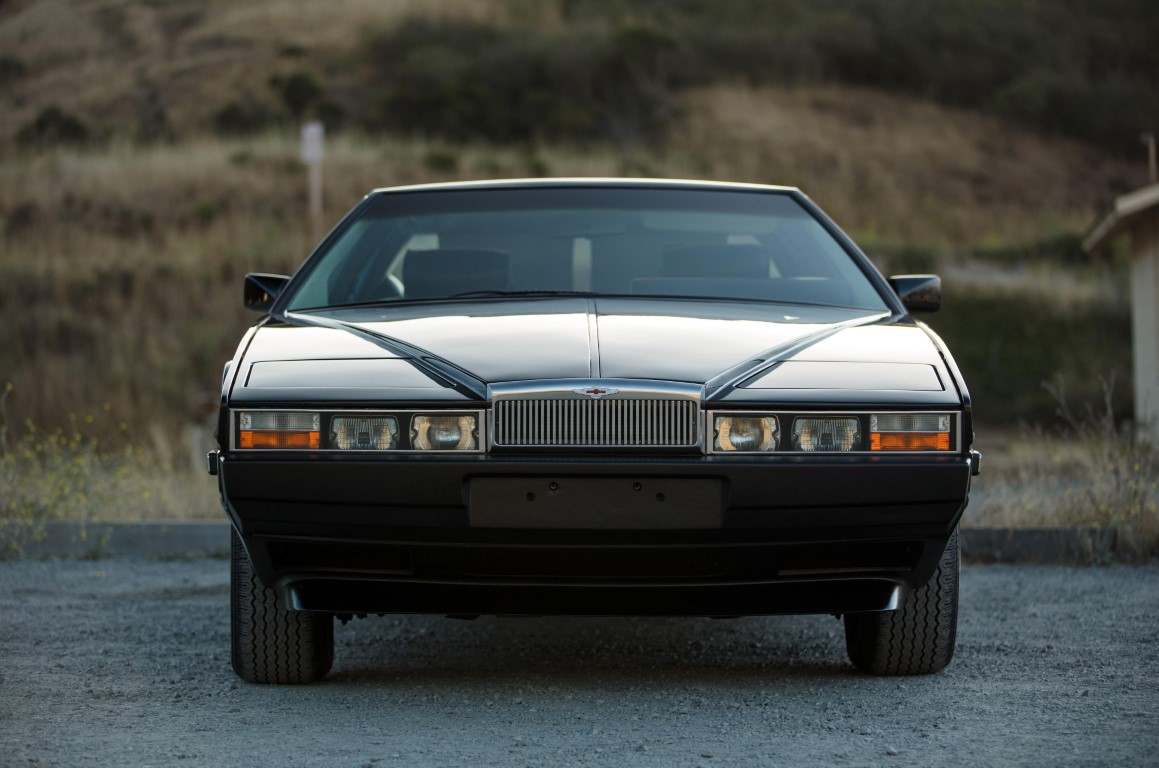
London Motor Show. Designer William Towns abandoned the classic look and adopted the "folded paper" or wedge
design style, characterized by extremely angular lines, flat surfaces, and a very low and wide body. The
exterior look featured pop-up headlights installed in the hood and a minute front grille that served as an
air intake for the transmission oil cooler.
The model shared the lengthened chassis and independent suspension with double wishbones at the front and a
De Dion axle with trailing links and a Watts linkage at the rear, along with Girling ventilated disc brakes
on all four wheels (with the rear discs mounted inboard, next to the differential). The engine continued to
be the 5.3-liter V8 with four twin-choke Weber 42DCNF carburetors, generating 280 cv at 5,000 rpm and 49.7
kgfm of torque at 3,000 rpm, coupled exclusively to a 3-speed Chrysler TorqueFlite automatic transmission.
The average fuel consumption was quite high, sitting between 4 and 5 km/l.
The Evolution of the Cabin and Electronic Challenges
Although the exterior design of the Series 2 generated great repercussion, customer deliveries only began in
1979 due to the enormous complexity in the development of its cabin. The Lagonda was the first production
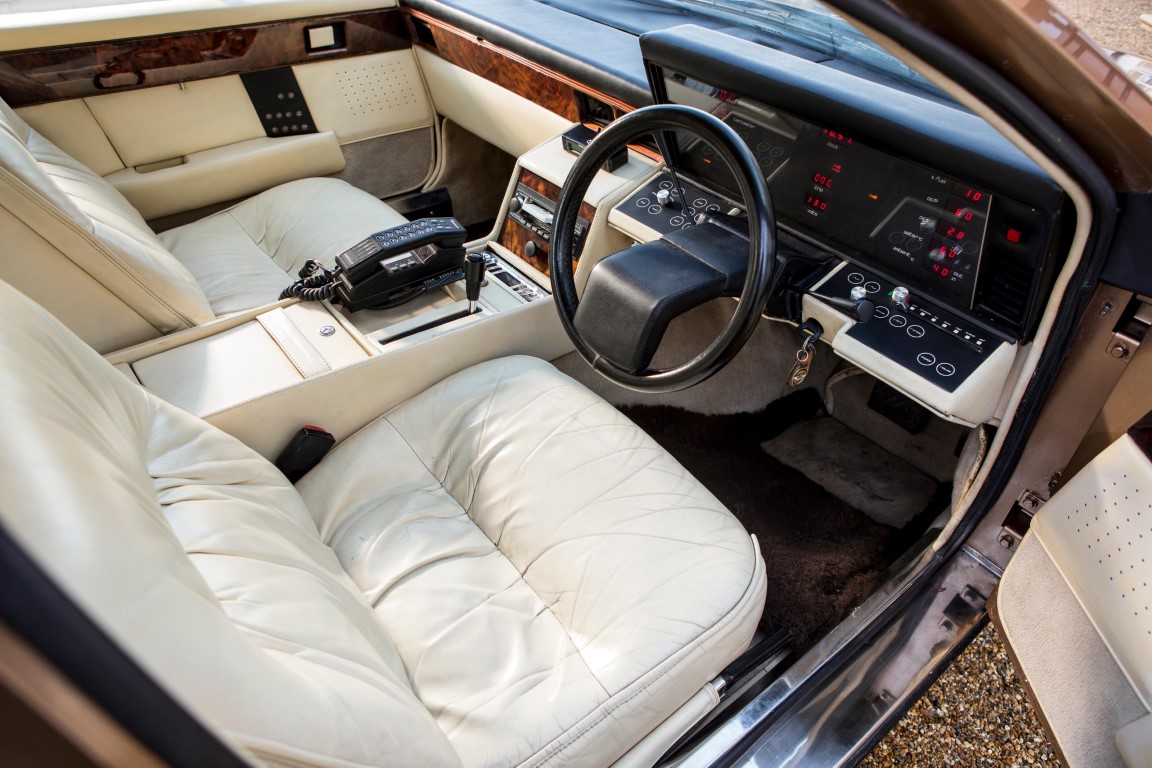
car in the world equipped with a fully digital instrument panel and touch-sensitive controls. The first
phase of this electronic system used LED (Light Emitting Diode) displays and capacitive membrane buttons
controlled by a Z80 microprocessor.
This initial system, developed in partnership with the Cranfield Institute of Technology, proved to be very
unstable in practical testing, suffering from electrical failures caused by the heat generated by the
complex wiring of more than 300 cables. To fix the problems, Aston Martin hired the American firm Javelina
Corporation, specialized in the electronics of the F-15 Eagle fighter jets.
Starting in 1984, Javelina replaced the original arrangement with three cathode-ray tube (CRT) screens
installed behind the steering wheel to display speed, fuel level, and engine parameters, in addition to
adding a voice synthesizer for alerts in four languages. The development cost of this technology was
enormous, representing about four times the budget of the rest of the car project.
The Series 2 received several updates throughout its nine years of production:
- 1980: Development of a prototype with an experimental twin-turbo V8 engine.
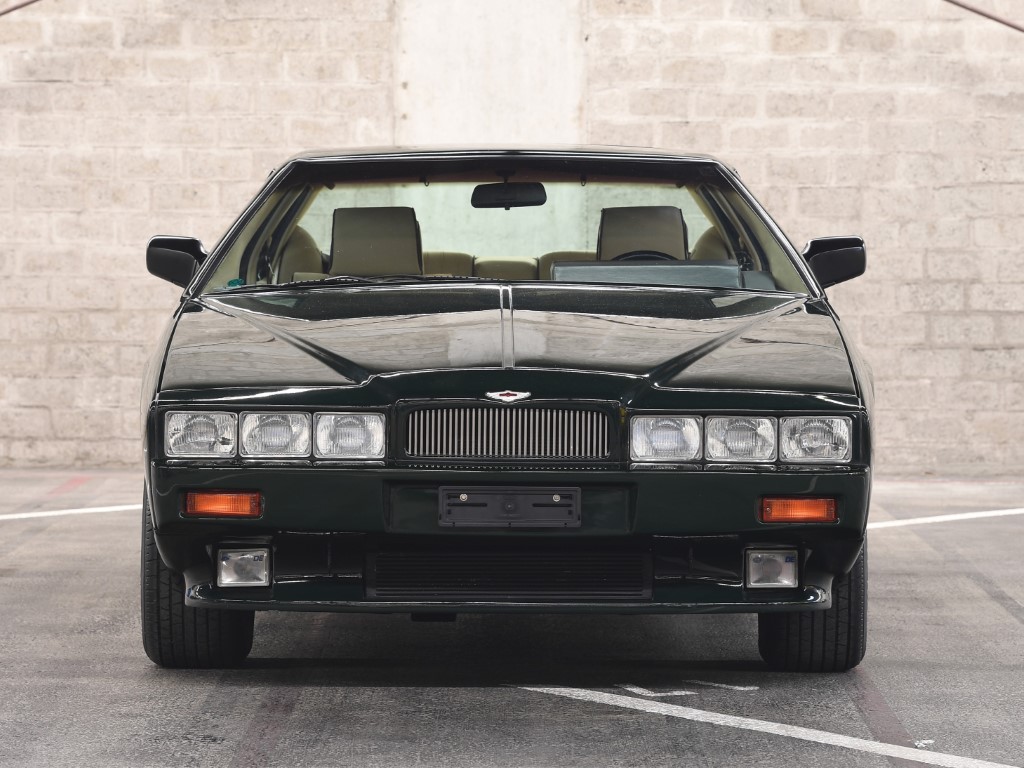
- 1982: Homologation of the model for the United States market, with the introduction of
larger 5 mph impact-absorbing bumpers and side marker lights required by local legislation.
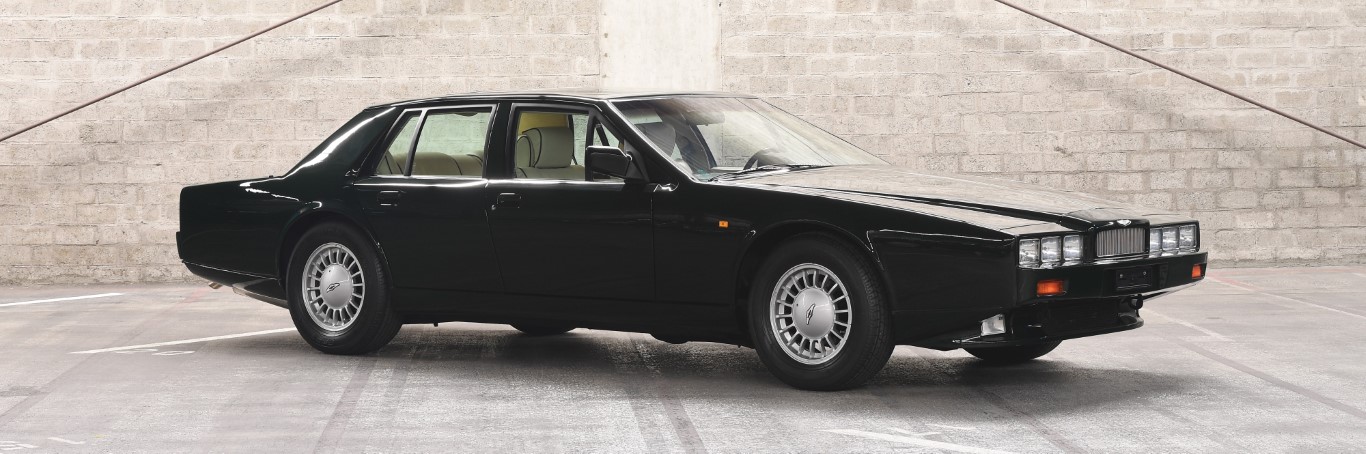
- 1983: Updates presented at the Frankfurt Motor Show, including factory 15-inch BBS
alloy wheels, side skirts, repositioned internal controls, and rear windows that could finally be opened
by the occupants (featuring a vertical glass division on the rear doors).