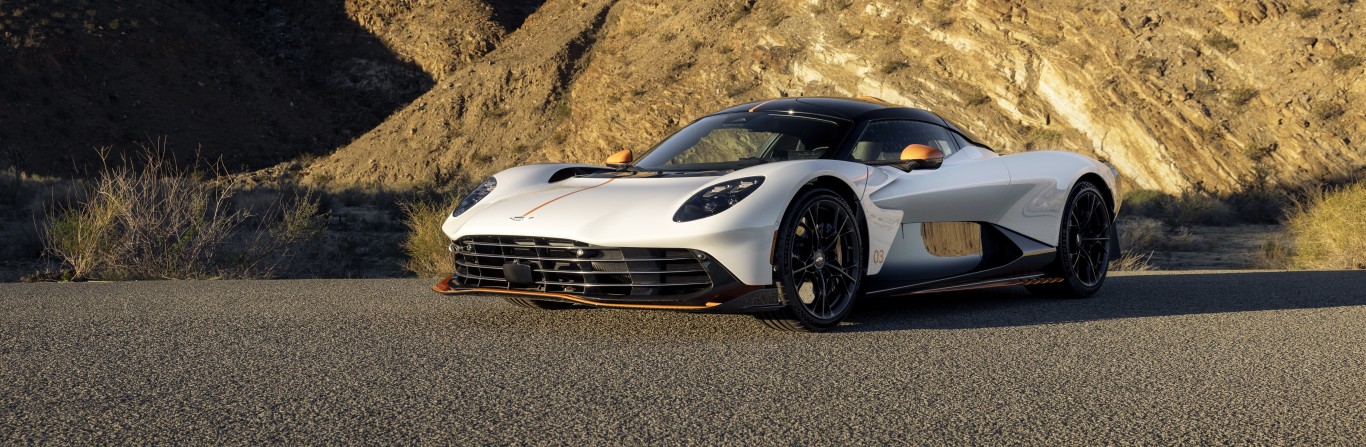
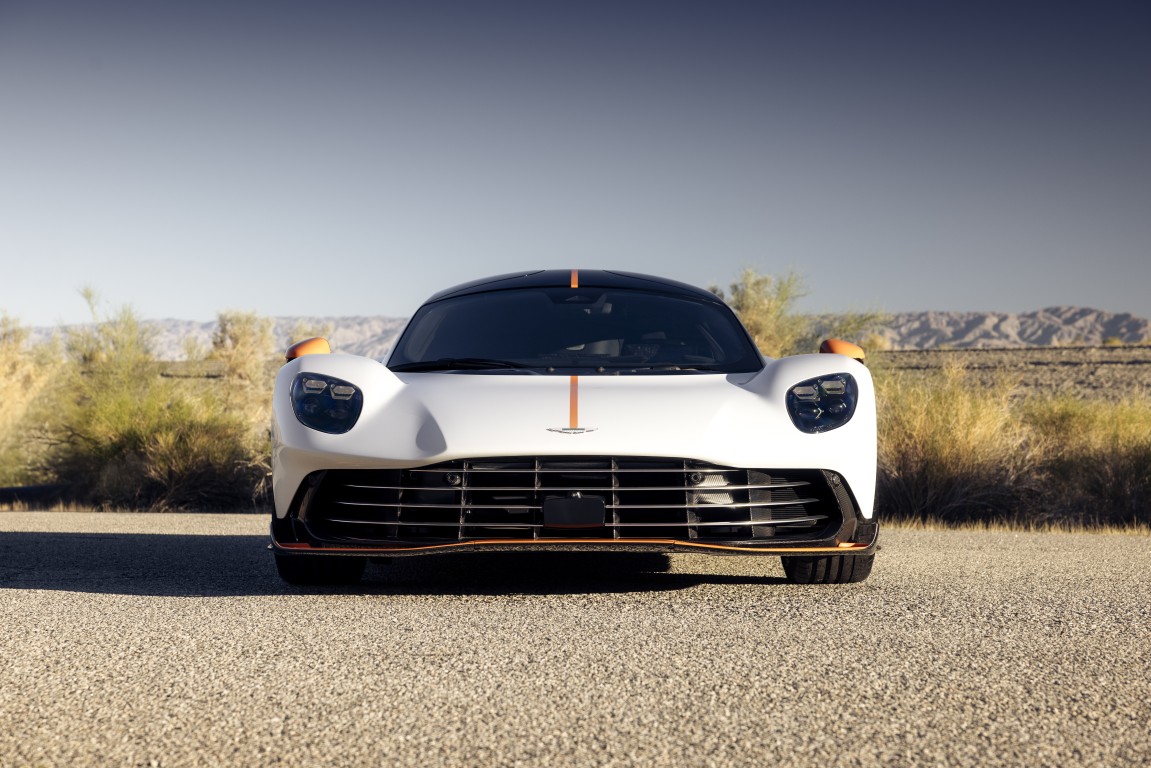
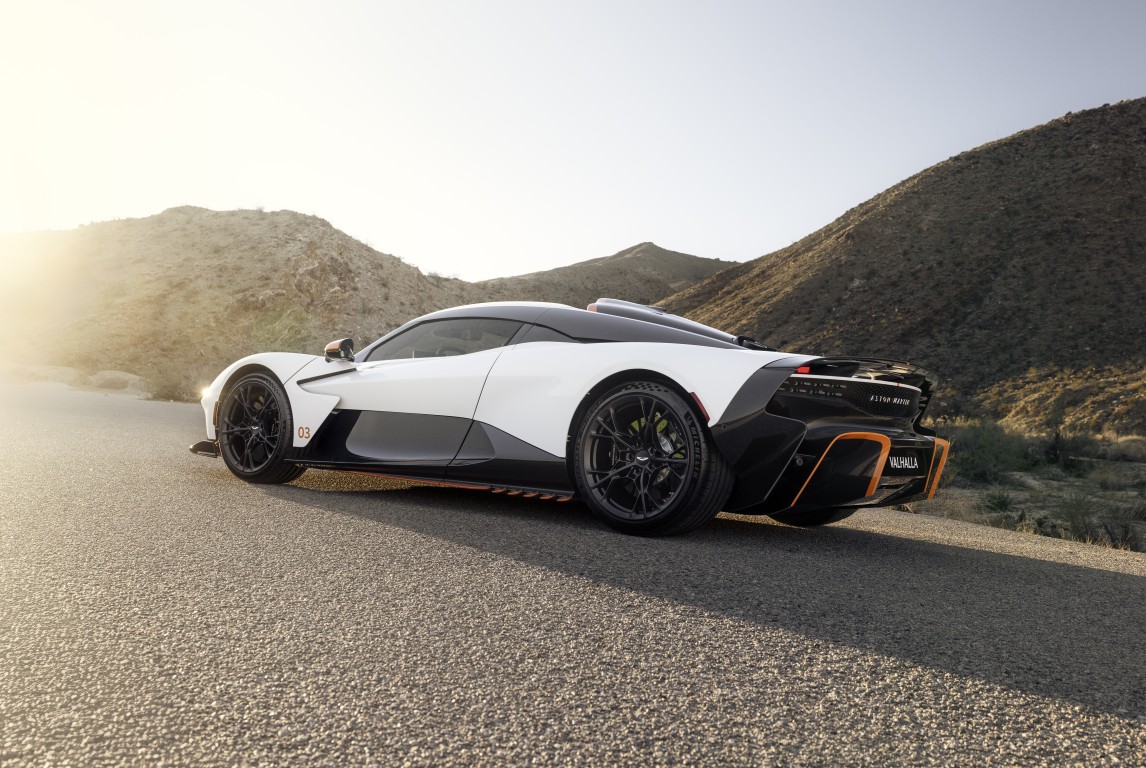
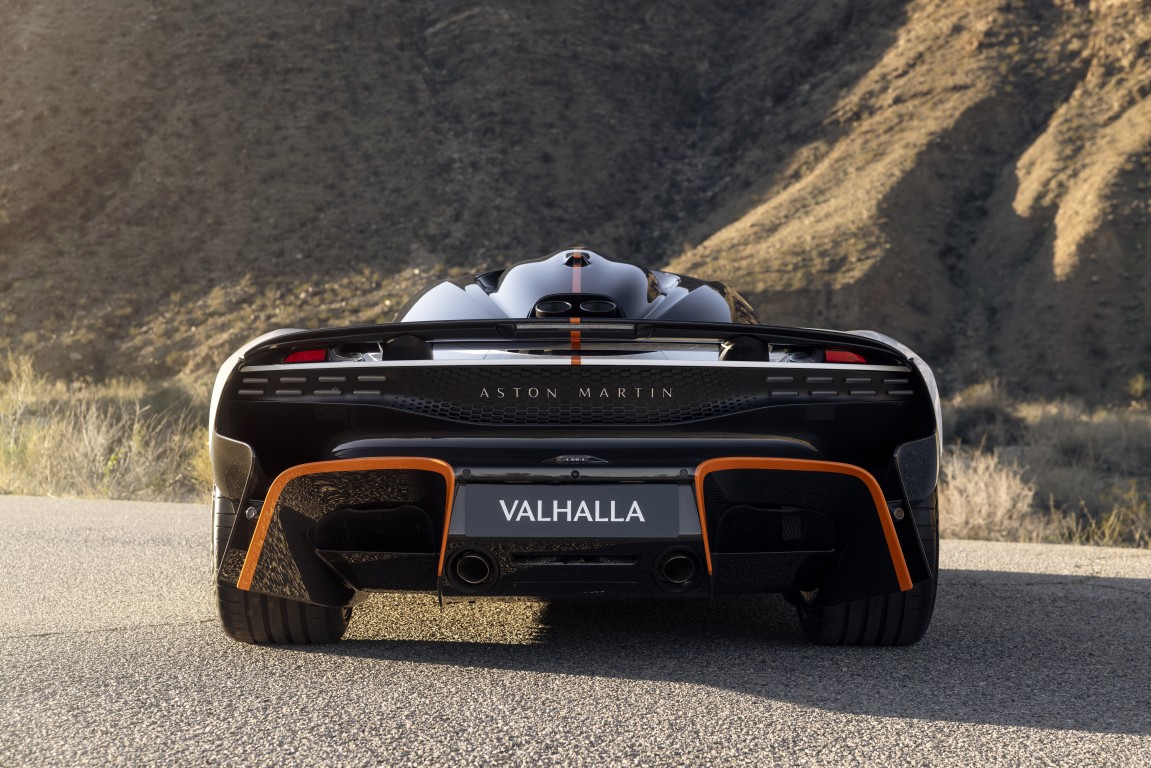
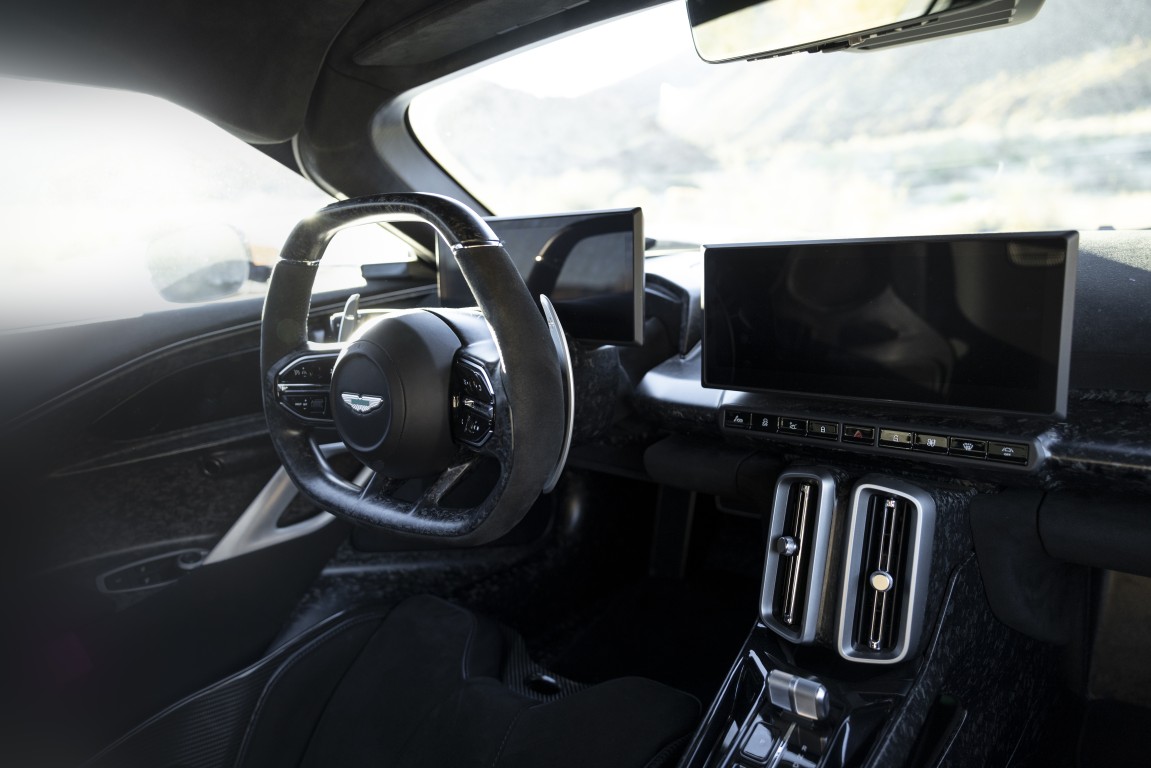
Marketed in a single production generation, the Valhalla went through three milestone phases during its engineering process, which radically altered its propulsion system and visual language.
The first phase consisted of the presentation of the AM-RB 003 concept in 2019. The initial proposal foresaw an in-house designed 3.0-liter twin-turbo V6 engine by Aston Martin (code TM01), combined with a hybrid system using a Rimac battery. The concept brought innovations such as the Castrol Nexcel rapid oil change system — capable of performing the replacement in 90 seconds through a sealed cartridge — and a rear wing featuring NASA-approved FlexFoil aerodynamic technology. At that moment, manufacturing volume was planned for only 500 units with a price set at around 1 million dollars each.
The second phase occurred in 2021, under the management of executive Tobias Moers. Facing budget constraints and the high cost of finalizing the in-house V6 engine development, Aston Martin canceled the internal engine and decided to adopt the twin-turbo V8 engine from Mercedes-AMG. The bodywork was completely redesigned to accommodate the new powertrain and meet global homologation standards, which included installing a traditional front grille, conventional rearview mirrors, and new air intakes. With the reformulation, production volume was expanded to 999 units and the price revised to the 800,000 dollar range.
The third phase marked the final homologation between 2023 and 2026, with track-adjusted prototypes fine-tuned by the Aston Martin Performance Technologies division and the brand's Formula 1 team. The electrical system was enhanced to integrate three electric motors, while the active aerodynamics and chassis received final ride dynamics adjustments, culminating in the first customer deliveries at the end of 2025.