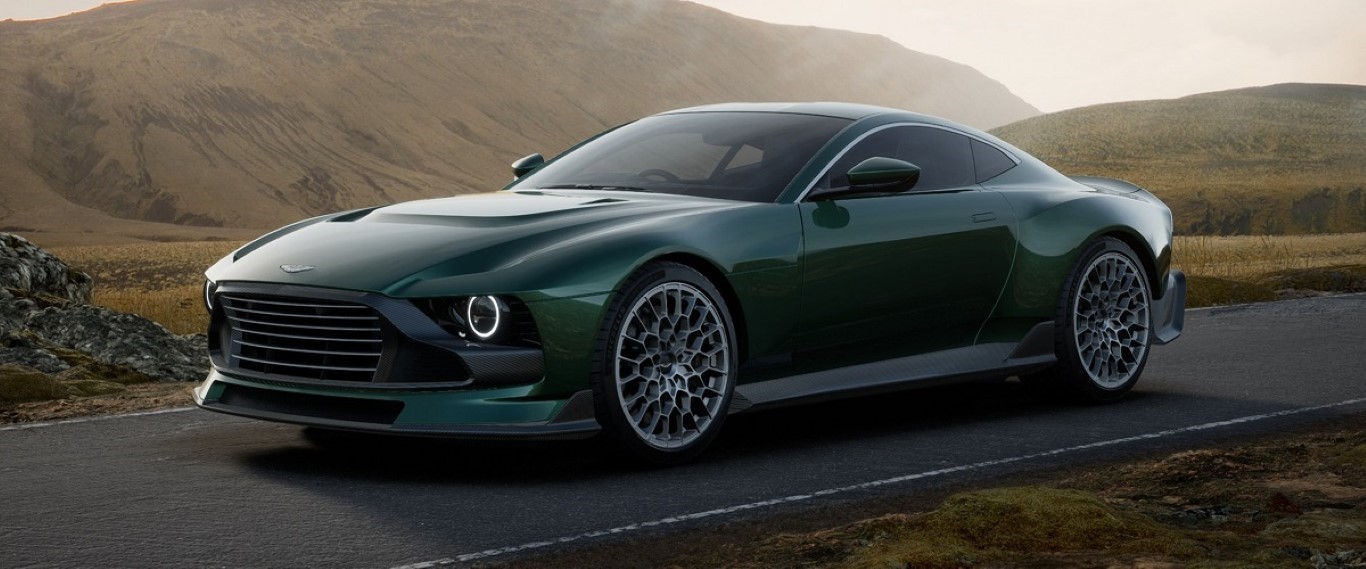
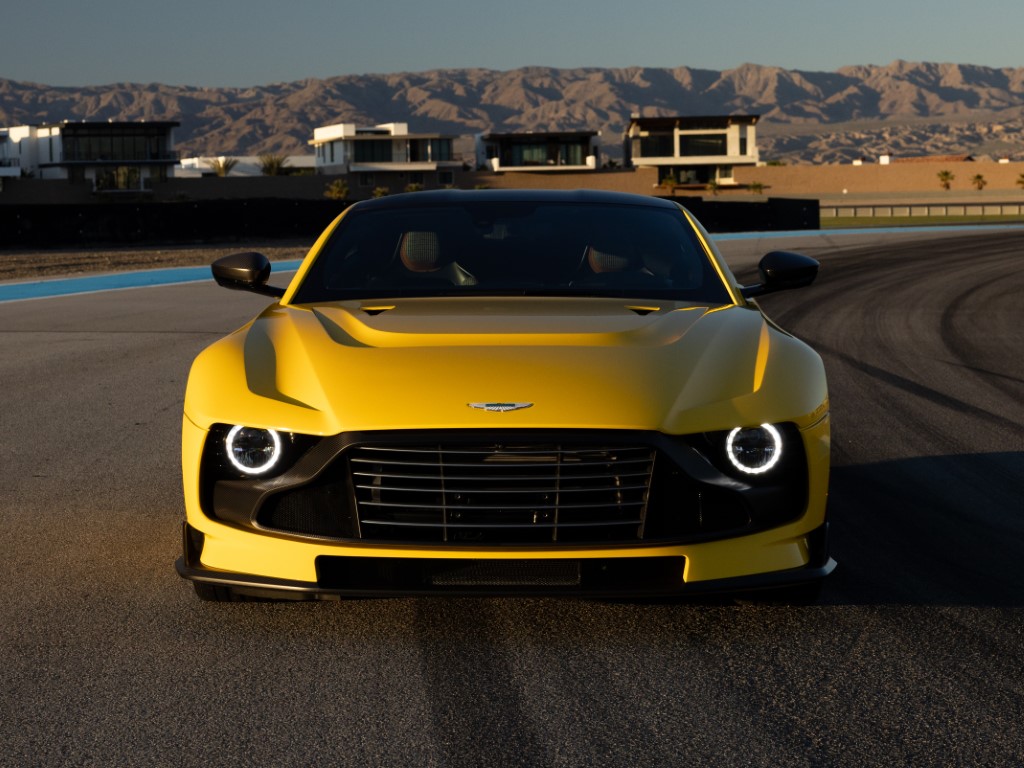
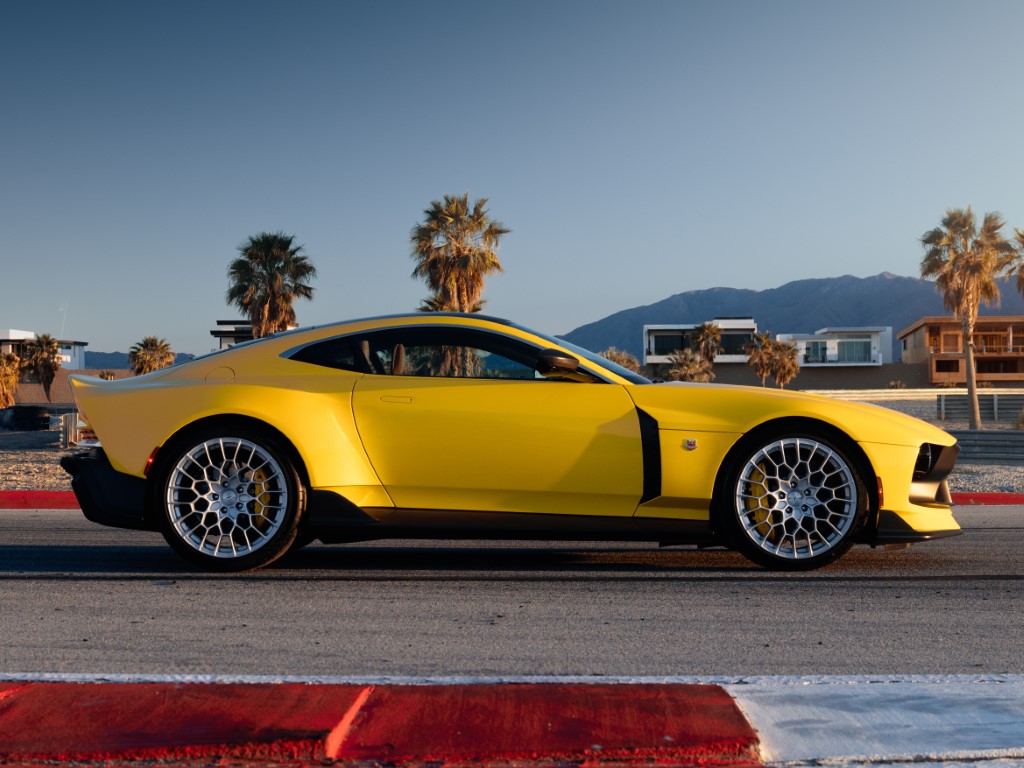
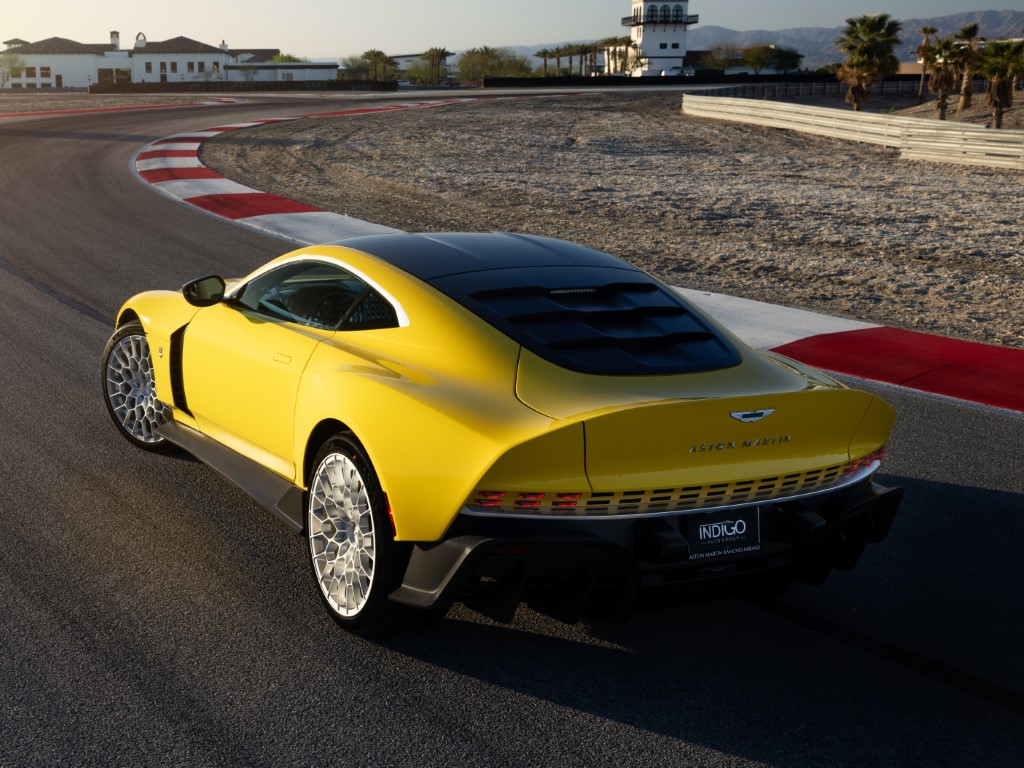
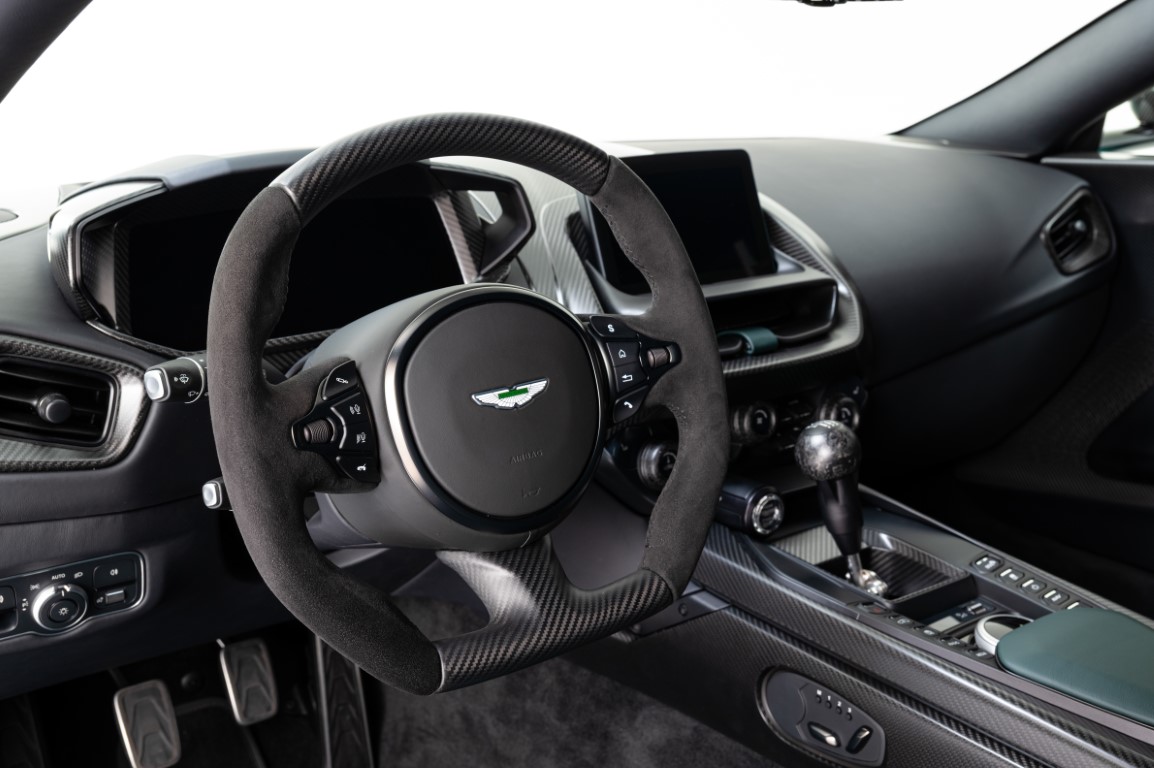
The engineering of the Valour is focused on the purity of the driving experience. While many modern
hypercars use hybrid systems to boost power, the Valour relies exclusively on internal combustion and
mechanical interaction.
The Twin-Turbo V12 Engine (AE31)
The Valour's powerplant is a specially calibrated version of the AE31 engine, a 5.2-liter V12 with
twin-turbocharging.
- Maximum Power: 715 PS (705 hp / 526 kW).
- Maximum Torque: 753 Nm (555 lb-ft).
- Location: Front-mid (mounted behind the front axle for better weight
distribution).
The engine calibration was adjusted to offer a highly elastic power delivery. The engineering team
worked to create a "virtually flat" torque curve in second gear, available from 1,800 rpm up to 7,000 rpm.
In practice, this means the car has immediate response ("punch") in almost any driving situation,
eliminating the need for constant downshifts for overtaking.
The Graziano Manual Transmission
The core element that defines the Valour's character is its 6-speed manual transmission, developed in
partnership with the Italian specialist Graziano. Mating a manual gearbox to a modern V12 engine with so
much torque presents significant engineering challenges, requiring reinforced components to handle the load
without compromising the ease of use of the clutch.
The transmission is rear-mounted (transaxle) to optimize the vehicle's weight distribution. It
features a Mechanical Limited-Slip Differential (LSD). Unlike the electronic differentials (E-Diff) common
in modern cars that use the brakes to vector torque, the Valour's mechanical LSD offers a more natural and
predictable response, allowing the driver to feel exactly when the rear tires are about to lose grip.
Aston Martin emphasizes that there is no "artificial torque manipulation" or intrusive electronic
systems to smooth out gear changes; the responsibility to operate the system smoothly falls entirely on the
driver, reinforcing the concept of engagement.
Chassis and Structural Rigidity
The Valour utilizes a bonded aluminum structure, a technology that Aston Martin has refined over
decades. However, to ensure the suspension works with precision, the torsional rigidity of the chassis was
significantly increased.
- Shear Panels: Front and rear shear panels were added.
- Reinforcements: The suspension towers and fuel tank area received
structural reinforcements.
Result: According to official documentation, the Valour boasts the stiffest body
ever produced by Aston Martin up to the date of its launch, allowing for more precise control of suspension
geometry under high lateral loads.
Suspension and Dynamics
The suspension system uses adaptive dampers provided by Bilstein. The driver can select from three
driving modes via buttons on the steering wheel:
- Sport: Standard setting, focused on ride comfort on public roads, absorbing
asphalt imperfections.
- Sport+: Increases damper stiffness and sharpens throttle response for more
spirited driving.
- Track: Maximum stiffness setting, intended for circuit use, minimizing body
roll in corners.
Unlike the Valiant model (which we will look at later), the Valour does not use Multimatic racing
dampers, as its primary focus is to be a Road Car capable of long journeys, and not just a track tool.
Braking System and Wheels
To contain the mass and power of the V12, the Valour is equipped as standard with Carbon Ceramic
Brakes (CCB).
- Front Axle: 410 mm x 38 mm discs with 6-piston calipers.
- Rear Axle: 360 mm x 32 mm discs with 4-piston calipers.
Weight Benefit: The use of carbon-ceramic saves 23 kg of unsprung mass compared to
equivalent steel discs. This reduction improves not only braking but also ride comfort and steering agility,
as the suspension has less inertia to control.
The tires are Michelin Pilot Sport S 5, marked with the code "AML", indicating they were developed
specifically for Aston Martin. They feature a hybrid compound: the outer part of the tread focuses on dry
grip (performance), while the inner part is optimized for wet-weather safety.