
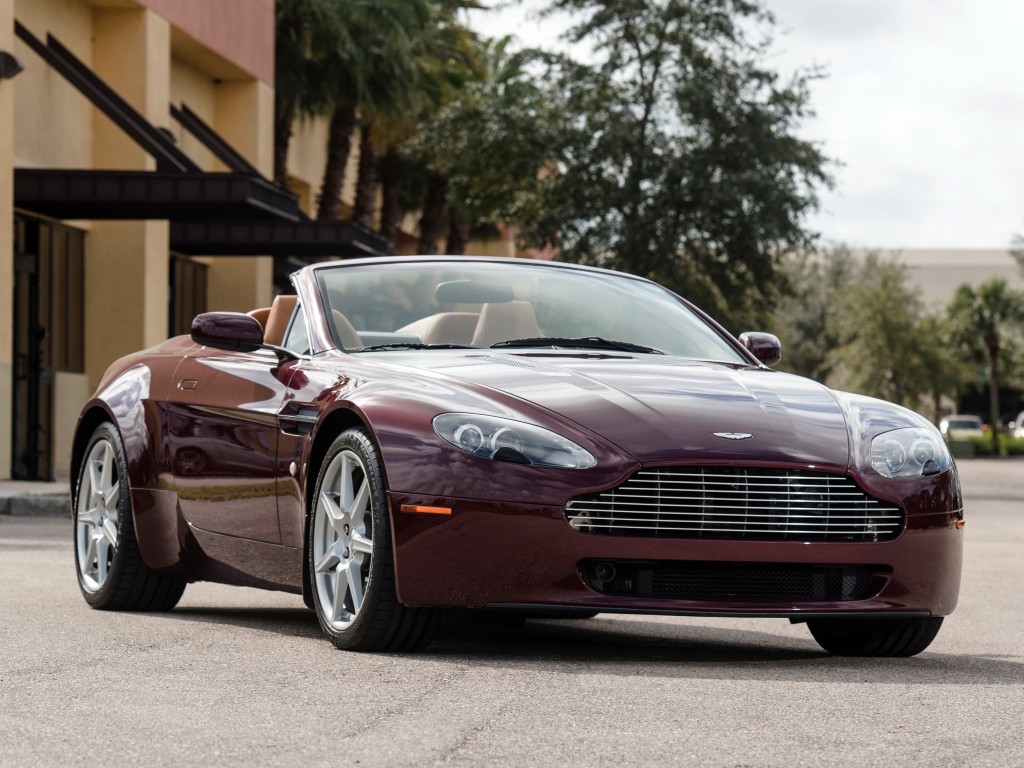
1st Generation
(2006 - 2008)
4.3 L V8 32V
405 cv
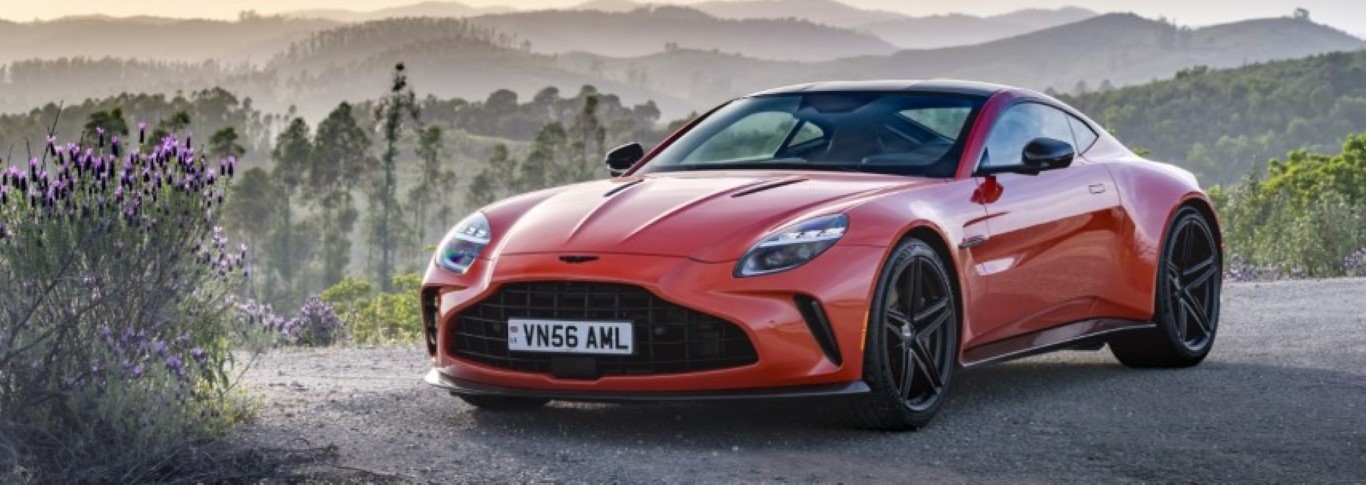
Technical specifications, versions, and history for the Aston Martin Vantage Roadster.
Select a generation to see available versions
(2006 - 2008)
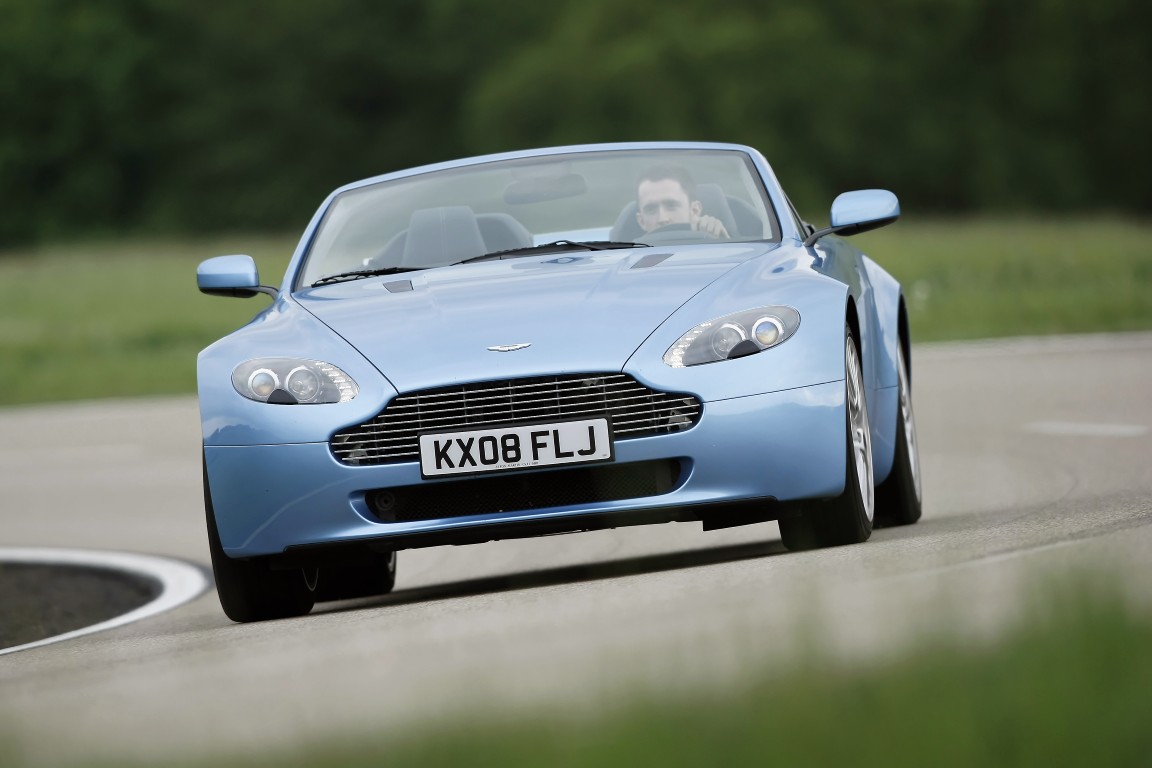
(2009 - 2011)
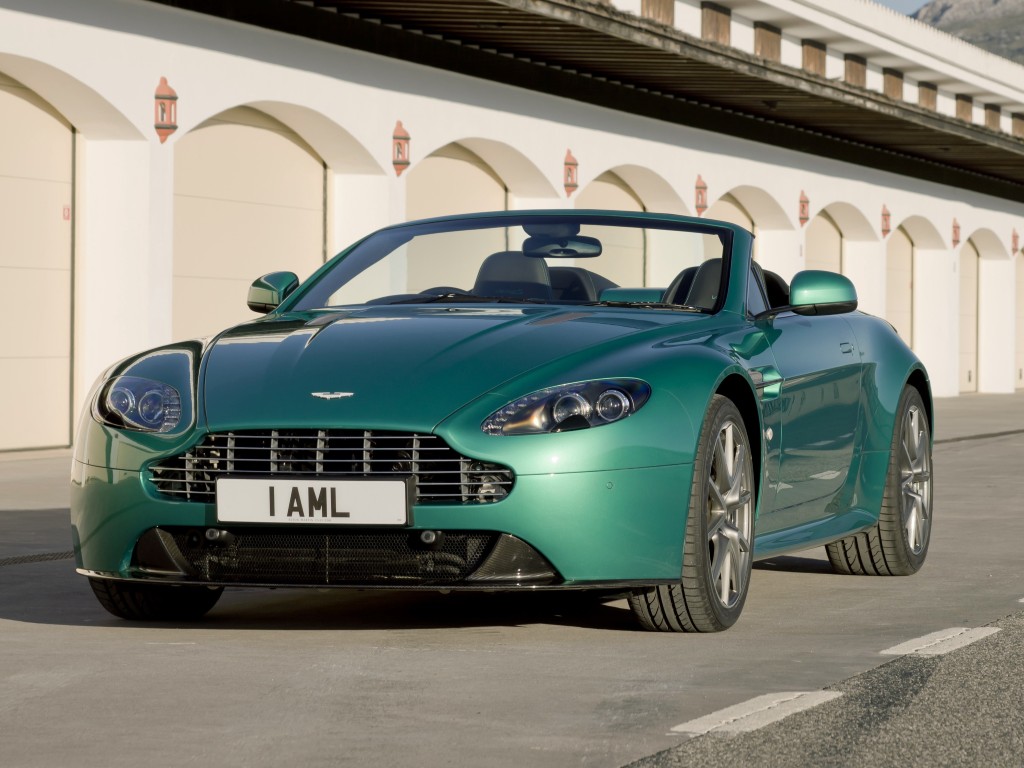
(2012 - 2017)
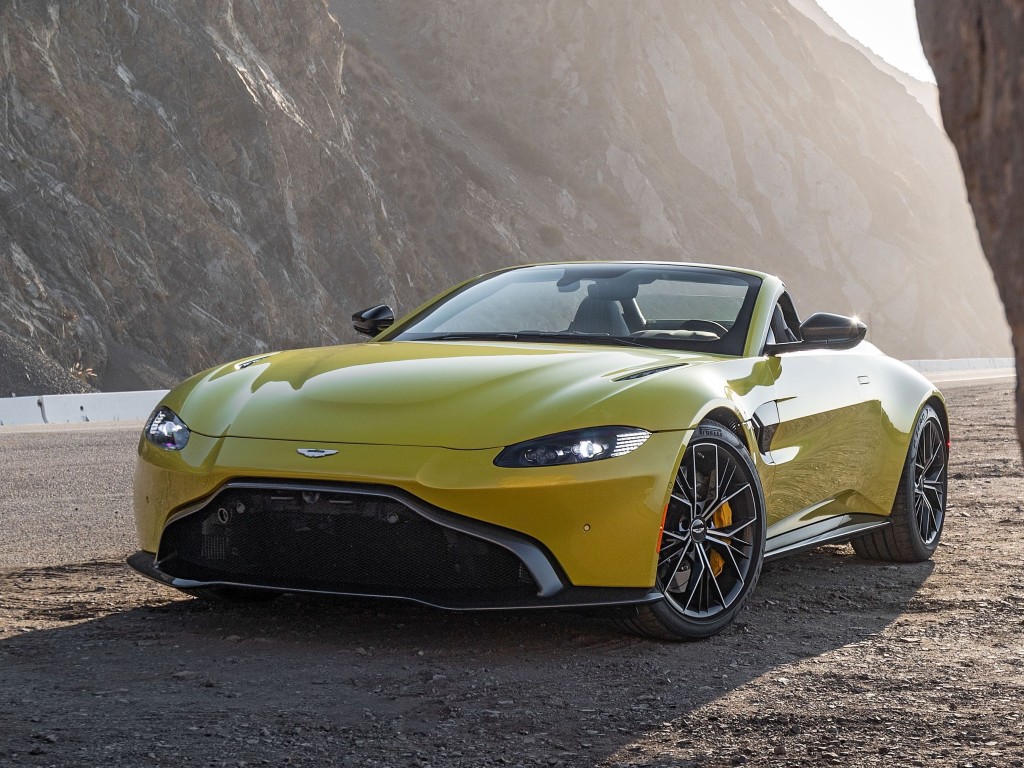
(2020 - 2024)
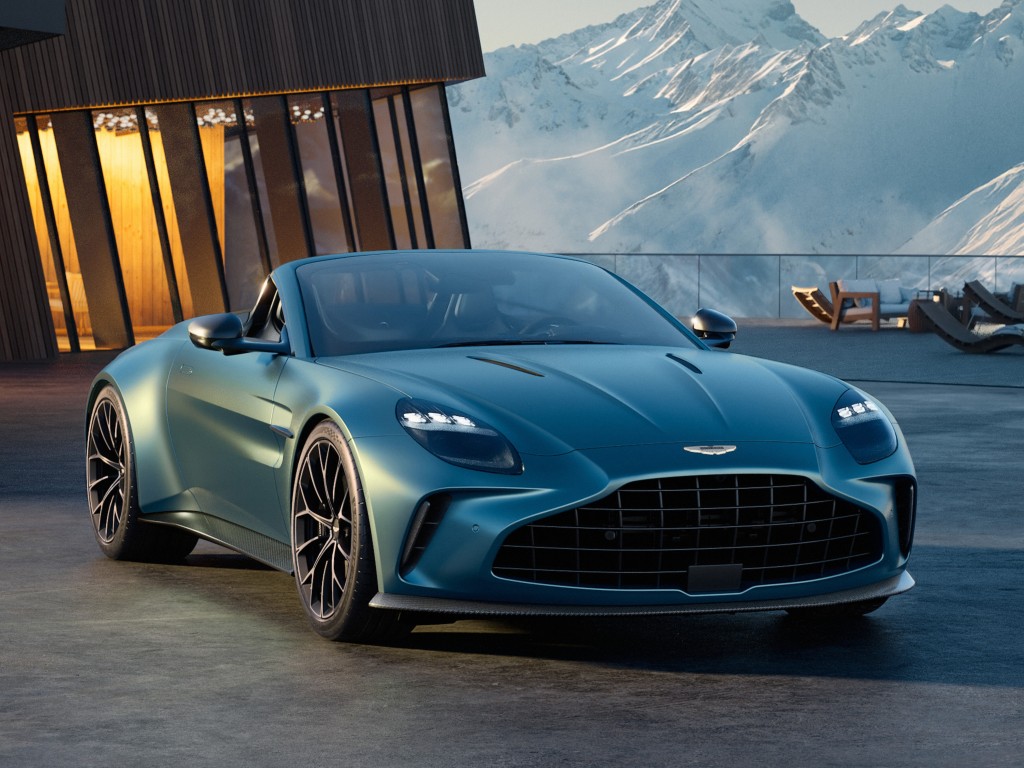
(2025-)
The history of the Aston Martin Vantage V8 Roadster is not merely the chronicle of an automobile; it is the detailed record of the transformation of an artisanal British manufacturer into a global powerhouse of automotive engineering. This report, designed to serve as the definitive reference on the model, explores the trajectory of the Vantage V8 in its convertible (Roadster) configuration, from its spiritual roots in the 1970s to its most recent and brutal iteration in 2025.
The name "Vantage" holds a particular mystique within Aston Martin. Historically, it denoted a high-performance variant of an existing model — an engine with larger carburetors, higher compression ratios, and more aggressive camshafts. However, in the 21st century, "Vantage" became its own model, a distinct product line destined to capture the heart of the sports car market, challenging established icons like the Porsche 911.
The Roadster variant, the central focus of this analysis, introduces an additional complexity to the engineering equation: the need to remove the structural roof without diluting the dynamic precision for which the Vantage Coupe is revered. The solution to these challenges, across two main generations of architecture (VH and AM6), reveals Aston Martin's obsession with torsional rigidity, weight distribution, and aesthetic purity.
Throughout this document, we will examine each production phase, each mechanical variation, and the exact manufacturing numbers that define the rarity and collector's value of these vehicles. The analysis is based on factory technical data, production records, and contemporary dynamic assessments, ensuring a holistic and accurate overview.
To understand the modern Vantage V8 Roadster, it is imperative to look at its spiritual predecessor. Although the nomenclature "Roadster" is a modern phenomenon at Aston Martin (which traditionally used the term "Volante" for convertibles), the concept of an open-top, high-performance V8 was forged in the company's classic era in Newport Pagnell.
In 1977, Aston Martin launched the V8 Vantage Coupe, hailed as Britain's first supercar due to its ability to reach 170 mph (274 km/h). However, it was only in 1986 that the factory combined the mechanical brutality of the Vantage engine with the open bodywork of the V8 Volante.
This car, the V8 Vantage Volante, was a titan of its time. Equipped with a 5.3-liter V8 engine fed by Weber carburetors, it produced around 400 hp — a colossal number for the 1980s. Visually, it was distinguished by flared wheel arches, side skirts, and a deep front air dam, elements necessary to maintain stability at high speeds.
The relevance of this model to the modern Vantage V8 Roadster lies in its philosophy: a muscular "Grand Tourer," capable of crossing continents at illegal speeds, but with the roof open to amplify the soundtrack of the V8 engine. Production was extremely limited, establishing the aura of exclusivity that the brand would pursue decades later with the manual models of the Gaydon era.
The true rebirth of the Vantage occurred in 2005, under the leadership of Dr. Ulrich Bez. Aston Martin moved to a new state-of-the-art factory in Gaydon, Warwickshire, and introduced a revolutionary chassis technology: the VH (Vertical-Horizontal) architecture.
The VH platform was the backbone of the entire Aston Martin range for over a decade. Unlike traditional tubular chassis or steel monocoques, the VH architecture utilized aluminum extrusions bonded with aerospace-grade epoxy adhesives, thermally cured.
Rigidity and Lightness: Chemical bonding, rather than welding, allowed for a continuous union along the joints, resulting in exceptional torsional rigidity. For the Roadster, this was crucial. Convertibles traditionally suffer from "scuttle shake" due to the lack of a roof. The VH chassis of the Vantage Roadster was designed to mitigate this from the drawing board, ensuring that the suspension had a solid foundation to operate on.
Weight Distribution: The architecture allowed for a "Front-Mid Engine" layout. The V8 engine was pushed behind the front axle, while the transmission was mounted on the rear axle (transaxle). This resulted in a nearly perfect weight distribution of 49:51 (front/rear), essential for the agility expected from the brand's "entry-level" model.
The V8 Vantage Coupe was launched in 2005, but the world had to wait until the 2006 Los Angeles Auto Show to see the Roadster version. Designed by Henrik Fisker, the car was immediately acclaimed as one of the most beautiful convertibles in the world. The design mission was clear: the car should be as beautiful with the roof up as it is down, avoiding the "tent" appearance that plagued many rivals.
The heart of this first phase was a 4.3-liter (4280 cc) V8 engine, a design that, although having roots in the Jaguar AJ-V8 architecture, was so extensively modified by Aston Martin that it became practically a new engine.
Transmission:
During this initial period, the Vantage Roadster was a sales success, helping Aston Martin achieve record production volumes. An analysis of the production numbers reveals a clear initial market preference for the convenience of the automated gearbox.
| Model (2006-2008) | Configuration | Units Produced |
|---|---|---|
| V8 Vantage Roadster 4.3 | Manual Gearbox | 727 |
| V8 Vantage Roadster 4.3 | Sportshift I | 2,293 |
| Total Phase I | 3,020 |
Insight Analysis: The production disparity (3 to 1 in favor of the Sportshift) ironically created an inverse situation in today's collector market. The 727 manual examples are now the most sought after from this era, valued for the purity of the analog driving experience they offer, free from the complexities and dated behavior of the first-generation Sportshift system.
In mid-2008, Aston Martin implemented a significant mid-cycle refresh. Although visually the car remained almost identical (except for new optional wheels), the engineering under the skin was transformed to address the main criticism of the 4.3 model: the lack of low-end torque.
Aston Martin engineers increased the bore and stroke of the cylinders, raising the displacement to 4735 cc. The cylinder heads were modified and airflow improved.
New Numbers:
Dynamic Impact: More important than the peak numbers was the delivery curve. The new engine offered much more grunt "under the curve," allowing for rolling acceleration without the constant need to downshift. This transformed the Roadster from a "rev-happy" sports car into a more capable and relaxed GT when needed.
Updated Sportshift I: The transmission software was refined to make low-speed maneuvers (parking) less traumatic and to preserve the clutch.
Center Console: The interior received the updated dashboard debuted in the DBS, replacing the Volvo-sourced plastic buttons with an elegant metal and glass interface, and introducing the sapphire crystal "ECU" (Emotion Control Unit) key, which was inserted into the dashboard to start the engine.
Suspension: Bilstein dampers were introduced as standard, improving body control without sacrificing ride comfort — a critical balance for a convertible.
To celebrate Aston Martin's achievements at the Nürburgring 24 Hours, the N400 edition was launched.
The introduction of the 4.7 engine revitalized sales, but the pro-automatic trend continued.
| Model (2008-2012) | Configuration | Units Produced |
|---|---|---|
| V8 Vantage Roadster 4.7 | Manual Gearbox | 507 |
| V8 Vantage Roadster 4.7 | Sportshift I | 1,816 |
| Total Phase II | 2,323 |
In 2011, Aston Martin launched the Vantage S, a version focused on greater dynamic sharpness, intended to bridge the gap between the standard Vantage and the new V12 Vantage. Eventually, the "S" became the standard of the lineup, replacing the base model in most markets.
The "S" was not just a trim package; it was a comprehensive mechanical overhaul.
V8 Vantage N420 Roadster (2010-2011)
Successor to the N400, now based on the standard 4.7L engine.
V8 Vantage N430 / GT Roadster (2014)
Sold as the Vantage GT in the United States and N430 in Europe/Rest of the World.
The "S" era marks the critical point for manual transmission collectors. While Aston Martin continued to offer the manual gearbox as an option on the "S" (and standard on the GT/N430), the take rate was miniscule.
| Model (2011-2018) | Configuration | Units Produced |
|---|---|---|
| V8 Vantage S Roadster | Manual Gearbox | 63 |
| V8 Vantage S Roadster | Sportshift II | 762 |
| Total Vantage S | 825 |
Critical Insight: With only 63 units produced globally, the V8 Vantage S Roadster Manual is one of the rarest cars of Aston Martin's modern era. Its combination of the final convertible bodywork, the most powerful engine, and the analog transmission guarantees its status as a high-value future classic.
Before ending production of the VH platform, Aston Martin launched the AMR (Aston Martin Racing) line. Inspired by the success of the World Champion GTE race car, this was the final farewell.
Extreme Rarity of the V8 Roadster:
Owning one of the 12 manual V8 AMR Roadsters is owning an almost unique piece of automotive history.
To facilitate the visualization of evolution and rarity, we present the consolidated production table of the V8 Roadster. These numbers are vital for market assessments and vehicle authentication.
| Generation / Phase | Model | Engine | Transmission | Roadster Units |
|---|---|---|---|---|
| VH Phase I | V8 Vantage | 4.3L | Manual | 727 |
| VH Phase I | V8 Vantage | 4.3L | Sportshift I | 2,293 |
| VH Special | N400 | 4.3L (Spec) | SS/Manual | ~195 (Est.) |
| VH Phase II | V8 Vantage | 4.7L | Manual | 507 |
| VH Phase II | V8 Vantage | 4.7L | Sportshift I | 1,816 |
| VH Phase III | V8 Vantage S | 4.7L | Manual | 63 |
| VH Phase III | V8 Vantage S | 4.7L | Sportshift II | 762 |
| VH Final | V8 AMR | 4.7L | Manual | 12 |
| VH Final | V8 AMR | 4.7L | Sportshift II | 51 |
In 2018, Aston Martin began the "Second Century" of its history with the launch of the new Vantage Coupe, followed by the Roadster in 2020. This generation represented a total break from the past in terms of powertrain and electronic architecture.
The most controversial and transformative change was the replacement of the naturally aspirated AJ-V8 engine with the M177 twin-turbo V8 engine supplied by Mercedes-AMG.
The Roadster of this generation was defined by its revolutionary roof mechanism.
The introduction of the E-Diff (Electronic Rear Differential) transformed the car's behavior. Unlike a passive mechanical limited-slip differential (LSD), the E-Diff can go from fully open to 100% locked in milliseconds, controlled by the stability computer. This allowed the Roadster to be incredibly agile on corner entry (open differential to reduce understeer) and to put down power with ferocity on exit (locked differential).
With Aston Martin's return to Formula 1, the F1 Edition was launched, based on the official Safety Car.
Although most of the publicity focused on the Coupe inspired by the film "The Living Daylights," a Roadster version was also made available in extremely limited numbers as part of the celebration of "No Time To Die."
In February 2024, Aston Martin revealed the new Vantage (2025 Model). Although technically a "facelift" of the AM6 generation, the magnitude of the changes — a 30% increase in power and an entirely new interior — suggests an almost completely new car.
Aston Martin decided to reposition the Vantage no longer as an "entry-level" model, but as a serious supercar for "real drivers."
The biggest criticism of the 2018-2023 generation was the interior, which utilized an old Mercedes electronic architecture (COMAND) with no touch screen and confusing ergonomics.
The front structure was reinforced to increase suspension rigidity, improving electric steering precision. New intelligent adaptive dampers from Bilstein (DTX) offer a much wider bandwidth between comfort and track mode, allowing the 2025 Roadster to be simultaneously more comfortable on long journeys and more capable on a circuit than its predecessor.
The trajectory of the Aston Martin Vantage V8 Roadster is a lesson in focused evolution. Starting as a beautiful design object with competent mechanics (4.3L), it evolved through incremental engineering (4.7L, S) to become one of the purest analog sports cars in the world. The transition to the turbo era (AM6) brought supercar performance, and the 2025 model cemented the Vantage's status as a fearsome rival to anything coming out of Stuttgart or Maranello.
Across all its generations, the Vantage V8 Roadster has remained true to one promise: to offer the thrill of a British race car with the elegance of a Grand Tourer, always with the sky as the limit.