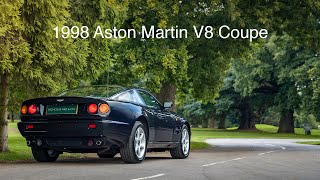
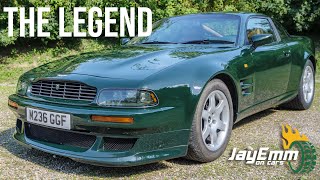
The Development Context: Project DP2034
To understand the original Virage, it is necessary to revisit Aston Martin's climate in the
mid-1980s. Under the charismatic leadership of Victor Gauntlett, the company had regained some stability,
but its product line — based on the V8 introduced in 1969 — was hopelessly aging. Emissions regulations,
especially in the United States, were strangling the performance of the old carbureted engines, and the
"muscular" design of the 70s was going out of style in favor of a more aerodynamic and smooth aesthetic.
The need for a new model was existential. The project, designated internally as DP2034, had a clear
mandate: to create a car that was modern enough to take Aston Martin into the 21st century, but that
maintained the traditional construction of a separate chassis and hand-formed aluminum bodywork, preserving
the brand's artisanal identity.
The Design Competition
The design choice was not trivial. Aston Martin invited five design studios to submit proposals.
Unlike the tradition of using Italian coachbuilders like Zagato or Touring, the winning proposal came from a
British duo: John Heffernan and Ken Greenley. They were automotive design professors at the Royal College of
Art in London.
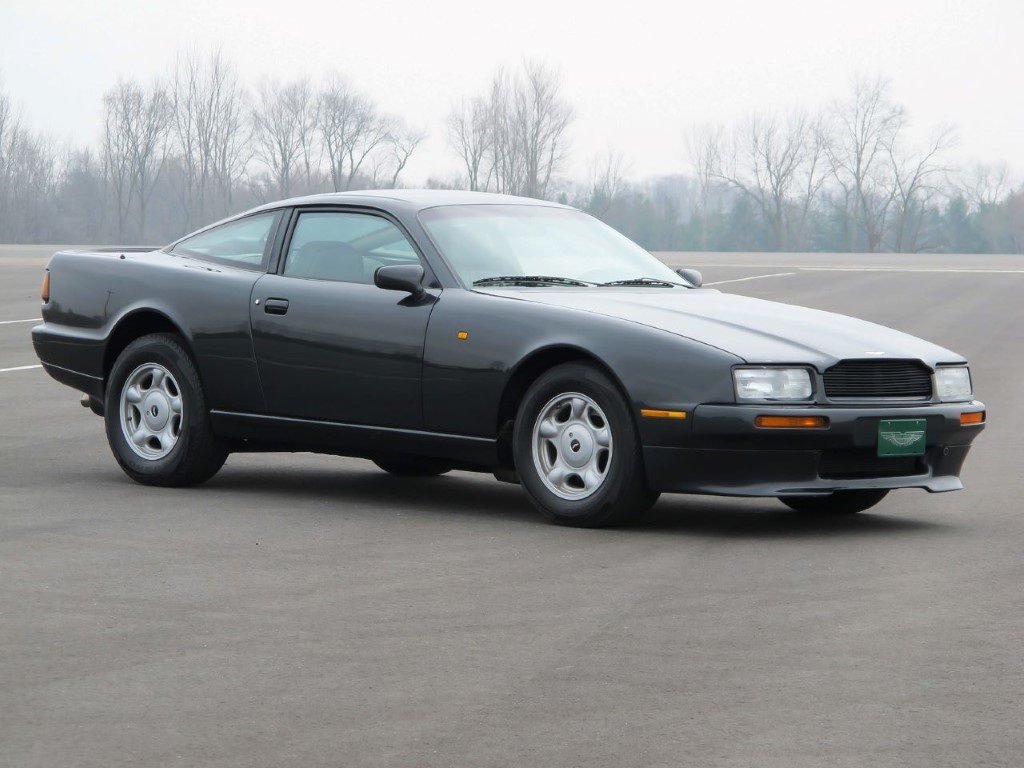
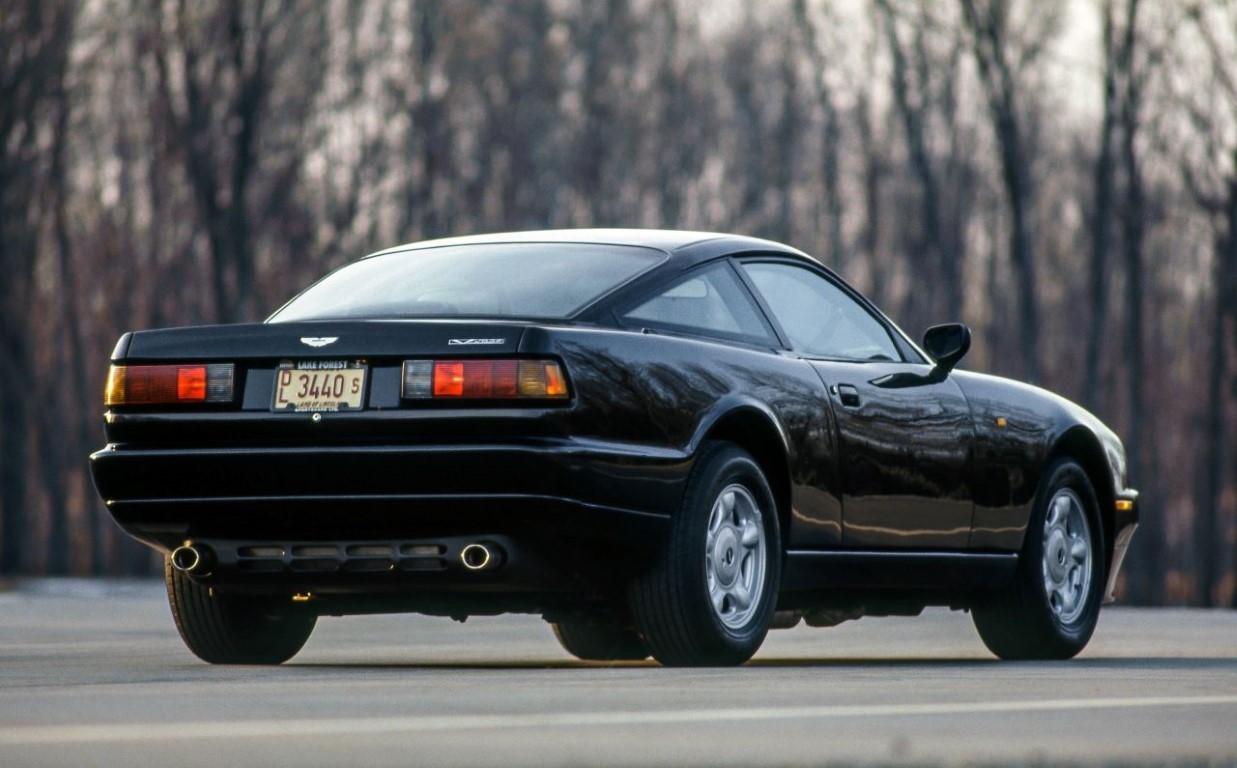
Heffernan and Greenley's proposal won because it managed to balance modernity with heritage. The
design featured clean, flush surfacing, eliminating the rain gutters and prominent chrome bumpers of
previous models. However, it maintained the imposing physical "presence" that the brand's customers
demanded. The car looked like it had been sculpted from a single block of solid aluminum, a characteristic
that would become the model's visual signature.
The official presentation took place at the Birmingham Motor Show in 1988. The reception was
enthusiastic, with the press praising the modernization of the classic lines. However, the commercial launch
coincided with the collapse of the supercar market and the global recession of the early 90s, which meant
that the Virage, destined to be a sales success, became an extremely low-volume product, dependent on
ultra-rich and loyal customers.
Engineering and Technical Specifications (1989-1995)
The Virage was the first truly new Aston Martin in almost 20 years. Although it maintained the front-engine,
rear-wheel-drive philosophy, the technical execution was significantly updated compared to its predecessor.
The 32-Valve V8 Engine
The heart of the Virage was a profound evolution of the lightweight alloy V8 engine designed by
Polish engineer Tadek Marek. However, to meet the new power and emissions requirements, Aston Martin needed
outside help.
- Callaway Development: The company hired Callaway Engineering from
Connecticut (USA), famous for their work on twin-turbo Corvettes, to redesign the engine's cylinder
heads. The goal was to implement a 4-valve per cylinder configuration (32 valves in total) to improve
the engine's "breathing" and combustion efficiency.
- Fuel Management: The temperamental Weber carburetors, difficult to tune for
emissions, were replaced by a modern Weber-Marelli electronic fuel injection system.
- Final Specifications: The 5,340 cc (5.3 Liters) engine produced 330 bhp
(horsepower) at 6,000 rpm and 350 lb-ft (475 Nm) of torque at 3,700 rpm.
- Catalytic Converters: One of the greatest achievements of this engine was
the ability to maintain (and even slightly increase) power compared to previous models, even with the
restrictive introduction of mandatory catalytic converters.
Transmission and Drivetrain
The transfer of this power to the rear wheels was managed by two main transmission options,
reflecting the car's dual personality as a sports car and grand tourer:
- 5-Speed ZF Manual: About 40% of early Virages were ordered with this
gearbox. It was a robust transmission, but known for having a heavy shift, requiring physical effort
from the driver.
- Chrysler TorqueFlite Automatic: Most buyers (60%) opted for the comfort of
the automatic transmission. Initially, the Virage used Chrysler's 3-speed gearbox, an old unit that,
although smooth, limited acceleration and fuel economy. In 1993, this was replaced by a more modern
4-speed unit with overdrive, significantly improving high-speed cruising capability.
Chassis and Suspension
The Virage chassis was a steel platform, onto which the aluminum bodywork was attached. The
suspension represented a mix of tradition and modernity:
- Front: Double wishbones with coil springs and an anti-roll bar.
- Rear: Aston Martin retained the complex and expensive De Dion tube axle,
located by radius arms and a Watt's linkage. The De Dion axle is an interesting technical solution that
allows the rear wheels to remain vertical to the ground (like a live axle) but without the unsprung
weight of the differential (which is fixed to the chassis, like in an independent suspension). This
provided excellent traction and comfort on uneven surfaces, ideal for a heavy GT.
Shared Components ("Parts Bin")
To make the production of such a low-volume car viable, Aston Martin resorted to "cannibalizing"
parts from major manufacturers, a common practice in the British niche industry.
- Headlights: Sourced from the Audi 200.
- Taillights: Originally from the second-generation Volkswagen Scirocco.
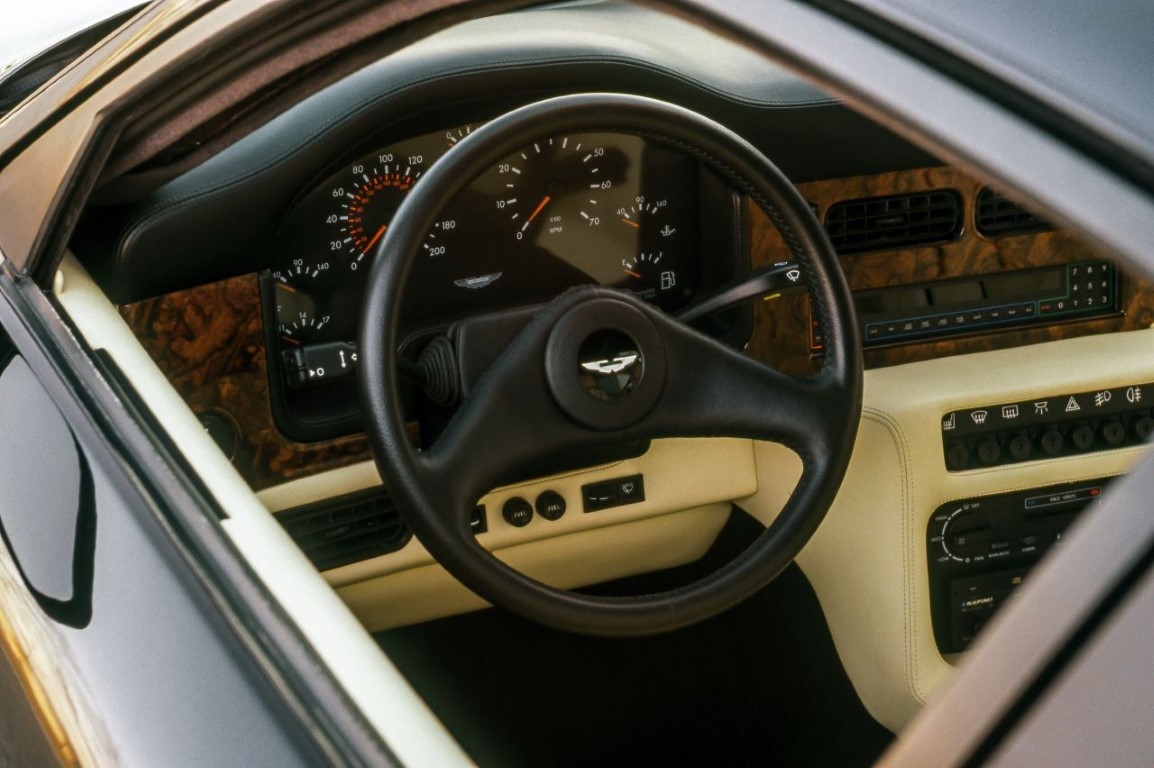
- Steering Column and Controls: Borrowed from Ford and, in some cases,
General Motors or Jaguar. Despite these humble origins, the interior finish was unmatched, with
hand-stitched Connolly leather and walnut wood covering the dashboard, effectively hiding the plebeian
origins of the electrical components.