
8P
(2008-2013)
2.0 Turbo
200 cv

Precision in the open air: the convertible that merged soft-top charm with the technological sophistication of the A3 line.
Select a generation to see available versions
(2008-2013)

(2013-2016)
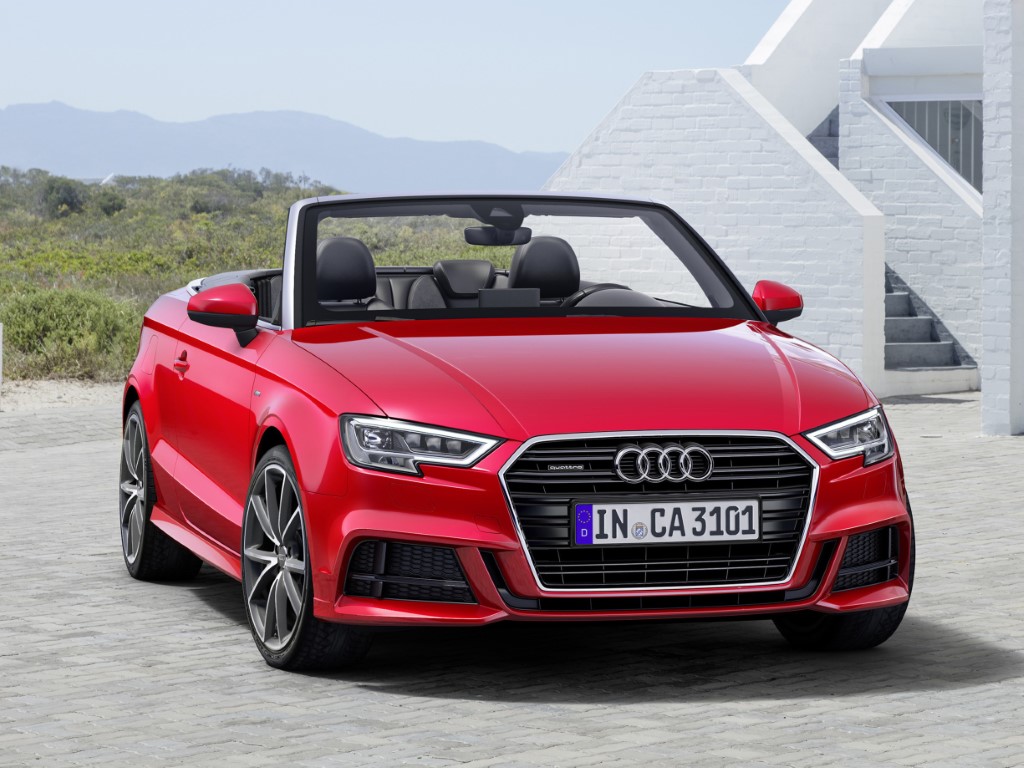
(2016-2020)
The global automotive industry is punctuated by models that, although derived from high-volume vehicles, manage to establish such a strong identity of their own that they become benchmarks in their niches. The Audi A3 Cabriolet is one of those paradigmatic cases. Born from the lineage of the successful A3 hatchback, this convertible did not represent merely a body variation, but rather the democratization of access to the Volkswagen Group's premium convertible engineering, strategically positioning itself below the A4/A5 lines and above mainstream offerings like the Volkswagen Golf Cabriolet.
This report aims to dissect, with technical and historical exhaustion, the life of the Audi A3 Cabriolet. We will analyze everything from the roots of the PQ35 platform of the first generation (Typ 8P) to the sophistication of the MQB modular platform of the second generation (Typ 8V), detailing powertrains, production volumes, specificities of the Brazilian market, and the socio-economic reasons that led to its discontinuation in 2020. The approach will be direct, focused on data and engineering, avoiding rhetorical excesses, but without omitting any technical detail relevant to historians, collectors, and industry experts.
Before delving into the specificities of the model, it is crucial to understand the market vacuum that the A3 Cabriolet filled. In the 1990s and early 2000s, the compact convertible segment was dominated by two philosophies: dedicated roadsters (like the Mazda MX-5) and adapted hatchbacks (like the VW Golf Cabrio and the Ford Escort Cabrio). Audi, already established in the premium segment with the A4 Cabriolet, identified a demand for a smaller, more urban vehicle, but one that maintained the acoustic insulation refinement and build quality of its older siblings.
Unlike many competitors at the time who bet on the complexity and weight of retractable hardtops (Hard-Tops) — such as the Peugeot 307 CC and the Renault Mégane CC —, Audi opted for tradition and the design purity of the fabric roof (Soft-Top). This engineering decision was not just aesthetic; it defined the vehicle dynamics of the A3 Cabriolet, allowing for a lower center of gravity and superior trunk space utilization, factors that will be explored in depth in subsequent sections.
Audi's entry into the compact convertible segment occurred late in the life cycle of the second-generation A3. While the A3 hatch (Typ 8P) was launched in 2003, the Cabriolet variant was only presented to the public in 2008. This delay was strategic: it allowed Audi to use the already updated version (facelift) of the platform and the model's aesthetics as a launch base.
The A3 Cabriolet 8P was built on the Volkswagen Group's PQ35 platform. However, removing the roof of a unibody vehicle requires massive structural compensations to prevent body torsion. Audi Hungaria, responsible for production in Győr, implemented significant reinforcements in the door sills, central tunnel, and firewall. Ultra-high-strength steel was applied to the windshield frame to guarantee the integrity of the survival cell in the event of a rollover.
Visually, the 8P model was distinguished by a short, high rear end. Unlike the later generation, which would adopt a sedan profile, the 8P maintained the soul of a hatchback. The roof, when folded, rested over the trunk, creating a "compacted three-box" profile. Audi introduced LED daytime running lights (DRLs) integrated into the headlights on this model, a visual signature that would become standard in the industry in the following years.
The engineering of the 8P's roof deserves highlighting. Audi used a "Z-fold" system.
There were two specification levels for the soft top:
The engine range for the 8P generation was vast, reflecting the European need to offer everything from entry-level versions focused on economy to sporty models. Direct fuel injection (FSI and TFSI) and diesel engines (TDI) were the core of the offering.
Detailed Engine Table – Audi A3 Cabriolet (Typ 8P):
| Engine | Configuration | Displacement | Power | Torque | Acceleration 0-100 km/h | Max. Speed | Mixed Consumption (EU Cycle) |
|---|---|---|---|---|---|---|---|
| 1.2 TFSI | 4-cyl. Turbo | 1,197 cm³ | 105 hp | 17.8 kgfm | 12.2 s | 190 km/h | ~17.5 km/l |
| 1.4 TFSI | 4-cyl. Turbo | 1,390 cm³ | 125 hp | 20.4 kgfm | 10.7 s | 200 km/h | ~16.9 km/l |
| 1.6 8V | 4-cyl. Naturally Aspirated | 1,595 cm³ | 102 hp | 15.1 kgfm | 12.9 s | 183 km/h | ~14.2 km/l |
| 1.8 TFSI | 4-cyl. Turbo | 1,798 cm³ | 160 hp | 25.5 kgfm | 8.2 s | 218 km/h | ~14.9 km/l |
| 2.0 TFSI | 4-cyl. Turbo | 1,984 cm³ | 200 hp | 28.5 kgfm | 7.4 s | 231 km/h | ~13.8 km/l |
| 1.6 TDI | 4-cyl. Diesel | 1,598 cm³ | 105 hp | 25.5 kgfm | 12.2 s | 190 km/h | ~23.2 km/l |
| 1.9 TDI | 4-cyl. Diesel | 1,896 cm³ | 105 hp | 25.5 kgfm | 12.3 s | 192 km/h | ~19.6 km/l |
| 2.0 TDI | 4-cyl. Diesel | 1,968 cm³ | 140 hp | 32.6 kgfm | 9.6 s | 204 km/h | ~21.7 km/l |
The A3 Cabriolet 8P was one of the pioneers in the massification of the S-tronic dual-clutch transmission (known as DSG at Volkswagen).
Because it was derived from the hatchback, the 8P suffered in cargo capacity.
The second generation of the A3 Cabriolet (third of the A3 model overall) represented a conceptual break. Launched at the 2013 Frankfurt Motor Show and hitting the market in 2014, it abandoned the hatchback silhouette in favor of a design based on the A3 Sedan (Saloon). This change was not merely aesthetic; it was made possible by the adoption of the MQB (Modularer Querbaukasten) modular platform.
The MQB platform allowed Audi to alter the vehicle's proportions with ease. The rear overhang was lengthened, giving the car a classic "three-box" elegance, making it resemble a mini-A5 Cabriolet.
The mechanism was renamed "K-Fold" due to the kinematics of the articulation arms.
Energy efficiency was the focus of the 8V generation. "Cylinder on Demand" (CoD) technology was introduced on the 1.4 engine, allowing the deactivation of two cylinders in low-load situations.
Detailed Engine Table – Audi A3 Cabriolet (Typ 8V):
| Engine | Displacement | Power | Torque | Acceleration 0-100 km/h | Technology |
|---|---|---|---|---|---|
| 1.4 TFSI | 1,395 cm³ | 125 hp | 20.4 kgfm | 10.2 s | Turbo |
| 1.4 TFSI CoD | 1,395 cm³ | 140/150 hp | 25.5 kgfm | 8.9 s | Cylinder on Demand |
| 1.8 TFSI | 1,798 cm³ | 180 hp | 25.5 kgfm | 7.8 s | Valvelift System |
| 2.0 TFSI | 1,984 cm³ | 190 hp | 32.6 kgfm | 6.9 s | B Cycle (Miller) |
| 2.0 TFSI (S3) | 1,984 cm³ | 300/310 hp | 38.7/40.8 kgfm | 5.4 s | High Performance |
| 1.6 TDI | 1,598 cm³ | 110 hp | 25.5 kgfm | 11.4 s | Clean Diesel |
| 2.0 TDI | 1,968 cm³ | 150/184 hp | 34.7/38.7 kgfm | 8.8 s / 7.2 s | Variable Turbo |
In 2016, Audi applied a mid-cycle update (model year 2017). The changes were deeply technological:
Brazil has a particular relationship with the A3 Cabriolet. While the 8P generation had an almost irrelevant presence, the result of sporadic and independent imports, the 8V generation was officially launched with an aggressive brand positioning strategy.
Audi Brasil launched the A3 Cabriolet 8V in September 2014. The strategy was clear: offer an "entry-level" convertible to attract young, wealthy customers who couldn't reach the price points of the A5 or TT.
Following initial success, Audi expanded the range to capture more price brackets.
Models sold in Brazil had specific configurations:
For enthusiasts and owners, the technical details make the difference. Below is an analysis of the critical points and differentiators of each version.
| Feature | Attraction 1.4 TFSI | Ambiente 1.4 TFSI | Ambition 1.8/2.0 TFSI |
|---|---|---|---|
| Profile | Entry / Cost-benefit | Intermediate / Comfort | Sporty / Top of the Line |
| Rear Suspension | Torsion Beam (Stiffer/simpler) | Torsion Beam | Multilink (Independent, better cornering) |
| Standard Wheels | 16-inch | 17-inch | 17 or 18-inch |
| Seats | Cloth or Simple Leather | Synthetic Leather | Sports (Lateral support) in Alcantara/Leather |
| Air Conditioning | Manual (in some early units) | Digital Dual Zone | Digital Dual Zone |
| Dashboard | Analog with monochrome Trip Computer | Analog with Color Computer | Virtual Cockpit (after 2017) |
| Driving Modes | Absent | Audi Drive Select | Audi Drive Select (with real Dynamic mode) |
For those seeking performance, the S3 Cabriolet is the pinnacle.
The production history of the A3 Cabriolet is intrinsically linked to the Audi Hungaria plant in Győr.
The Győr plant, originally an engine factory, expanded to vehicle assembly with the TT and later with the A3 family. Audi invested over 900 million Euros to enable the factory for full production (body shop, paint, and assembly) of the A3 Sedan and Cabriolet.
Audi reports grouped production numbers, but quarterly reports reveal the "niche" scale of the Cabriolet.
Between 2007 and 2013 (8P Generation), approximately 63,000 units of the A3 Cabriolet were produced jointly between Ingolstadt and Győr.
In the 8V generation (2014-2020), numbers fluctuated. In high quarters (like Q1 2019), production was around 3,300 to 4,000 units quarterly. At the end of its life (Q3 2020), production fell to 4,620 cumulative units in the period, a tiny number compared to the more than 113,000 Q3 SUVs produced in the same interval.
Total Estimate: It is estimated that total global production for the two combined generations is in the range of 180,000 to 200,000 units, making it a relatively exclusive car compared to the millions of A3 Hatchbacks produced.
Production of the A3 Cabriolet ended in 2020, with no successor in the 8Y generation (launched in 2020).
The Audi A3 Cabriolet ended its journey as one of the most balanced products ever made by the brand. It managed to translate the experience of freedom of a convertible without imposing the severe usability penalties that usually accompany this category. Its trunk was usable, its acoustic insulation (especially in the 8V generation with the acoustic roof) was exemplary, and its driving dynamics, while not those of a race car, were safe and enjoyable.
In Brazil, the 8V Ambition model (especially the 2.0 with Virtual Cockpit) remains one of the most rational purchases in the premium used market. It offers the reliable and easy-to-maintain mechanics of the VW Group (shared with the Golf GTI and Jetta GLI), a design that stands the test of time, and the exclusivity of a body format that, unfortunately, is disappearing from global production lines. The A3 Cabriolet was not just a car; it was a manifesto that German engineering could be fun and logical at the same time.