
8T
(2009-2011)
3.2 V6
265 cv
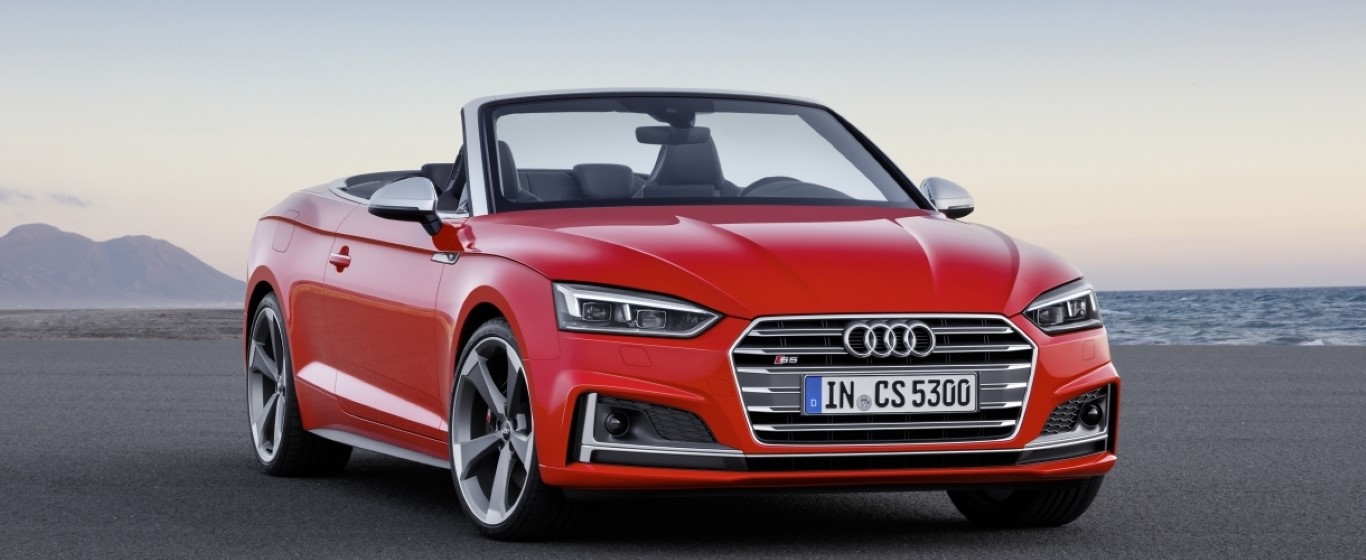
The peak of open-air style: the fusion of vanguard technology and the most beautiful silhouette in Ingolstadt engineering.
Select a generation to see available versions
(2009-2011)

(2012-2017)
The Audi A5 Cabriolet emerged on the global automotive scene as a strategic response from the German manufacturer to the need for a four-seater convertible that transcended the limitations of models derived from compact sedans. Launched to succeed the Audi A4 Cabriolet, the A5 positioned itself at a higher level of sophistication, joining the Grand Tourer (GT) segment. The project's central philosophy was to unite the aesthetic elegance of a coupe with the freedom of open-top driving, without sacrificing daily functionality or the comfort of four adult occupants.
The historical importance of the A5 Cabriolet lies in its resistance to passing trends. In the late 2000s, direct competitors, such as BMW with the 3 Series (E93), were migrating to retractable hard-tops, which added weight and mechanical complexity, in addition to compromising rear design and luggage space. Audi, under the design direction of Walter de Silva, chose to keep the fabric soft-top. This decision was not merely aesthetic, but an engineering choice focused on weight reduction, preserving the low center of gravity, and maintaining the classic, flowing lines that define the brand's visual identity.
Throughout its production, which extended from 2009 to 2024, the model evolved through two distinct generations (B8 and B9 platforms), each receiving significant mid-life updates (facelifts). The trajectory of the A5 Cabriolet reflects the very evolution of the premium industry: starting from naturally aspirated engines and mechanical transmissions to the era of turbocharging, cockpit digitalization, and mild hybridization, culminating in the end of its production in the face of the transition to electric mobility.
The removal of a car's fixed roof presents significant engineering challenges, primarily related to torsional rigidity — the chassis' resistance to twisting during cornering or on uneven surfaces. Audi addressed this challenge in the A5 Cabriolet through an extensive program of structural reinforcements.
To compensate for the absence of the roof structure, the A5 Cabriolet's platform received ultra-high-strength steels at critical points. The door sills (the lower part of the side structure) were reinforced, as were the central transmission tunnel and the A-pillars (which support the windshield). The result is a body that maintains dynamic integrity, preventing the excessive vibration known as scuttle shake, common in less rigid convertibles.
In terms of safety, the model introduced an active rollover protection system. Aluminum bars, hidden behind the rear headrests, are pyrotechnically deployed (by controlled explosives, similar to those in airbags) in milliseconds if the vehicle's gyroscopic sensors detect a dangerous tilt or imminent rollover. Additionally, special head-thorax side airbags were developed to protect occupants even with the windows down.
The A5 Cabriolet's fabric soft top is a complex piece of engineering, designed to offer thermal and acoustic insulation comparable to that of a closed vehicle. Audi offers an "acoustic soft top" composed of three layers, including a middle layer of polyurethane foam that absorbs external sound frequencies, allowing conversations at a normal tone even at highway speeds.
The opening and closing mechanism uses a kinematics known as "K-Fold", which allows the roof to fold compactly in the rear.
The first generation of the A5 Cabriolet (chassis code 8F) hit the global market in 2009, utilizing the Volkswagen Group's MLB longitudinal modular platform. This platform was revolutionary for positioning the front differential ahead of the clutch, allowing the front axle to be moved forward. This resulted in a longer wheelbase and shorter front overhangs, significantly improving weight distribution and the car's aesthetics compared to the old A4 Cabriolet.
The engine range of the initial phase (pre-facelift) was marked by the transition between the "old guard" of naturally aspirated engines and the new era of downsizing (smaller turbocharged engines).
Available transmissions included the 6-speed manual gearbox (rare), the Multitronic continuously variable automatic transmission (CVT) for front-wheel drive versions (focused on comfort and economy), and the 7-speed S-tronic dual-clutch gearbox for versions with quattro all-wheel drive.
Unlike the S5 Coupe of the same era, which used a naturally aspirated 4.2 V8 engine, the S5 Cabriolet was launched straight away with the 3.0 V6 TFSI Supercharged engine (with a mechanical compressor). This engine produced 333 hp and 440 Nm of torque. The choice of the Supercharged V6 was due to the need for a more compact and efficient engine for the convertible structure, maintaining the instant throttle response characteristic of mechanical compressors.
In 2011, for the 2012 model year, Audi introduced a comprehensive update, known internally and by enthusiasts as "B8.5". This update was vital to keep the model competitive against new rivals.
The front of the vehicle was restyled to adopt a more aggressive and technical appearance.
Under the skin, the B8.5 brought profound changes. The hydraulic steering was replaced by an electromechanical power steering system. Although some critics noted a slight loss of road feel ("feedback"), this change was crucial for energy efficiency and allowed the introduction of active assistance systems, such as Active Lane Assist, which could gently correct the steering to keep the car in the lane.
The engines were also revised. The 2.0 TFSI received improvements in thermal management to heat up faster and reduce emissions. The top version of the 2.0's power rose from 211 hp to 225 hp in international markets (although in Brazil the homologation varied, often remaining around 211 hp or rising to 230 hp in final years).
The most prestigious moment of the B8.5 generation was the launch of the RS5 Cabriolet. This model represented the peak of Audi's internal combustion engineering pre-massive turbochargers.
The transition from the B8 generation to the B9 (launched in late 2016 as a 2017 model) was not just visual, but a complete change of architecture.
| Feature | Generation B8 / B8.5 (2009-2016) | Generation B9 / B9.5 (2017-2024) |
|---|---|---|
| Platform | MLB (Modular Longitudinal Matrix) | MLB Evo |
| Weight | Heavier structure, greater use of steel. | Up to 40 kg lighter, extensive use of aluminum and composites.11 |
| Rear Suspension | Trapezoidal. | Five-link redesigned for greater comfort and precision.10 |
| Infotainment | Screen integrated into the dashboard, analog dials. | Freestanding screen (tablet), digital Audi Virtual Cockpit.19 |
| S5 Engine | 3.0 V6 Supercharged (Compressor). | 3.0 V6 Turbo (Twin-scroll single turbo).20 |
| Length | Approx. 4.62 m. | Approx. 4.67 m (Grew 47mm).10 |
The B9 kept the classic silhouette but sharpened all the lines. The hood gained powerful creases ("power dome") and the waistline became more three-dimensional. The big innovation was the interior. The analog dashboard was replaced (in higher versions) by the Audi Virtual Cockpit, a 12.3-inch configurable screen behind the steering wheel. For the Cabriolet, microphones were integrated into the seat belts, ensuring that voice commands and phone calls were clear even with the roof open at high speed.3
Mechanically, the S5 model abandoned the mechanical compressor in favor of a turbocharger. The new 3.0 V6 Turbo engine produced 354 hp and 500 Nm of torque. Although more powerful and with more torque, the switch from compressor to turbo resulted in slightly less immediate throttle response, but with greater energy efficiency.
In 2020, Audi applied the facelift of the B9 generation, called B9.5. Visually, the car received ventilation slits above the front grille (a tribute to the classic 1984 Audi Sport quattro) and new side skirts for a sleeker appearance. The headlights began offering Matrix LED technology with Laser, capable of masking oncoming cars so as not to dazzle drivers, while maintaining maximum illumination on the rest of the road.
Inside, the big change was the elimination of the rotary dial on the center console. The MMI system began to be controlled entirely by touch on a new 10.1-inch screen (MIB 3). The powertrain also evolved with the introduction of 12-volt mild hybrid systems (MHEV) for the four-cylinder engines, allowing the car to turn off the engine in cruising situations ("freewheeling") to save fuel.
In 2024, Audi confirmed the end of production for the Coupe and Cabriolet variants of the A5 line. With the brand's restructuring (where even numbers will be electric and odd numbers combustion, transforming the successor to the A4 into the A5 Sedan/Avant), there was no room for a new convertible. The market niche shrank drastically, and the capacity of the Neckarsulm plant was redirected to higher-volume models.
Brazil received the A5 Cabriolet as an image vehicle, aimed at an exclusive audience. Unlike Europe, where there were entry-level manual versions with fabric seats, the Brazilian configurations were always well-equipped.
In Brazil, the best-selling combination was the Ibis White or Brilliant Black body with a black soft top. Soft top colors like Red or Brown were rare and generally only came by special order. Metallic paint options included Navarra Blue, Daytona Gray, and Floret Silver.
| Year | Model / Version | Approximate Price at the Time (R$) 2012 A5 Cabriolet 2.0 TFSI (Launch) R$ 229,700 |
|---|---|---|
| 2015 | A5 Cabriolet 2.0 TFSI Ambition | R$ 248,190 2017 A5 Sportback/Cabriolet Ambition Plus (B9) R$ 273,990 |
| 2019 | RS5 Coupe (Top reference) | R$ 556,990 2023 RS5 Sportback (Latest models) R$ 569,899 (Used/Pre-owned) |
Audi's annual financial reports clearly show the decline of the convertible segment, which justifies the discontinuation of the model.
| Fiscal Year | Model | Units Produced/Sold (Global) | Source |
|---|---|---|---|
| 2014 | A5 Cabriolet | 19,408 | 31 |
| 2020 | A5 Cabriolet (Up to Q3/Pandemic) | 6,139 | 32 |
| 2024 | A5 Cabriolet (1st Semester Germany) | 2,209 | 5 |
The drop from almost 20,000 annual units to residual volumes demonstrates the shift in global consumer preference to SUVs and Sportback models (4-door coupes), which maintained much higher sales volumes (the A5 Sportback sold around 36,000 to 57,000 units in the same period that the Cabriolet sold 6,000).
Below is a summary of the specifications of the most relevant engines found in the model's life cycle.
| Engine | Code | Generation | Cylinders / Induction | Power (hp) | Torque (Nm) | Notes |
|---|---|---|---|---|---|---|
| 2.0 TFSI | EA888 | B8 | 4 Cyl / Turbo | 180 / 211 | 320 / 350 | Most popular version in Brazil. Oil problems in early years. |
| 2.0 TFSI | EA888 Gen3 | B9 | 4 Cyl / Turbo | 190 / 252 | 320 / 370 | Improvement in efficiency and reliability. |
| 3.0 TFSI | EA837 | B8 (S5) | V6 / Supercharger | 333 | 440 | Immediate response, characteristic compressor sound. |
| 3.0 TFSI | EA839 | B9 (S5) | V6 / Turbo | 354 | 500 | Twin-scroll Turbo. More torque, slight turbo lag. |
| 4.2 FSI | - | B8.5 (RS5) | V8 / Naturally Aspirated | 450 | 430 | High-revving engine (8,500 rpm). Modern classic. |
The Audi A5 Cabriolet concludes its journey as one of the last representatives of a golden era of German convertibles. It masterfully combined rational engineering (quattro drive, structural safety, daily usability) with the emotional appeal of open-top driving.
For the owner or enthusiast, the model offers clear distinctions between its generations: the B8/B8.5 appeals to those seeking a classic design and, in the case of the RS5, the pure experience of a naturally aspirated V8 engine. The B9/B9.5, on the other hand, offers technological sophistication, with modern digital interfaces and a lighter, more refined dynamic platform.
Its discontinuation in 2024 leaves a vacuum in the market, especially in Brazil, where options for four-seater convertibles have become practically nonexistent. The A5 Cabriolet remains, therefore, not just as a desirable used car, but as a future classic that marked the moment when Audi's elegance and technology reached a rare balance.