
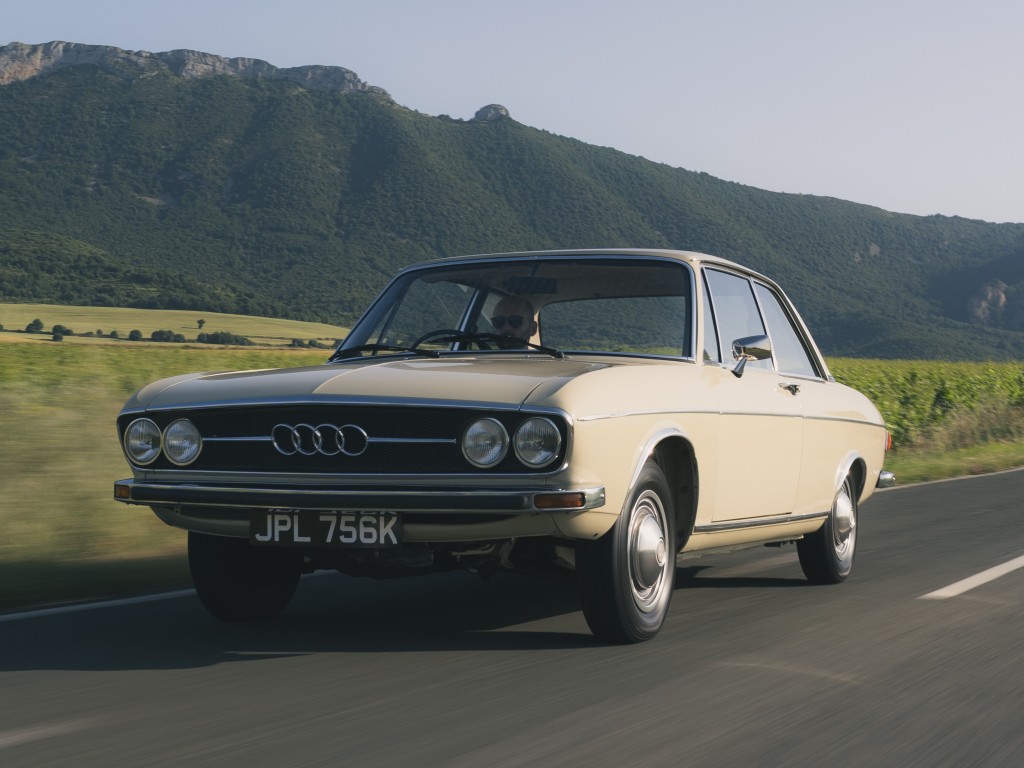
C1
(1968 - 1973)
1.8 L L4 8V
115 cv
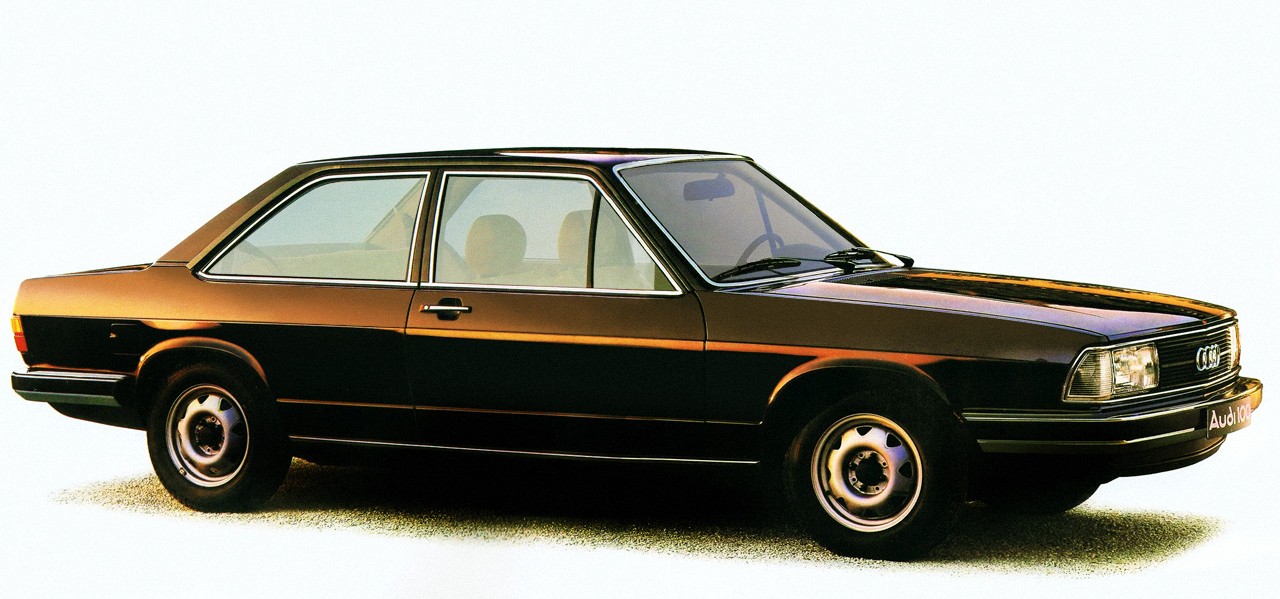
Technical specifications, versions, and history for the Audi 100 2-door Sedan.
Select a generation to see available versions
(1968 - 1973)
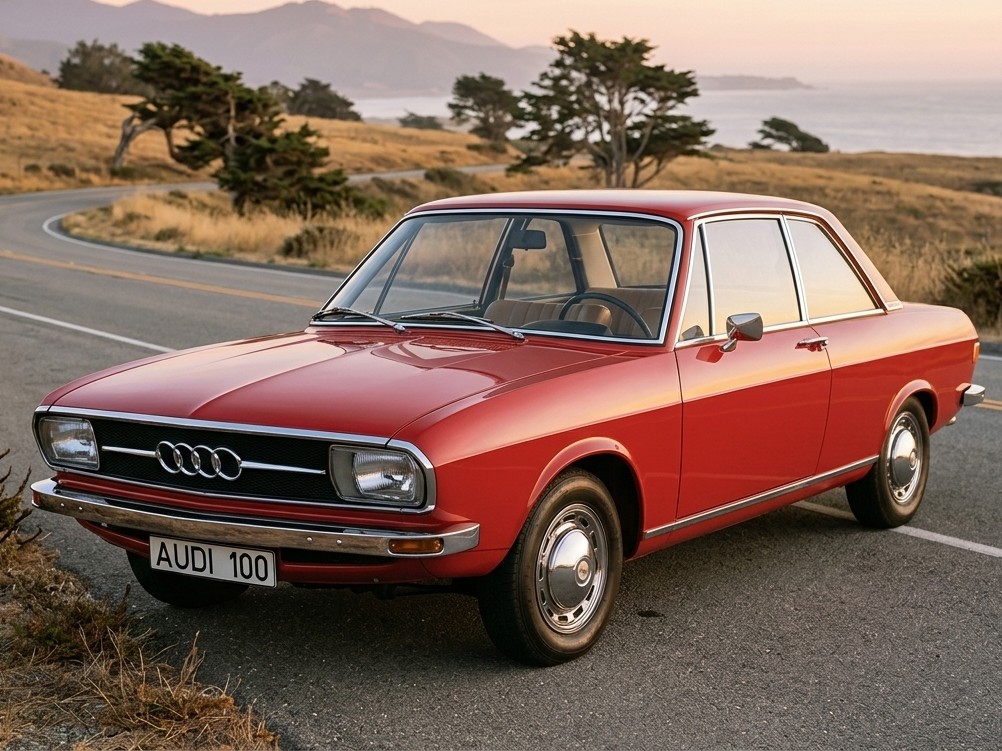
(1973 - 1977)
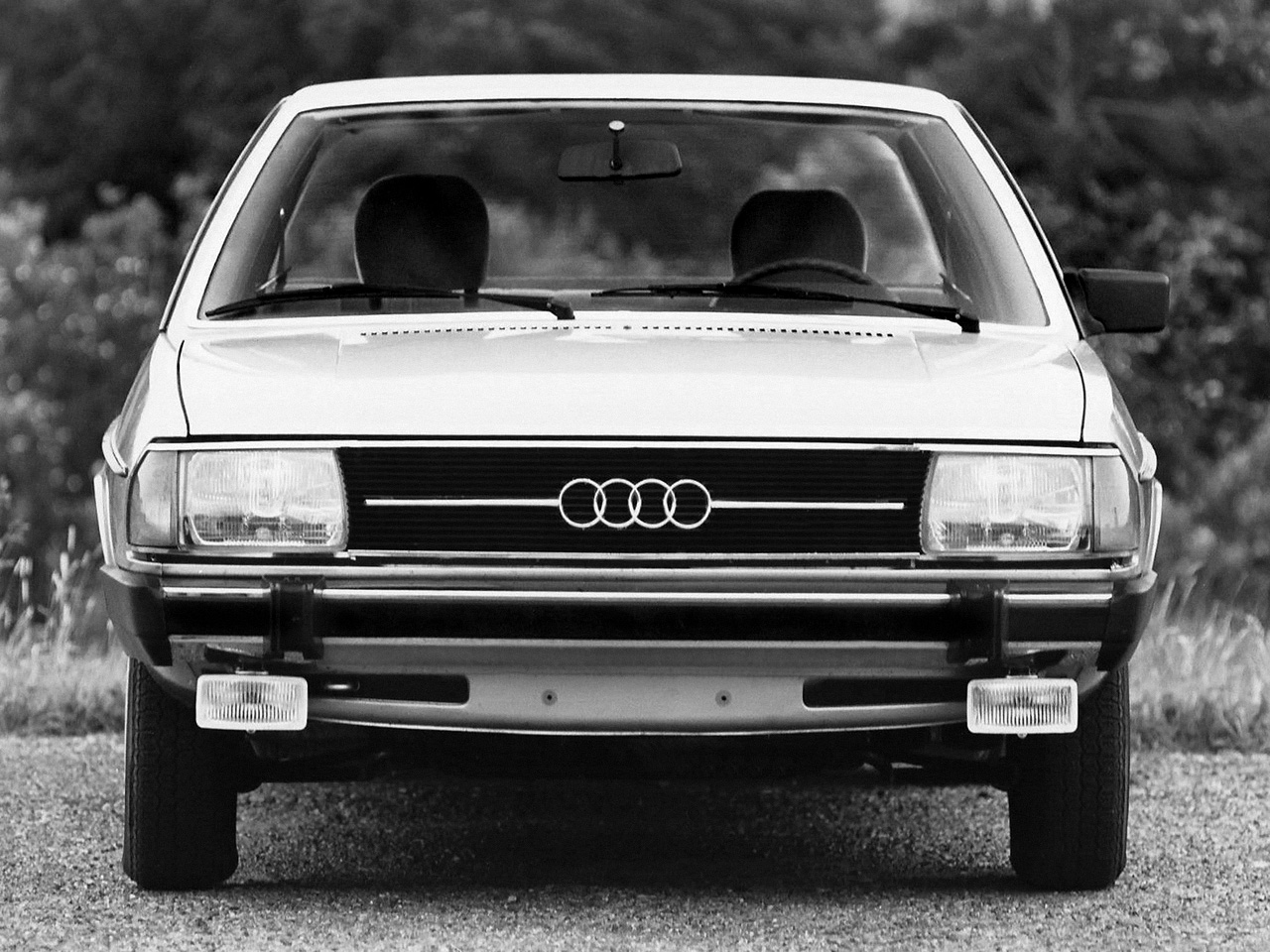
(1976 - 1979)
(1979 - 1983)
The history of the Audi 100 Sedan dates back to the mid-1960s, a period of profound corporate reorganization in the German automotive industry. In 1964, Volkswagen Group acquired Auto Union from Daimler-Benz, taking over the manufacturing facilities located in Ingolstadt. The initial objective of Volkswagen's executive board was to use Ingolstadt's production capacity exclusively to meet the high demand for the Volkswagen Beetle, strictly forbidding the development of new models under the Audi badge.
Despite this corporate directive, Auto Union's chief engineer and technical director, Dr. Ludwig Kraus, recognized the need to introduce an executive mid-to-large-size sedan to the market to ensure the company's long-term profitability. Kraus developed the vehicle in secret, without the knowledge of the board of directors in Wolfsburg. When the prototype was finally presented to Volkswagen's chairman, Heinrich Nordhoff, the engineering quality of the project convinced the board to approve the vehicle for series production.
The car was officially introduced to the public on November 26, 1968, under the name Audi 100, where the number directly referenced the 100 PS (99 hp) developed by the top-of-the-line version at the time. The commercial success of the model rescued Audi from financial extinction and established the brand as a premium manufacturer capable of competing with entrenched names like Mercedes-Benz and BMW.
Built on the Volkswagen Group C1 platform, the first-generation Audi 100 adopted a front-longitudinal engine, front-wheel-drive mechanical layout. The absence of a central transmission tunnel maximized interior cabin space to comfortably seat five passengers. The chassis featured an independent double-wishbone front suspension and a torsion-beam axle at the rear. A notable engineering detail during the early years of the C1 model was the use of inboard-mounted front disc brakes, located next to the differential output, aimed at reducing the vehicle's unsprung mass.
The body lineup quickly expanded to include a two-door sedan in 1969 and a fastback coupe dubbed the Audi 100 Coupé S in 1970. In the North American market, the sedan debuted in 1970 in the LS trim, making it the brand's first model officially sold in the United States. In March 1971, the 500,000th Audi vehicle rolled off the assembly line in Ingolstadt, showcasing the car's rapid sales pace.
In 1972, the powertrain range underwent technical revisions in which the entry-level 80 PS and 90 PS variants were replaced by an updated 85 PS version of the 1.8-liter engine running on regular gasoline. Concurrently, the brand introduced the 100 GL trim level, powered by the 115 PS 1.9-liter engine previously exclusive to the Coupé S.
In September 1973 (for the 1974 model year), Audi rolled out the mid-cycle facelift for the C1 generation. Aesthetic changes included a smaller rectangular front grille, more angular front fenders, and redesigned taillight lenses. Mechanically, the rear torsion axle was replaced by a coil-sprung suspension, delivering improved road-holding and ride comfort. For the 1975 model year, the base version was renamed 100 L and adopted the 1.6-liter engine sourced from the Audi 80. In the United States, the model gained a Bosch electronic fuel injection system in 1975 to meet local emissions regulations.
Powertrains for the C1 generation consisted of inline four-cylinder gasoline engines equipped with carburetors or electronic fuel injection.
| Version | Displacement | Power | Torque | Fuel System | Production Period |
|---|---|---|---|---|---|
| 100 (Base) | 1.8L (1,760 cc) | 80 PS (79 hp / 59 kW) | 135 Nm | Carburetor | 1968–1972 |
| 100 S | 1.8L (1,760 cc) | 90 PS (89 hp / 66 kW) | 142 Nm | Carburetor | 1968–1972 |
| 100 LS | 1.8L (1,760 cc) | 100 PS (99 hp / 74 kW) | 150 Nm | Carburetor / Injection | 1968–1976 |
| 100 L | 1.6L (1,588 cc) | 85 PS (84 hp / 63 kW) | 122 Nm | Carburetor | 1974–1976 |
| 100 GL / GLS | 1.9L (1,871 cc) | 112–115 PS (111–113 hp / 84 kW) | 160 Nm | Carburetor | 1972–1976 |
Total production of the Audi 100 C1 reached 827,474 units. The Sedan body style (two- and four-door) accounted for 796,787 examples, while the Coupé S registered 30,687 units produced.
Presented in August 1976 in Luxembourg, the Audi 100 C2 (Type 43) introduced a major technical innovation to the automotive industry: the first mass-production inline five-cylinder gasoline engine in a passenger car. The engineering goal was to deliver the smooth performance of a six-cylinder engine while retaining the fuel efficiency and compact packaging of a four-cylinder unit.
The C2 generation maintained the front-wheel-drive configuration and offered two- and four-door sedan options, alongside the 1977 introduction of the five-door Avant variant featuring a fastback/station wagon body style. In September 1977, the model line passed the milestone of one million Audi 100 units built. In North America, the model was sold as the Audi 5000 between model years 1978 and 1983, while in Australia it was marketed under the Audi 5E nameplate.
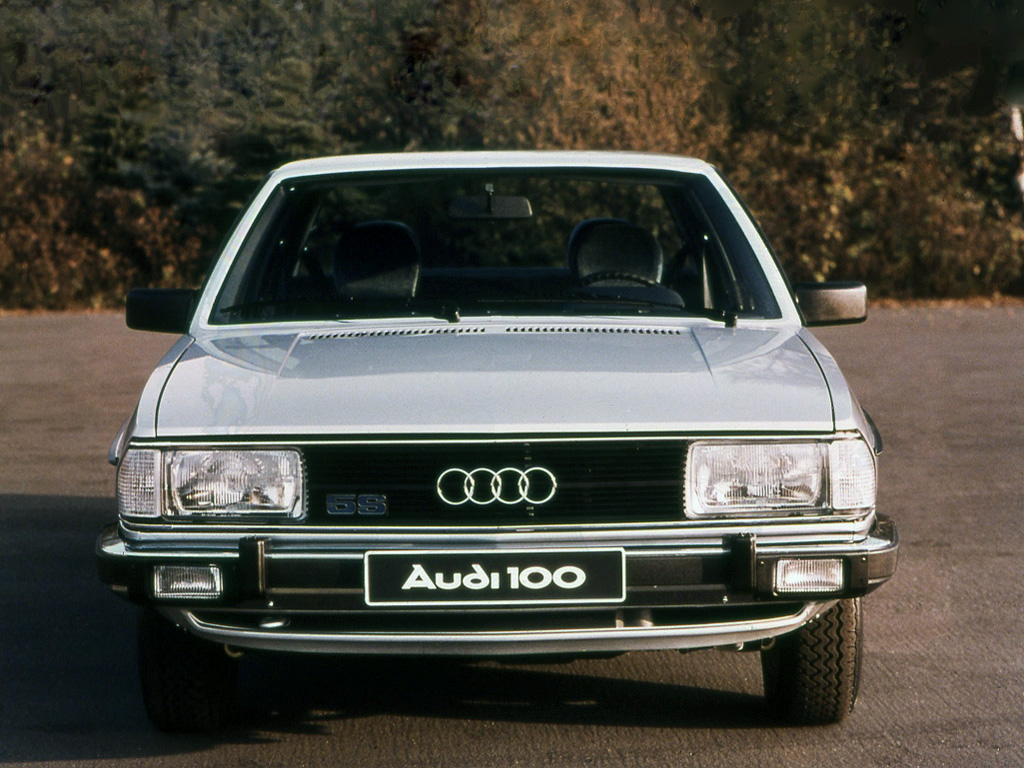
In 1979, the C2 received a styling and technological refresh. The front end gained larger rectangular headlights with wraparound turn signals, along with wider horizontal taillights and revised bumpers. The interior featured upgraded upholstery materials, improved sound insulation, and redesigned instrumentation.
That same year, Audi launched the Audi 200 (Type 43), an upmarket luxury derivative based on the C2 sedan body. The Audi 200 featured dual rectangular headlights, a refined interior with velour or leather seating, and the debut of a turbocharged version of the 2.1-liter five-cylinder engine, developing between 170 PS and 182 PS. In 1978, Audi had also added a naturally aspirated 2.0-liter 70 PS five-cylinder diesel engine to the lineup, followed by an 85 PS turbodiesel version in 1982.
The C2 engine lineup comprised four- and five-cylinder gasoline and diesel units.
| Version / Engine | Displacement | Power | Fuel System | Production Period |
|---|---|---|---|---|
| 1.6 I4 | 1.6L (1,588 cc) | 85 PS (84 hp / 63 kW) | Carburetor | 1976–1982 |
| 2.0 I4 | 2.0L (1,984 cc) | 115 PS (113 hp / 85 kW) | Carburetor | 1976–1978 |
| 2.1 I5 | 2.1L (2,144 cc) | 100–115 PS (99–113 hp) | Carburetor | 1978–1982 |
| 2.1 I5 (5E / CD) | 2.1L (2,144 cc) | 136 PS (134 hp / 100 kW) | Electronic Injection (K-Jetronic) | 1977–1982 |
| 2.0 D (Diesel) | 2.0L (1,986 cc) | 70 PS (69 hp / 51 kW) | Naturally Aspirated Diesel (Indirect Injection) | 1978–1982 |
| 2.0 TD (Turbodiesel) | 2.0L (1,986 cc) | 85 PS (84 hp / 63 kW) | Turbodiesel | 1982–1983 |
Total production of the C2 generation reached 988,581 vehicles. Of this total, the four-door Sedan accounted for 887,647 units, the Audi 100 Avant totaled 49,652 units, and the luxury Audi 200 series recorded 51,282 examples built.
Launched in 1982, the Audi 100 C3 (Type 44) achieved a groundbreaking technical milestone by setting a drag coefficient ($C_d$) of 0.30. This aerodynamic benchmark was achieved by mounting side glass flush with the bodywork (using a sliding window mechanism) and smoothing the body contours. This aerodynamic advancement reduced fuel consumption and high-speed wind noise for the executive sedan.
Starting in 1985, Audi manufactured the C3 with a 100% fully galvanized steel body, providing enhanced corrosion protection. The model also introduced the Procon-Ten (Programmed Contraction and Tension) passive safety system. In severe frontal impacts, the system used steel cables connected to the engine block to pull the steering wheel forward away from the driver into the dashboard while simultaneously pre-tensioning the front seatbelts. Permanent quattro all-wheel drive was made available on the C3 sedan starting in 1984, utilizing a lockable center differential.
In January 1988, Audi introduced a facelift for the C3. The most noticeable exterior update was the adoption of flush-fitting door handles mounted level with the bodywork. The cabin received a redesigned dashboard with rounded instrument dials and updated ventilation controls.
In 1990, Audi introduced the brand's first direct-injection turbodiesel passenger car engine in the C3: the inline five-cylinder 2.5 TDI producing 120 PS and 265 Nm of torque. The C3 generation also played a critical role in Volkswagen's Asian expansion. Local assembly in China began in 1988 via FAW-Volkswagen in Changchun, giving rise to sedans and extended-wheelbase variants produced under the state-owned Hongqi brand.
The C3 gasoline and diesel engine lineup comprised four- and five-cylinder units.
| Version / Engine | Displacement | Power | Fuel System / Highlights | Production Period |
|---|---|---|---|---|
| 1.8 I4 | 1.8L (1,781 cc) | 75–90 PS (74–89 hp) | Carburetor / Catalyzed Injection | 1982–1990 |
| 1.9 I5 | 1.9L (1,921 cc) | 100 PS (99 hp / 74 kW) | Carburetor | 1982–1984 |
| 2.0 I5 | 2.0L (1,994 cc) | 115 PS (113 hp / 85 kW) | Electronic Injection with Catalytic Converter | 1984–1990 |
| 2.1 I5 | 2.1L (2,144 cc) | 136 PS (134 hp / 100 kW) | Electronic Injection (K-Jetronic) | 1982–1984 |
| 2.2 I5 | 2.2L (2,226 cc) | 115–138 PS (113–136 hp) | Electronic Injection | 1984–1990 |
| 2.3 I5 | 2.3L (2,309 cc) | 136 PS (134 hp / 100 kW) | Electronic Injection (KE-Jetronic) | 1986–1990 |
| 2.2 Turbo I5 | 2.2L (2,226 cc) | 165 PS (163 hp / 121 kW) | Turbocharged Electronic Injection | 1986–1990 |
| 2.0 D (Diesel) | 2.0L (1,986 cc) | 70 PS (69 hp / 51 kW) | Naturally Aspirated Diesel | 1982–1989 |
| 2.0 TD | 2.0L (1,986 cc) | 87–100 PS (86–99 hp) | Turbodiesel | 1983–1989 |
| 2.4 D | 2.4L (2,370 cc) | 82 PS (81 hp / 60 kW) | Naturally Aspirated Diesel | 1989–1990 |
| 2.5 TDI | 2.5L (2,461 cc) | 120 PS (118 hp / 88 kW) | Direct-Injection Turbodiesel | 1990 |
Production of the C3 generation in Germany accumulated 1,078,443 vehicles in total (including Audi 100 Sedan, Avant, and Audi 200 variations).
Launched in late 1990 in Europe (as a 1991 model year), the Audi 100 C4 (Type 4A) brought refinements in chassis rigidity and noise, vibration, and harshness (NVH) insulation. The exterior design adopted more rounded contours while preserving the signature rear quarter window integrated into the C-pillar. The interior featured soft-touch molded plastics and tighter assembly tolerances.
The major mechanical advancement of the C4 generation was the introduction of 90-degree V6 engines with single overhead camshafts (SOHC) and 12 valves. Offered in 2.8-liter (174 PS) and 2.6-liter (150 PS) displacements, these engines provided smooth operation and linear torque delivery.
In August 1991, the factory launched the first high-performance model in the lineup: the Audi Ur-S4 Sedan. The model was powered by a 2.2-liter 20-valve turbocharged inline-five engine with an intercooler, developing 230 PS and 350 Nm of torque, paired with permanent quattro all-wheel drive and a five- or six-speed manual transmission.
In mid-1994, Audi carried out an extensive styling and technical update on the C4 lineup. The front and rear bumpers were redesigned with full body-color paint, front turn signal lenses became clear, the grille was integrated directly into the hood, and the taillights received a new internal layout.
Alongside this facelift, Audi overhauled its official naming scheme. The traditional Audi 100 moniker was retired and replaced by the Audi A6 (retaining the C4 platform designation), while the sporty Ur-S4 became known as the Audi S6. This restructuring positioned the lineup alongside the compact executive A4 sedan and the flagship A8 sedan.
Fourth-generation powertrains included inline four- and five-cylinder units, V6 engines, and turbodiesel options.
| Version / Engine | Displacement | Power | Torque | Cylinder Configuration | Production Period |
|---|---|---|---|---|---|
| 2.0 | 2.0L (1,984 cc) | 101 PS (100 hp / 74 kW) | 157 Nm | Inline-4 (AAE) | 1990–1994 |
| 2.0 E | 2.0L (1,984 cc) | 115 PS (113 hp / 85 kW) | 168 Nm | Inline-4 (ABK) | 1990–1994 |
| 2.0 E 16V | 2.0L (1,984 cc) | 137 PS (135 hp / 101 kW) | 180 Nm | Inline-4 16V (ACE) | 1992–1994 |
| 2.3 E | 2.3L (2,309 cc) | 133 PS (131 hp / 98 kW) | 186 Nm | Inline-5 (AAR) | 1990–1994 |
| 2.6 V6 | 2.6L (2,598 cc) | 150 PS (148 hp / 110 kW) | 225 Nm | 90° V6 SOHC 12V (ABC) | 1992–1994 |
| 2.8 V6 E | 2.8L (2,771 cc) | 174 PS (172 hp / 128 kW) | 245 Nm | 90° V6 SOHC 12V (AAH) | 1990–1994 |
| 2.2 Turbo (Ur-S4) | 2.2L (2,226 cc) | 230 PS (227 hp / 169 kW) | 350 Nm | Inline-5 20V Turbo (AAN) | 1991–1994 |
| 2.4 D | 2.4L (2,370 cc) | 82 PS (81 hp / 60 kW) | 164 Nm | Inline-5 Diesel (AAS) | 1991–1994 |
| 2.5 TDI | 2.5L (2,461 cc) | 115 PS (113 hp / 85 kW) | 265 Nm | Inline-5 Turbodiesel (AAT) | 1991–1994 |
During the period it was sold under the Audi 100 nameplate (between late 1990 and mid-1994), the C4 recorded approximately 480,000 units manufactured prior to the commercial transition to the Audi A6 brand.
The trajectory of the Audi 100 reflects the company's technological evolution throughout 26 years of continuous production under this nameplate.
| Generation | Internal Code | Production Years | Drag Coefficient (Cd) | Global Production Volume | Key Technical Innovations |
|---|---|---|---|---|---|
| C1 | F104 | 1968–1976 | 0.38–0.42 | 827,474 units | Front-wheel drive, inboard brakes, lightweight construction without a transmission tunnel. |
| C2 | Type 43 | 1976–1982 | 0.36 | 988,581 units | World's first production 5-cylinder gasoline engine, 5-cylinder turbodiesel engine. |
| C3 | Type 44 | 1982–1991 | 0.30 | 1,078,443 units | Benchmark aerodynamics, fully galvanized body, Procon-Ten safety system, quattro all-wheel drive, TDI engine. |
| C4 | Type 4A | 1990–1994 | 0.32 | ~480,000 units | 90° V6 engines, high torsional rigidity, high-performance Ur-S4 version, transition to the A6 series. |
The Audi 100 Sedan played a pivotal role in repositioning Audi in the executive luxury vehicle segment. Initially engineered in secret to bypass corporate restrictions, the model saved the brand in Ingolstadt and served as a testbed for pioneering technologies such as five-cylinder gasoline engines, aerodynamic design, quattro permanent all-wheel drive, and direct-injection TDI engines. The four generations built between 1968 and 1994 totaled more than 3.3 million vehicles manufactured in Germany, laying the engineering groundwork that continues in the modern Audi A6 lineup.