
C2
(1977 - 1979)
2.1 L L5 8V
136 cv
Technical specifications, versions, and history for the Audi 100 Avant.
Select a generation to see available versions
(1977 - 1979)
(1979 - 1982)
(1983 - 1988)
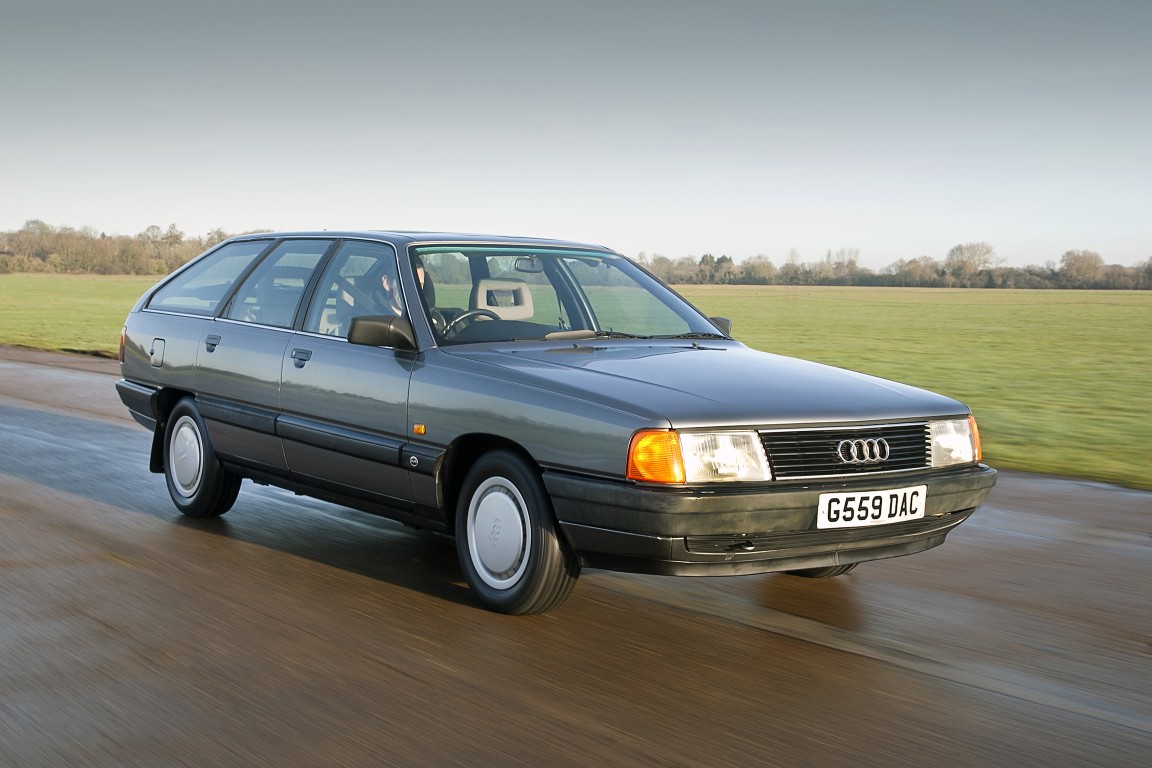
(1988 - 1990)
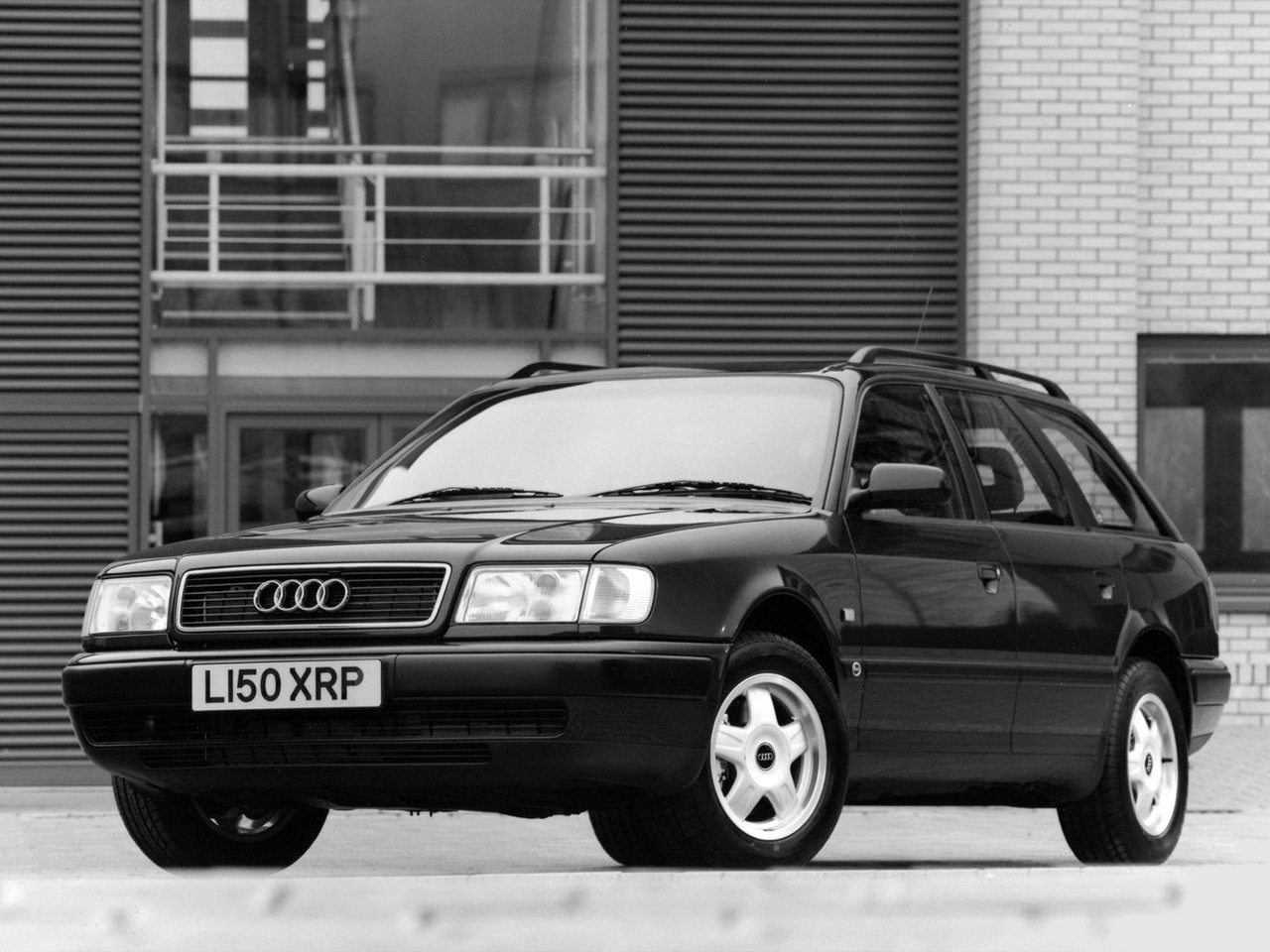
(1991 - 1994)
The Audi 100 Avant played a decisive role in the transformation of Audi, propelling the German brand from a mid-tier manufacturer into a global benchmark in the premium segment. Originally launched in the 1970s, the Avant model redefined the concept of full-size station wagons and family vehicles. While direct competitors focused on strictly utilitarian, boxy designs, Audi pursued a fusion of aerodynamics, technical sophistication, and interior functionality. Across three primary generations — C2, C3, and C4 —, the Audi 100 Avant introduced crucial innovations to the automotive industry, such as Quattro permanent all-wheel drive, fully galvanized body shells, and direct-injection turbodiesel (TDI) engine technology.
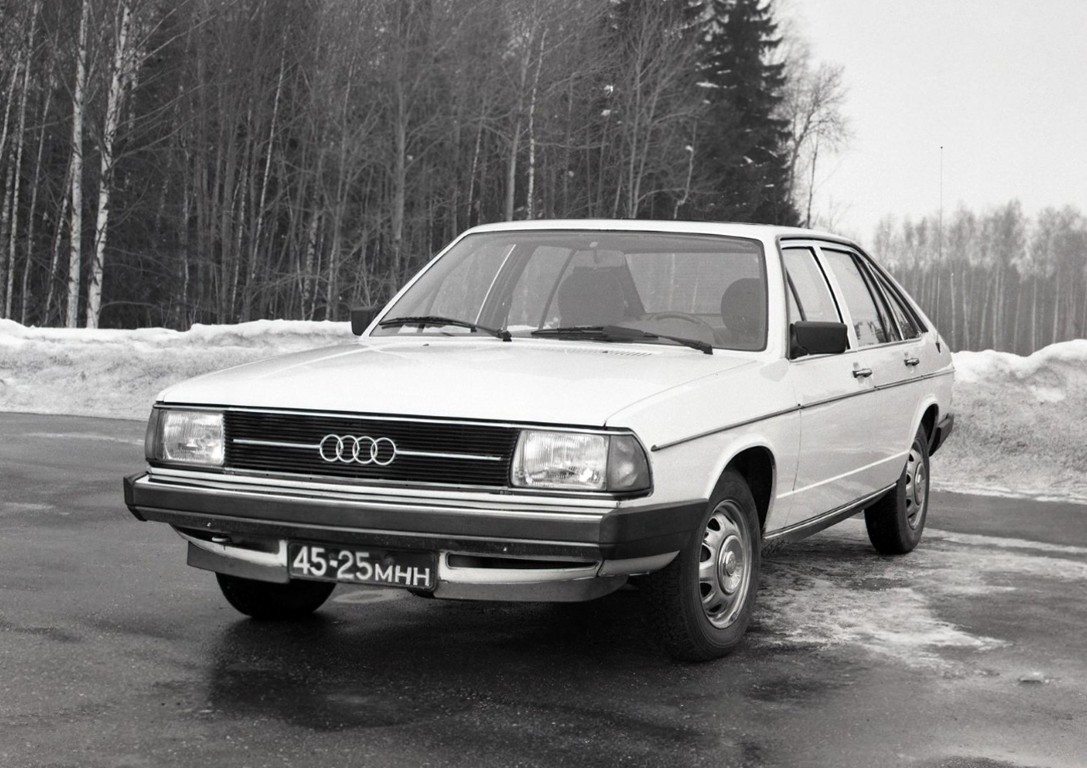
The first iteration of the Audi 100 Avant was unveiled in August 1977, developed on the C2 platform (Typ 43). Departing from the traditional station wagons of the period, Audi styled the original Avant with a five-door liftback or fastback body, characterized by a sharply raked rear window. The objective was to attract an executive demographic seeking cargo versatility without sacrificing a sporty, elegant design.
This conceptual approach enabled the brand to offer a unique proposition in the European market. A fundamental milestone in the manufacturer's history occurred in September 1977, when the one-millionth Audi 100 rolled off the assembly line at the Neckarsulm plant; this commemorative unit was precisely an Audi 100 Avant.
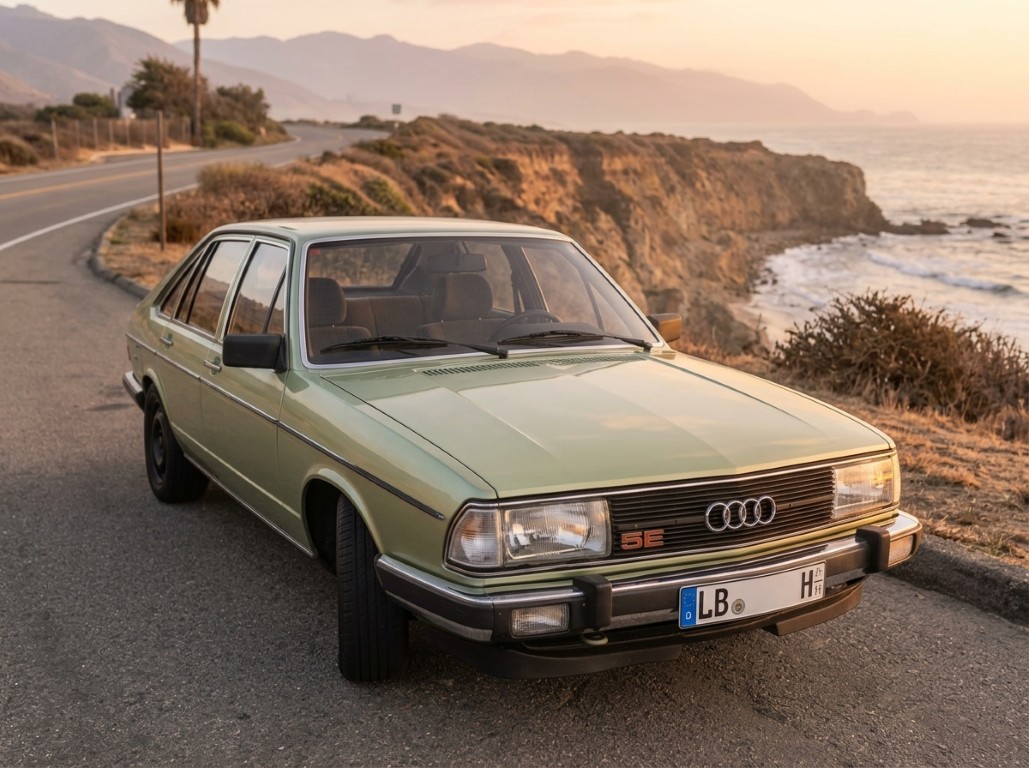
In 1981, the C2 generation underwent a mid-cycle facelift. Exterior updates included enlarged headlights and a refreshed front fascia. Inside, Audi elevated cabin refinement with higher-grade materials and improved acoustic insulation. Around the same time, the CS trim was introduced, adding a sporty aesthetic with alloy wheels, a front chin spoiler, and bespoke interior appointments.
The C2 platform registered a total volume of 988,581 units manufactured between 1976 and 1982. Of this total, the Avant body variant accounted for 49,652 units built between 1977 and 1982.
The C2 Avant powertrain lineup featured inline four- and five-cylinder engines, fueled via carburetors or mechanical fuel injection, as well as a naturally aspirated diesel version.
| Engine | Type / Cylinders | Fuel | Power | Production Period |
|---|---|---|---|---|
| 1.6 L | Inline-4 (Carburetor) | Gasoline | 85 hp | 1977–1979 |
| 2.0 L | Inline-4 (Carburetor) | Gasoline | 115 hp | 1977–1979 |
| 2.1 L | Inline-5 (Injection/Carb.) | Gasoline | 115 hp / 136 hp | 1977–1979 |
| 1.9 L | Inline-5 (Carburetor) | Gasoline | 100 hp | 1980–1982 |
| 2.0 D | Inline-5 (Naturally Aspirated) | Diesel | 70 hp | 1978–1979 |
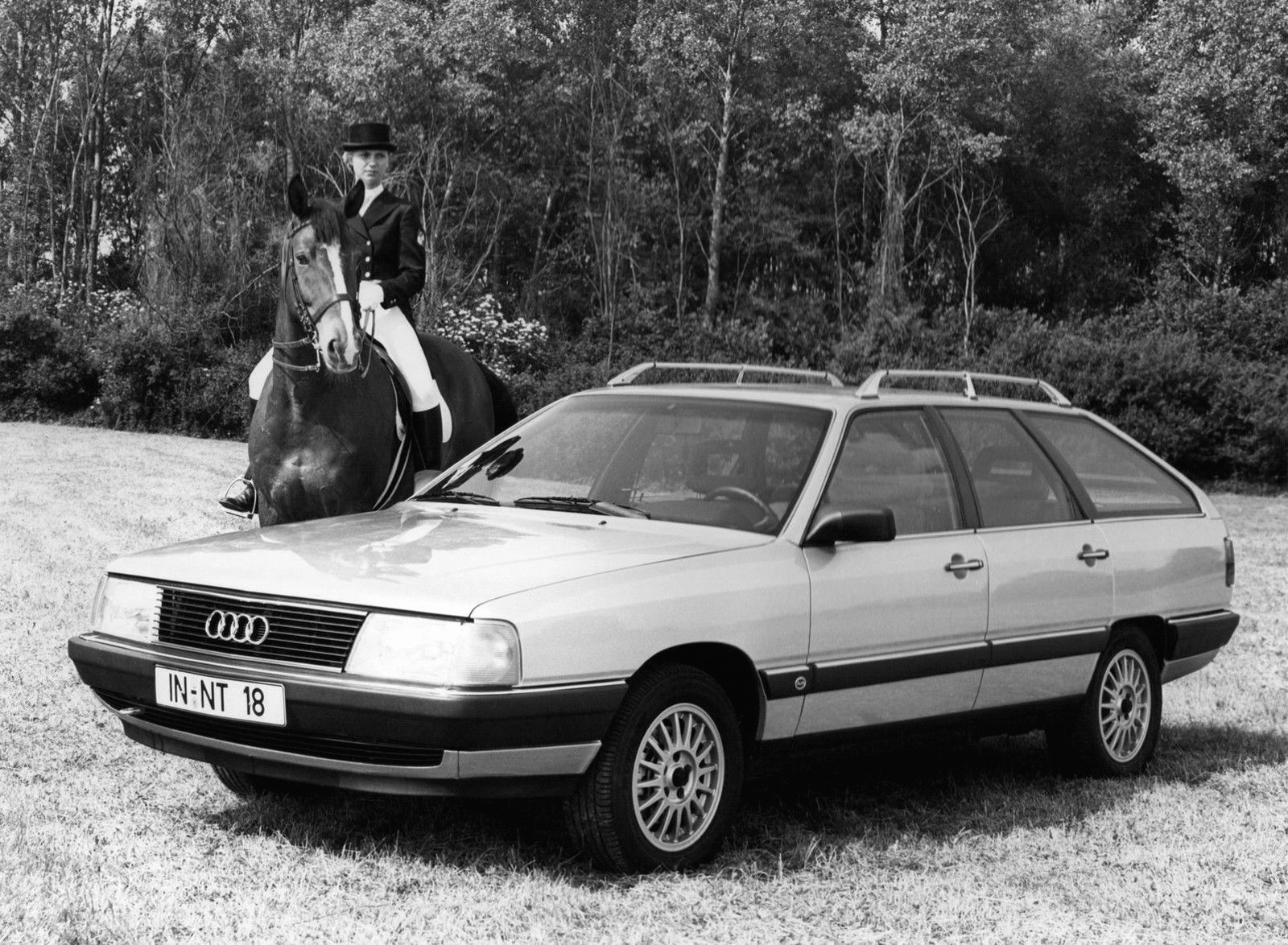
Introduced in late 1982 and commercialized starting in 1983, the Audi 100 Avant C3 revolutionized global automotive engineering under the design leadership of Hartmut Warkuss. The central focus of the project was aerodynamic efficiency. The model featured flush-mounted glass, fluid contours, and an aerodynamic drag coefficient (Cd) of just 0.30 on the sedan and 0.34 on the Avant — a world record for series-production vehicles at the time. This achievement contributed to the Audi 100 winning the European Car of the Year award in 1983.
Starting in 1985, Audi introduced vehicle bodies constructed entirely from galvanized steel, offering an unprecedented factory anti-corrosion warranty. In the C3 lineup, the Avant retained its raked rear profile while substantially expanding cargo capacity, ranging from 644 liters to 1,920 liters with the rear seats folded flat. Beginning with this generation, the celebrated Quattro permanent all-wheel-drive system became available on the Avant, drastically enhancing vehicle stability and traction in low-grip conditions.
In 1988, the C3 lineup underwent a refinement-focused facelift. Chrome accents on the taillights, bumpers, and side moldings were deleted in favor of a cleaner, more contemporary look. The exterior door handles were redesigned to sit fully flush with the bodywork. The instrument cluster was redesigned, gaining an extended curved binnacle and more ergonomic switchgear.
In late 1989, Audi introduced a historic breakthrough for diesel powertrains in the C3 Avant: the 2.5 TDI inline five-cylinder engine developing 120 hp. This engine combined direct injection with a turbocharger, achieving a top speed near 200 km/h and an average fuel consumption of 5.7 L/100 km, permanently reshaping the passenger car diesel market.
The C3 vehicle family recorded a total of 1,078,443 assembled units. Specific production volumes for the station wagon variants are detailed in the table below.
| C3 Generation Model | Units Produced |
|---|---|
| Audi 100 Avant (C3) | 122,852 units |
| Audi 200 Avant (C3 - Luxury sports version) | 6,153 units |
| Audi 100 Sedan (C3) | 852,243 units |
| Audi 200 Sedan (C3) | 97,195 units |
The C3 lineup featured an extensive array of four- and five-cylinder engines.
| Engine | Configuration | Fuel | Power | Notes |
|---|---|---|---|---|
| 1.8 | Inline-4 | Gasoline | 75 hp / 88 hp / 90 hp | Carbureted / Injected / Catalyzed |
| 1.9 | Inline-5 | Gasoline | 100 hp | Carburetor (1982–1984) |
| 2.0 / 2.0 CAT | Inline-5 | Gasoline | 113 hp / 115 hp | K-Jetronic Injection / Catalytic Converter |
| 2.1 | Inline-5 | Gasoline | 136 hp | Electronic fuel injection |
| 2.2 / 2.2 CAT | Inline-5 | Gasoline | 115 hp / 138 hp | Quattro option available |
| 2.2 Turbo | Inline-5 | Gasoline | 165 hp | Turbocharged / Catalyzed |
| 2.2 Turbo 20V | Inline-5 | Gasoline | 220 hp | Exclusive to Audi 200 Avant Quattro |
| 2.3 / 2.3 E | Inline-5 | Gasoline | 136 hp | KE-Jetronic Injection / Quattro option |
| 2.0 D | Inline-5 | Diesel | 70 hp | Naturally aspirated |
| 2.0 TD | Inline-5 | Diesel | 87 hp / 100 hp | Pre-chamber turbodiesel |
| 2.4 D | Inline-5 | Diesel | 82 hp | Naturally aspirated (1989–1990) |
| 2.5 TDI | Inline-5 | Diesel | 120 hp | Direct-Injection Turbodiesel (1989–1990) |
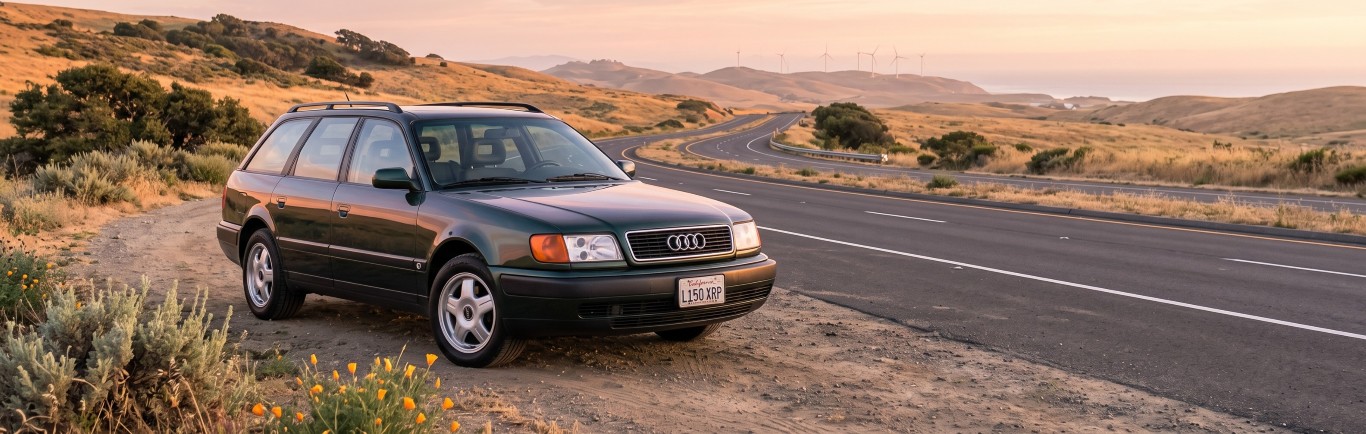
Launched in 1991, the C4 generation was designed by Erwin Leo Himmel and marked Audi's definitive consolidation in the executive luxury segment, directly challenging established benchmarks in the European market. Unlike the C2 and C3 generations, Audi moved away from the fastback-style rear on the C4 Avant, adopting a traditional estate profile with an extended roofline and an upright tailgate. This transition significantly improved cargo usability, providing between 390 and 1,310 liters of usable space.
The C4 body structure made extensive use of high-strength, fully galvanized steel, delivering exceptional torsional rigidity and structural longevity. The vehicle came factory-equipped with the Procon-Ten (Programmed Contraction and Tension) passive safety system, which used steel cables anchored to the engine block to retract the steering column and pretension the seatbelts during a severe frontal impact. On models equipped with Quattro all-wheel drive, the rear suspension featured trapezoidal link arms that enhanced directional precision and ride quality.
The most significant technical evolution of the C4 generation was the introduction of Audi's first V6 engines: a 2.8-liter unit developing 174 hp and a 2.6-liter version producing 150 hp. The 2.8 V6 engine was notable for its variable-geometry dual-stage intake manifold, engineered to optimize low-end torque while ensuring responsive high-rpm power delivery.
In the high-performance tier, the brand presented the Audi S4 Avant (C4), powered either by a 2.2-liter 20-valve turbocharged inline-five engine (delivering 230 hp) or a 4.2-liter V8, paired with Quattro all-wheel drive and a five- or six-speed manual transmission.
Production of the Audi 100 Avant C4 concluded in late 1994. As part of Audi's global model nomenclature realignment, the C4 received visual and mechanical updates and was rebranded as the Audi A6 Avant starting from the 1995 model year, while the sporty S4 C4 was rechristened the S6 Avant.
The C4 Avant brought together four-cylinder, five-cylinder, V6 gasoline engines, and advanced turbodiesel units.
| Engine | Code | Configuration | Power | Transmission / Drivetrain |
|---|---|---|---|---|
| 2.0 | AAE | Inline-4 8V | 101 hp | 5-speed Manual / FWD |
| 2.0 E | AAD / ABK | Inline-4 8V | 115 hp | 5-speed Manual or 4-speed Auto / FWD or Quattro |
| 2.0 16V | ACE | Inline-4 16V | 137 hp | 5-speed Manual or 4-speed Auto / FWD |
| 2.3 E | AAR | Inline-5 10V | 133 hp | 5-speed Manual or 4-speed Auto / FWD or Quattro |
| 2.6 V6 | ABC | V6 12V | 150 hp | 5-speed Manual or 4-speed Auto / FWD or Quattro |
| 2.8 V6 E | AAH | V6 12V | 174 hp | 5-speed Manual or 4-speed Auto / FWD or Quattro |
| 2.4 D | MAS | Inline-5 (Naturally Aspirated) | 82 hp | 5-speed Manual / FWD |
| 2.5 TDI | AAT | Inline-5 Turbodiesel | 115 hp | 5/6-speed Manual or 4-speed Auto / FWD |
| S4 Avant | AAN | Inline-5 20V Turbo | 230 hp | 5/6-speed Manual or 4-speed Auto / Quattro |
| Parameter | First Generation (C2) | Second Generation (C3) | Third Generation (C4) |
|---|---|---|---|
| Production Period (Avant) | 1977–1982 | 1983–1991 | 1991–1994 |
| Body Style | 5-door Liftback / Fastback | Aerodynamic Sloped Wagon | Traditional Executive Estate |
| Drag Coefficient (Cd) | 0.42 | 0.34 | 0.36 |
| Key Technologies | 5-cylinder engines | Full galvanization, Quattro AWD, Direct-Injection TDI | V6 engines, Procon-Ten system, Multilink Quattro rear suspension |
| Avant Units Produced | 49,652 | 122,852 (100) + 6,153 (200) | ~100,000+ (Integrated into C4 platform) |
The evolution of the Audi 100 Avant reflects a continuous pursuit of efficiency and engineering refinement. In the C2 generation, Audi utilized the raked rear profile to establish a distinctive identity and capture new market segments. In the C3 generation, breakthroughs in aerodynamics and corrosion protection set new benchmarks across the automotive industry. Finally, the C4 generation elevated the platform with the introduction of V6 engines and a robust structural architecture, solidifying the formula that gave rise to the successful A6 Avant lineage.
The Audi 100 Avant evolved beyond being a mere body derivative to become a defining emblem of Audi's technical capability. By combining executive sedan comfort with family wagon practicality and the all-weather capability of Quattro permanent all-wheel drive, the model paved the way for station wagons to thrive in the premium sector. The heritage established across the C2, C3, and C4 generations continues to influence the brand's engineering identity and the enduring appeal of the Avant nameplate today.