
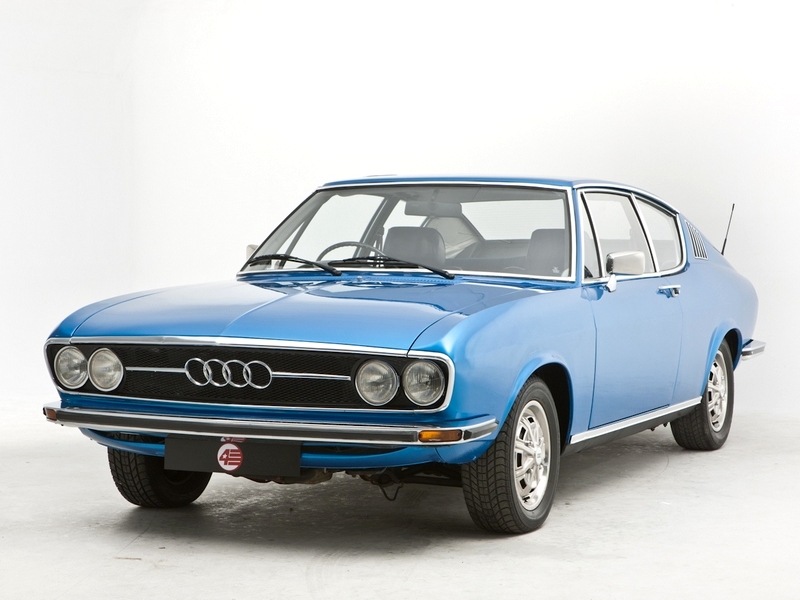
C1
(1970 - 1973)
1.9 L L4 8V
115 cv
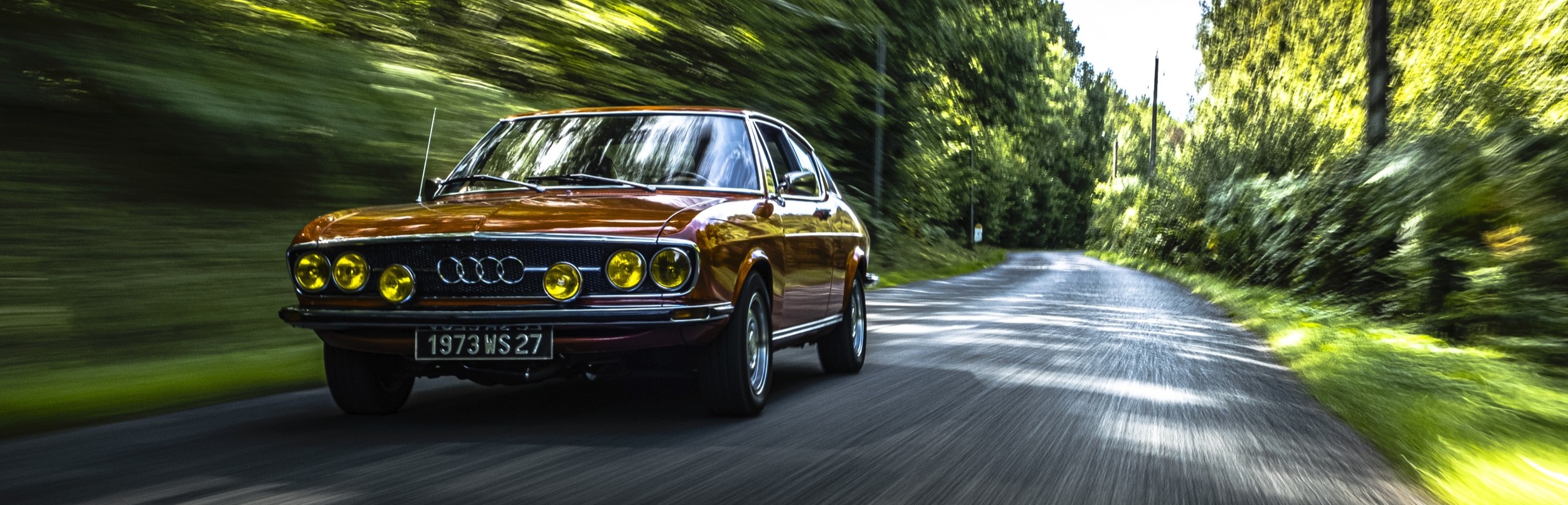
Technical specifications, versions, and history for the Audi 100 Coupe.
Select a generation to see available versions
(1970 - 1973)
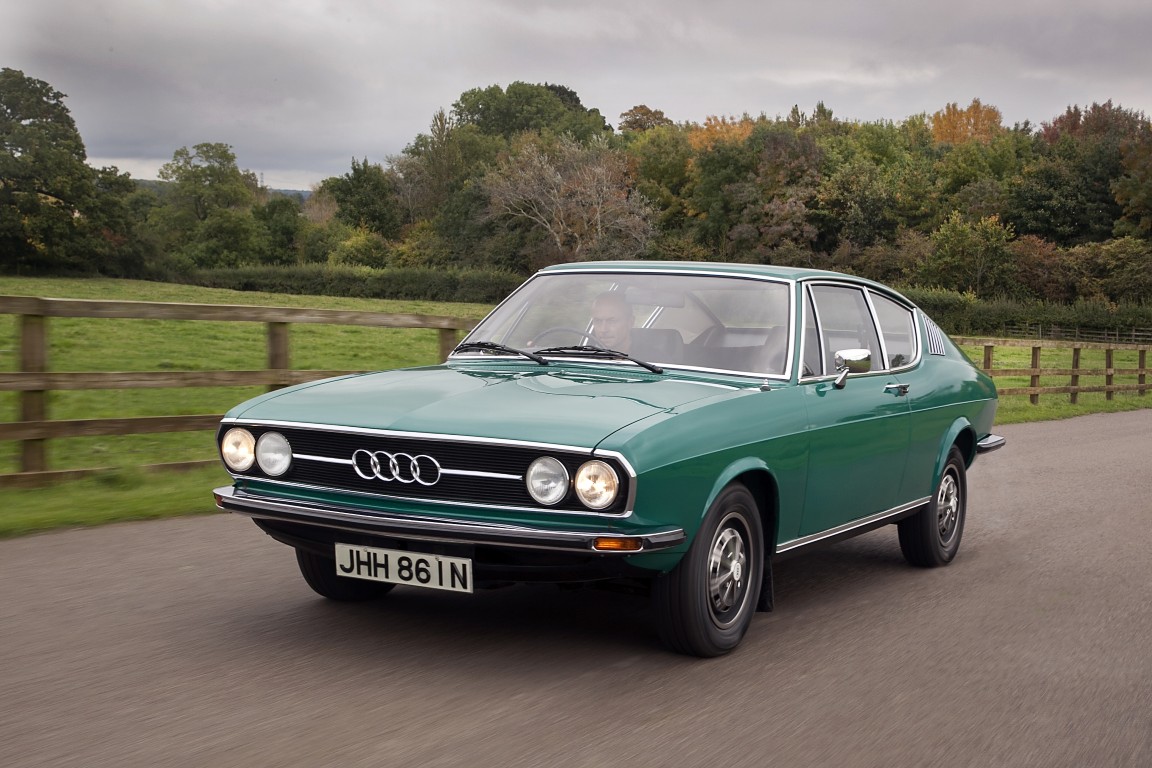
(1973 - 1976)
The Audi 100 Coupé S represents a landmark in the trajectory of the Ingolstadt-based manufacturer, symbolizing the consolidation of Audi as an independent brand focused on advanced engineering and refined craftsmanship. Launched at the turn of the 1970s, the model combined styling inspired by Italian grand tourers with practical front-wheel-drive mechanics, establishing dynamic and visual parameters that influenced future developments in the German automotive industry.
The genesis of the lineage dates back to an industrial restructuring period of Auto Union under Volkswagen's control, initiated in the mid-1960s. Countering directives from headquarters in Wolfsburg, which planned to utilize the Ingolstadt facilities solely to expand assembly of the Beetle, engineer Ludwig Kraus secretly developed an executive mid-to-large-size sedan: the first-generation Audi 100 (C1 platform). The immediate market success of the sedan paved the way for Kraus, assisted by designers Ruprecht Neuner and Hartmut Warkuss, to conceive a derivative with strictly emotional and sporting appeal.
Presented to the public in September 1969 during the Frankfurt Motor Show (IAA), the Audi 100 Coupé S entered regular assembly-line production in the second half of 1970. Its fastback silhouette, highlighted by the sweeping roofline flowing into the rear tail and decorative louvers on the C-pillars, drew immediate visual comparisons to internationally renowned contemporaries of the period, such as the Aston Martin DBS and the Fiat Dino Coupé.
The coupe utilized the stamped-steel unibody platform of the C1 sedan as its foundation, albeit with significant geometric modifications. To enhance cornering agility and directional stability under demanding driving conditions, the wheelbase was shortened by approximately 11.5 centimeters relative to the sedan, measuring 2,560 mm. This reduction tightened the turning circle and provided more immediate steering response.
| Dimension / Characteristic | Official Specification |
|---|---|
| Overall length | 4,398 mm |
| Overall width | 1,750 mm |
| Overall height | 1,341 mm |
| Wheelbase | 2,560 mm |
| Front track | 1,440 mm |
| Rear track | 1,440 mm |
| Curb weight | 1,100 kg |
| Luggage compartment volume | 500 liters |
| Fuel tank capacity | 58 liters |
| Aerodynamic drag coefficient (Cd) | 0.40 |
The front suspension architecture employed independent double wishbones paired with coil springs, telescopic hydraulic shock absorbers, and a transverse anti-roll bar. The rear axle relied on a rigid tubular setup featuring longitudinal torsion bars, trailing arms, a Panhard rod, and a stabilizer bar.
The original braking configuration was one of the most discussed engineering solutions of the project. Audi adopted inboard front disc brakes, mounted directly at the differential outputs rather than at the wheel hubs. The goal was to reduce unsprung mass at the suspension extremities to maximize tire contact and grip. These internally ventilated discs featured four-piston calipers, complemented by vacuum-assisted rear drum brakes. Although effective on track, the inboard placement hampered heat dissipation during prolonged braking and added significant complexity to routine workshop maintenance.
The Audi 100 Coupé was produced exclusively within the C1 platform lifecycle (factory code F105) between 1970 and 1976. Unlike the 100 sedan family, which continued evolving across the C2, C3, and C4 generations, the Coupé S did not receive a direct second generation under the same nameplate; in subsequent decades, the brand's sporting focus shifted toward the Audi Coupé/Audi Quattro lineage, built on the smaller Audi 80 platform. Over its six-year production run, the Coupé S went through three distinct technical and styling stages.
The first phase covered model years 1970 to mid-1972. During this period, the car utilized the highest-output specification of its engine, fed by dual carburetors, while featuring an upscale interior appointed with faux wood dashboard trim, center-console auxiliary gauges, a tilt-adjustable sports steering wheel, and individual bucket seats with integrated head restraints.
The second phase took place between late 1972 and mid-1973, consisting of a strictly mechanical update. Pressured by tightening vehicle emissions standards and seeking to eliminate the recurring synchronization issues of dual carburetors, engineering standardized the powertrain with a single progressive twin-choke carburetor. This resulted in a slight reduction in rated power output while maintaining a stable torque delivery across the low and mid-rev ranges.
The third phase corresponded to the mid-cycle facelift (often identified by technical preservationists as the C1.5 generation), implemented in September 1973 for the 1974 model year and maintained until production ended in 1976. Visually, the metallic front grille was replaced by an anti-glare black plastic unit with revised horizontal slats. At the rear, the angled vertical taillights were superseded by larger, rectangular light clusters. The cabin received an integrated instrument panel, a redesigned ventilation system, refreshed upholstery materials, and upgraded seat belts. Mechanically, the primary update occurred between 1974 and 1975, when the manufacturer eliminated the problematic inboard front brakes, relocating the discs to conventional outboard positions at the wheel hubs to resolve excessive engine-bay heat retention.
The powertrain of the Audi 100 Coupé S was based on the longitudinally mounted inline four-cylinder engine from the Mitteldruck ("medium pressure") engine family, whose high-efficiency combustion chamber had originally been designed with technical support from Daimler-Benz prior to Auto Union's sale. To power the Coupé S and ensure higher performance than the sedan (which peaked at 1.8 liters), the cylinder bore was enlarged to 84.0 mm alongside an 84.4 mm stroke, yielding a displacement of 1,871 cc. The camshaft was positioned inside the engine block (OHV), actuating two valves per cylinder via lifters, pushrods, and rocker arms.
Standard equipment featured a fully synchronized four-speed manual transmission. Beginning in 1971, an optional three-speed automatic gearbox was added to the catalog, calibrated to suit the power curve of the engine.
| Technical Parameter | Phase 1 (1970 – 1972) | Phase 2 (1972 – 1973) | Phase 3 / Facelift (1974 – 1976) |
|---|---|---|---|
| Configuration and displacement | Inline-4, 1,871 cc | Inline-4, 1,871 cc | Inline-4, 1,871 cc |
| Valves per cylinder | 2 (OHV / camshaft in block) | 2 (OHV / camshaft in block) | 2 (OHV / camshaft in block) |
| Fuel system | 2x twin-choke Solex carburetors | 1x twin-choke Solex carburetor | 1x twin-choke Solex carburetor |
| Compression ratio | 10.2:1 | 10.0:1 | 10.0:1 |
| Maximum net power | 115 hp (85 kW) @ 5,500 rpm | 112 hp (82 kW) @ 5,600 rpm | 112 hp (82 kW) @ 5,600 rpm |
| Maximum net torque | 159 Nm @ 4,000 rpm | 160 Nm @ 3,500 rpm | 160 Nm @ 3,500 rpm |
| Standard transmission | 4-speed manual | 4-speed manual | 4-speed manual |
| Optional transmission | 3-speed automatic | 3-speed automatic | 3-speed automatic |
| 0 to 100 km/h acceleration | 10.0 seconds | 10.2 seconds | 10.2 seconds |
| Homologated top speed | 185 km/h | 183 km/h | 183 km/h |
Across its production run, the assembly lines delivered 30,687 units of the Audi 100 Coupé S. This represents a modest portion of the overarching Audi 100 C1 production run, which reached 827,474 vehicles worldwide, reflecting the exclusive niche market occupied by the coupe.
The majority of units were sold in Western European markets, primarily in West Germany, Switzerland, and France. Under a local completely knocked-down (CKD) assembly program, the South African plant built 1,472 right-hand-drive units between 1972 and 1976. In the North American market, the Coupé S was not marketed through the official dealer network, as re-engineering the body to comply with local bumper standards and impact tests would have rendered the retail price commercially non-viable. The handful of examples in the United States and Canada arrived via private independent imports over subsequent decades.
Its torsional rigidity and expansive engine bay made the Audi 100 Coupé S a prime platform for experimental engineering within the Volkswagen Group and Porsche. Between 1973 and 1975, development teams created three specialized test mules for the Porsche 928 program. At the time, Porsche was secretly readying its new grand tourer featuring a front water-cooled V8 engine and a rear transaxle gearbox. To road-test the mechanical assembly incognito without revealing the design of the upcoming model, Porsche fitted these components into Coupé S shells. The first prototype (designated V3) used a standard Coupé S body fitted with prominent wheel-arch flares to accommodate the widened track. A second prototype (designated V4) was sectioned down its longitudinal center line and widened by 11 centimeters relative to factory dimensions, creating a wide-body mule capable of housing 4.5 to 5.0-liter V8 powerplants delivering between 240 and 350 horsepower.
Outside the Porsche program, the Italian design house led by Pietro Frua presented a styling concept for the Audi 100 Coupé in 1974. The concept showcased an aerodynamic wedge-shaped front end with pop-up headlights and a more sharply raked rear hatch. Although fully operational and constructed over production 112 hp running gear, Frua's study never advanced beyond the design prototype stage, as Audi opted to focus its development capital on the upcoming Audi 100 C2 and the expanding 80 model lines.
The conclusion of Audi 100 Coupé S production in 1976 brought to an end the automaker's first post-takeover sports model chapter. It demonstrated the commercial viability of an upscale sporty vehicle underpinned by the front-wheel-drive architecture of a volume executive sedan. The packaging decisions, weight distribution with a forward front overhang, and dedicated aerodynamic focus served as an ideological stepping stone toward the development of the original Audi Quattro at the start of the 1980s. Today, with fewer than 31,000 units originally produced and a low survival rate resulting from contemporary rust vulnerability, the Coupé S stands as one of the most sought-after collector pieces in German classic car history.