
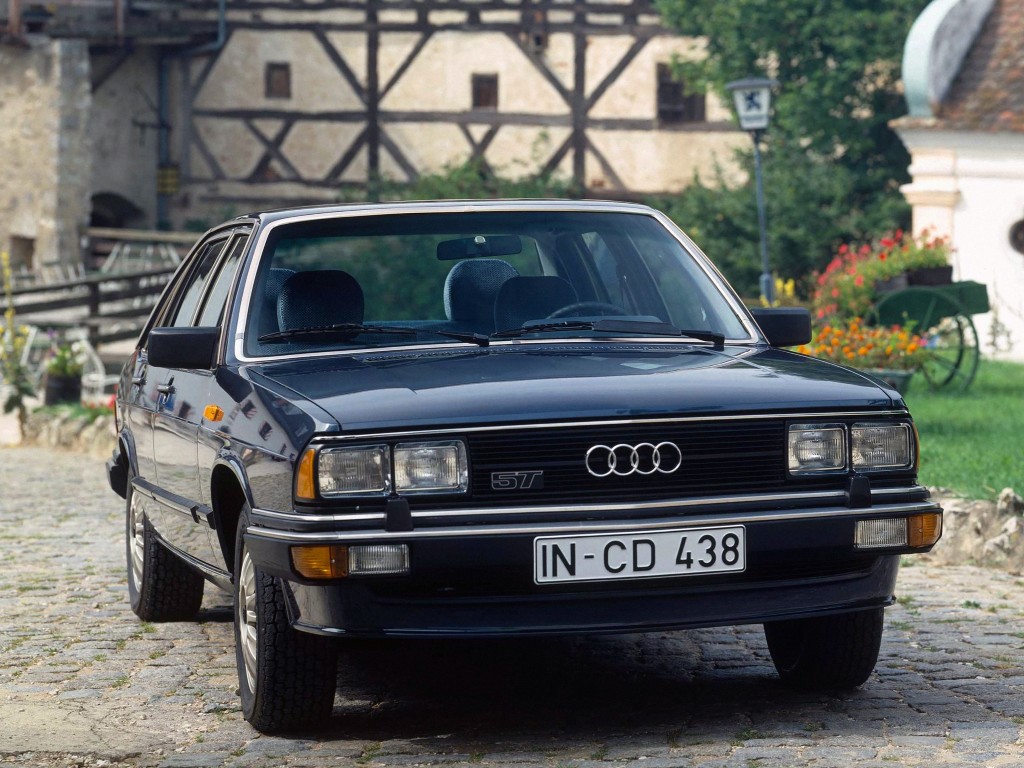
C2
(1979 - 1983)
2.1 L L5 10V Turbo
170 cv
Technical specifications, versions, and history for the Audi 200.
Select a generation to see available versions
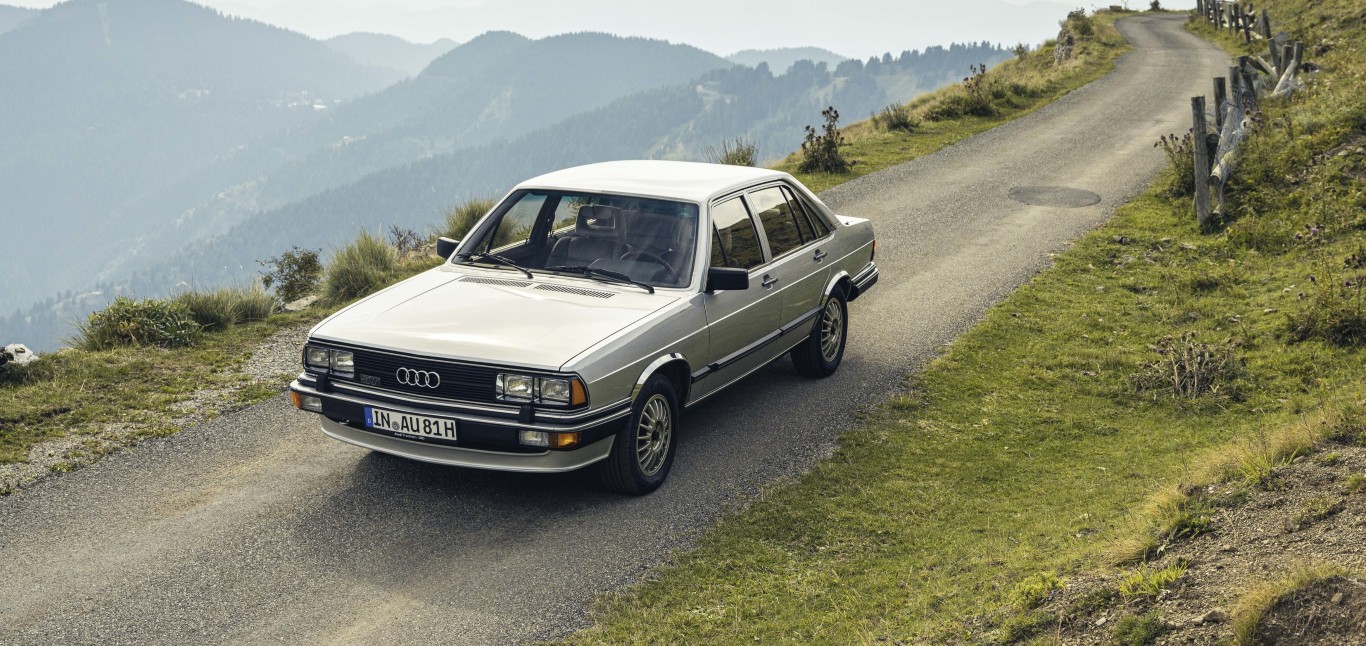
(1979 - 1983)
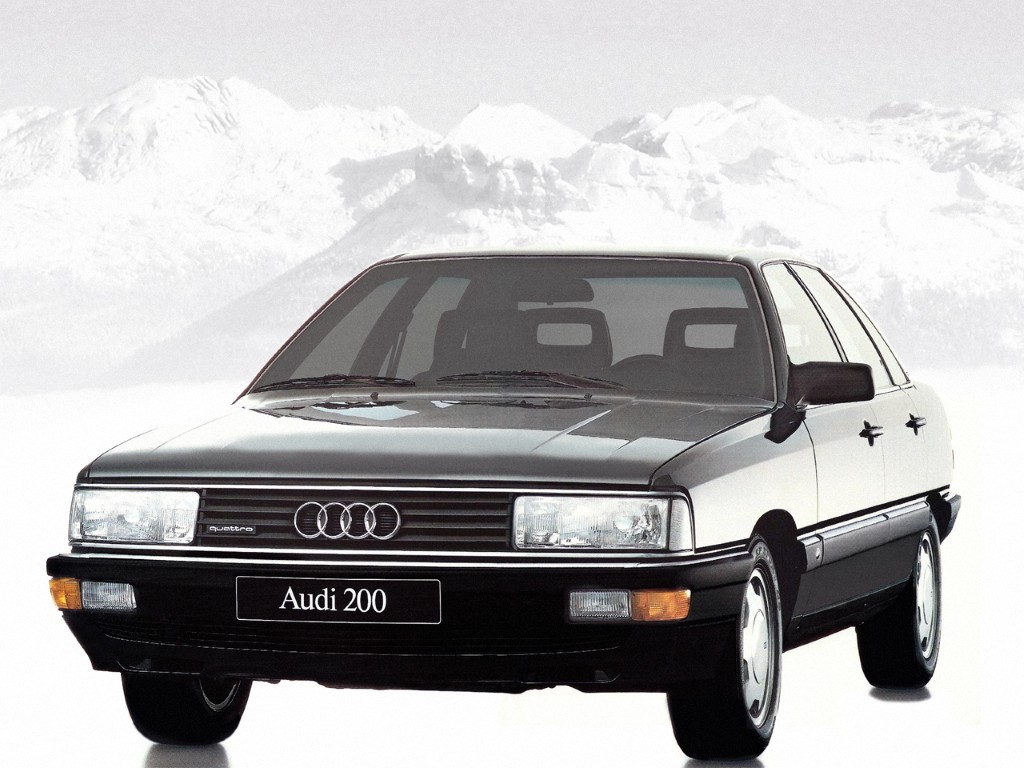
(1983 - 1988)
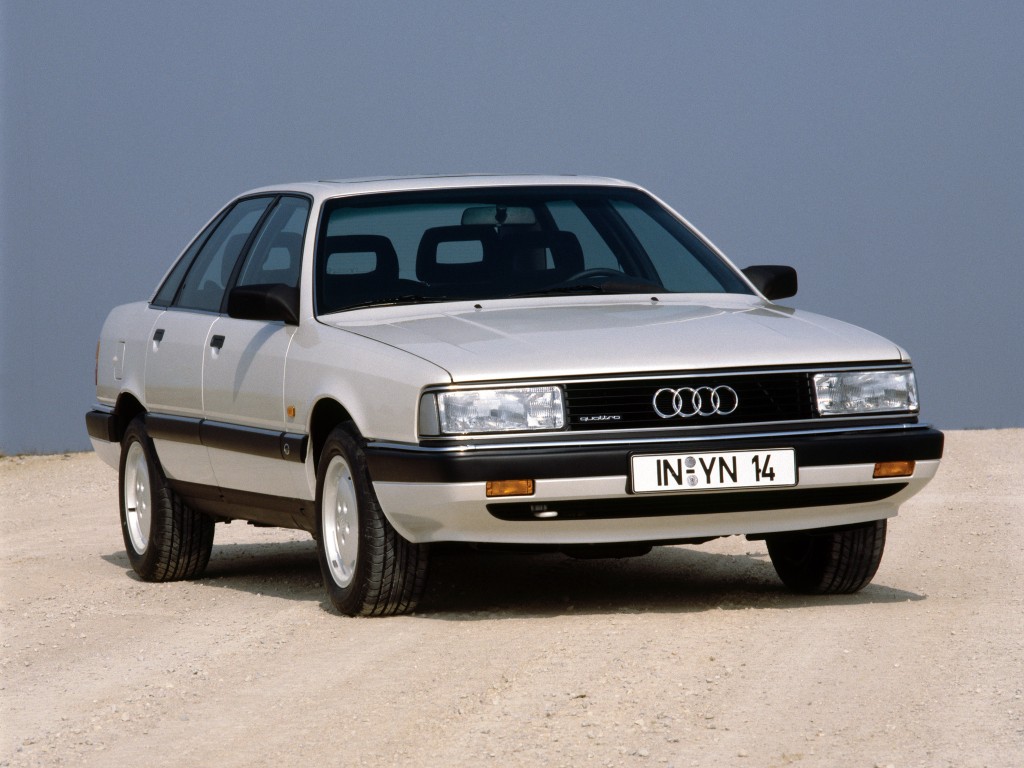
(1988 - 1991)
The Audi 200 was conceived in the late 1970s with the strategic objective of elevating the German brand into the executive luxury segment, directly rivaling established models such as the Mercedes-Benz W123/W124 and the BMW 5 Series. Derived from the structural architecture of the Audi 100, the Audi 200 was positioned as the flagship variant of the range, integrating higher levels of interior trim, a broader offering of standard equipment, and exclusive turbocharged inline five-cylinder powertrains. Across two primary generations (C2 and C3) and a decisive mid-cycle update, the model played a fundamental role in the development of quattro permanent all-wheel drive and the establishment of high-performance turbocharged engines that shaped Audi's identity.
Introduced in late 1979 and marketed until 1982, the first generation of the Audi 200 carried the internal code Typ 43 and utilized the Volkswagen Group C2 platform. The vehicle shared the basic unibody structure of the Audi 100 C2, but set itself apart aesthetically through a redesigned front end featuring dual rectangular halogen headlights, more robust chrome-trimmed bumpers, exclusive side protective moldings, and 15-inch alloy wheels shod with 205/60 R15 tires. Inside, the finish included high-density velour upholstery, an expanded instrument cluster, and enhanced sound insulation.
During the Typ 43 production cycle, the Audi 200 was offered exclusively in a four-door sedan body style. Although a variant called the Audi 100 Avant existed at the same time, it was a five-door hatchback/liftback model and did not receive the 200 badge or the turbocharged engines of the lineup.
The engine lineup for the Audi 200 C2 was limited to two variations of the 2.1-liter (2,144 cc) inline five-cylinder gasoline engine block, mounted longitudinally at the front, featuring a single overhead camshaft (SOHC) and two valves per cylinder. Fuel delivery was managed by the Bosch K-Jetronic mechanical injection system.
The entry-level version, the Audi 200 5E, used the naturally aspirated engine with identification code WC, producing 136 hp. The top-of-the-line version, the Audi 200 5T, featured the turbocharged engine under code WJ, generating 170 hp. This variant stood out in the European market for delivering acceleration and top speed figures comparable to larger-displacement V8 executive sedans. Both engines could be paired with either a 5-speed manual transmission or a 3-speed automatic gearbox, with exclusively front-wheel drive.
| Technical Data and Performance | Audi 200 5E (Naturally Aspirated) | Audi 200 5T (Turbo) |
|---|---|---|
| Engine Code | WC | WJ |
| Displacement / Cylinders | 2,144 cc / Inline-5 | 2,144 cc / Inline-5 |
| Bore x Stroke | 79.5 mm x 86.4 mm | 79.5 mm x 86.4 mm |
| Compression Ratio | 9.3:1 | 7.2:1 |
| Fuel System | Bosch K-Jetronic Mechanical Injection | Bosch K-Jetronic with KKK Turbocharger |
| Maximum Power | 136 hp (100 kW) @ 5,700 rpm | 170 hp (125 kW) @ 5,300 rpm |
| Maximum Torque | 182 Nm @ 4,200 rpm | 265 Nm @ 3,300 rpm |
| Transmission | 5-speed Manual / 3-speed Auto | 5-speed Manual / 3-speed Auto |
| Acceleration (0–100 km/h) | 10.6 s (Manual) / 12.5 s (Automatic) | 8.6 s (Manual) / 9.4 s (Automatic) |
| Top Speed | 188 km/h (Manual) / 183 km/h (Automatic) | 202 km/h (Manual) / 195 km/h (Automatic) |
| Curb Weight | 1,260 kg | 1,260 kg |
Total production of the Audi 200 C2 reached 51,282 units between 1979 and 1982. Consumer preference was overwhelmingly oriented toward the turbocharged model, which accounted for over 75% of total sales.
Launched in the European market in 1983, the second generation of the Audi 200, designated Typ 44 and based on the Volkswagen Group C3 platform, redefined automotive aerodynamic standards under design chief Hartmut Warkuss. The sedan body achieved an aerodynamic drag coefficient ($C_d$) of 0.30, an unprecedented benchmark for a production executive sedan at the time.
Unlike the previous generation, the Audi 200 C3 was offered in two body configurations: the traditional four-door sedan and the five-door station wagon, named the Audi 200 Avant. The Avant variant boasted an aerodynamic profile with a $C_d$ of 0.34 and offered superior cargo capacity without compromising sporty appeal and dynamic performance. The C3 generation also introduced the permanent quattro all-wheel-drive system, derived from the Audi Quattro rally car, setting a benchmark for stability and traction under adverse conditions.
In early 1988, the Audi 200 C3 lineup underwent a comprehensive mid-cycle facelift. On the exterior, aesthetic changes focused on visual cleanliness and aerodynamic optimization, highlighted by the adoption of door handles fully recessed and flush with the bodywork, new side mirrors, and subtly reconfigured taillight clusters.
The dashboard was completely redesigned, gaining a smooth, continuous curved instrument binnacle housing auxiliary gauges for oil pressure, temperature, and battery voltage, alongside updated automatic climate control switchgear and refreshed interior upholstery.
The most significant technical innovation introduced with the 1988 facelift was Procon-Ten (Programmed Contraction and Tension). This exclusive Audi passive safety system operated via a network of tensioned steel cables connected to the engine block. In a severe frontal impact, the rearward displacement of the engine pulled the steel cables, retracting the steering column into the dashboard away from the driver and instantly pre-tensioning the front seatbelts, drastically reducing injury risk.
The C3 generation engine lineup evolved continuously between 1983 and 1991, transitioning from 10-valve variants to an advanced 20-valve architecture.
In the early years, the Audi 200 C3 utilized the 2.1-liter 10-valve turbo engine (code KG), delivering 182 hp without a catalytic converter. To comply with strict environmental legislation in Europe and North America, Audi introduced the 2.2-liter (2,226 cc) 10-valve engine with a three-way catalytic converter (code MC), tuned to 165 hp.
With the 1988 facelift, new calibrations of the 2.2-liter engine emerged: the 1B code, equipped with optimized electronic engine management and elevated boost pressure to deliver 200 hp with a manual transmission, and the 2B code, tuned to 190 hp for automatic transmission versions.
In March 1989, Audi presented the definitive version of the C3 series: the Audi 200 20V Turbo Quattro (Sedan and Avant). Under the hood, the vehicle adopted the 3B engine, a 2.2-liter (2,226 cc) inline-5 with double overhead camshafts (DOHC), 4 valves per cylinder (20V total), a KKK K24 turbocharger with a high-capacity intercooler, and Bosch Motronic sequential electronic fuel injection.
This powerplant generated 220 hp at 5,700 rpm and 309 Nm of torque at just 1,950 rpm, allowing the sedan to accelerate from 0 to 100 km/h in 6.6 seconds and reach a top speed of 242 km/h. The 200 20V featured standard permanent quattro all-wheel drive with a Torsen center differential, a reinforced 5-speed manual gearbox, and distinctive styling cues such as subtly flared front and rear wheel arches and cross-spoke BBS alloy wheels.
To rein in the 20V's performance, Audi adopted a front braking system developed by ATE Teves, nicknamed "UFO" brakes due to the disc's shape. This system positioned the brake caliper inside the dished steel rotor, allowing the use of a larger effective disc diameter (310 mm) without increasing the 15-inch wheel size, resulting in superior thermal heat dissipation.
| Engine Code | Valves | Displacement | Power / Torque | Fuel Delivery / Catalyst | Period | Transmission / Drivetrain |
|---|---|---|---|---|---|---|
| KG | 10V | 2,144 cc | 182 hp (134 kW) @ 5,700 rpm / 252 Nm | Bosch K-Jetronic Turbo / Non-Catalyst | 1983–1987 | 5-speed Manual / FWD or Quattro |
| MC | 10V | 2,226 cc | 165 hp (121 kW) @ 5,500 rpm / 240 Nm | Bosch K-Jetronic with Catalyst | 1985–1991 | 5-speed Manual / 3/4-speed Auto / FWD / Quattro |
| 1B | 10V | 2,226 cc | 200 hp (147 kW) @ 5,700 rpm / 270 Nm | Bosch K-Jetronic with Catalyst | 1988–1990 | 5-speed Manual / FWD or Quattro |
| 2B | 10V | 2,226 cc | 190 hp (140 kW) @ 5,800 rpm / 270 Nm | Bosch K-Jetronic with Catalyst | 1988–1990 | 4-speed Automatic / Front-Wheel Drive |
| 3B | 20V | 2,226 cc | 220 hp (162 kW) @ 5,700 rpm / 309 Nm | Bosch Motronic Turbo 20V / Catalyst | 1989–1991 | 5-speed Manual / Quattro All-Wheel Drive |
Production of the Audi 100/200 C3 platform exceeded one million units in total, of which the Audi 200 represented the most exclusive and high-performance share. Across its two generations, the Audi 200 production volume was distributed as follows:
| Generation / Body Variant | Production Period | Units Produced |
|---|---|---|
| Audi 200 C2 (Typ 43) Sedan | 1979–1982 | 51,282 |
| Audi 200 C3 (Typ 44) Sedan | 1983–1991 | 97,195 |
| Audi 200 C3 (Typ 44) Avant | 1984–1991 | 6,153 |
| Cumulative Total (C2 + C3) | 1979–1991 | 154,630 |
Variants equipped with the 20V engine (code 3B) manufactured between 1989 and 1991 had a limited production volume. In the United States market, where the model was sold under the commercial designation Audi 200 20V Turbo Quattro during the 1991 model year, approximately 1,000 units of the Sedan and around 149 to 200 units of the Avant wagon were imported, consolidating the 20V Avant as one of the rarest series-production cars in the manufacturer's modern history.
The mechanical durability of the five-cylinder engine and the efficiency of the quattro drivetrain were demonstrated by Audi on two distinct fronts of international motorsport using the Audi 200 structure.
Following the cancellation of Group B at the end of the 1986 season, the FIA established Group A as the premier category of the WRC for 1987, requiring cars derived directly from series production with a minimum run of 5,000 units. Audi entered the Audi 200 Quattro Group A, equipped with the 10-valve 2.1-liter Turbo engine tuned to generate around 238 hp and 330 Nm of torque, maintaining the minimum weight of 1,370 kg.
In the grueling 1987 Safari Rally in Kenya, contested over thousands of kilometers under extreme terrain and weather conditions, the factory Audi team scored a historic 1-2 finish: the duo Hannu Mikkola and Arne Hertz secured overall victory in 1st place, followed by Walter Röhrl and Christian Geistdörfer in 2nd position.
In 1988, Audi redirected its circuit racing efforts to the United States by entering the Trans-Am Championship with the Audi 200 Quattro Trans-Am (internal code R4). SCCA technical regulations required retaining the factory steel unibody shell and original engine block.
The Audi 200 played a pivotal role in repositioning Audi in the global automotive market. It served as a validation testbed for engineering solutions such as quattro all-wheel drive in executive sedans, advanced aerodynamic body shaping, the Procon-Ten mechanical safety system, and the evolution of turbocharged five-cylinder engines with 20-valve cylinder heads.
Upon concluding its production in 1991, Audi overhauled its model nomenclature structure. The technical concept established by the Audi 200 20V led directly to the Audi S4 (developed on the C4 platform of the Audi 100) and subsequently to the Audi S6 and the high-performance Audi RS2 Avant estate, laying the definitive foundations for the German brand's performance vehicle division.