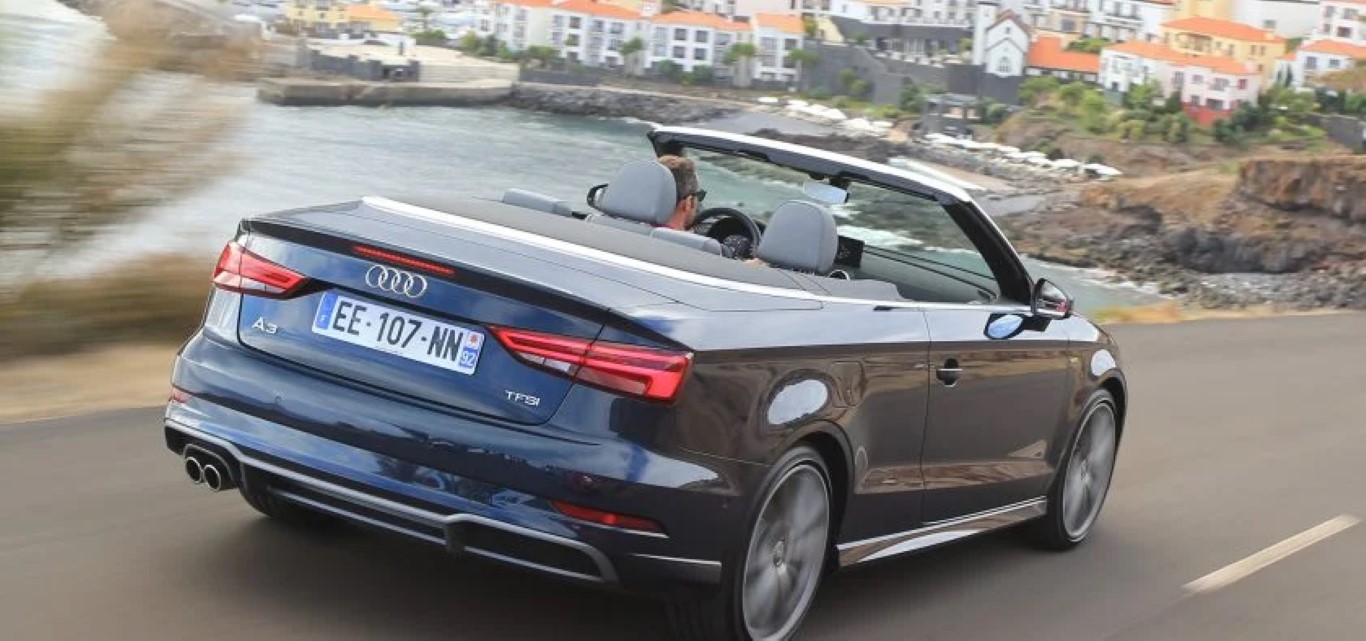
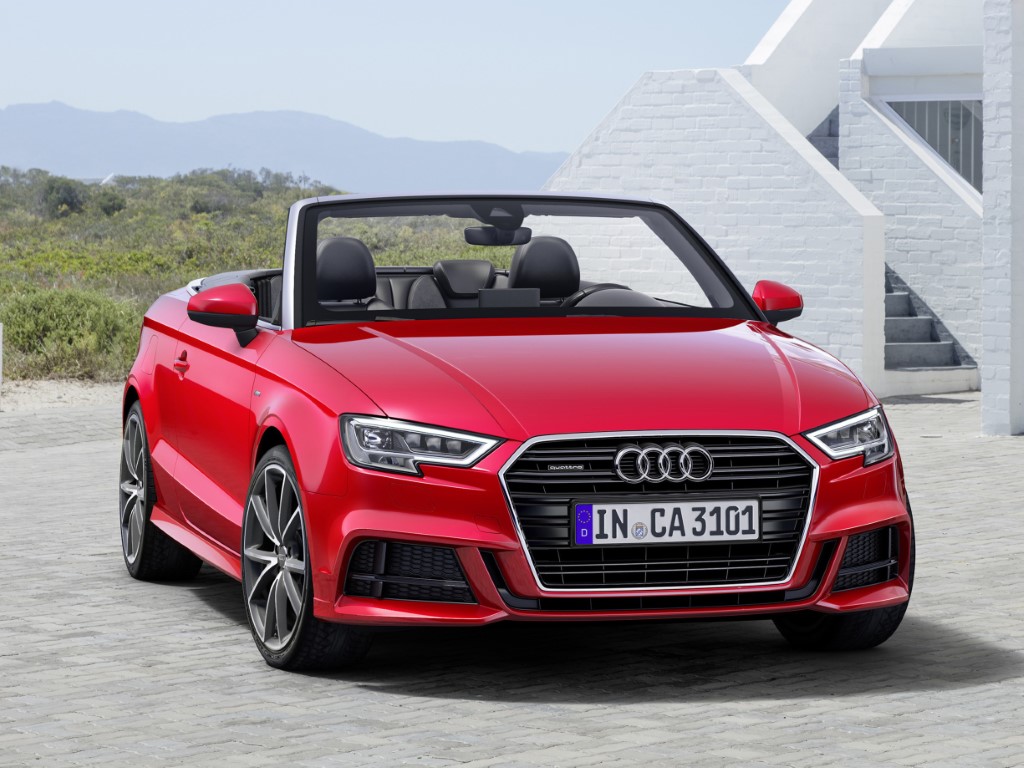
The production history of the A3 Cabriolet is intrinsically linked to the Audi Hungaria plant in
Győr.
The Hungarian Center of Excellence
The Győr plant, originally an engine factory, expanded to vehicle assembly with the TT and later with
the A3 family. Audi invested over 900 million Euros to enable the factory for full production (body shop,
paint, and assembly) of the A3 Sedan and Cabriolet.
- Capacity: The factory produced around 160,000 vehicles per year at the peak
of the 8V generation, encompassing the TT, A3 Sedan, and Cabriolet.
- Roof Logistics: The soft tops were supplied by third-party specialists
(like Webasto or Magna, depending on the year/contract), delivered to the assembly line "just-in-time"
already pre-assembled for installation on the chassis.
Estimated Production Volumes
Audi reports grouped production numbers, but quarterly reports reveal the "niche" scale of the
Cabriolet.
Between 2007 and 2013 (8P Generation), approximately 63,000 units of the A3 Cabriolet were produced
jointly between Ingolstadt and Győr.
In the 8V generation (2014-2020), numbers fluctuated. In high quarters (like Q1 2019), production was
around 3,300 to 4,000 units quarterly. At the end of its life (Q3 2020), production fell to 4,620 cumulative
units in the period, a tiny number compared to the more than 113,000 Q3 SUVs produced in the same interval.
Total Estimate: It is estimated that total global production for the two combined
generations is in the range of 180,000 to 200,000 units, making it a relatively exclusive car compared to
the millions of A3 Hatchbacks produced.
The End (2020) and the Reasons for Discontinuation
Production of the A3 Cabriolet ended in 2020, with no successor in the 8Y generation (launched in
2020).
- The Rise of SUVs: The global consumer migrated massively to SUVs (Q2, Q3).
The "leisure car" stopped being the convertible and became the Crossover.
- Homologation Costs: With emissions (Euro 6d, WLTP) and safety standards
becoming stricter, the cost of developing a unique and complex body variant to sell a few thousand units
became prohibitive.
- Simplification of the VW Group: The global strategy focused on
electrification. Low-volume internal combustion models, like the A3 Cabriolet and the TT Roadster, were
cut to free up resources for the e-tron line.
Conclusion
The Audi A3 Cabriolet ended its journey as one of the most balanced products ever made by the brand.
It managed to translate the experience of freedom of a convertible without imposing the severe usability
penalties that usually accompany this category. Its trunk was usable, its acoustic insulation (especially in
the 8V generation with the acoustic roof) was exemplary, and its driving dynamics, while not those of a race
car, were safe and enjoyable.
In Brazil, the 8V Ambition model (especially the 2.0 with Virtual Cockpit) remains one of the most
rational purchases in the premium used market. It offers the reliable and easy-to-maintain mechanics of the
VW Group (shared with the Golf GTI and Jetta GLI), a design that stands the test of time, and the
exclusivity of a body format that, unfortunately, is disappearing from global production lines. The A3
Cabriolet was not just a car; it was a manifesto that German engineering could be fun and logical at the
same time.