8V
(2014 - 2016)
2.0 Turbo
220 cv
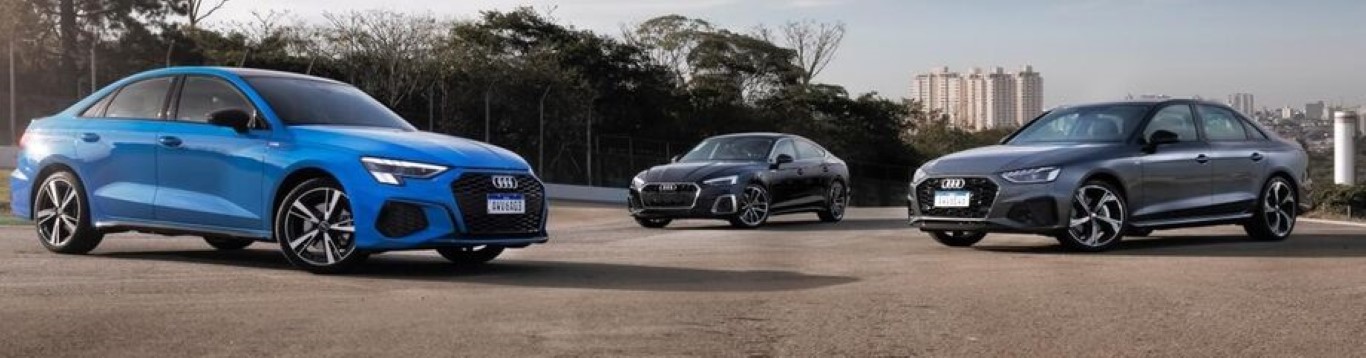
Technical specifications, versions, and history for the Audi A3 Sedan.
Select a generation to see available versions
(2014 - 2016)
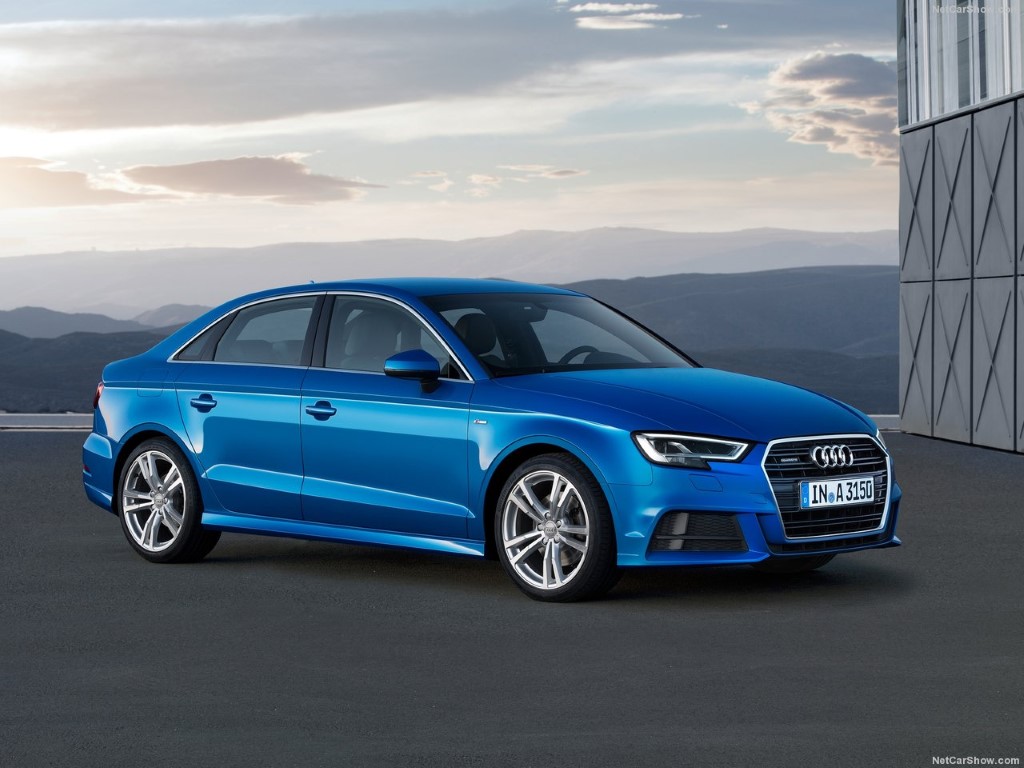
(2017 - 2021)
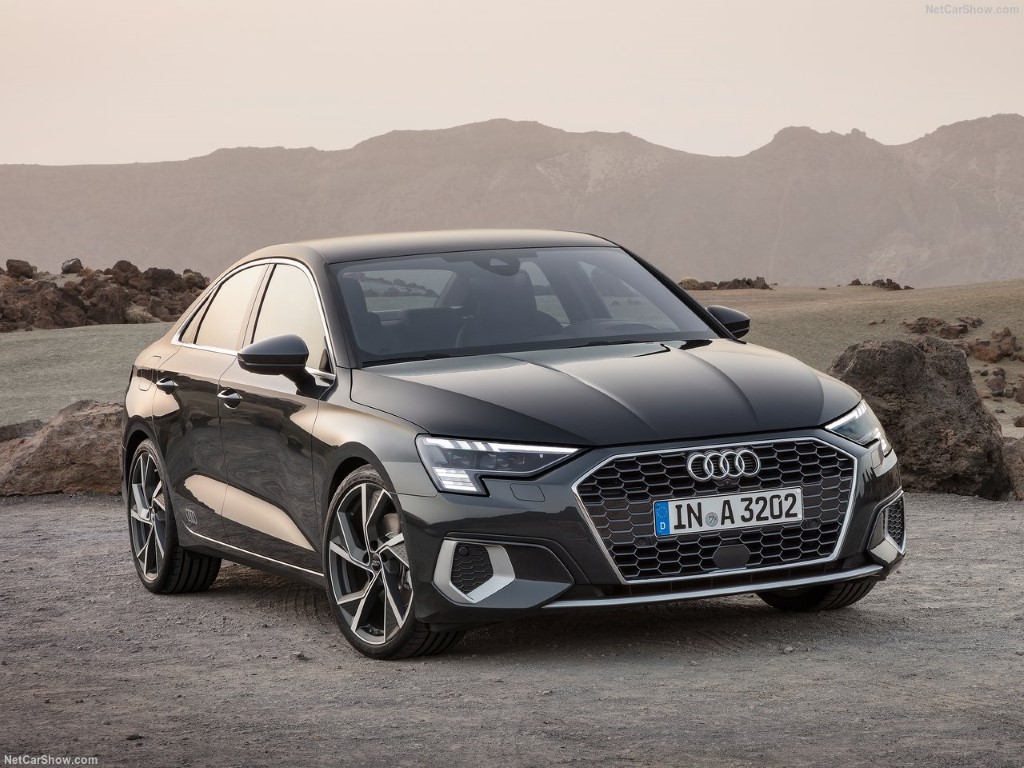
(2022 - 2024)
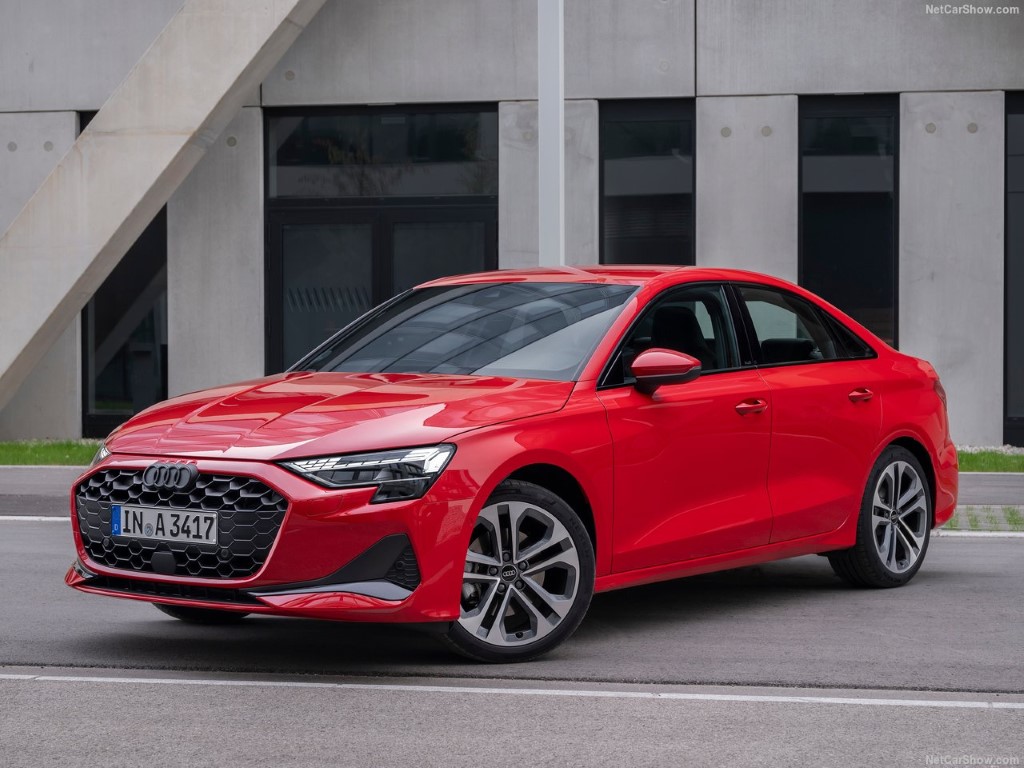
(2025-)
Select a powertrain to view full technical specifications
The global automotive industry, over the past three decades, has witnessed an unprecedented fragmentation of segments. However, few moves were as calculated and transformative as the introduction of sedan variants into premium compact families. The Audi A3 Sedan is not just an isolated product; it represents the tactical response of Audi AG to an emerging global demand — specifically in China and the United States, and subsequently in Latin America — for vehicles that combined the prestige of German engineering with the traditional three-box silhouette, but in manageable urban dimensions.
Before the advent of the A3 Sedan, the entry-level segment for luxury sedans was occupied by models that, generation after generation, had grown substantially. The Audi A4, BMW 3 Series, and Mercedes-Benz C-Class, once compact, migrated to higher size and price brackets, leaving a vacuum in the market. The aspirational consumer, or the one desiring a second premium car for urban use, found themselves orphaned of options other than hatchbacks — a body configuration that, while popular in Europe, faces cultural resistance in markets that associate the "protruding trunk" with status and safety.
This report compiles an exhaustive analysis of the Audi A3 Sedan's trajectory, with a surgical focus on its operation in the Brazilian market. The following narrative dissects the engineering nuances of the MQB platform, the complex industrial decisions behind its nationalization in São José dos Pinhais, the technical controversies over suspensions and transmissions that divided the enthusiast base, and the technological sophistication of the current generation. The goal is to provide a definitive historical record, free of superficialities, that documents not only the "what," but the "why" of every bolt changed along this journey of commercial success.
To understand the A3 Sedan, it is imperative to understand its backbone: the Modularer Querbaukasten (MQB) platform, or Modular Transverse Matrix. Launched by the Volkswagen Group in 2012, this architecture represented a paradigm shift in automotive manufacturing. Unlike older platforms, which were rigid in dimensions, the MQB standardized only the distance between the front axle and the firewall (where the pedals are located), allowing all other dimensions — wheelbase, front and rear overhangs, width, and height — to be altered according to the project's needs.
In the specific case of the A3 Sedan (internal code 8V), the MQB allowed Audi's designers to draw a car with harmonious proportions. Unlike previous attempts by other brands to transform hatchbacks into sedans (which often resulted in awkward aesthetics), the A3 Sedan benefited from a slightly elongated wheelbase compared to the Sportback (hatch) model, giving it a "four-door coupe" silhouette. The roofline drop was softened, and the integration of the third volume was organic. Beyond aesthetics, the MQB brought significant advancements in torsional rigidity and weight reduction, utilizing hot-formed ultra-high-strength steels, which would directly translate into the model's praised driving dynamics.
The landing of the Audi A3 Sedan in Brazil officially occurred in January 2014. At this inaugural moment, the vehicle was a purely European product, imported from the Audi factory in Győr, Hungary — the largest engine plant in the world and a center of excellence for the brand.
The market reception was immediate and overwhelming. In a scenario where the Brazilian consumer was accustomed to paying high prices for mid-size sedans from mainstream brands (like the Toyota Corolla and Honda Civic), the A3 Sedan arrived with an aggressive price positioning, offering the prestige of the four rings for a justifiable financial difference. By October 2014, Audi had already sold 7,000 units of the model, representing 35% of the brand's total sales volume in the country that year. This success not only validated the product strategy but also paved the way for the local production decision.
The Hungarian models brought to Brazil were characterized by a mechanical set that prioritized thermodynamic efficiency and dynamic precision, strictly aligned with the standard offered in Germany.
The year 2015 marked a turning point in Audi's history in Brazil. Under the Inovar-Auto automotive regime, which imposed 30 percentage point surcharges on the IPI (Industrialized Products Tax) for imported vehicles outside the quota, nationalization became a matter of survival and competitiveness. Audi announced a multi-million dollar investment to reactivate its assembly line within the Volkswagen industrial complex in São José dos Pinhais, Paraná.
This move, however, was not just logistical. The engineering team at Audi do Brasil, in collaboration with the headquarters in Ingolstadt, conducted an extensive testing and adaptation program to "tropicalize" the A3 Sedan. The goal was to increase the vehicle's robustness to withstand the Brazilian road network, notoriously more severe than the European one, and to adapt the powertrain for the use of ethanol.
The national A3 Sedan debuted a global innovation for the brand: the first Audi engine with directly injected Flex Fuel technology. Produced at the Volkswagen engine plant in São Carlos (SP), the 1.4 TFSI Flex engine was heavily reworked compared to its Hungarian gasoline counterpart.
Engineering applied new materials to the valve seats and piston rings to resist the corrosiveness of ethanol and increased the compression ratio to take advantage of this plant-based fuel's higher octane rating. The high-pressure direct injection system (working above 200 bar) allowed ethanol to be sprayed directly into the combustion chamber with such precision that it eliminated the need for any auxiliary cold start system (like the old small gasoline tank or the heating lances in the manifold). The car started instantly even in sub-zero temperatures.
The practical result was a notable leap in performance:
With this new heart, the national A3 Sedan 1.4 became much faster, reducing its 0 to 100 km/h time to the 8.8-second range and reaching a top speed of 215 km/h, numbers that placed it far ahead of the naturally aspirated mid-size sedans of the time.
Nationalization, although beneficial for the engine, brought alterations to the transmission and rear suspension of the 1.4 versions that generated intense debates among purists and technical consumers. Audi justified the changes based on durability and the Brazilian usage profile, although the reduction of production costs is also an undeniable implicit factor.
In the versions equipped with the 1.4 Flex engine, Audi replaced the S-tronic dual-clutch gearbox (DQ200) with the conventional 6-speed Tiptronic automatic gearbox (AQ250), supplied by Japanese company Aisin.
The second structural alteration was the replacement of the Multilink rear suspension with a torsion beam in the national 1.4 versions.
In order not to alienate the enthusiast consumer who demanded the full technology, Audi launched the national A3 Sedan 2.0 Ambition. This car represented the "state of the art" of local production, maintaining the European chassis specifications.
Unlike the 1.4, the 2.0 Ambition was a completely different animal:
This model, priced at the time around R$ 137,990, offered an unbeatable performance-to-cost ratio, accelerating from 0 to 100 km/h in 6.9 seconds.
| Year/Model | Origin | Version | Engine | Power | Gearbox | Rear Suspension |
|---|---|---|---|---|---|---|
| 2014-2015 | Hungary | Attraction | 1.4 TFSI (G) | 122 hp | S-tronic 7 (Dry) | Multilink |
| 2014-2015 | Hungary | Ambition | 1.8 TFSI (G) | 180 hp | S-tronic 7 (Dry) | Multilink |
| 2016-2020 | Brazil | Attraction/Prestige | 1.4 TFSI (Flex) | 150 hp | Tiptronic 6 | Torsion Beam |
| 2016-2020 | Brazil | Ambiente/Prestige Plus | 1.4 TFSI (Flex) | 150 hp | Tiptronic 6 | Torsion Beam |
| 2016-2020 | Brazil | Ambition/Performance | 2.0 TFSI (G) | 220 hp | S-tronic 6 (Wet) | Multilink |
In 2017, following the global life cycle, the national A3 Sedan received its mid-life update. The external changes were surgical to align the car with the brand's new visual language, debuted by the A4 B9. The headlights gained a "Z" bottom cutout, making the car's look more aggressive. The Singleframe grille was widened and received sharper contours.
However, the revolution was on the inside. Audi introduced the Audi Virtual Cockpit to the compact segment. It is a fully digital instrument cluster, consisting of a high-resolution 12.3-inch TFT screen (1440 x 540 pixels). Powered by an NVIDIA graphics processor, the panel allowed the driver to choose between viewing classic dials (speedometer and tachometer) or minimizing them to display the GPS navigation map full screen, directly in the field of view. This feature, previously restricted to higher-category luxury cars (like the Audi TT and Q7), raised the segment's technological bar and became a mandatory object of desire in the resale market.
With the facelift, Audi do Brasil abandoned the old nomenclature (Attraction, Ambiente, Ambition) and adopted global names based on equipment packages, aiming to simplify customer understanding:
To celebrate the brand's silver jubilee in Brazil — an operation heroically started by Ayrton Senna in 1994 —, Audi launched the special series A3 Sedan Prestige Plus 25 Anos in 2019. Limited to a few hundred units, this version offered an exclusive visual package:
Listed at R$ 149,990 (with aggressive promotions down to R$ 131,990), the model was an instant success, offering the top-of-the-line look with the economy and robustness of the 1.4 Flex engine.
The year 2020 marked the end of Audi A3 Sedan production in Brazil. In December of that year, the last units left the Paraná assembly line, leaving only about 30 cars in stock at the beginning of 2021.
The decision to end local production was complex and multifactorial:
The production hiatus temporarily left the Brazilian market without the sedan until the arrival of the first imported units of the new generation.
The new generation of the A3 Sedan, landing in Brazil in late 2021 as a 2022 model, brought a visual rupture. The design, penned under Marc Lichte's new directive, incorporated concave surfaces on the sides (a complex stamping technique inspired by Lamborghini models), giving the car unprecedented musculature. The front grille became even larger and dominated by a honeycomb weave.
Inside, the change was radical. The round air vents (a hallmark of the previous generation) gave way to angular geometric shapes positioned next to the instrument cluster, reminiscent of fighter jet cockpits. The traditional gear lever disappeared, replaced by a small, minimalist selector ("shift-by-wire"), freeing up space on the center console. The 10.1-inch MMI Touch multimedia system became integrated into the dashboard, abandoning the retractable screen of the previous generation.
The launch of the 8Y generation in Brazil was marked by a curious and extremely specific version, a result of turbulence in the global supply chain (semiconductor crisis). Audi brought a limited pre-sale batch of approximately 300 units equipped with the 1.4 engine.
This version, dubbed the A3 Sedan S line Limited 1.4 TFSI, is considered a "white fly" (rare item) and has unique specifications:
Past the initial batch, Audi regularized the offer of the A3 Sedan with the engine that defines the current generation: the 2.0 TFSI MHEV.
The current versions, S line and Performance Black, position the A3 Sedan at a price point above R$ 300,000, distancing it from its former "entry-level" position and placing it as a sophisticated and technological niche product.
Technical Comparison - Generations 8V vs. 8Y
| Feature | A3 Sedan 1.4 National (8V) | A3 Sedan 2.0 National (8V) | A3 Sedan 2.0 MHEV (8Y) |
|---|---|---|---|
| Platform | MQB | MQB | MQB Evo |
| Engine | 1.4 TFSI Flex | 2.0 TFSI Gasoline | 2.0 TFSI Gasoline MHEV (48V) |
| Power | 150 hp | 220 hp | 204 hp |
| Torque | 25.5 kgfm | 35.7 kgfm | 30.6 kgfm |
| Gearbox | Tiptronic 6 (Auto) | S-tronic 6 (Dual Clutch) | S-tronic 7 (Dual Clutch) |
| Rear Suspension | Torsion Beam | Multilink | Multilink |
| Gear Lever | Traditional Mechanical | Traditional Mechanical | Electronic Selector (Shift-by-wire) |
| Dashboard | Analog (Virtual opt.) | Virtual Cockpit | Audi Virtual Cockpit Plus (Standard) |
To understand the aura of the A3, it is necessary to look at its pumped-up siblings, which lend sporty credibility to the entire lineup.
The S3 acts as the perfect balance between daily usability and track performance.
The RS3 is the crown jewel. It is the only car in the segment to use an inline 5-cylinder engine (2.5 TFSI), a historical configuration that harks back to Audi's Group B rally cars in the 80s.
The A3 Sedan was Audi's supporting pillar in Brazil during the last decade. In the peak years of national production (2015-2018), it consistently outperformed competitors like the Mercedes-Benz CLA (which was imported and more expensive) and the BMW 3 Series (which, although also national, was higher priced). The strategy of offering an "entry-level Audi" with a 1.4 Flex engine democratized access to the brand, bringing customers from Japanese brands (Toyota/Honda) into the German premium universe.
For the consumer looking to enter the brand via the used market, the technical distinction between the phases is crucial:
The Audi A3 Sedan wrote a fundamental chapter in Brazilian automotive history. It proved that it was possible to adapt a global luxury project to local idiosyncrasies (ethanol, potholes) without changing the essence of the product. From a national bestseller to an imported object of desire, its evolution reflects the maturing of the premium market itself in the country. Whether in the rationality of the 1.4 Flex or the sonic fury of the 5-cylinder RS3, the model remains the benchmark for dynamic balance and build quality in its segment.
Images of the Audi A3 Sedan