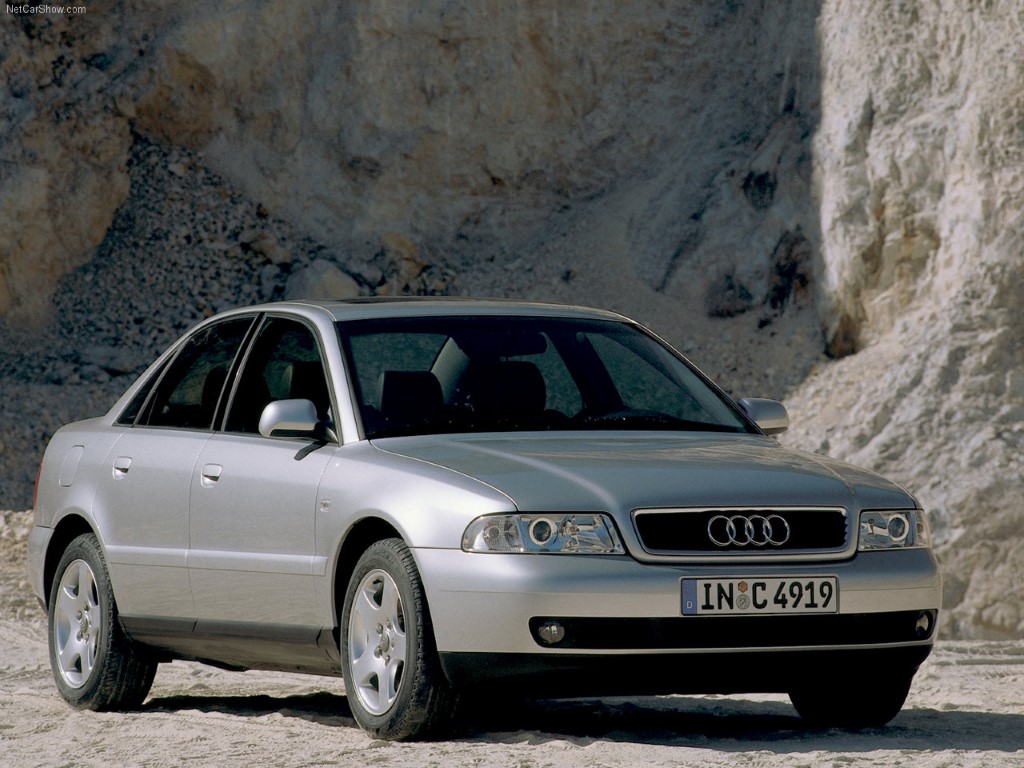
B5
(1994 - 2001)
2.8 V6
193 cv

Technical specifications, versions, and history for the Audi A4.
Select a generation to see available versions
(1994 - 2001)
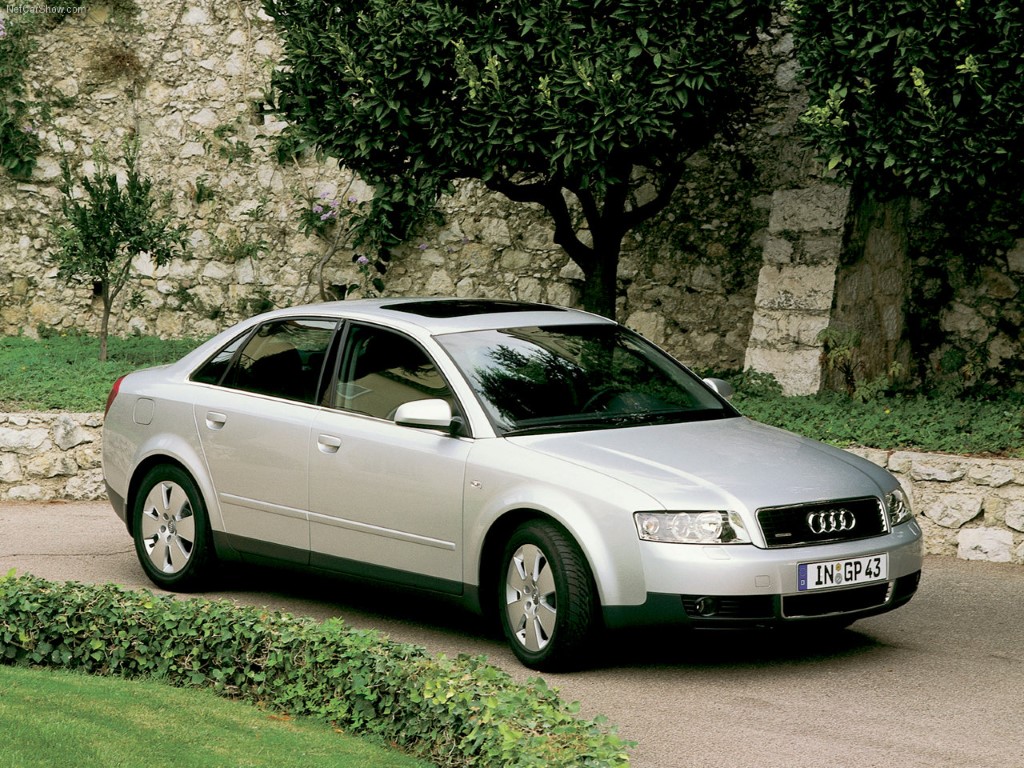
(2002 - 2005)
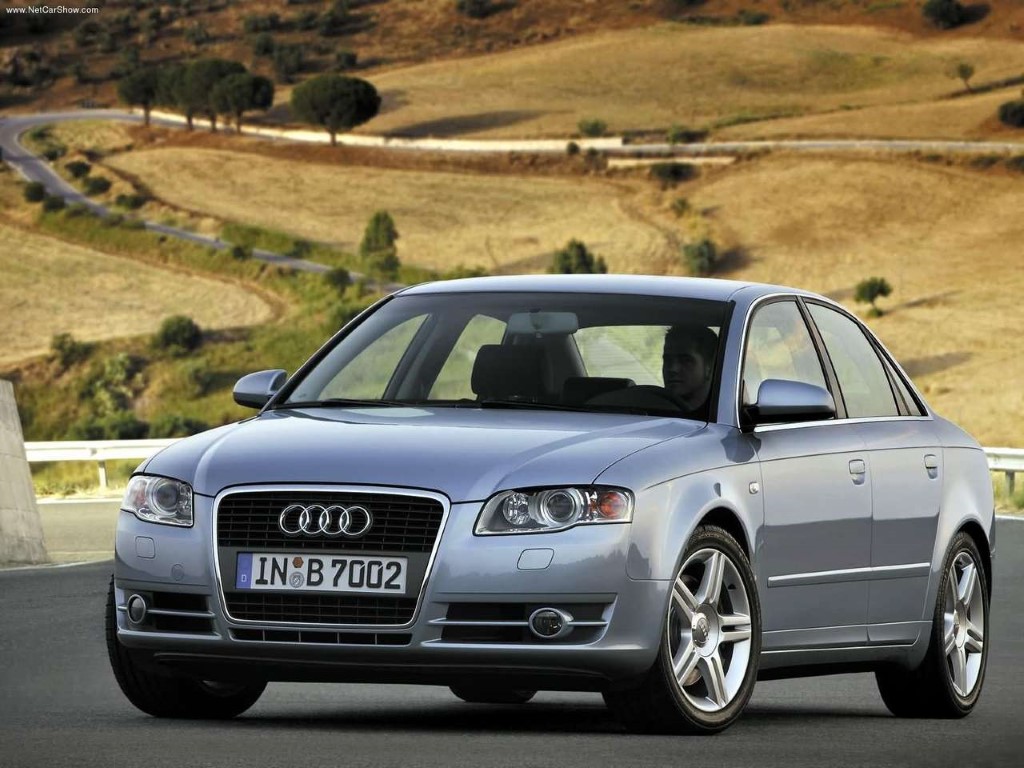
(2006 - 2008)
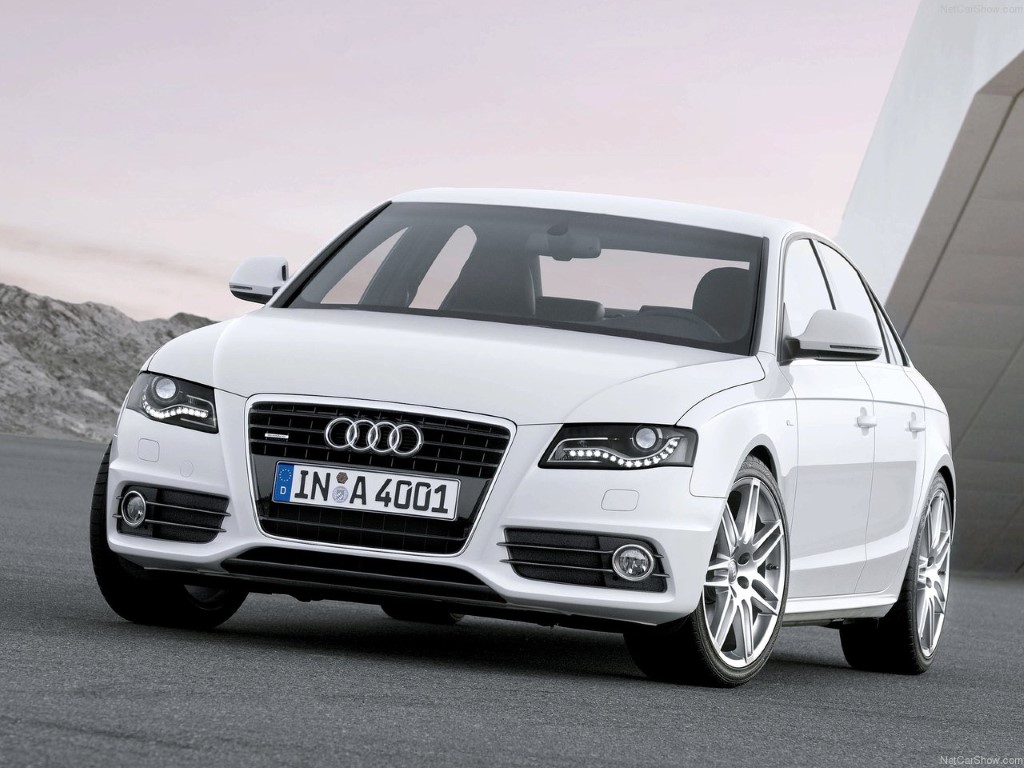
(2009 - 2012)
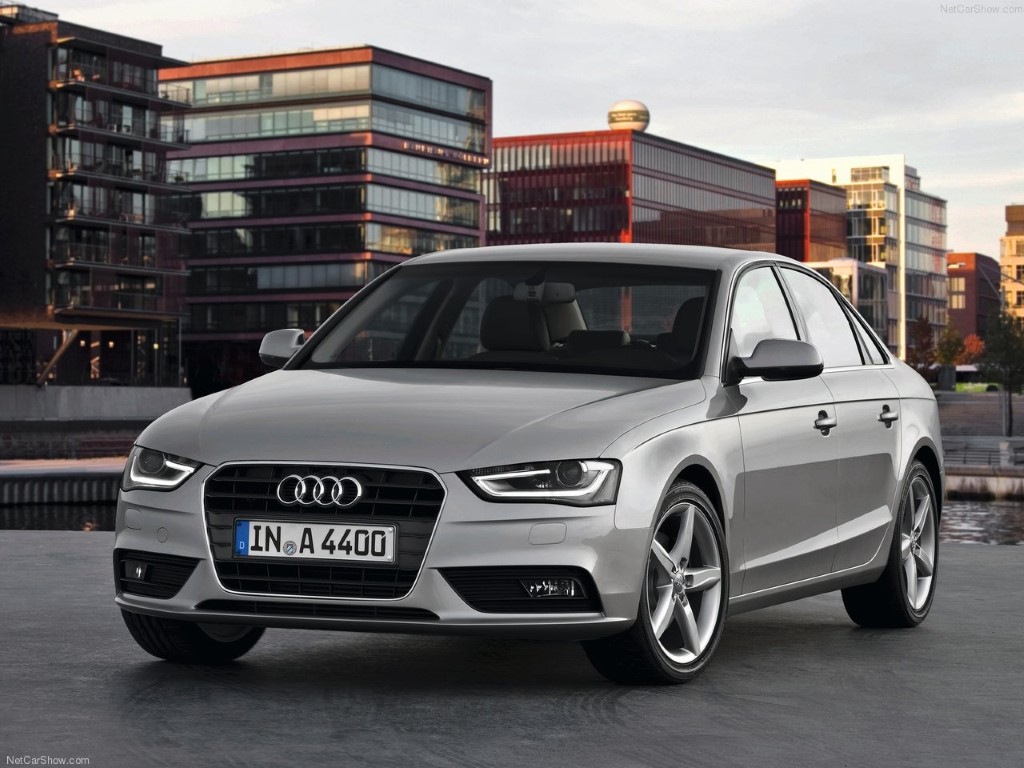
(2013 - 2016)
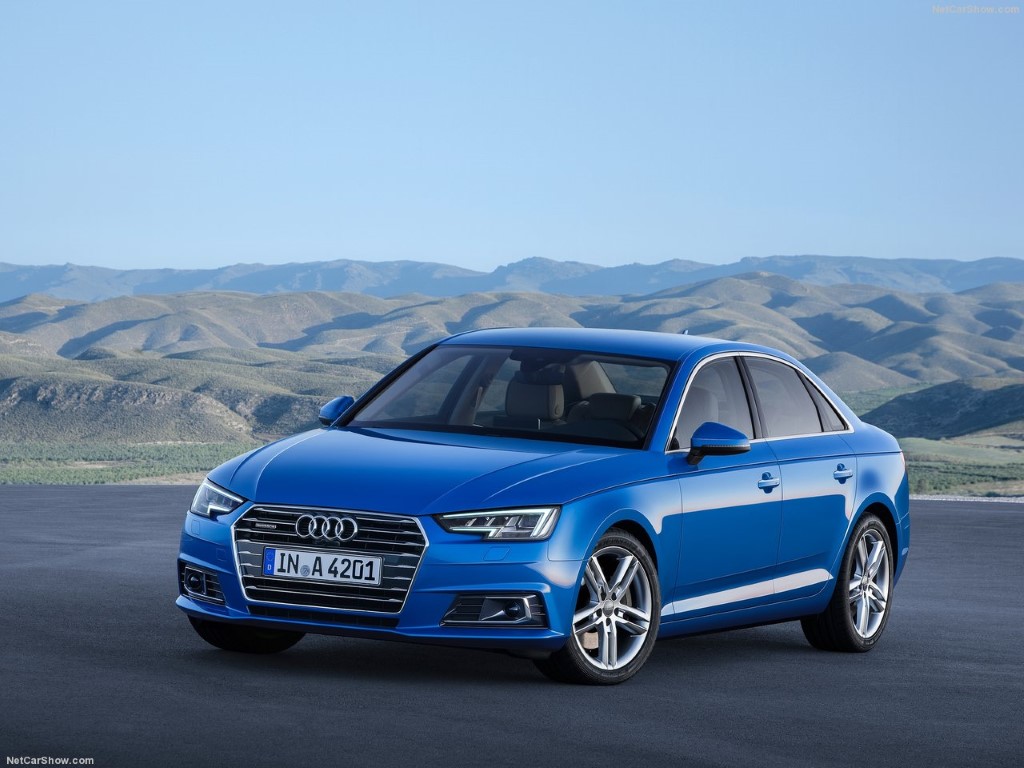
(2016 - 2020)

(2021 - 2025)
In the early 1990s, Audi faced the challenge of replacing the Audi 80, a model respected for its robustness and the introduction of corrosion protection (full galvanization), but which lacked the sporty appeal and dynamic sophistication necessary to challenge the BMW 3 Series E36 and the Mercedes-Benz C-Class W202. The response came in 1994 with the Typ 8D project, commercially named the Audi A4.
The name change was not merely cosmetic; it signaled a new hierarchy within the Volkswagen Group and a new global ambition. The A4 was the first model in the group to use the "B5" platform (PL45), which shared structural components with the Volkswagen Passat of the time, but with a distinctly superior chassis tuning and build quality, focused on the premium segment.
For the Brazilian market, the arrival of the A4 coincided with a crucial historical moment: the opening of imports and the economic stabilization brought about by the Real Plan. Audi, propelled by the image of three-time champion Ayrton Senna (who brought the brand to Brazil shortly before his passing), found in the A4 the perfect vehicle to capture the imagination of the emerging upper-middle class. The model became synonymous with status, German technology, and accessible performance, especially through its turbocharged versions.
The first generation of the A4, internally designated as B5, was an engineering milestone that established the standards the brand would follow for decades to come. Launched in Europe in November 1994 and arriving in Brazil in 1995, the model radically broke away from the rectilinear design of the 80s, adopting fluid, rounded lines and an elegant silhouette that has aged with remarkable dignity.
The major technical differentiator of the B5, often ignored in superficial analyses, was the introduction of the four-link front suspension (four independent aluminum control arms). Unlike the traditional MacPherson strut system, used by most front-wheel-drive cars (and by the predecessor Audi 80), the four-link system allowed the virtual steering axis to be positioned very close to the center of the wheel.
In practice, this almost completely eliminated "torque steer" — the tendency of the steering wheel to pull to the sides during hard acceleration, something common in powerful front-wheel-drive cars. This mechanical sophistication provided steering precision and high-speed stability that rivaled its rear-wheel-drive competitors, elevating Audi to a new dynamic level.
However, for the Brazilian consumer, this complexity took its toll: the aluminum arms and their bushings suffered accelerated wear on Brazil's irregularly paved streets, making front suspension maintenance a constant point of attention for owners of used models.
The A4 B5 introduced cylinder head technology with 5 valves per cylinder (3 intake and 2 exhaust) to Brazil, totaling 20 valves in the four-cylinder engines and 30 valves in the V6s. This configuration, derived from the racetracks, aimed to optimize the air-fuel mixture flow at high RPMs, allowing the engines to "breathe" better and deliver more specific power.
The main engine options sold in Brazil in this generation were:
| Engine | Configuration | Power | Torque | Key Features |
|---|---|---|---|---|
| 1.8 20V | Naturally Aspirated 4-Cyl. | 125 hp | 17.6 kgfm | Entry-level engine. Robust, but required high RPMs to move the sedan with agility. Known for its smoothness. |
| 1.8 Turbo 20V | Turbocharged 4-Cyl. | 150 hp / 180 hp | 21.4 kgfm | The star of the lineup. Combined economy and sporty performance (0-100 km/h in ~8.3s). Great tuning potential. |
| 2.4 V6 30V | Naturally Aspirated V6 | 165 hp | 23.5 kgfm | Introduced in the facelift (1999). Focused on silence and cruising comfort. |
| 2.8 V6 30V | Naturally Aspirated V6 | 193 hp | 28.6 kgfm | "Civilian" top of the line. Usually equipped with Quattro all-wheel drive and Tiptronic transmission. |
In 1999, Audi applied a mid-life update (facelift) to the model, often informally referred to as the "B5.5". The changes included:
The A4 B5 was the car that solidified Audi's image in Brazil. It proved that a luxury car could be fun, technological, and relatively accessible (compared to the prohibitive Mercedes of the time). Thousands of units were imported, creating a solid fanbase and an aftermarket that endures to this day.
The second generation of the A4, codenamed Typ 8E (sedan) or B6, was launched in Europe at the end of 2000 and arrived in Brazil in 2001. Under the design direction of Peter Schreyer, the B6 abandoned the soft curves of the B5 in favor of a "Bauhaus" aesthetic: clean lines, a high beltline, broad shoulders, and a raised rear that made it resemble a compact version of the A6 (C5). The car looked as if it were sculpted from a solid block of metal, conveying a sense of unparalleled robustness in its category.
The B6 represented a giant leap in torsional rigidity. The bodywork was significantly stronger, which not only improved passive safety (obtaining excellent scores in Euro NCAP crash tests) but also contributed to superior acoustic insulation. When closing the door of an A4 B6, the solid sound ("thunk") became a trademark of perceived quality.
It was in this generation that Audi bet massively on the CVT transmission (Continuously Variable Transmission), commercially named Multitronic, for its front-wheel-drive (FWD) versions.
The A4 B6 raised the bar for standard equipment. Items such as digital dual-zone air conditioning (with independent adjustments for the driver and passenger), ESP (Electronic Stability Program), and six airbags became common on most imported versions.
The third generation, B7, launched in 2005, is technically considered a profound restyling (facelift) of the B6 generation, as it maintained the same platform (PL46) and basic cabin structure. However, the aesthetic, mechanical, and suspension changes were so extensive that Audi classified it as a new generation.
The B7 was the vehicle responsible for introducing the Singleframe front grille to the mid-size segment — a single vertical piece that united the former upper and lower grilles. This design element became Audi's strongest visual signature, giving the car a much more aggressive and distinct road presence, visually separating it from its predecessors.
The greatest innovation of the B7 was under the hood. Audi introduced Fuel Stratified Injection (FSI) technology, where fuel is injected directly into the combustion chamber under extremely high pressure, instead of into the intake manifold.
Audi worked to mitigate the criticisms of the Multitronic. In the B7, the CVT gearbox received software to simulate 7 virtual "gears" in manual mode, making the driving experience more engaging. The suspension was also recalibrated with new geometry and components derived from the S4, making the car more agile and communicative, although it still retained a tendency to understeer (pushing forward) at the limit, due to the engine placement.
Launched in 2008, the B8 generation represented the largest technical change in the history of the A4 since the launch of the original in 1994. The car was rebuilt from the ground up on a new architecture, the MLB (Modular Longitudinal Matrix), designed to resolve the dynamic limitations inherent to Audi's longitudinal engine and front-wheel-drive layout.
The "original sin" of the previous generations (B5, B6, B7) was the engine positioned too far ahead of the front axle, which concentrated too much weight in the "nose" of the car, hindering agility and causing understeer.
On the B8's MLB platform, Audi engineers accomplished an engineering feat: they swapped the position of the differential with the clutch/torque converter. This allowed the front axle to be moved forward by about 154 mm.
Practical Result: The front overhang (the part of the car ahead of the wheel) became shorter, the wheelbase grew significantly (to 2.81 meters), and the weight distribution improved drastically. The A4 B8 offered vastly superior interior space (especially rear-seat legroom) and a neutral, balanced driving dynamic, finally approaching the BMW 3 Series in driving pleasure.
The B8 was the car that popularized LED Daytime Running Lights (DRL) globally. The design of the LED "eyelashes" in the headlights made the car unmistakable at night and sparked a design trend that the entire automotive industry copied in the following years. The overall design, penned by Walter de Silva, was described by him as one of his most beautiful works, featuring athletic and elegant proportions.
In Brazil, Audi's commercial strategy for the B8 was aggressive, segmenting the model into clear trim versions to fight the Mercedes C-Class (W204) and the BMW 3 Series (E90/F30).
It is imperative to mention a critical aspect of the B8's history: the 2.0 TFSI engines produced between 2009 and 2012 (EA888 Generation 2 family) suffered from a design defect in the piston rings, which were too thin and allowed excessive oil blow-by.
The fifth generation, B9, introduced in 2015 and launched in Brazil in 2016, maintained the MLB platform (now evolved into MLB Evo), focusing on weight reduction (up to 120 kg lighter than the B8) and the total digitalization of the user experience.
In an important chapter of recent history, Audi once again produced the A4 in Brazil. Between 2016 and the end of 2020, the A4 Sedan was assembled at the São José dos Pinhais (PR) plant, alongside the Q3 SUV. Production was carried out under the SKD (Semi-Knocked Down) regime, where cars arrived partially assembled and received finalization (engine, transmission, suspension) in Brazil. This strategy aimed to take advantage of the tax benefits of the Inovar-Auto program. However, with the end of the program and logistical/exchange rate complexity, Audi ended the local production of the sedan, returning to importing it entirely from Germany in its more recent versions.
The B9 lineup in Brazil was structured into versions that changed names over the years, especially after the 2019/2020 facelift (B9.5):
From 2017 onwards, Audi replaced the Torsen center differential (purely mechanical and permanent) with the Quattro Ultra system in the 4-cylinder versions.
In 2024, Audi announced a global restructuring of its naming conventions that marks the end of the "A4" era as we know it. To avoid confusion between electric and combustion models, the brand decided:
The direct successor to the combustion-powered Audi A4 Sedan is the New Audi A5 Sedan (B10 Generation), revealed in mid-2024. This new model, expected to arrive in Brazil between late 2025 and 2026, adopts a Sportback body style (with the trunk lid opening along with the rear window), fusing the practicality of the old A4 with the coupe styling of the old A5 Sportback. It will utilize the new PPC (Premium Platform Combustion) architecture, prepared for new-generation mild hybrid and plug-in hybrid systems.
The Audi A4 is undeniably the financial pillar of modern Audi.
For the Brazilian consumer interested in purchasing a used A4, it is vital to understand the specific points of attention for each generation within the local context:
| Generation | Common Powertrain | Transmission | Critical Maintenance Points | Risk Level |
|---|---|---|---|---|
| B5 (1995-2001) | 1.8T 20V | Auto 4/5-speed (Tiptronic) | Front suspension (aluminum arms wear out early on potholed streets); Oil sludge if mineral oil is used; KKK K03 Turbo (lifespan). | Medium/High (Age) |
| B6 (2001-2005) | 1.8T / 3.0 V6 | CVT Multitronic (6-speed) | Multitronic TCU module (expensive electronic failure); Ignition coils; Vacuum leaks. | High (due to Transmission) |
| B7 (2005-2008) | 2.0 TFSI | CVT Multitronic (7-speed) | High-pressure pump Cam Follower (wear can destroy the camshaft); PCV valve; Carbon buildup on valves (direct injection). | Medium |
| B8 (2008-2012) | 2.0 TFSI (Gen 2) | CVT (8-speed) / S-Tronic | Excessive oil consumption (piston rings); Timing chain (tensioner can fail and cause piston-to-valve contact). | High (if not repaired) |
| B8.5 (2013-2016) | 1.8 / 2.0 TFSI | CVT / S-Tronic | Water pump (premature leaks at the thermostat); Hydraulic engine mounts. Gen 3 engine solved the oil consumption. | Low/Medium |
| B9 (2016-2024) | 2.0 TFSI Ultra | S-Tronic (DL382) | S-Tronic gearbox mechatronics (although more robust than older ones, repairs are expensive); Electric water pump. | Low |
In Brazil, the A4 suffers from the "Rich Man's Leftover" ("Resto de Rico") phenomenon in the older generations (B5, B6, B7), where the purchase price is low (often lower than a used mass-market car), but the maintenance cost remains that of an imported luxury car. Trim pieces, headlights, and electronic components have prices tied to the Dollar and Euro, making specialized pre-purchase inspection vital.
The history of the Audi A4 Sedan is the chronicle of the modern luxury automobile's evolution. It started as a bold challenger (B5), consolidated itself as an alternative with superior design and finish (B6/B7), reinvented its dynamics to beat the leaders (B8), and culminated as a showcase of digital technology and efficiency (B9).
For Brazil, the A4 leaves a cultural legacy. It was the car that taught a generation of drivers what accessible "German technology" meant. While the A4 name bids farewell to combustion engines to be reborn as electric, and the new A5 takes up its mantle, the model remains a benchmark for what an executive sedan should be: elegant, innovative, and, above all, a pleasure to drive.