8T
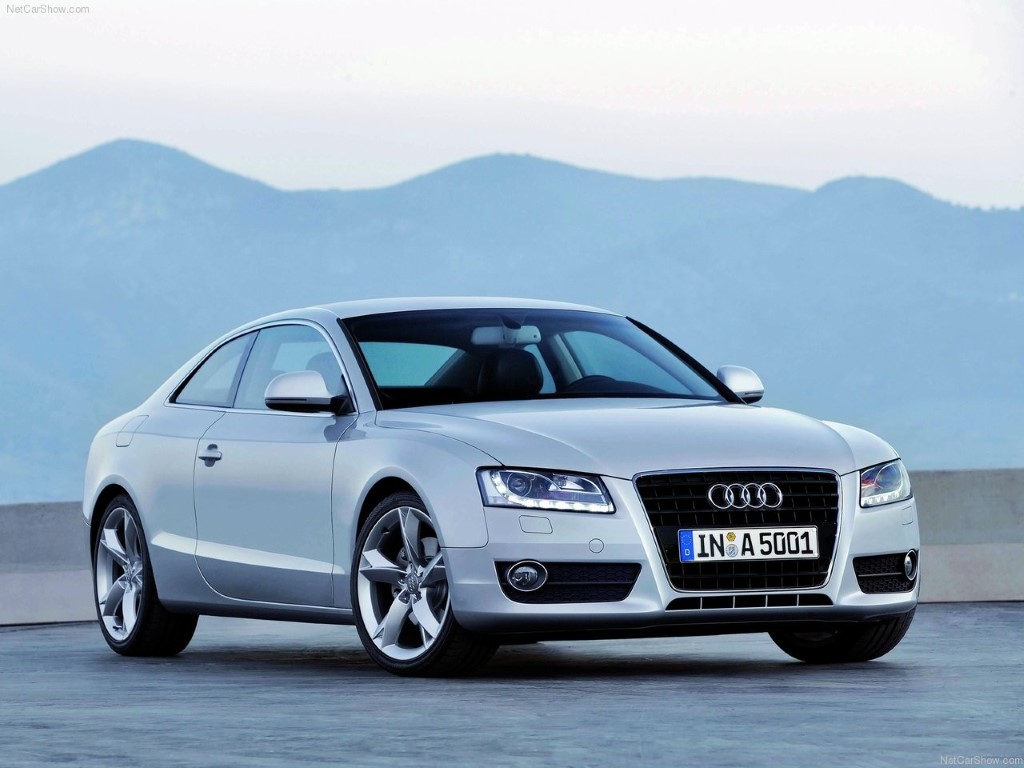
(2008-2011)
3.2 V6 FSI
265 cv

Poetry in motion: the coupe that transformed German functionality into a high-performance aerodynamic sculpture.
Select a generation to see available versions
(2008-2011)
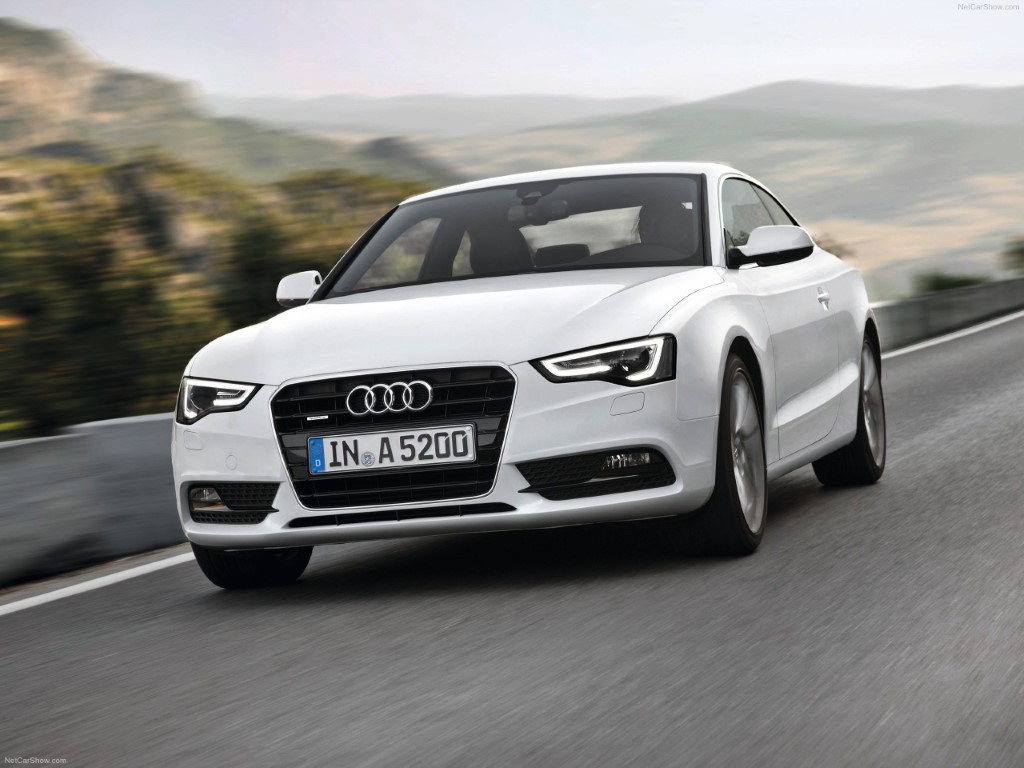
(2012-2016)
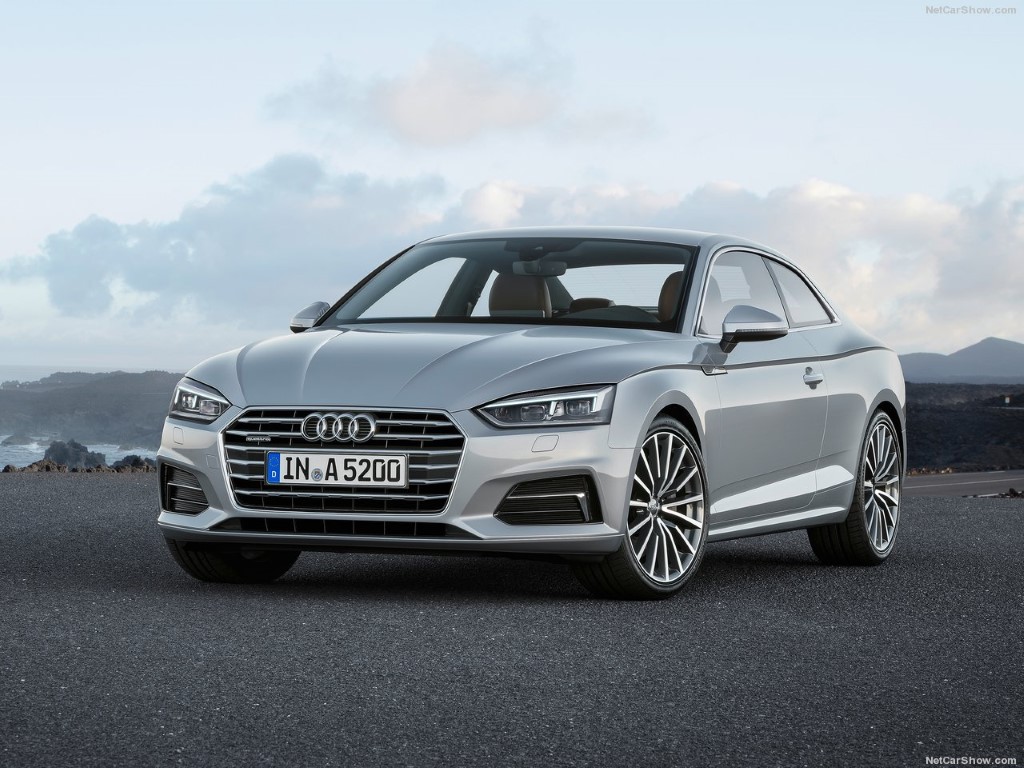
(2017-2019)
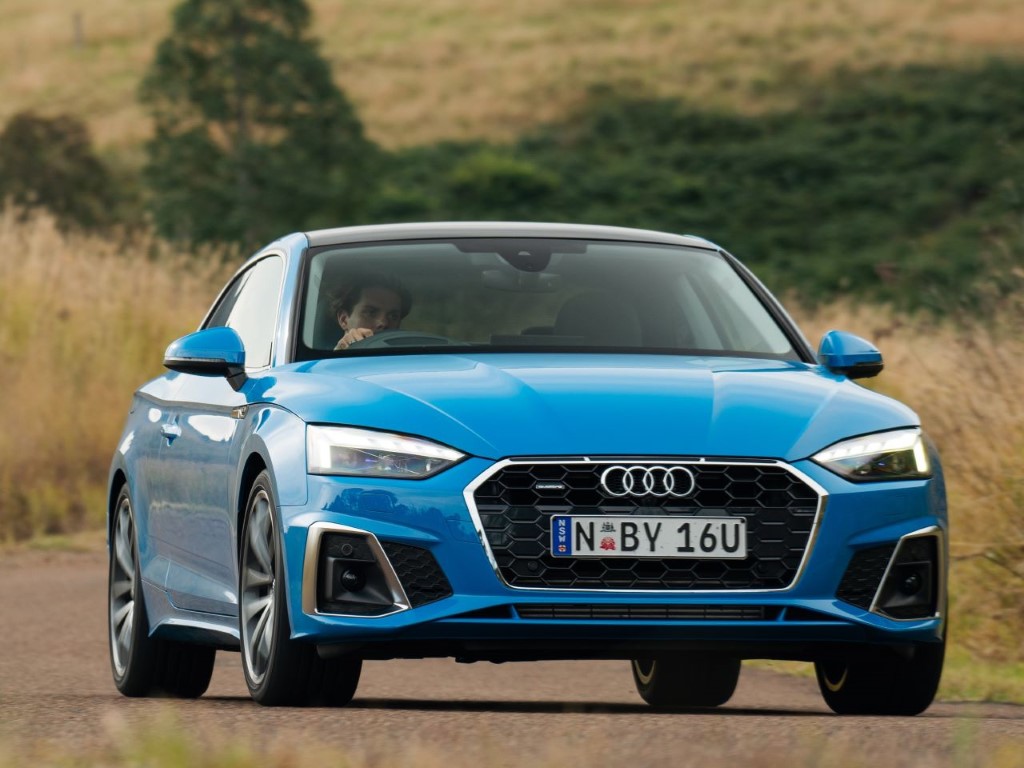
(2020-2024)
The Audi A5 Coupé does not merely represent a model within the German manufacturer's portfolio; it symbolizes a strategic and aesthetic turning point for the Ingolstadt brand. After a hiatus of over a decade without a dedicated mid-size coupe — since the end of the Audi 80 Coupé's production in 1996 — Audi watched its main rivals, BMW and Mercedes-Benz, dominate the segment with the 3 Series Coupe and the CLK-Class, respectively.
Audi's response needed to be striking. It wasn't enough to just remove two doors from the A4 sedan; it was necessary to create a vehicle that evoked emotion, combined the tradition of the Grand Tourer (GT) with cutting-edge technology, and redefined the company's visual language.
This report exhaustively analyzes the trajectory of the Audi A5 Coupé, from its conception in the design studios to its discontinuation as a two-door model in 2024. We will explore the technical details of its revolutionary platform, the evolution of its engines, its reception in the Brazilian market, and the industrial reasons that led to the end of its production.
To understand the A5, it is imperative to analyze its conceptual origin. Four years before the official launch, Audi presented the Audi Nuvolari Quattro concept at the 2003 Geneva International Motor Show. This vehicle was not just a styling exercise, but a statement of intent.
The concept's name paid homage to Tazio Nuvolari, one of the most legendary racing drivers in history, suggesting that the future coupe would have performance in its DNA. The Nuvolari's design introduced the silhouette that would define the A5: a wide, low stance and, crucially, a wavy shoulder line that ran along the entire side of the car, connecting the headlights to the taillights. This flowing line became the visual signature of Walter de Silva, the project's chief designer, who would later declare the A5 his masterpiece.
Beyond proportions, the Nuvolari pioneered the use of lighting technology. It was one of the first vehicles in the world to display full LED headlights, an innovation that Audi would bring to mass production years later, becoming a distinctive feature of the brand in the premium market.
Although the Nuvolari's design was transplanted almost unaltered to the production A5, the concept's powertrain was overly exotic for a volume model, serving more to demonstrate the robustness of the future platform.
| Characteristic | Nuvolari Quattro Concept (2003) | A5 Production (2007 - Top Model) |
|---|---|---|
| Engine | 5.0L V10 Biturbo TFSI | 4.2L V8 FSI (S5) |
| Power | 600 hp (441 kW) | 354 hp (260 kW) |
| Torque | 750 Nm | 440 Nm |
| Transmission | 6-speed automatic | 6-speed manual or Tiptronic |
| Acceleration 0-100 km/h | 4.1 seconds | 5.1 seconds (S5) |
The concept's V10 biturbo engine illustrated the chassis's potential, but market reality demanded more rational engines, ranging from efficient four-cylinder units to powerful naturally aspirated V8s.
The official launch of the A5 Coupé took place in 2007, marking the debut of the B8 platform. This moment was technically significant because the A5 served as the launch vehicle for Audi's new Modular Longitudinal Matrix (MLB) architecture, even before the A4 sedan (which was the sales flagship).
Historically, Audi cars suffered dynamic criticisms due to the engine being positioned too far ahead of the front axle, which caused unfavorable weight distribution and a tendency to understeer (the car "pushing forward" in corners). The MLB platform solved this engineering problem by repositioning the differential and the clutch.
By moving the differential in front of the clutch (and the torque converter in automatics), engineers were able to shift the front axle forward by about 15 centimeters.
Audi launched the A5 with a clear strategy: to offer accessible performance and, at the same time, a high-performance option from day one.
The 3.2 FSI V6 Engine At launch, the main (non-S) model was equipped with the 3.2-liter V6 FSI engine. The FSI (Fuel Stratified Injection) direct injection technology allowed for greater efficiency and power. This engine delivered 265 hp and was praised for its smooth operation, an essential characteristic for a luxury Grand Tourer. It used the Audi Valvelift system, which varied valve opening to optimize gas flow and low-end torque.
The Arrival of the 2.0 TFSI Shortly after launch, Audi introduced the engine that would become the "heart" of the A5 lineup globally and in Brazil: the 2.0 TFSI four-cylinder. Equipped with a turbocharger and direct injection, this engine offered an ideal balance between weight (being lighter than the V6, it improved dynamics) and torque. Power outputs ranged from 180 hp to 211 hp in the early versions, reaching 225 hp in later updates.
Simultaneously with the standard A5, Audi launched the sporty S5 version. Unlike future generations that would adopt supercharging (turbo or mechanical supercharger), the first S5 Coupé was a European "muscle car". It housed a naturally aspirated 4.2-liter V8 FSI engine.
The arrival of the A5 in Brazil was marked by an exclusivity positioning.
Phase 1: The Top of the Line (2008-2010) The A5 initially landed in Brazil only in the V6 3.2 FSI version, with a suggested retail price of R$ 254,500 at the time. It came equipped with Quattro all-wheel drive and an automatic transmission, plus a Bang & Olufsen sound system as standard. It was a niche car, focused on those seeking more style than the A4 and more comfort than a Porsche.
Phase 2: Popularization with the 2.0 (2011-2016) To increase sales volume, Audi introduced the 2.0 TFSI versions. The Brazilian lineup was structured into three main trim levels, which defined both luxury and mechanics:
In 2011, the A5 received its mid-life update. The changes were subtle but important to maintain competitiveness.
Nine years after the original launch, Audi presented the second generation of the A5 Coupé in June 2016. The challenge was immense: how to update a design icon without ruining it? The answer was a visual evolution and a technical revolution.
Visually, the B9 maintained the B8's silhouette but added tension to the lines. The wavy shoulder line became three-dimensional, with a deep crease that required more complex metal stamping processes. The hood gained a "power dome" (sharp creases in the center) to suggest the power of the engines, and the front grille became wider and flatter, positioned lower to give a planted appearance to the ground.
The biggest change was under the skin. The A5 B9 migrated to the MLB Evo platform. The main advantage was weight reduction. Through the intelligent use of materials — combining cast aluminum in the suspension mounts, rolled aluminum in the bodywork, and ultra-high-strength steels in the survival cell — the car became up to 60 kg lighter than its predecessor, depending on the version.
Aerodynamics were also refined in the wind tunnel, achieving a drag coefficient (Cd) of just 0.25, one of the best in the industry at the time. This resulted in an extremely quiet cabin at high speeds and better fuel efficiency.
The B9's interior marked a break from the past. The analog dashboard gave way to the Audi Virtual Cockpit, a fully customizable 12.3-inch TFT screen behind the steering wheel. The driver could choose between classic dials or an "infotainment" mode that expanded the navigation map (Google Earth) to take up almost the entire screen.
The center console adopted a horizontalized design with continuous air vents, creating a sense of spaciousness. The MMI (Multi Media Interface) system received a rotary dial with a touch-sensitive surface (touchpad) for character input, making it easier to enter GPS destinations.
The second generation focused on efficiency through downsizing and advanced combustion cycles.
In the Brazilian market, the A5 B9 (launched in 2017 as a 2018 model) was offered with a robust trim structure, all equipped with the 7-speed S-Tronic gearbox (the Multitronic CVT was extinguished).
| Version | Engine | Power | Torque | Drivetrain | Equipment Highlights |
|---|---|---|---|---|---|
| Attraction | 2.0 TFSI | 190 hp | 320 Nm | Front-wheel | Analog dashboard, Xenon, Power seat. |
| Ambiente | 2.0 TFSI | 190 hp | 320 Nm | Front-wheel | Virtual Cockpit, GPS, 18" Wheels, Sports seats. |
| Ambition | 2.0 TFSI | 252 hp | 370 Nm | Quattro | High-performance engine, All-wheel drive. |
| Ambition Plus | 2.0 TFSI | 252 hp | 370 Nm | Quattro | Full LED headlights, Panoramic Roof, Tri-zone Air, ADAS. |
Note: Later on, Audi adopted a numerical nomenclature based on power output bands. The 190 hp versions became known as 40 TFSI and the 252 hp (or 249 hp) versions as 45 TFSI.
The second generation marked the end of naturally aspirated engines and mechanical superchargers in the sports versions.
In 2019/2020, the A5 family received its last major update.
The front grille abandoned the chrome horizontal bars in favor of a matte or gloss black honeycomb structure, aligning the A5 with the RS models. Above the grille, three small ventilation slits were added, a direct homage to the classic 1984 Audi Sport Quattro.
Inside, the biggest change was the elimination of the MMI rotary dial on the console. The new 10.1-inch center screen became touch-sensitive (touchscreen), operating like a tablet. The system became faster, but the ergonomics of operating a touchscreen while driving was a point of debate.
Mechanically, the big news was the introduction of the 12-volt Mild Hybrid (MHEV) system on the four-cylinder engines. A belt-driven alternator-starter (BAS) allows the car to shut off the combustion engine in cruising situations (coasting) between 55 and 160 km/h, smoothly restarting it when the driver touches the accelerator. This brought marginal, but important, gains in fuel efficiency.
The story of the A5 Coupé cannot be told without addressing the overwhelming success of its four-door sibling, the A5 Sportback. Originally launched in 2009, the Sportback offered the same aesthetics as the Coupé, but with the practicality of rear doors and a liftback trunk.
Production and sales data show a clear consumer migration. The Coupé became a niche product within its own lineup. Analyzing Audi's annual and quarterly reports, the disparity becomes evident.
Global Production Data (Selected Examples):
| Year | Model / Body Style | Units Produced | Source |
|---|---|---|---|
| 2019 (Q3 Cumulative) | A5 Sportback | ~51,411 | 29 |
| 2019 (Q3 Cumulative) | A5 Coupé | ~9,585 | 29 |
| 2019 (Q3 Cumulative) | A5 Cabriolet | ~8,838 | 29 |
The numbers reveal that for every A5 Coupé sold, Audi sold more than five units of the Sportback. The Coupé represented less than 15% of the A5 family's sales mix.
Despite the Coupé's decline, the A5 brand as a whole remained strong, sustained by the Sportback:
This stability in total numbers, contrasted with the statistical irrelevance of the Coupé, provided the economic justification for Audi to discontinue the two-door model.
In July 2024, Audi confirmed what rumors had already indicated: production of the Coupé and Cabriolet versions of the A5 and S5 family would be permanently ended, with no direct successors.
Audi reorganized its nomenclature for the electric era.
Consequently, the successor to the traditional A4 sedan was renamed the Audi A5 (B10 Generation). However, this "new A5" was launched only in Sedan (which maintains the liftback style of the old Sportback) and Avant (station wagon) body styles. The two-door A5 Coupé ceased to exist, a victim of the global preference for SUVs and four-door sedans with coupe styling.
The Audi A5 Coupé concludes its 17-year trajectory as one of the most important models in Audi's modern history. It fulfilled its initial mission with flying colors: it proved that Audi could create exciting, beautiful, and dynamically capable cars to challenge BMW.
The model leaves a robust technical legacy — from the introduction of the MLB platform to the democratization of LED headlights and digital dashboards. For the Brazilian market, the A5 Coupé (and its Sportback sibling) became a status symbol and an object of desire, evolving from a niche V6 in 2008 to a premium segment bestseller with the 2.0 TFSI engine.
Although the A5 name lives on in the new generation of sedans, the classic A5 Coupé now joins the pantheon of great German touring cars of the past, remembered for the famous quote by its creator, Walter de Silva: "A car designed to be beautiful, not just functional."