
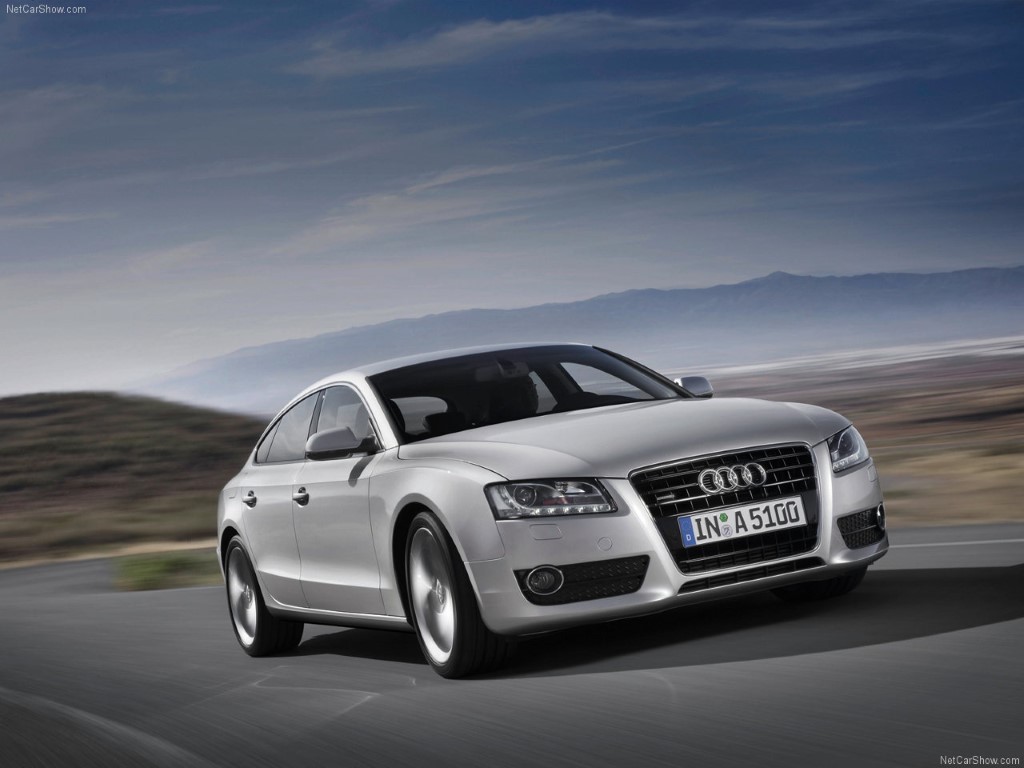
8T
(2010 - 2011)
2.0 Turbo
211 cv
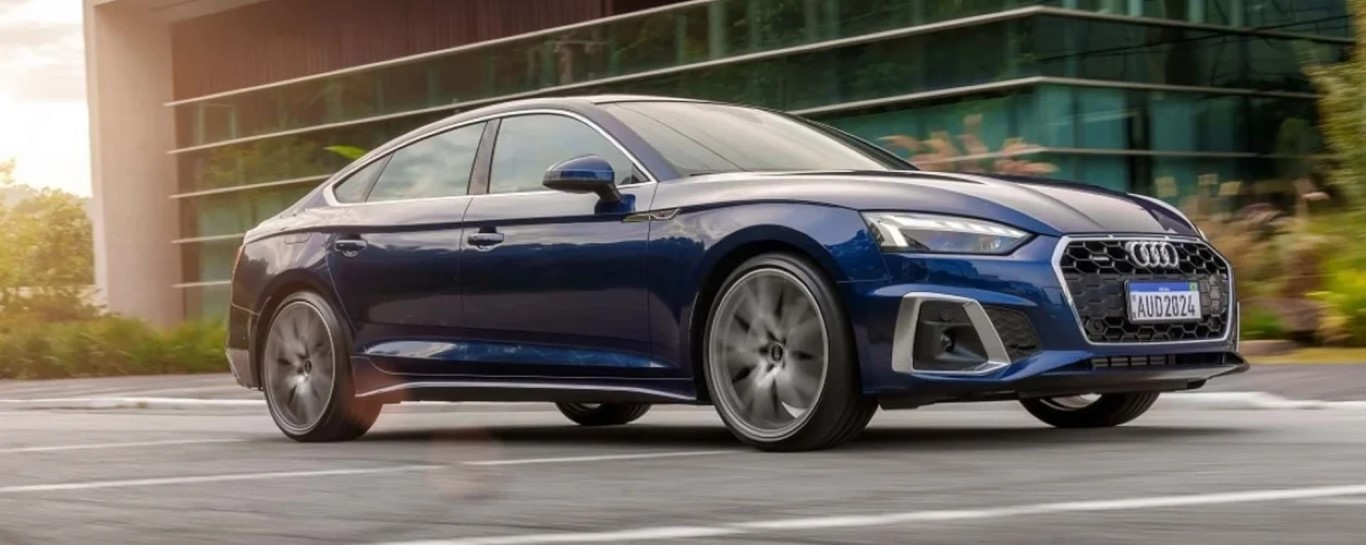
Technical specifications, versions, and history for the Audi A5 Sportback.
Select a generation to see available versions
(2010 - 2011)
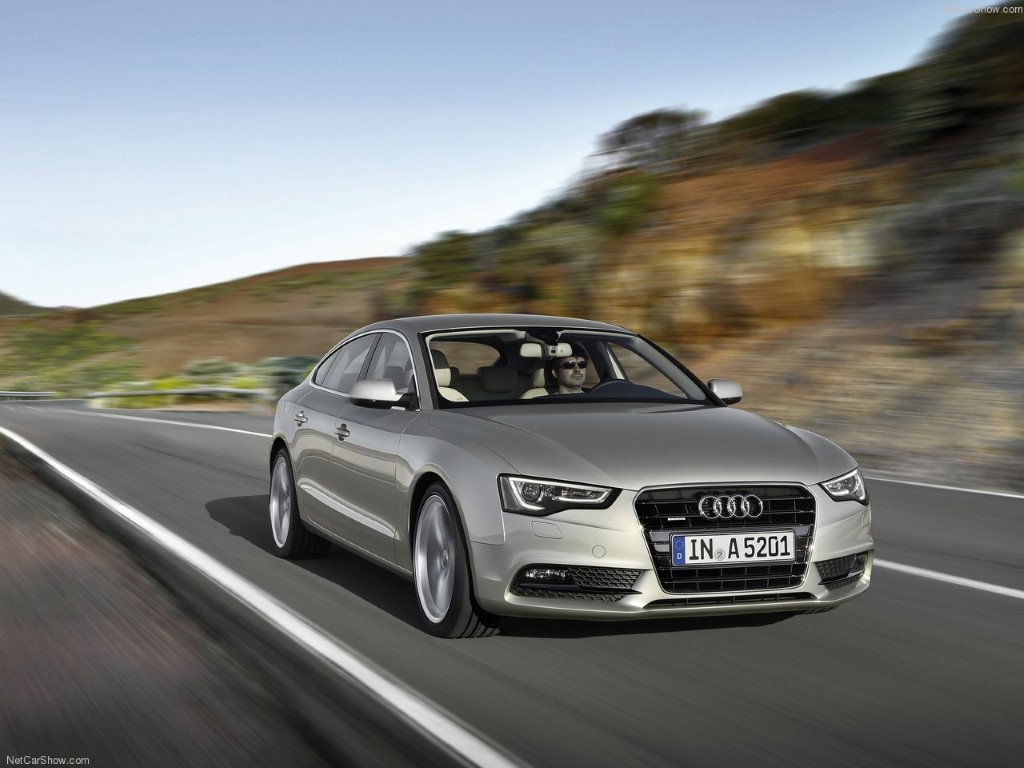
(2012 - 2016)
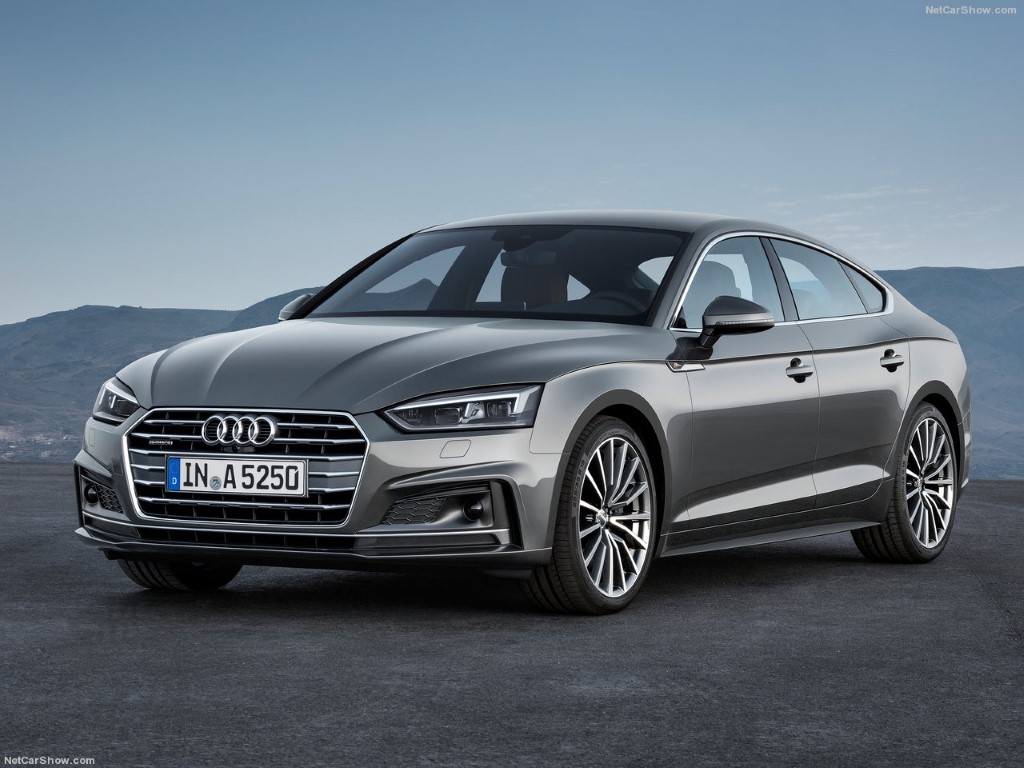
(2017 - 2019)
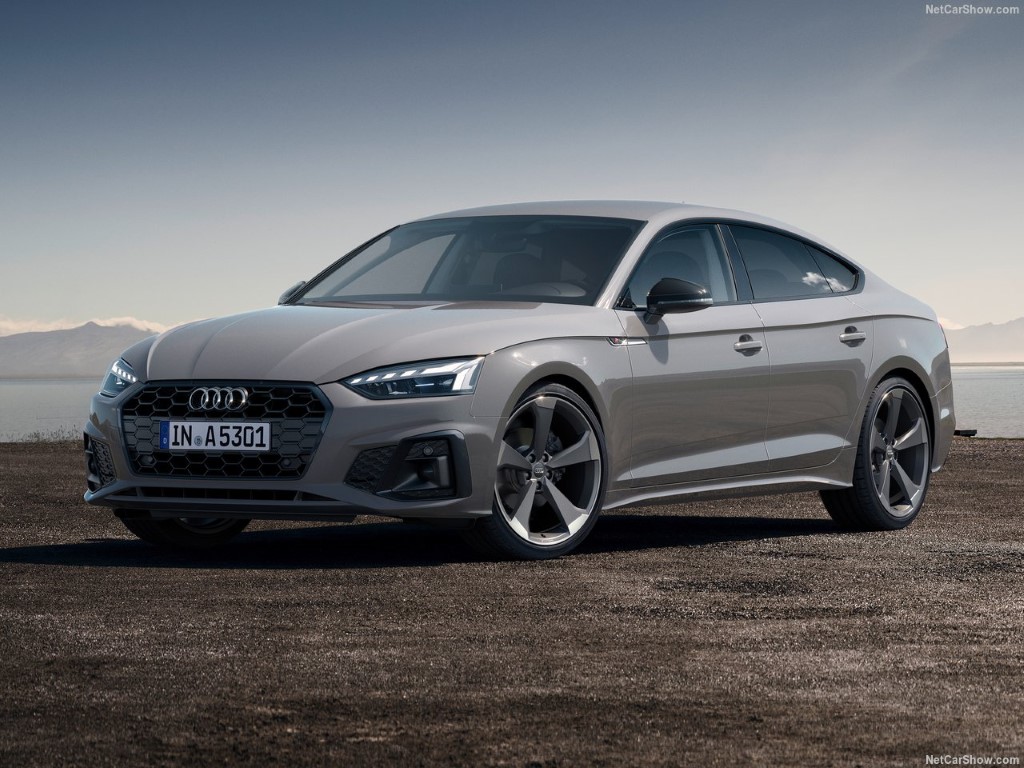
(2020 - 2024)
The automotive industry is marked by moments of rupture where strict functionality gives way to emotional aesthetics, without, however, abandoning utility. The Audi A5 Sportback is, undoubtedly, one of these milestones. This report is dedicated to a forensic and historical analysis of this model which, designed under the tutelage of the legendary Walter de Silva, not only redefined the visual language of the Ingolstadt manufacturer but also created a vital market subsegment: the four-door (or five, technically) coupe in the mid-size luxury segment.
The A5 Sportback did not emerge in a vacuum. It was Audi's strategic response to a growing dilemma in the late 2000s: the saturation of the traditional sedan format (represented by the A4) and the impracticality of classic coupes (the two-door A5) for everyday family use. By merging the descending, sporty silhouette with the accessibility of four doors and a liftback-style trunk lid, Audi democratized the "Grand Tourer", offering a machine that served both the driver's emotion and a family's logistical need.
The following analysis dissects each phase of this evolution, from the engineering of the modular longitudinal platform (MLB) to the market nuances in Brazil, supported by global production data and detailed technical specifications.
To comprehend the A5 Sportback, it is imperative to understand the engineering that supports it. The model was one of the main beneficiaries of the MLB (Modularer Längsbaukasten) architecture, introduced with the B8 family.
Prior to the B8 generation, Audi vehicles with longitudinal engines suffered dynamic criticism due to the engine positioning too far ahead of the front axle, which generated an unfavorable weight distribution and a natural tendency to understeer.
The MLB platform solved this fundamental engineering problem:
The A5 Sportback (factory code 8T8) was revealed in 2009, two years after the Coupe. The design was characterized by the "Waveline", a prominent lateral crease that flowed from the headlights to the taillights, conferring muscularity to the fenders. Unlike the A4 sedan, the Sportback had a reduced height (1,391 mm), frameless windows on all four doors, and a C-pillar that extended smoothly to the rear extremity, disguising the hatchback functionality.
In the Brazilian market, the A5 Sportback was launched in 2010 as a status symbol, positioned above the A4 and below the A6. Audi do Brasil's strategy focused on two fronts: volume with turbo engines and prestige with V6 engines.
Analysis of Launch Versions (2010)
| Feature | A5 Sportback 2.0 TFSI (Entry-level) | A5 Sportback 3.2 FSI (Top of the Line) |
|---|---|---|
| Engine | 2.0L EA888 Turbocharged 4-Cylinder | 3.2L V6 Naturally Aspirated FSI |
| Power | 180 hp / 211 hp | 269 hp |
| Torque | 320 Nm (180hp) / 350 Nm (211hp) | 330 Nm |
| Transmission | Multitronic (CVT - 8 virtual gears) | Tiptronic (6-speed Automatic) |
| Drivetrain | Front-Wheel Drive (FWD) | Quattro All-Wheel Drive (Torsen) |
| Price (2010) | ~R$ 189,000 ~R$ 259,500 |
Technical Insights:
In 2012, Audi applied a mid-life update (B8.5) that was crucial for the longevity of the first generation. The changes transcended aesthetics.
Mechanical and Aesthetic Evolution:
Post-Facelift Versions Table (Brazil 2012-2016):
| Version | Engine | Gearbox | Equipment Details |
|---|---|---|---|
| Attraction | 1.8 TFSI (170 hp) | Multitronic (CVT) | Fabric/synthetic leather seats, bi-xenon headlights, 17" wheels. |
| Ambiente | 2.0 TFSI (180 hp) | Multitronic (CVT) | Sunroof, power seats, Virtual Cockpit (in the final years), 18" wheels. |
| Ambition | 2.0 TFSI (211/225 hp) | S-Tronic (7-speed) | Quattro drive, visual S-Line kit, sports suspension. |
The second generation, built on the evolution of the platform (MLB Evo), represented a leap in technological sophistication and thermodynamic efficiency. Launched in Europe in 2016 and in Brazil in 2017, it maintained the proportions but sharpened the lines.
The MLB Evo utilized a smart mix of materials (aluminum, ultra-high-strength steel, and magnesium) to reduce the total vehicle weight by up to 60 kg, despite the increase in dimensions and the amount of electronic equipment. The front suspension became a redesigned five-link setup, separating longitudinal and transverse forces to improve comfort and precision.
The national launch in 2017 was aggressive, with four distinct configurations, all based on the 2.0 TFSI engine, but with radically different calibrations.
The 2.0 TFSI B-Cycle (Miller) Engine The great technical innovation was the 190 hp engine (used in the Attraction and Ambiente versions). It operates under what Audi calls the "B-Cycle", a variation of the Miller Cycle.
The End of the CVT and the Rise of the S-Tronic The second generation definitively eliminated the Multitronic gearbox. All versions, including front-wheel-drive ones, began using the 7-speed S-Tronic transmission (oil-bathed dual-clutch). The front-wheel-drive version uses the DL382 gearbox, optimized for efficiency and low CO2 emissions.
Launch Versions and Prices (Brazil 2017):
In 2020, the model received its mid-life update. Visually, changes focused on the front grille (wider and flatter) and the trapezoidal exhaust outlets. Inside, the MMI rotary push-button was eliminated in favor of a 10.1-inch touchscreen with haptic and acoustic feedback.
Mild Hybrid Technology (MHEV): The biggest invisible change was the introduction of the 12-volt mild hybrid system across all 2.0 TFSI powertrains. A belt alternator starter (BAS) connects to the crankshaft, allowing:
New Version Nomenclatures (2020+): Audi reorganized the names to reflect global power output ranges:
The A5 Sportback lineage has branches focused on pure performance, which transform the executive sedan into a track machine capable of rivaling supercars.
The S5 is the balance between daily comfort and aggressive sportiness.
The RS5 Sportback (available only on the B9/F5 platform) is developed by the Audi Sport GmbH division.
Audi do Brasil utilized limited editions to maintain interest in the model during its lifecycle.
In May 2023, a highly exclusive series was launched for Brazil, limited to 50 units.
Analysis of the Volkswagen AG and Audi AG annual reports reveals that the Sportback was not just a lineup complement, but the savior of the A5 family. While coupe sales collapsed globally over the last decade, the Sportback maintained healthy volumes.
The table below compiles data extracted from official financial reports, illustrating the dominance of the Sportback body style over the other variants (Coupe and Cabriolet).
| Fiscal Year | A5 Sportback Production | A5 Coupe Production | A5 Cabriolet Production | Total A5 Family | Market Insights |
|---|---|---|---|---|---|
| 2014 | 54,407 | 35,348 | 25,107 | 114,862 | The Sportback already represented almost 50% of the total mix. |
| 2016 | Generation Transition | 23,366 | 13,916 | 103,344 (Total) | Year of change from B8 to B9. Sportback numbers diluted in the transition. |
| 2019 | 71,128 | 12,093 | 9,856 | 93,077 | Turning point: The Sportback sells 3x more than Coupe and Cabriolet combined. |
| 2020 | 43,996 | 6,475 | 6,315 | 56,786 | Severe impact from the COVID-19 Pandemic. Drop of ~38% in volume. |
| 2023 | Aggregated Data | Aggregated Data | Aggregated Data | 75,584 | Post-pandemic recovery, stabilizing at a lower level than 2014. |
The year 2024 marked the end of an era and the beginning of another with the reveal of the third generation, which brings a fundamental change in Audi's nomenclature.
To clarify its transition to electrification, Audi defined a new rule:
As a direct consequence of this rule, the combustion A4 sedan ceased to exist. The New Audi A5 (B10) assumes the role of the brand's primary mid-size sedan. Based on the new PPC (Premium Platform Combustion) platform, the new model will be offered globally. The crucial detail is that the new "A5 Sedan" adopted the liftback-style tailgate of the old Sportback. In other words, the Sportback concept won the internal design battle: it became the standard, eliminating the traditional three-box sedan from the combustion A5/A4 lineup.
This new model grew in all dimensions, offering more legroom and shoulder room, and introduced a new electronic architecture ("Digital Stage") focused on high-resolution screens for the driver and passenger.
The trajectory of the Audi A5 Sportback is a case study in adaptation and survival in the premium segment. What started in 2009 as a risky design bet – to fill a niche between the sedan and the coupe – ultimately became the backbone of Audi's presence in the D-segment.
Production data proves that the versatility of the Sportback (4 doors + ample trunk) was the decisive factor that allowed the "A5" name to survive the extinction of coupes. For the Brazilian market, the model consolidated itself as the rational choice for the enthusiast: it offers German driving dynamics, cutting-edge technology (especially with the Miller cycle and Quattro Ultra drive), and an aesthetic that ages remarkably well.
With the arrival of the B10 generation, the legacy of the Sportback is definitively cemented: it ceases to be a niche variant to become the standard format for Audi's combustion luxury automobile for the coming decades.