

C4
(1994 - 1996)
2.8 V6
174 cv

Technical specifications, versions, and history for the Audi A6.
Select a generation to see available versions
(1994 - 1996)

(1997 - 2001)
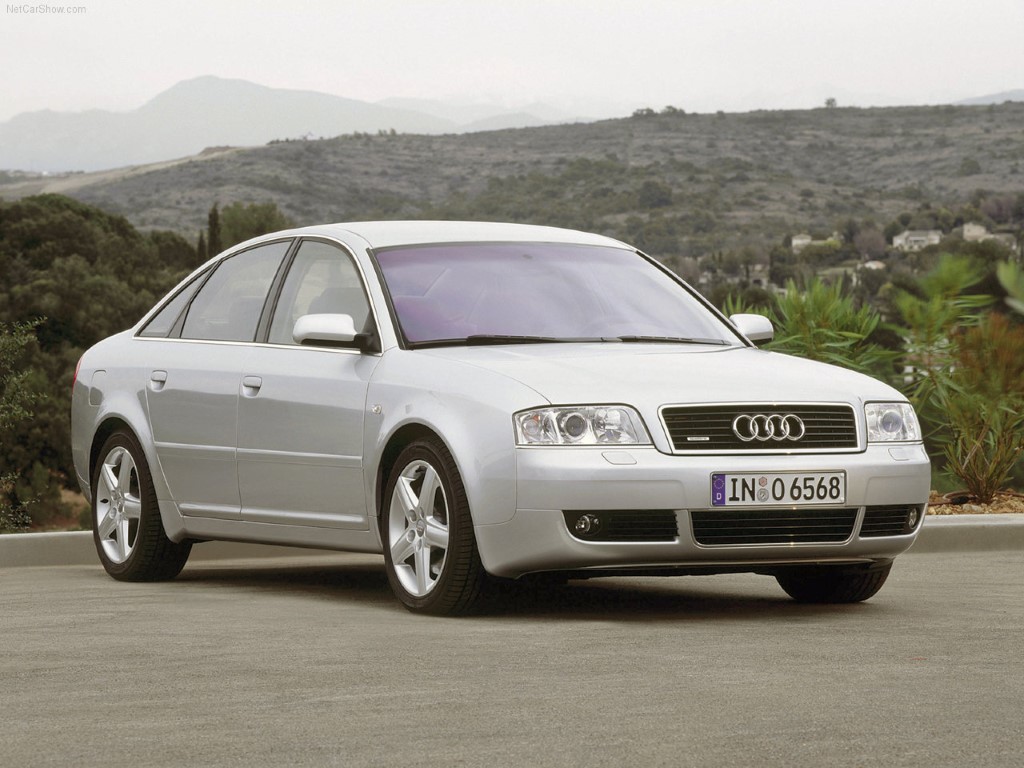
(2002 - 2004)

(2005 - 2008)
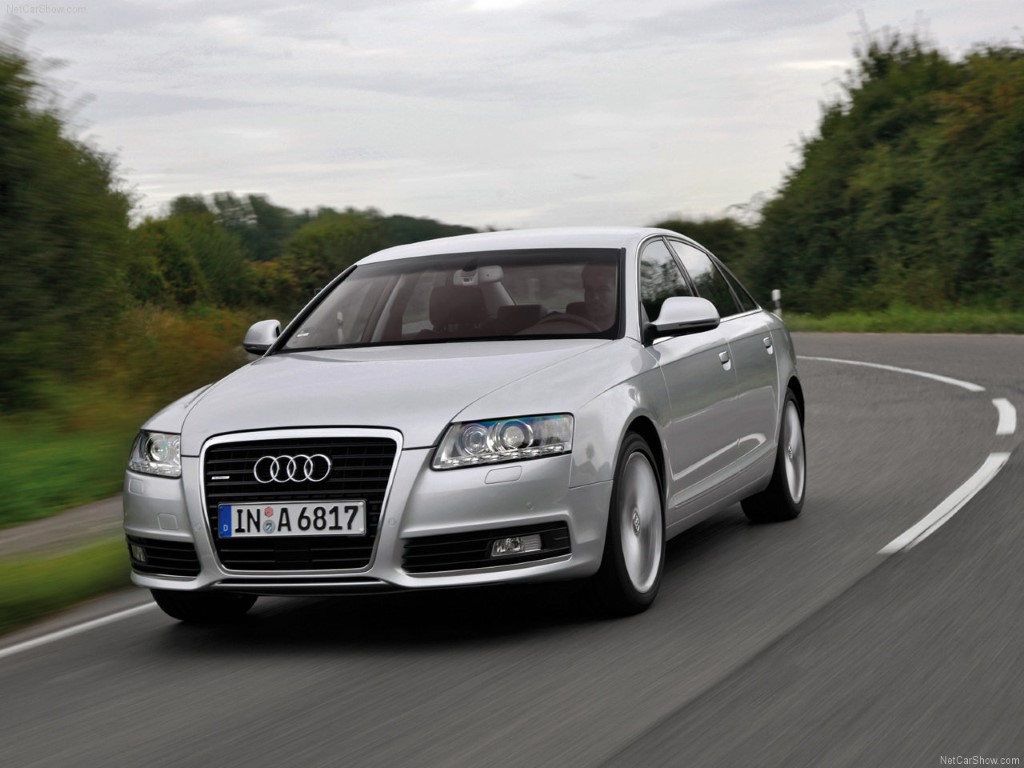
(2009 - 2011)

(2012 - 2014)

(2015 - 2018)

(2019 - 2023)
Select a powertrain to view full technical specifications
The trajectory of the Audi A6 is not just the story of a car model; it is the narrative of a brand's transformation. To understand the depth of the A6's impact, it is necessary to go back in time and analyze the foundation upon which it was built: the Audi C platform. Since the late 1960s, Audi sought to establish itself in the fiercely contested executive sedan segment, a territory historically dominated by giants like Mercedes-Benz and BMW. The Audi A6, as we know it today, is the direct heir to the Audi 100, carrying with it decades of innovation in aerodynamics, all-wheel drive, and lightweight construction.
The importance of this model to the Volkswagen Group is monumental. With nearly 10 million units produced across all generations of the C-Series (Audi 100 and A6) up to 2025, the A6 represents the financial and technological backbone of the Ingolstadt brand. It acts as the perfect balancing point in the portfolio: it offers the dynamic agility expected of a sports sedan (like the A4) combined with the sovereign comfort and cutting-edge technology of the luxury class (like the A8).
In this report, we will explore every facet of this evolution, from the nomenclature transition in 1994 to the era of digitalization and electrification. We will analyze not only the engines and transmissions, but the design philosophies, the engineering decisions that defined eras, and the specific reception in the Brazilian market, where the A6 played a crucial role in building Audi's prestige image, driven by the hands of Ayrton Senna.
Although the focus of this study is the A6, ignoring the Audi 100 would be to omit the vehicle's genetic basis. The C1 (1968-1976), C2 (1976-1982), and C3 (1982-1991) generations established the technological pillars that would define the A6. The Audi 100 C3, in particular, was a global milestone in 1982 when it achieved a drag coefficient (Cd) of 0.30, the lowest for a production car at the time. This obsession with aerodynamic efficiency shaped the silhouette of all subsequent Audi sedans, focusing on wind noise reduction and fuel economy at high speeds, essential characteristics for the German Autobahnen.
The transition to the name "A6" in 1994 was not merely cosmetic. It was part of a complete restructuring of the brand's identity, aligning the mid-size sedan with the recently launched top-of-the-line A8 and the imminent A4. The alphanumeric nomenclature simplified the hierarchy for the global consumer: "A" indicated the passenger lineage and the number its relative size. Thus, the A6 officially assumed its post as the direct challenger to the Mercedes-Benz E-Class and the BMW 5 Series.
The first generation to bear the A6 badge, designated internally as Typ 4A (C4 platform), hit the market in 1994. Technically, it was a deep facelift of the 1991 Audi 100, but the changes were sufficient to reposition the car. Aesthetically, Audi softened the straight lines typical of the 80s. The rectangular headlights gained clear lenses and white turn signals (replacing the orange ones), the front grille was redesigned for a more integrated appearance, and the taillights were rounded. The bumpers lost the rough black trim strips in favor of body-color paint, giving a more modern and premium look.
Inside, the C4 maintained the sober and functional German architecture but raised the standard of materials. The use of soft-touch plastics, real wood inserts, and highly durable fabrics began to define Audi's reputation as a benchmark in cabin quality. Acoustic insulation was reinforced to compete with the silence aboard the Mercedes E-Class W124.
The C4 generation is revered today by enthusiasts for being the "swan song" of certain classic Audi technologies, while simultaneously introducing innovations that endure to this day.
The Legendary Torsen Quattro Drive One of the biggest differentiators of the A6 C4 was the consolidation of the quattro permanent all-wheel-drive system. Unlike competitors' on-demand systems, Audi's system utilized a Torsen (torque-sensing) center differential. This purely mechanical system was capable of redistributing power between the front and rear axles instantaneously, without the need for electronic sensors or actuation delays. This guaranteed unparalleled directional stability in rain or snow, making the A6 the preferred choice in Alpine climates and, interestingly, for armored vehicles in Brazil due to the extra dynamic safety.
Engine Range The engine offering in the C4 generation was vast and marked the transition from 5-cylinder engines to V6s:
It was on the C4 platform that the S6 moniker was born. Replacing the old S4 (from the Audi 100 line), the S6 C4 was Audi's answer to the BMW M5.
The arrival of the Audi A6 C4 in Brazil is a separate chapter in national automotive history. In 1993, Ayrton Senna, looking toward his post-Formula 1 future, signed an agreement to represent Audi in Brazil through Senna Import. Until then, the brand was an illustrious unknown to the general Brazilian public, who revered only Mercedes and BMW.
The official launch took place in 1994. The A6 C4 was positioned as the "smart man's" choice, focused on technology and rationality. The imported versions were mostly the V6s (2.6 and 2.8), equipped with automatic transmissions and front-wheel drive or quattro. The price was prohibitive for most, positioning the car at the top of the social pyramid. Ayrton Senna participated actively in the marketing strategy and even brought an Audi S4 (immediate predecessor) for personal use. Senna's untimely death in May 1994 turned the Audi brand into an emotional legacy for Brazilians, helping to consolidate the A6 as a symbol of success.
If the C4 was an evolution, the C5 generation (Typ 4B), launched in 1997, was a complete revolution. Under the design leadership of Peter Schreyer, the A6 C5 broke with all the brand's visual conventions. The design was heavily influenced by the Bauhaus school, characterized by clean, functional lines and pure geometric shapes.
The car's silhouette was defined by a continuous arc running from the A-pillar to the C-pillar, creating an elongated coupe profile. The rounded rear end, controversial at launch, was designed purely for aerodynamic efficiency, resulting in a Cd of 0.28 — an exceptional value that reduced fuel consumption and wind noise. The flared wheel arches gave the car a muscular stance, visually differentiating it from the conservative sobriety of the Mercedes E-Class W210.
The C5 generation was Audi's technological laboratory, introducing systems that sought to surpass the competition through complexity and refinement.
The Era of 5 Valves Audi bet heavily on 5-valve-per-cylinder technology (30 valves on the V6 engines). The theory was that three intake valves allowed for a faster and more complete filling of the cylinder, while two exhaust valves guaranteed the efficient evacuation of gases.
The Gamble on the CVT Transmission (Multitronic) With the 2001 facelift, Audi introduced the Multitronic transmission for front-wheel-drive models. It was a CVT (Continuously Variable Transmission) that used a metal chain instead of a belt. The promise was to combine the comfort of an automatic with the efficiency of a manual, keeping the engine always at the ideal RPM. In practice, the system offered extremely smooth driving, without gear-shift jolts. However, the Multitronic suffered from long-term reliability issues (chain wear and TCU control unit failures), making it a critical point of concern in the used market to this day. For quattro models, Audi kept the reliable 5-speed ZF Tiptronic automatic gearbox.
In 2002, the quattro GmbH division launched the first RS 6 based on the C5 platform. Unlike the S6 (which used a 340 hp naturally aspirated V8), the RS 6 aimed to destroy the competition.
In Brazil, the A6 C5 was the car that consolidated Audi as a prestige brand. It arrived at a time of economic stability (post-Plano Real) and competed strongly.
Launched in 2004, the A6 C6 (Typ 4F) was designed by Satoshi Wada and marked the introduction of modern Audi's strongest visual identity: the Singleframe grille. This single trapezoidal grille, which united the former upper and lower grilles, gave the car an imposing and aggressive presence in the rearview mirror, a feature copied by almost the entire industry in the following years. The car grew significantly in all dimensions, reaching 4.92 meters, responding to criticisms about rear space in the previous generation.
The C6 generation brought the MMI (Multi Media Interface). While BMW suffered severe criticism for the complexity of its initial iDrive system, Audi developed a logical interface with a central rotary knob surrounded by four function buttons in the corners. The MMI controlled everything: radio, navigation, air suspension (optional), and vehicle settings. The color screen at the top of the dashboard, perfectly integrated into the driver's line of sight, set a new standard for ergonomics.
Audi pioneered the mass implementation of gasoline direct injection (FSI - Fuel Stratified Injection). This technology injected fuel directly into the combustion chamber under high pressure, allowing for higher compression ratios, greater thermal efficiency, and more power with lower consumption.
The C6 generation is unique in history for having offered V10 engines in two performance tiers, leveraging the VW Group's synergy with Lamborghini.
In Brazil, the A6 C6 arrived with elevated status. The 3.0 TFSI versions (post-2009) were the best sellers, offering a perfect balance between performance and fuel consumption. The S6 V10 was also officially imported, becoming an object of desire and, today, a modern classic with complex and expensive maintenance. The Fipe table shows that these vehicles have suffered steep depreciation, making them affordable to buy but prohibitive to maintain for the average owner.
The C7 generation (Typ 4G) focused on reversing the weight gain trend. Utilizing the Audi Ultra hybrid construction philosophy, about 20% of the bodywork was now made of aluminum (hood, front fenders, doors, and trunk lid), while the structure utilized hot-formed ultra-high-strength steels. This resulted in a weight reduction of up to 80 kg depending on the version, improving driving dynamics and fuel economy.
Audi has always used lighting as a signature. In the 2014 facelift, the A6 C7 introduced Matrix LED headlights. This system used a camera in the windshield to detect vehicles ahead or oncoming traffic. The system then individually turned off specific LEDs to create a "shadow" around the other cars, keeping the high beam on for the rest of the road. This drastically increased safety during night driving.
The 7-speed S-tronic transmission (wet dual-clutch, code DL501) became the standard for most quattro versions. It offered gear changes in milliseconds, providing a sense of sportiness that conventional automatic gearboxes couldn't match.
In Brazil, the A6 C7 consolidated the version nomenclature based on equipment packages:
Launched in 2018, the C8 generation (Typ 4K) brought the "Prologue" design language, characterized by tauter surfaces, broad shoulders over the wheels (evoking the original Audi Quattro), and a wider, lower Singleframe grille. The biggest change occurred inside. The MMI rotary knob was eliminated. In its place, Audi installed the MMI Touch Response concept: two high-resolution screens on the center console. The upper one (10.1 inches) controls infotainment and navigation, while the lower one (8.6 inches) controls climate and text input. Haptic feedback (a physical vibration when touching the screen) was introduced to mimic the feel of physical buttons, allowing use without looking.
All engines in the C8 lineup are electrified with Mild Hybrid technology.
A key innovation in the C8 was the introduction of rear-wheel steering (optional). At low speeds (up to 60 km/h), the rear wheels turn up to 5 degrees in the opposite direction to the front wheels, reducing the turning circle by up to 1.1 meters and making maneuvering in tight garages easier. At high speeds, they turn in the same direction, virtually increasing the wheelbase and stability during lane changes.
In Brazil, the A6 C8 arrived in 2019 with prices starting at R$ 426,000, but inflation and currency devaluation pushed values well over half a million reais in 2024/2025.
In 2023, Audi announced a strategy that caused global confusion: even numbers would be reserved for electric cars (EVs) and odd numbers for combustion engine cars (ICE). Under the plan, the next combustion A6 would be renamed Audi A7, while the "A6" name would be exclusive to the new electric A6 e-tron model.
In February 2025, Audi admitted the mistake. Following negative feedback from customers and dealers who viewed the "A6" name as an asset too valuable to change, the brand cancelled the name change for this model.
The table below summarizes the technical evolution of the five generations of the A6 Sedan, focusing on the most relevant specifications for the market.
| Feature | C4 (1994-1997) | C5 (1997-2004) | C6 (2004-2011) | C7 (2011-2018) | C8 (2018-Present) |
|---|---|---|---|---|---|
| Internal Code | Typ 4A | Typ 4B | Typ 4F | Typ 4G | Typ 4K |
| Length (mm) | 4,797 | 4,796 | 4,916 | 4,933 | 4,939 |
| Wheelbase (mm) | 2,760 | 2,760 | 2,843 | 2,912 | 2,924 |
| Drag Coefficient (Cd) | 0.29 | 0.28 | 0.28 | 0.26 | 0.24 |
| Front Suspension | MacPherson | Multi-link (4 arms) | Multi-link (4 arms) | Lightweight 5-link | Aluminum 5-link |
| Highlight Engine | 2.8 V6 30v / 2.2T | 2.7 Biturbo V6 | 3.0 SC V6 / V10 | 3.0 SC V6 / 4.0 V8 | 3.0 Turbo V6 MHEV |
| Auto. Gearbox | 4-speed | 5-speed (Tiptronic) | 6-speed (Tip/Multi) | 7-speed (S-tronic) | 7-speed (S-tronic) |
| Quattro Drive | Torsen T-1 (Mech.) | Torsen T-2 | Torsen T-3 (40:60) | Crown Gear Differential | Ultra (Decouplable) |
| Sport Version | S6 / S6 Plus | S6 / RS 6 (Sedan) | S6 / RS 6 (Sedan) | S6 / RS 6 (Avant) | S6 / RS 6 (Avant) |
Cumulative production of the C-Series (100 + A6) reached 9,836,762 units in April 2025. Of this total, about 3.2 million correspond to Audi 100 models, meaning that over 6.6 million vehicles have worn the A6 badge since 1994.
A crucial factor for these numbers is the Chinese market. Since the C5 generation, Audi has produced an exclusive elongated version in China called the A6L. The A6L became the standard car for Chinese government officials and businessmen, offering limousine rear space. In many years, sales of the A6L in China have surpassed global sales of the standard A6, justifying Audi's continued investment in sedans even with the decline of this segment in Europe and the US.
The Audi A6 Sedan is a case study in persistence and incremental engineering. It wasn't born a leader; it built its leadership. The C4 generation proved that Audi belonged in the premium segment. The C5 proved the brand could lead in design. The C6 brought visual imposingness and interface technology. The C7 focused on efficiency and dynamics. And the C8 brought the digital future.
For the Brazilian market, the A6 holds special meaning. It was the vehicle that, brought by the hands of a national idol (Senna), taught the local consumer that there was intelligent life beyond the traditional brands. Although today it is a niche product for connoisseurs, the A6 Sedan remains the purest expression of the brand's slogan: Vorsprung durch Technik (Advancement through Technology).
Images of the Audi A6