
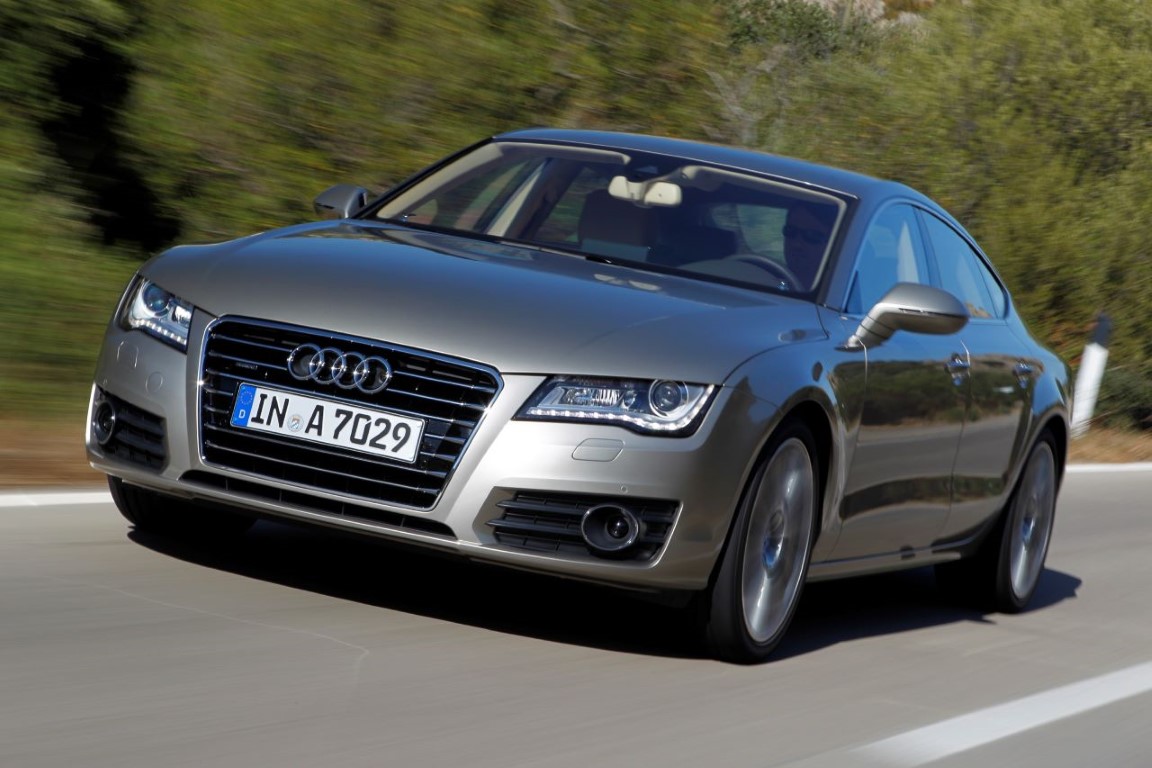
C7
(2011 - 2014)
3.0 V6 Supercharged
300 cv

Technical specifications, versions, and history for the Audi A7.
Select a generation to see available versions
(2011 - 2014)
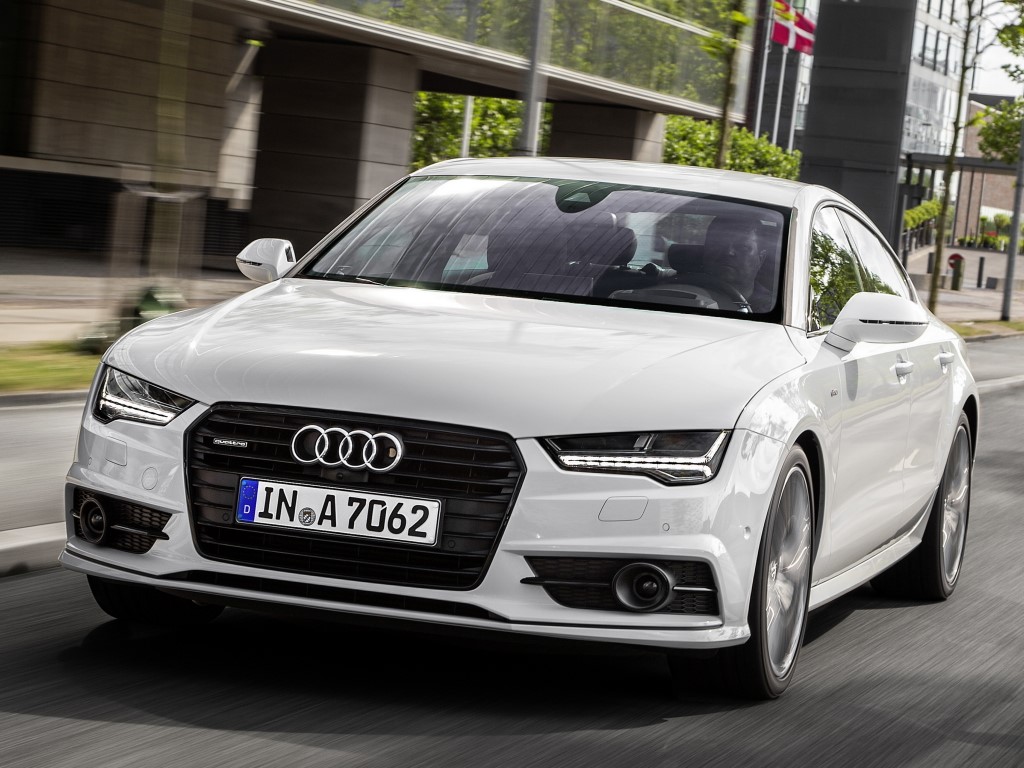
(2015 - 2018)
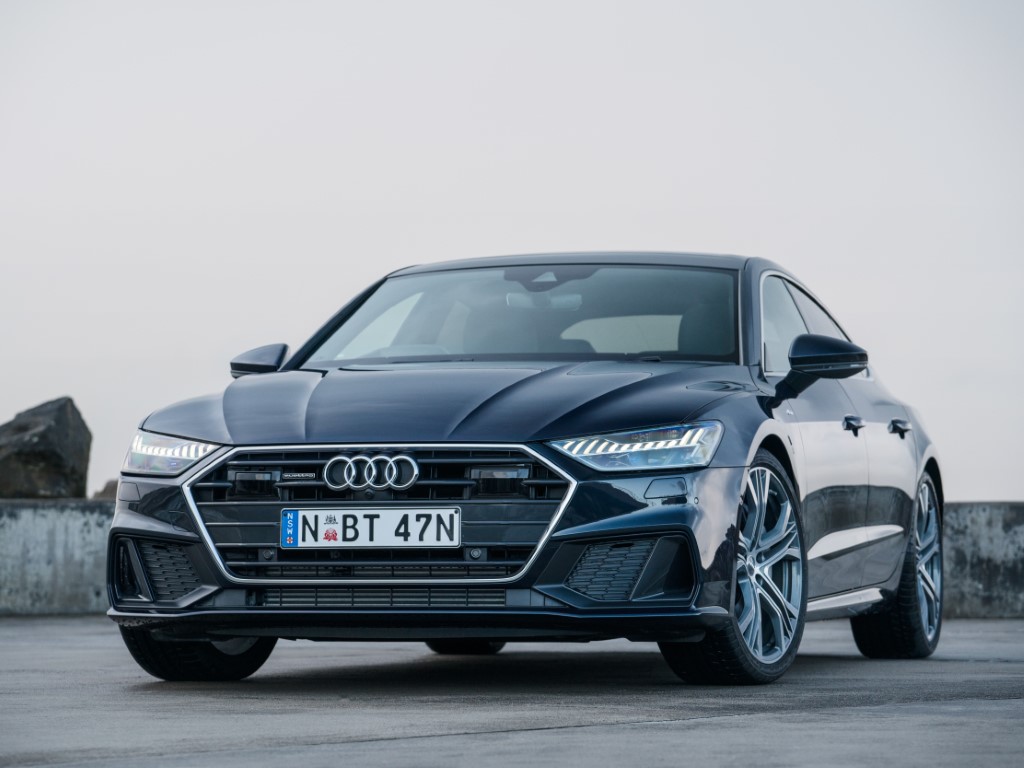
(2019 - 2023)
The luxury automotive industry, historically conservative, underwent a radical transformation in the first decade of the 21st century. Traditionally, the "E" (Executive) segment was dominated by three-box sedans — vehicles characterized by a clear visual separation between the engine compartment, the passenger cabin, and the trunk. Audi, with its A6 model, and its German rivals, BMW 5 Series and Mercedes-Benz E-Class, fought for the hegemony of this format. However, market analyses conducted in the mid-2000s identified a dissonance in the expectations of high-income consumers: there was a growing desire for the emotional and dynamic aesthetics of a sports coupe, but without renouncing the practicality of four doors and the rear space offered by conventional sedans.
The initial response to this latent demand was given by the Stuttgart competitor, with the launch of the CLS in 2004, which inaugurated the modern niche of "four-door coupes". Audi, guided by its corporate mantra Vorsprung durch Technik (Advancement through Technology), observed the movement, but chose not to deliver an immediate and reactive response. Instead, the engineers and designers in Ingolstadt, under the tutelage of then design chief Stefan Sielaff and later Wolfgang Egger, dove into the brand's archives to reimagine the concept. The inspiration did not come from contemporary sedans, but rather from the 1969 Audi 100 Coupé S, a two-door fastback with a truncated and sloping rear that became a brand design icon.
The goal of the A7 project was not just to fill the numerical and price gap existing between the executive A6 and the A8 limousine. The mission was to create a "Grand Touring" in the purest sense of the word: a vehicle capable of crossing continents at high speed, offering supreme comfort, but with a silhouette that evoked speed even when static. Unlike its direct competitors that kept the trunk lid separated from the rear window (maintaining the three-box structure, albeit disguised), Audi opted for the "Sportback" configuration. This engineering decision integrated the rear window into the trunk lid, creating a wide liftback-type (or fifth door) opening. This technical choice defined the identity of the A7: a fusion of a coupe, a sedan, and the cargo versatility of a station wagon (Avant).
The public materialization of this vision occurred at the Detroit Auto Show in January 2009, with the revelation of the Audi Sportback Concept. This vehicle was not a mere abstract styling exercise, but a disguised pre-production car. It anticipated not only the lines of the future A7, but also the visual language that Audi would adopt in the following decade. The concept featured a more angular and horizontalized Singleframe grille, narrow LED headlights, and a shoulder line (internally called the "Tornado Line") that ran along the entire side of the vehicle, giving it an athletic and lowered stance.
Technically, the concept already signaled Audi's commitment to efficiency. Equipped with a 225 hp and 550 Nm torque 3.0 TDI Clean Diesel V6 engine, the prototype boasted an exhaust gas treatment system that almost completely eliminated nitrogen oxides, meeting the strictest emission standards of the 50 US states. The 7-speed S tronic transmission and quattro all-wheel drive completed the mechanical package, demonstrating that the future A7 would be a car focused on both performance and environmental responsibility.
The reception from critics and the public was extremely positive, validating Audi's bet on the Sportback format. The transition from the concept to the production model was remarkably faithful, preserving the dramatic proportions and the purity of the lines, something rare in the industry where manufacturing and safety restrictions frequently dilute the visual impact of prototypes.
The official launch of the production Audi A7 Sportback took place in July 2010, at the Pinakothek der Moderne in Munich, a location deliberately chosen to associate the vehicle with contemporary art and functional design. Built on the modular MLB (Modular Longitudinal Matrix) platform, shared with the fourth generation of the A6 (C7), the A7 differentiated itself through the intensive use of lightweight materials and a distinct chassis calibration, focused on a more engaging driving experience.
The design of the first generation (internal code 4G8) is characterized by its fluid and minimalist silhouette. At 4.97 meters long and 1.91 meters wide, but only 1.42 meters high, the A7 projected an image of width and stability. The most controversial and distinct element of the design was the "Kammback" rear — an abrupt vertical cut at the rear that improves aerodynamic efficiency by reducing the turbulence of the air detaching from the vehicle. The drag coefficient (Cd) of 0.28 was a benchmark for the class at the time.
A crucial technical innovation to maintain the purity of the lines was the implementation of an active rear spoiler. Invisibly integrated into the trunk lid when at rest, the spoiler automatically extended upon reaching 130 km/h (and retracted when slowing down to 80 km/h). This engineering solution made it possible to generate the necessary downforce on the rear axle to ensure stability at high speeds — a critical requirement for the German Autobahns — without compromising the elegance of the car's profile with a permanent fixed wing.
The frameless windows were another design signature inherited from classic coupes. To make this feature viable without sacrificing the acoustic insulation expected of a luxury car, Audi developed multi-layer sealing systems and used thicker laminated glass, ensuring that the silence on board was comparable to that of the A8 sedan.
The A7 C7 was one of the pioneers in applying the "Audi Ultra" lightweight construction strategy. The bodywork utilized an intelligent hybrid construction, comprising about 20% aluminum and the remainder in high and ultra-high-strength steels.
The interior of the A7 introduced the "wrap-around" concept, a continuous horizontal line that enveloped the driver and passenger, creating a sensation of a secure and integrated cockpit. The dashboard was slightly tilted towards the driver, reinforcing the sporty vocation.
The core technology was the MMI (Multi Media Interface) Navigation Plus system. In the C7 generation, the system introduced a significant innovation: the MMI Touch. This was a sensitive touchpad located on the center console, where the driver could "write" letters and numbers with their finger to input GPS destinations or dial phone numbers, without taking their eyes off the road. This haptic interface was widely praised for its intuitiveness and ergonomic safety.
Another technological highlight was the optional Head-Up Display (HUD), which projected speed and navigation information directly onto the windshield, virtually floating about 2 meters ahead of the hood. The Night Vision Assistant system utilized a thermal camera in the front grille to detect pedestrians and large animals up to 300 meters away, highlighting them in yellow or red on the digital instrument cluster, depending on the risk of collision.
The engine range of the first phase focused on high-efficiency and high-power V6 units, featuring direct injection and thermal energy recovery.
Technical Note on Transmissions: Most quattro models utilized the 7-speed S tronic dual-clutch transmission (code DL501). However, the BiTDI model produced so much torque (650 Nm) that it exceeded the safe capacity of the S tronic of that era. Therefore, Audi equipped the BiTDI with a conventional 8-speed Tiptronic torque converter automatic transmission (ZF 8HP), known for its robustness.
The C7 platform proved to be an exceptionally rigid and competent base, allowing the brand's sports division (then quattro GmbH, now Audi Sport GmbH) to develop versions that directly rivaled supercars in terms of raw acceleration.
Launched in 2012, the S7 positioned itself as the "gentleman's sports car". Under the hood resided a completely new engine: the 4.0 TFSI biturbo V8.
The RS 7, launched in 2013, was the ultimate expression of brutality and engineering. Although it shared the 4.0-liter V8 block with the S7, the RS 7's engine was a distinct beast. Larger twin-scroll turbochargers mounted inside the engine's "V" ("Hot V" configuration) ensured short intake paths and explosive response.
In May 2014, Audi presented the product update ("Product Improvement" or PI) for the A7/S7/RS 7 line, introducing the 2015 model. Although the changes to the metal stamping were minimal, the technological update was profound, marking the debut of technologies that would define the industry.
The most visible and significant innovation was the introduction of the Matrix LED technology. Until then, high beam assistants only switched between high and low beams. Audi's Matrix system changed the paradigm.
To comply with Euro 6 emission standards, Audi revised the entire engine range, extracting more power with lower consumption.
At the end of the C7 generation's lifecycle, Audi launched the RS 7 Performance variant. Through changes to the engine management and an increase in turbo pressure, power was elevated to 605 hp and torque reached 750 Nm during the overboost function. The 0 to 100 km/h time fell to 3.7 seconds, consolidating the A7 as one of the fastest four-door vehicles on the planet at the time.
The second generation of the A7 Sportback, designated internally as C8 (or Type 4K8), was revealed in October 2017 and arrived on the market as a 2018/2019 model. Designed under the leadership of design chief Marc Lichte, this generation represented a technological breakthrough, focusing on full cabin digitalization and mild electrification.
Based on the evolution of the modular platform, now called MLB Evo, the new A7 maintained the classic proportions, but with tauter surfaces and sharper edges.
The interior of the A7 C8 eliminated almost all physical buttons and the rotary MMI control knob that characterized the previous generation. In its place, Audi implemented the concept of "digital fusion".
One of the greatest technical innovations of the C8 generation was the standardization of the 48-volt Mild Hybrid (MHEV) technology across all V6 and V8 engines.
The engine offering in the second generation reflected the global shift in priorities, abandoning the mechanical supercharger in favor of twin-scroll turbochargers for greater thermal efficiency.
| Model (New Nomenclature) | Engine | Configuration | Power | Torque | Acceleration 0-100 |
|---|---|---|---|---|---|
| 45 TFSI | 2.0 TFSI | 4-Cylinder Turbo | 245 hp | 370 Nm | 6.2 s |
| 55 TFSI | 3.0 TFSI | V6 Turbo (Single-turbo) | 340 hp | 500 Nm | 5.3 s |
| 40 TDI | 2.0 TDI | 4-Cylinder Diesel | 204 hp | 400 Nm | 8.3 s |
| 50 TDI | 3.0 TDI | V6 Diesel | 286 hp | 620 Nm | 5.7 s |
| 55 TFSI e | 2.0 PHEV | 4-Cyl. + Electric (Plug-in Hybrid) | 367 hp (Comb.) | 500 Nm | 5.7 s |
Note: Audi adopted a new numerical nomenclature based on power output ranges (e.g., "55" indicates power between 333-375 hp), abandoning the direct reference to displacement on the trunk lid.
The quattro drive also evolved. In the 4-cylinder models (like the 45 TFSI), Audi introduced the quattro ultra system. Unlike the traditional permanent system (Torsen) used in the powerful V6s, the ultra system completely disconnects the rear axle in steady driving to save fuel, reactivating all-wheel drive in milliseconds as soon as it detects a loss of grip or dynamic driving.
The second generation brought a controversial strategic bifurcation for the performance models, dividing the world into two distinct markets based on fuel preferences and emissions.
European Market (S7 TDI): For the first time, Audi launched the S7 in Europe equipped exclusively with a 3.0 TDI V6 engine (Diesel). This engine utilized an Electric Powered Compressor (EPC) fed by the 48V system to eliminate turbo lag at low revs. With 349 hp and a massive 700 Nm of torque, the car offered exceptional cruising range, but was criticized by purists for the lack of a sporty sound and lower peak power compared to its predecessor.
Global Markets (USA, Asia, Brazil, Middle East) - S7 TFSI: In these regions, where diesel in performance cars is unpopular or prohibited, the S7 received the 2.9 TFSI biturbo V6 engine (shared with the RS 4 and RS 5). This gasoline engine delivers 444 hp and 600 Nm of torque, maintaining the high-revving character and sporty sound expected of an "S" model. The loss of two cylinders compared to the old V8 was compensated by the technology and lower weight of the block.
The C8 generation RS 7 corrected the main aesthetic criticism of the previous generation: the lack of visual differentiation. The new RS 7 shares only four body panels with the standard A7: the hood, the roof, the front doors, and the trunk lid. Everything else is exclusive.
The Audi A7 is, by definition, a niche product. It sacrifices the practicality and cost-benefit of the A6 sedan in the name of style and exclusivity, naturally resulting in lower production volumes. However, the data reveals fascinating market trends.
The following table compiles fragmented data from annual reports and sales records to illustrate the product's life curve.
| Year | US Sales | China Sales (Estimated) | Global Context |
|---|---|---|---|
| 2012 | 8,598 | - | Peak of 1st Gen (Novelty in the market) |
| 2014 | 8,133 | - | Introduction of Facelift and new engines |
| 2016 | 6,558 | - | Start of the natural decline of the C7 cycle |
| 2018 | 3,833 | High Demand | Transition year (C7 to C8) |
| 2019 | 4,870 | - | Full arrival of the C8 Generation in markets |
| 2021 | 3,081 | - | Semiconductor crisis affects production |
| 2023 | 1,430 | ~30,000+ | Massive divergence due to the Chinese A7L model |
| 2024 | 1,042 | High | Sharp decline in the West; focus on China |
Analyzing recent global numbers (such as the 2023 report indicating over 34,000 units produced) requires context. The vast majority of these units are not the A7 Sportback we know, but rather the Audi A7L.
Produced by the SAIC-Audi joint venture specifically for China, the A7L abandons the fastback roof in favor of a traditional three-box sedan body with an extended wheelbase. The Chinese luxury market prioritizes rear-seat legroom over sporty aesthetics. Thus, the "A7" became the volume flagship in China, while in the West (US and Europe) the A7 Sportback became a rare collector's item, with sales shrinking in favor of SUVs like the Q8.
The trajectory of the A7 in Brazil reflects the complexity of the national luxury market, marked by high taxes and exchange rate fluctuations.
In Brazil, the A7 competes in a rarefied segment against the Porsche Panamera and the Mercedes-Benz CLS. Due to the high cost and low ground clearance (problematic for Brazilian asphalt), the A7 lost much ground to the Audi Q8 SUV, which offers similar technology and status with greater robustness. Today, seeing an A7 C8 on Brazilian streets is a rare event, reserved for enthusiasts who reject the hegemony of SUVs.
The Audi A7 Sportback has established itself as one of the design pillars of the four-ring brand. More than a high-volume commercial success, it served as an image "beacon", proving that Audi could create vehicles that appeal to both emotion and reason.
The model's legacy lies in the democratization of technologies. The A7 was the vehicle that brought Matrix LED headlights, dynamic turn signals, and the 100% digital instrument cluster to center stage, technologies that today equip everything from the A3 to the Q8. It proved the viability of hybrid aluminum-steel construction on a large scale.
Looking ahead, the future of the "A7" name will undergo a radical change. Audi has announced a new nomenclature strategy: even numbers (A4, A6, Q8) will be reserved for 100% electric vehicles (e-tron), while odd numbers (A5, A7, Q7) will designate vehicles with internal combustion engines (ICE). Therefore, the successor to the current A6 sedan (C8) will be named Audi A7 in the next generation. The A7 name will cease to be exclusive to the four-door coupe and will come to represent the entire family of combustion executives (Sedan and Avant). It is likely that the "Sportback" format will survive as a top-tier variant of this newly expanded A7 family, keeping the spirit of the Grand Touring alive, even as the industry moves inexorably towards total electrification.
The current Audi A7, therefore, can be considered the apex of Audi's combustion design era: a complex, beautiful, and sophisticated machine, which marked an era where form did not have to strictly follow function, but could dance with it.